Let me tell you something. Fifteen years behind the wheel, hundreds of warehouses — and the ones I remember aren't the biggest or the busiest. They're the ones where I didn't have to sit in a truck queue at the gate. Ask any driver: every minute in that line is money burning on the asphalt.
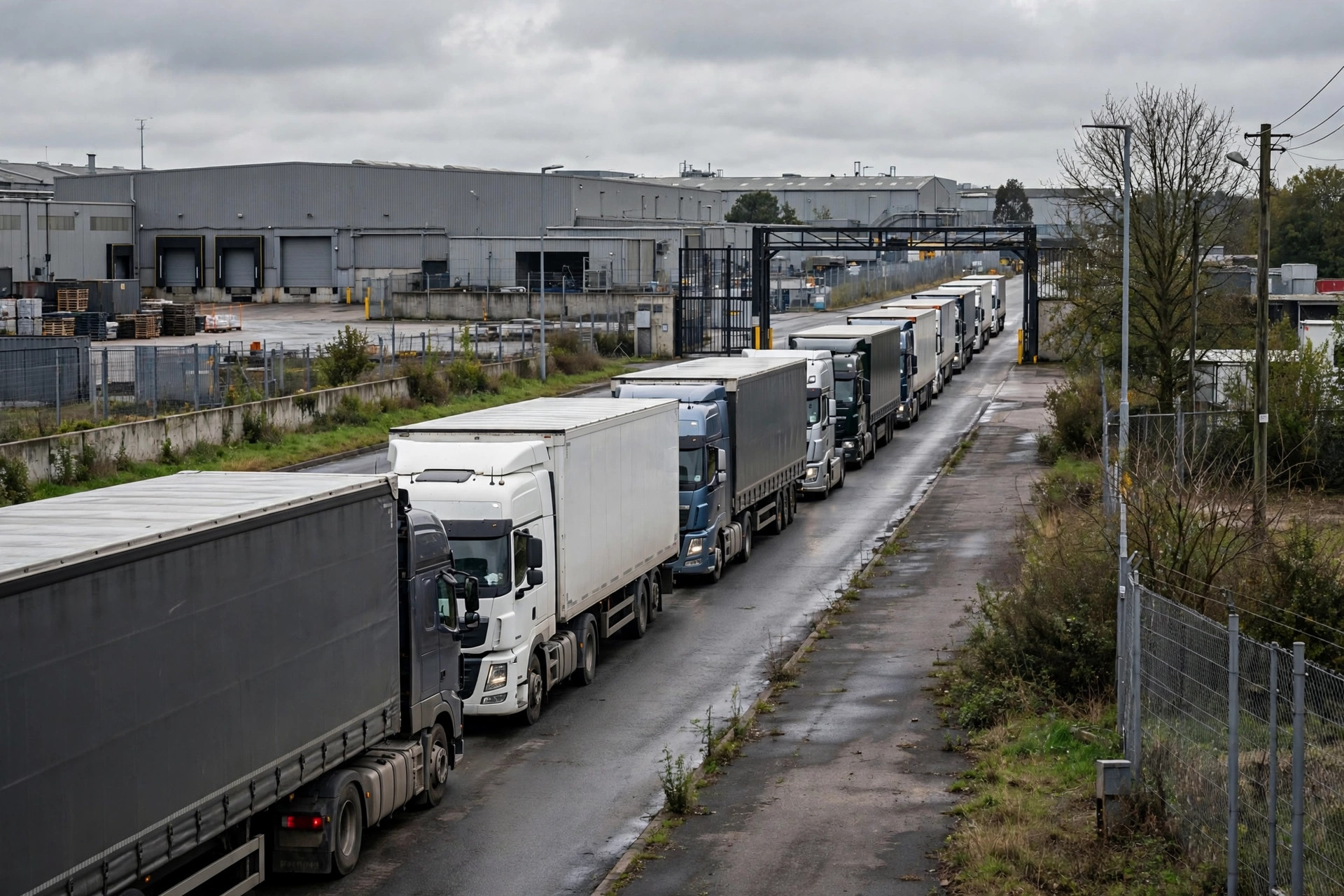
Two falls ago I hauled a load of furniture to a distribution center in Fontana. Appointment was 9 a.m. for the unload, so I rolled in at 7, figuring I'd get out early and grab an afternoon load in Ontario. I sat there until 11. One narrow access road, trucks parked nose-to-tail along the street — had to be twenty, thirty of them — choking the whole road down to one lane. A city cop cruised back and forth telling us to move, and nobody dared, because if you moved you lost your spot. Guys sleeping in their cabs, guys squatting on the curb smoking and cursing. I called receiving and they said, "Hang tight, eight more ahead of you." That "hang tight" killed my afternoon load.
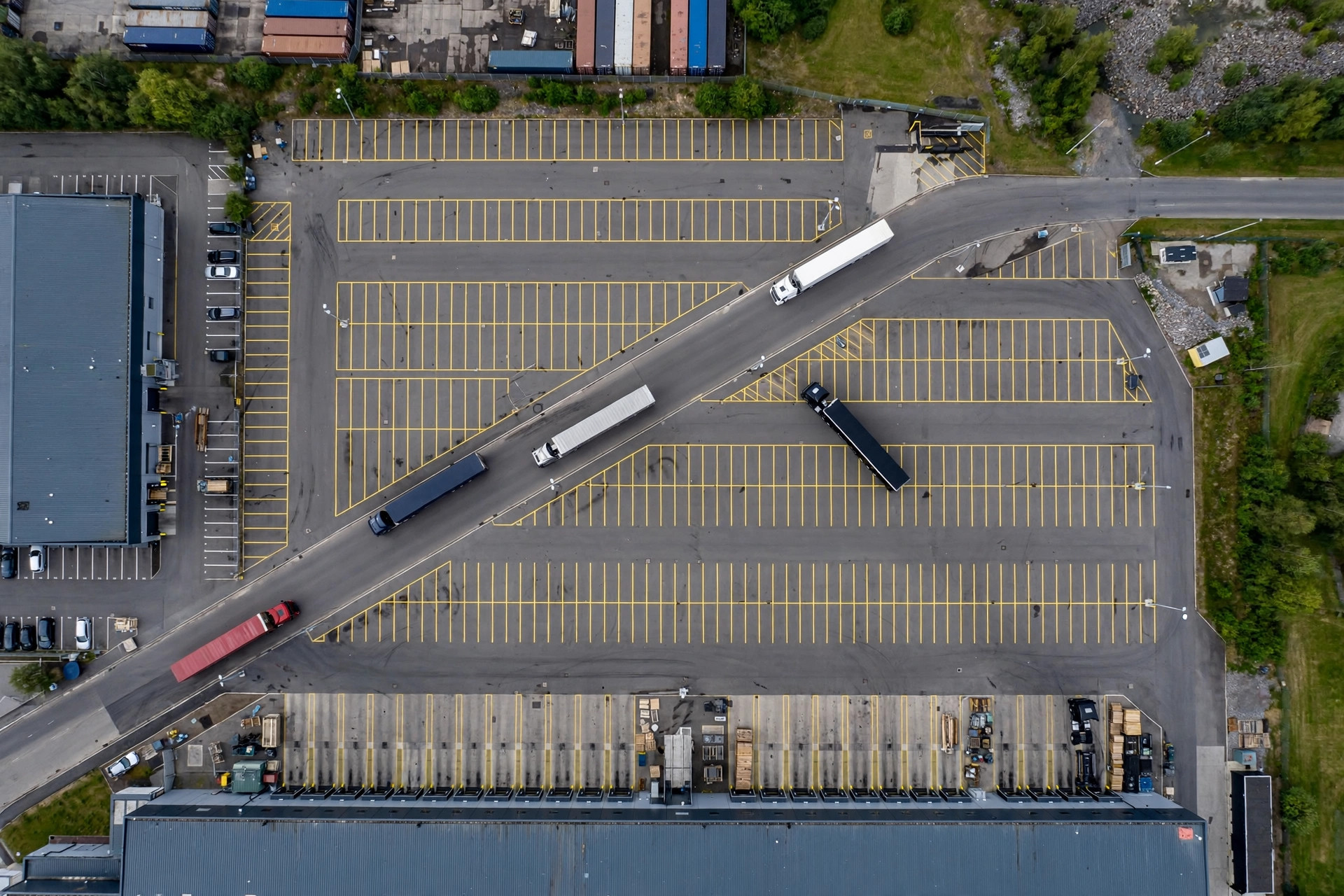
Then last summer I picked up at a cold storage outfit in Riverside. Whole different world. Handed my appointment slip at the guard shack, the guard scanned it and gave me a number card: "Number 15, six ahead of you. Park in B-12, there's a shelter with water and restrooms. Watch the board — move when your number's up." They had a dedicated queue lane inside the yard with about twenty marked staging stalls on both sides, all nose-out, no backing needed. I parked, locked up, drank some water in the shelter. Forty minutes later the board flipped to 15. I drove to the dock, got unloaded, signed, and rolled — ninety minutes door to door. Same freeway, two warehouses, two hours apart.
Here's what those two days taught me. A lot of warehouse owners have this backwards: they see a line of trucks at the gate and think it means business is good. Let me give it to you straight — every minute a driver waits at your gate burns your money and your reputation. A driver sits two hours today, tomorrow dispatch sends him back and he fights the dispatcher about it. Enough fights, and the good drivers stop taking your loads. Then you're stuck with the expensive ones and the unreliable ones. Warehouse owners almost never do that math.
What Those Two Hours in the Queue Really Cost
Here's my own accounting — and I'll only speak for myself, every fleet's numbers are different. Back when I ran regional dedicated lanes, a full day for my truck was two short turns; a day and a half was normal. Those two hours in the queue ate half my morning, the afternoon load flew away, and a third of the day's revenue went with it. Fuel, truck payment, insurance — not a dime less. Driver pay still owed. For a fleet, those two hours are pure loss.
And the warehouse? Drivers stacked up at the gate while the dock sits empty — freight not ready, short-handed, last truck still unloading. Driver waiting outside, chaos inside, nobody talking to anybody. The hidden costs are worse. Trucks parked on a city street, a cop writes tickets, and the driver blames the warehouse for every one of them. In peak season the queue blocks the entrance and exit lanes, your own outbound trucks can't get out, and the whole yard seizes up. Worst one I ever saw: queued trucks blocking the fire lane. The fire department showed up with a correction notice. Now that's what I call paying tuition.
So this isn't about drivers loving to complain. It's about yard planning that never made room for waiting. Trucks arriving and not unloading right away — that's normal. The question is where they wait and how.
What a Well-Run Truck Queue Looks Like, Through a Driver's Eyes
After all these years, the smooth yards all share the same traits. Here's my checklist — warehouse owners, walk your yard with this in hand:
- Separate in from out. One gate in, one gate out. If you've only got one gate, paint the yard into two lanes. The worst is inbound and outbound trucks nose-to-nose at the entrance with nobody moving.
- Keep a queue lane at the gate. Don't let the line spill onto the city street. Make it long enough — sized for at least 1.5 times your peak-hour appointment volume, or peak season will overflow it anyway.
- Staging stalls, nose-out, 45-degree angle parking if you can. Driver parks and walks away, no backing gymnastics; when his number's up he pulls straight out without blocking the guy behind.
- Leave real turnaround room. A 53-foot trailer swings wide. Too many yards paint lines sized for cars, and then a big rig can't make the turn — might as well not have painted at all.
- Put the scale in the right place. Scale traffic and queue traffic should never cross, or you've got two streams of trucks fighting in the yard.
- A driver rest area: shelter, water, restroom. Don't underestimate this. Drivers with somewhere to be don't wander the yard parking wherever they please. Half your yard discipline comes from this one thing.
- Number display. One board at the gate, one in the yard, so nobody has to get out and ask "what number are we on?" Even a hand-written whiteboard beats nothing.
- Emergency lanes stay empty, always. Fire lanes, ambulance access — paint them, sign them, tow whoever parks there.
- Night lighting and cameras. Drivers waiting in the yard at 2 a.m. in the dark is how bad things happen.
- Stagger the appointments. Don't book twenty trucks for 9 a.m. Release a few every fifteen to twenty minutes and the queue takes care of itself.
And here's the part that surprises people: plenty of warehouses spend big money on queueing software and drivers still curse them. Why? Because the software solves the numbering, not the waiting. Honest truth — a restroom shelter plus a hand-written number board outperforms a lot of fancy systems. What drivers fear isn't waiting. It's waiting without knowing how long, with nowhere to go. Waiting you can see and waiting you can stand — that's a yard that stays calm.
Look at the three kinds of yards side by side and the gap is obvious:
| Yard type | Driver experience | What the warehouse spends | Biggest risk |
|---|---|---|---|
| Queue on the public street | Cursing, doesn't want to come back | Almost nothing | Tickets, complaints, lost carriers |
| Yard with queue lane and staging stalls | Can wait, no trouble | Striping and signs, one-time | Peak hours can still overflow |
| Staggered appointments, call numbers, rest area | On time, waits easy | Staff to run appointments and call numbers | Sloppy management slides back a tier |
The more you spend going down that list, the faster the risk drops. The first tier looks cheap but it's the most expensive — what it costs you isn't paint, it's drivers and carriers who never come back.
Two Pieces of Advice — One for Warehouses, One for Shippers
For warehouse owners: plan the yard traffic before something forces you to. Wait until the cops are writing tickets, the fire department is issuing notices, and good drivers won't take your freight — by then the fix costs ten times what it would have. Striping is the cheapest renovation there is. Paint the in-out separation and the queue lane first. It's a few thousand dollars. Don't cheap out on it.
For shippers: when you're picking a warehouse or a 3PL, don't just tour the inside. Go look at the gate. Show up at 9 a.m., see whether trucks are lined up, look at the drivers' faces. A warehouse with a long line at the gate won't move your freight fast either — a messy yard usually means a messy operation inside.
Fifteen years on the road taught me this: a truck waiting on cargo is fine; a truck stuck in a jam going nowhere is not. You can tell whether a warehouse has its act together in the first three minutes after you pull in. Those two hours at the gate — save them and they're real money in your pocket. Don't, and sooner or later they turn into tickets, complaints, and customers you lost.
By Shifu Zhao, Trucking Veteran (15 yrs)