Here's my verdict up front: most people get warehouse steel structure fireproofing backwards. The moment they hear "fireproof the steel," they picture a crew spraying on a coat of paint. That's turning a building-classification question into a painting question, and I've seen too many owners and contractors pay for that mix-up — the coating goes on, the inspection fails, the money is gone, and the problem is still sitting there.
This breaks into two sides. One side: does your warehouse even need its structural steel to carry a fire-resistance rating? The other side: if it does, how do you get there? Get the order wrong and everything after it is rework.
What a Fire Rating on Steel Is Actually Buying You
First, let's clear out the most common misunderstanding: steel doesn't catch fire, but steel hates heat. In a real fire, exposed steel loses strength faster than most people expect. A column softens, the roof follows. A fire-resistance rating isn't about keeping steel from burning. It's about keeping steel standing long enough — long enough for people to get out, for firefighters to get in, for the structure to not come down first.
So the first question the code asks is never "what coating are you using." It's "what construction type is this building?" In the US, under the IBC, a Type IIB building allows the structural steel frame to be unrated — no fire-resistance rating — within certain height and area limits. Plenty of warehouses legally have bare steel, no coating at all. That's not a loophole. That's the code's own path. Flip it around: if your construction type, height, area, or occupancy demands a rating on the steel, then fire protection enters the picture, and you pick from three options — spray-applied fire-resistive material (SFRM), intumescent coatings, or gypsum-board enclosures. Each one carries its own price.
I've seen too many projects get fuzzy right on this line — "no coating needed" misheard as "fire protection doesn't apply," or "protection required" misheard as "coat every column." Both mistakes come from skipping the classification step.
The Pit I Watched Happen: Coating Applied, Inspection Failed Anyway
A few years back, a 3PL operation in California's Inland Empire built a new warehouse. First US build for the owner. The design went in as Type IIB, and the structural steel needed no fireproofing. Mid-construction, the owner changed his mind: raise the racks, add another storage level, squeeze more density out of the same footprint. The crew was agreeable. Racks went up. Then came the fire inspection, and the problem arrived with it: once storage height changed, the fire risk profile of the stored goods changed with it, and the fire department wanted the whole fire design re-checked against the new storage conditions — sprinklers, compartmentation, egress, all of it recalculated. The steel's own classification hadn't changed, but the project's fire math had to be redone from scratch.
Worse, the crew had heard "the fire department wants something" and decided to be helpful: they sprayed fireproofing onto some of the columns. At inspection, the fire official's first question was the one nobody could answer: which UL design is this coating applied under? What thickness? Does the W/D ratio check out? A UL design comes out of fire testing to ASTM E119 / UL 263, and each design ties to specific steel shapes and protection methods. Some UL designs even specify a minimum W/D ratio — the weight-to-heated-perimeter ratio of the steel member. Coating with no design paperwork behind it is coating that doesn't count.
My lesson from that job is one sentence: the inspector isn't checking whether you sprayed something. The inspector is checking whether what you sprayed has a design file behind it and was installed to that file. Work with no paperwork is work you did for free.
A Damaged Coating You Don't Repair Is a Coating You Never Had
The second pit isn't in new buildings. It's in old ones. Another warehouse, years into operation, had a column base where a forklift had knocked off a big patch of fireproofing, down to bare steel. Nobody treated it as urgent — it's just a scuffed coating, how bad can it be? Years later, at a routine fire re-inspection, the inspector spotted that column from across the floor and wrote it up.
The rule sits in IFC Section 703: the fire-resistance rating of the building has to be maintained, and damaged coatings have to be repaired and restored. That's not a suggestion. It's a maintenance obligation.
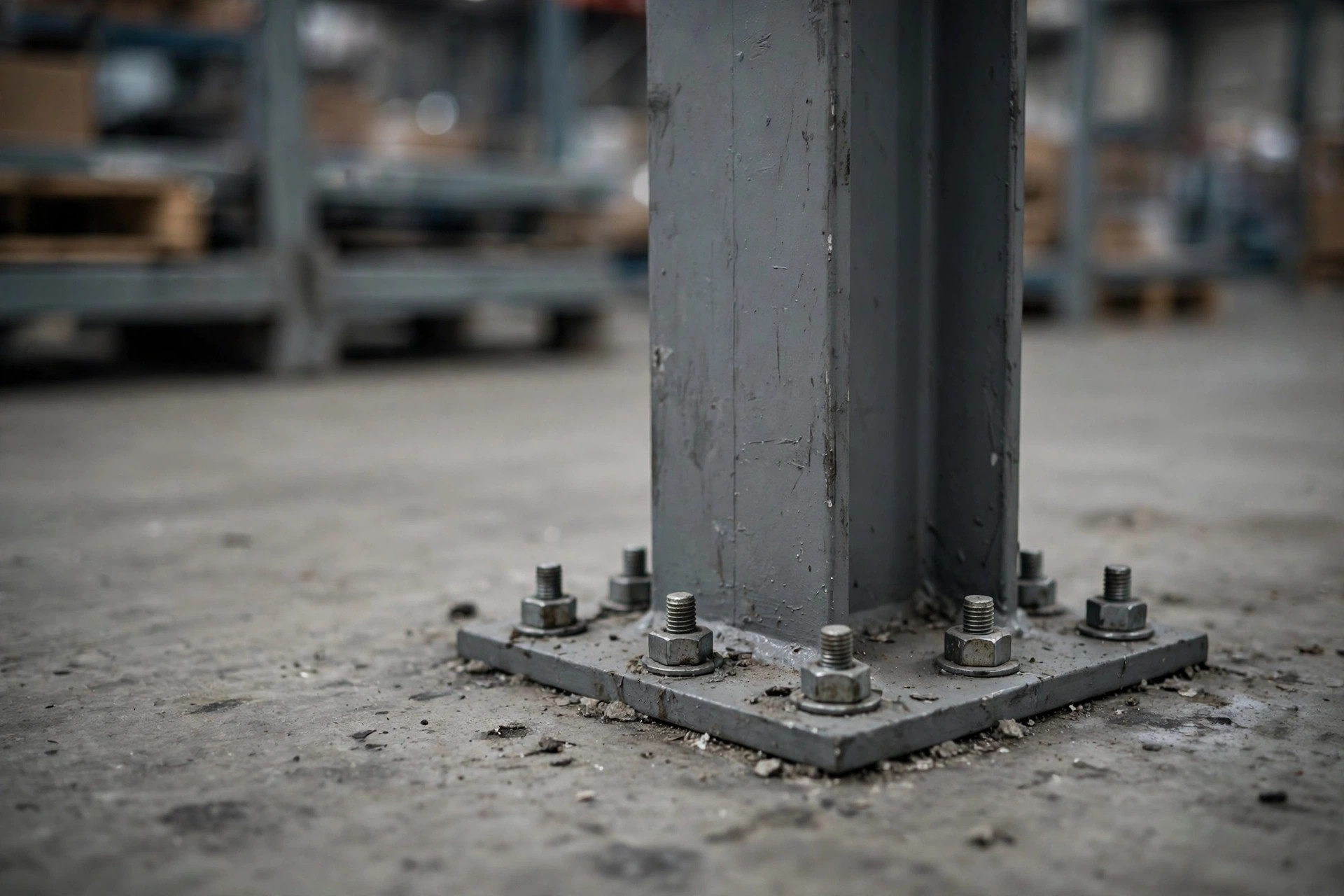
The part people miss is that the repair has to follow the original UL design too — same material, same thickness, same method. Touching it up with ordinary paint looks identical and fails the moment anyone checks the file. In an older warehouse, "is any fireproofing damaged" belongs on the same fixed inspection checklist as sprinkler heads and egress aisles.
Warehouse Steel Structure Fireproofing: Three Methods, One Honest Comparison
To be blunt, none of the three methods is "best." There's only "best for your building."
| Method | What it looks like | Where it fits | What to watch day to day |
|---|---|---|---|
| SFRM (spray-applied fire-resistive material) | Sprayed-on fibrous coating, rough surface | Concealed steel nobody sees up close | Bruises easily — forklifts and rack installs knock it off, and repairs go back to the original design |
| Intumescent coating | Looks like a thin coat of paint, clean finish | Exposed steel where appearance matters | Expands into an insulating char layer when heated; application and repair both follow the UL design file |
| Gypsum-board enclosure | Steel column boxed inside board | Columns that take hits, or spots where you want a set-and-forget solution | A broken board has to be patched, and you can't see the steel inside — inspections need to stay alert |
You'll notice I left thickness and price out of that table on purpose. Not because I'm hiding them — because there is no universal answer. Thickness depends on the UL design you're working under and the steel member. Price depends on local labor, material, and site conditions. Any article handing you a generic "dollars per square foot and millimeters thick" number is making it up. The only honest answer is: go by your UL design and your local fire authority.
Rack Steel Is Not Building Steel — Stop Confusing Them
Here's the counter-intuitive call that trips up plenty of experienced people: the steel in your racks and the steel in your building are two different things.
Racking steel generally doesn't carry a building fireproofing requirement — nobody is asking you to coat every rack upright. But move the racks and the building's fire conditions move with them: racks go higher, storage height changes; commodities change, fire risk changes; aisles narrow, egress and fire access change. Those shifts can trigger sprinkler work, compartmentation changes, even a fresh look at the building classification that originally said "no coating needed." Spending big money coating racks is usually spending in the wrong place. The money that matters goes to having the design team re-check the fire design against the new storage conditions.
Same goes for "thicker is safer." It isn't. Thickness follows the UL design. Thicker than spec doesn't buy you extra safety, and uneven or off-spec application fails inspection just the same.
Four Questions Before You Face the Inspector
If you're building or modifying a warehouse, answer these four before you meet the fire official. Answer them cleanly and the inspection will probably go smoothly. Can't answer them, and no coating will save you.
One: what construction type is this building filed under, and does the steel actually need a rating? This sets the direction — get it wrong and everything after it is wrong. Two: if a rating is needed, which UL design are you working under? Are the design file, installation records, and thickness checks complete? Three: do your steel members satisfy the design's conditions, like the W/D ratio? Four: once the building is running, who inspects for coating damage, who repairs it, and to what standard?
The first three are design-phase questions. The fourth is operations. Most people answer the first three and leave the fourth for "later" — and most of the correction notices I've seen come from the fourth.
To put it plainly, warehouse steel structure fireproofing isn't a painting problem. It's a classification problem plus a maintenance problem. Get the classification right and you coat what needs coating and not a dollar more. Keep up the maintenance and what you sprayed still counts a decade later. Next time someone tells you "one coat and you'll pass," ask them one question back: which UL design are you talking about?
By Lao Mi, Supply Chain Veteran (20 yrs)