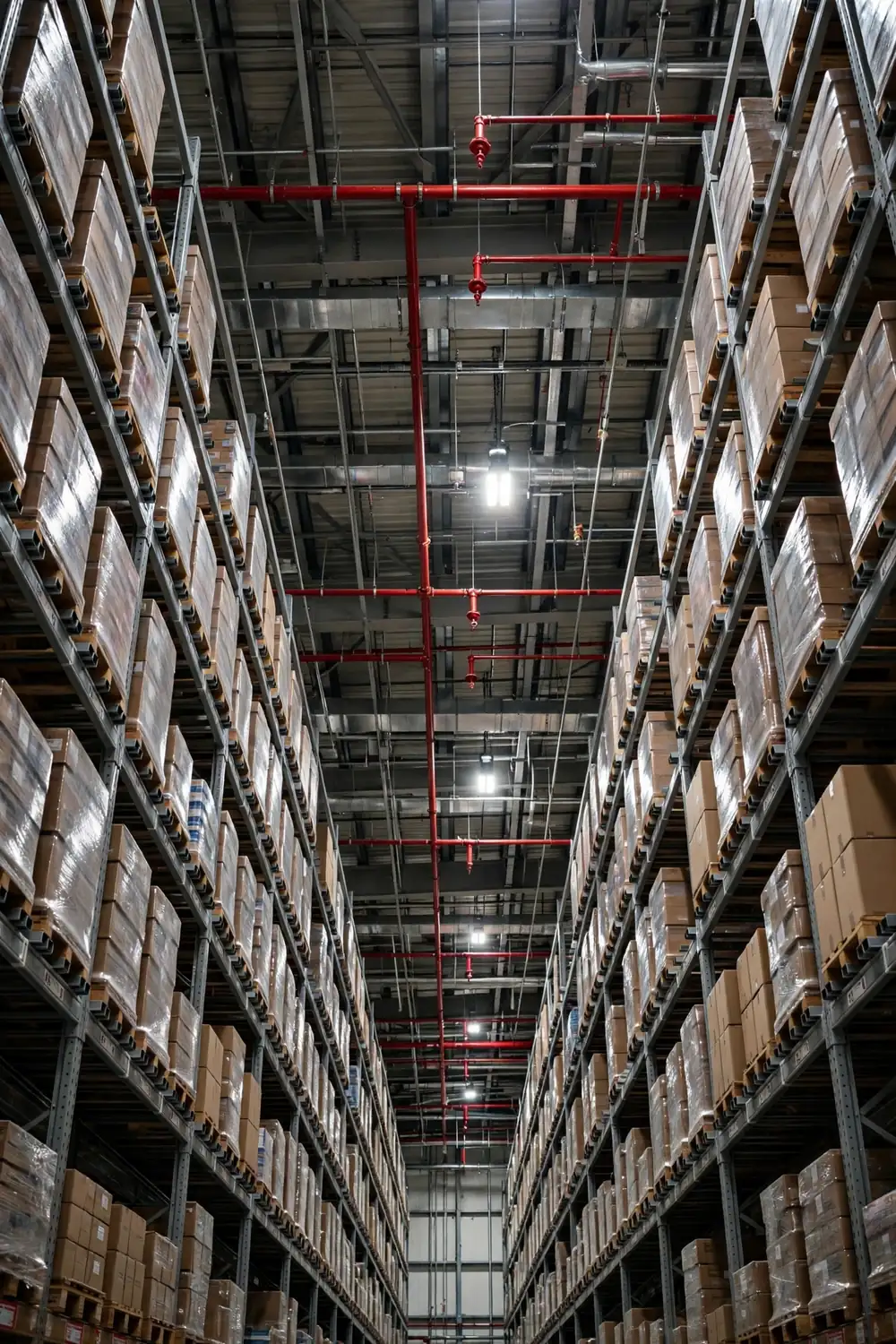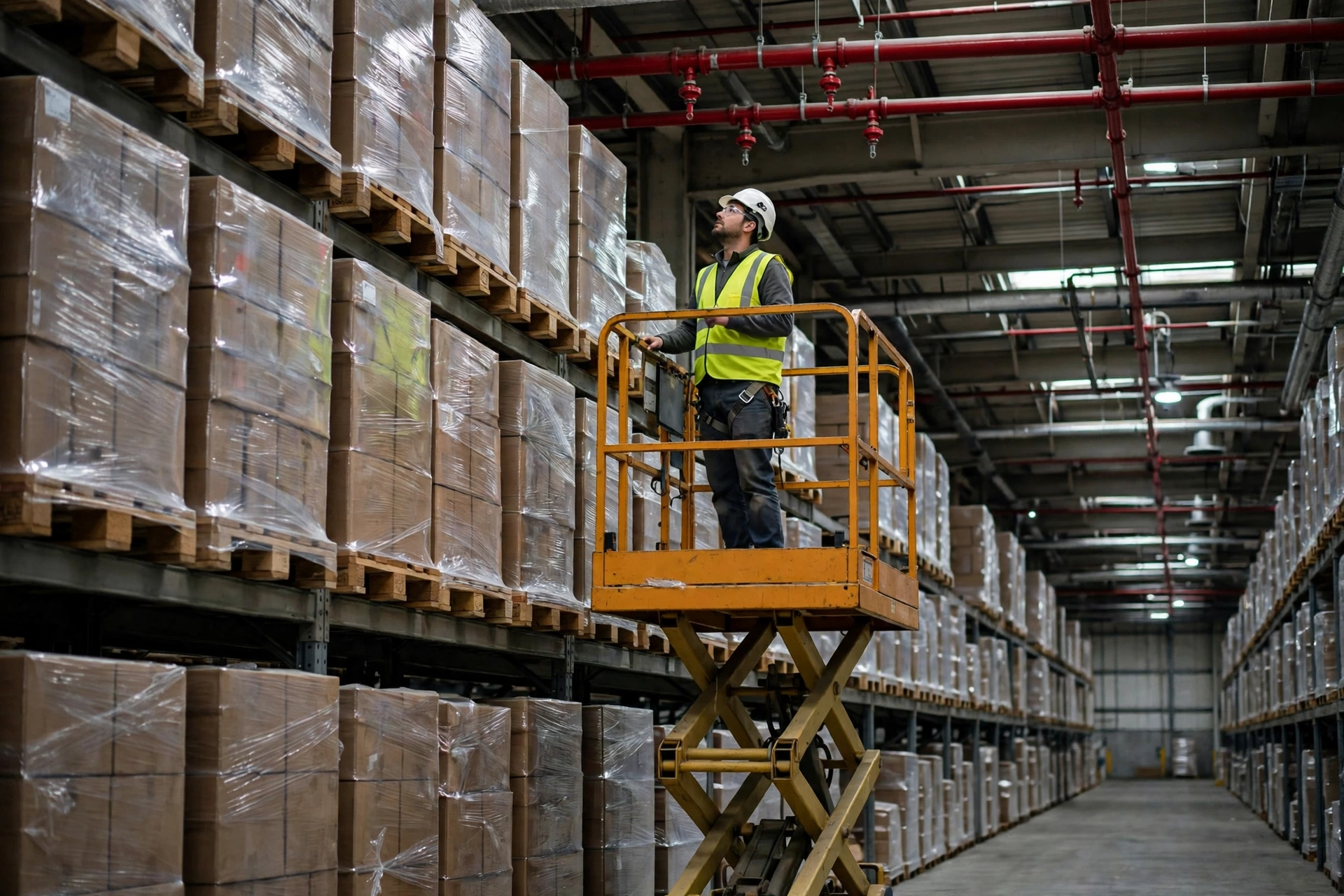
Let me start with the verdict, because that is how I work: the most expensive space in a warehouse is not the bay with the highest rent. It is the empty gap under the sprinkler heads that everyone wants to fill. In plain terms, warehouse sprinkler clearance storage is about one rule — the top of your stock, whether it sits on the floor or on racking, must stay a clear distance below the sprinklers, and the exact distance is whatever the current NFPA standards and your local fire code require for your commodity and your system. Treat that gap as wasted space and you will pay for it. I have seen too many operators learn this the expensive way. The trade-off is simple: one extra layer buys you a few dozen pallet positions. A failed inspection, a forced restack, a shutdown, or an insurance fight costs far more than those positions will ever earn.
warehouse sprinkler heads need room to do their job
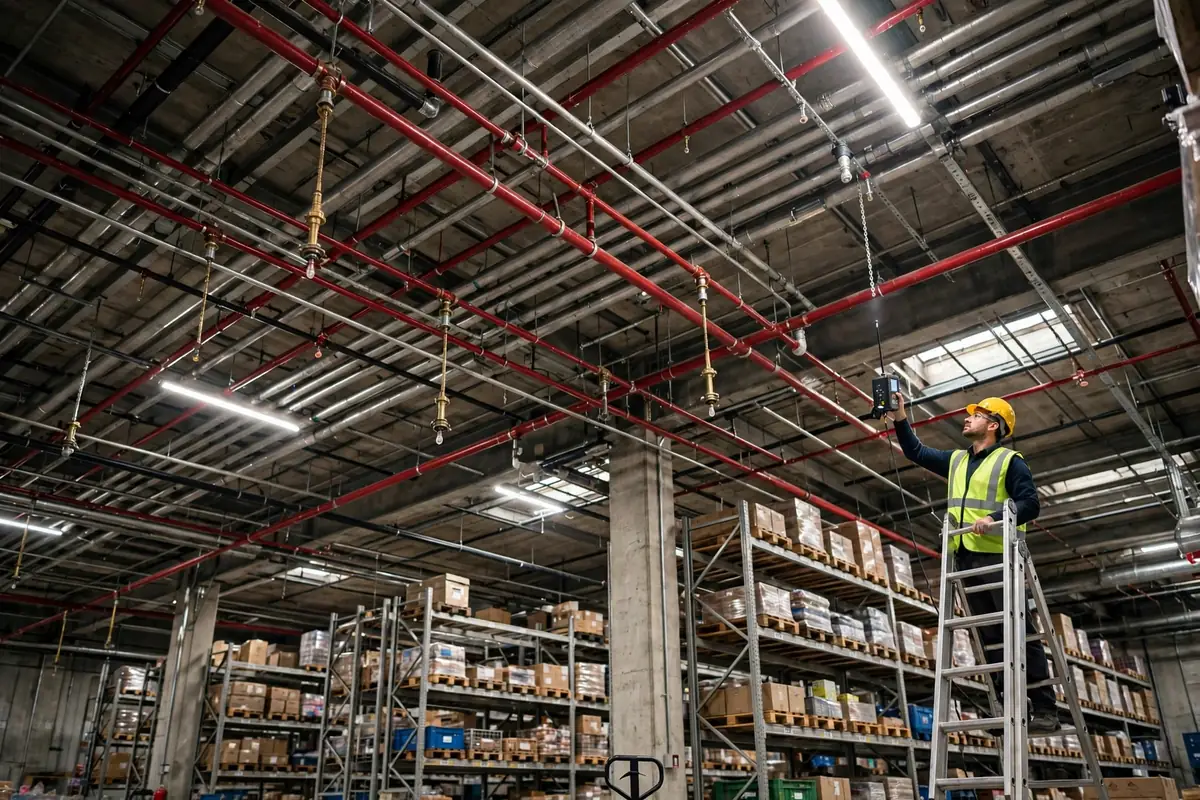
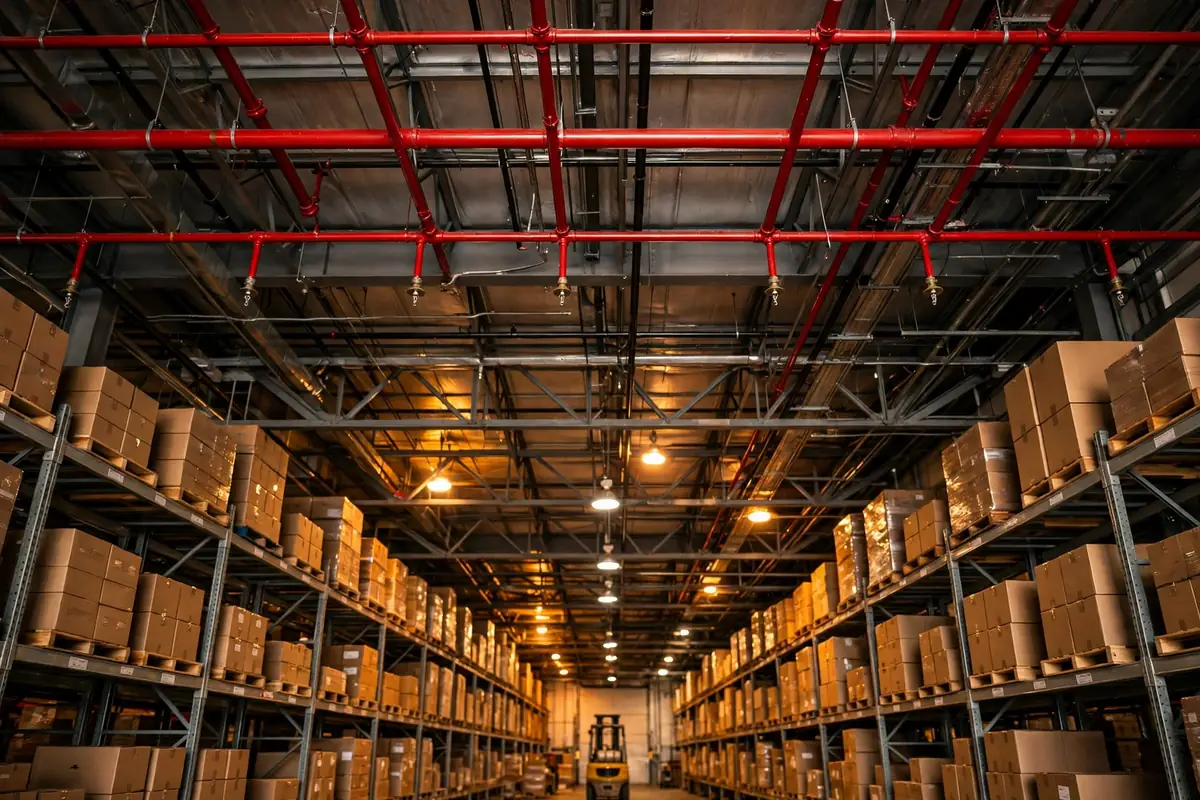
A sprinkler head is not a showerhead. It does not just get things wet. When a fire starts, the head has to open at the right temperature and throw water in a designed pattern over the area it protects. Stack stock right up against it, or hide it behind a wall of cartons, and you break that pattern. The water hits the top of the load, bounces off, and never reaches the seat of the fire burning inside the stack. Meanwhile the load can also shield heat from the head itself, delaying activation while the fire grows quietly below. Inspectors are strict about clearance for exactly this reason. They are not judging how tidy your stacks look. They are judging whether water can actually land on a fire. Whatever clearance your project adopted under its governing code — shown here by way of illustration, not as a universal number — is the clearance you keep. You do not get to invent your own.
A blocked head fails once, and that is enough
Here is a hypothetical scenario, invented in its details but true in its logic. A high-bay distribution warehouse takes in roughly a third more volume than planned during peak season. The operations manager adds one more layer to the two rack rows nearest the wall. Cartons end up almost touching the sprinkler piping, and in a few spots a carton half-covers a head. The fire inspector does not study the layout drawings. He walks the aisles, looks up three times, and writes it up on the spot: insufficient clearance, obstructed sprinklers, restack required, re-inspection to follow. The manager protests that the stock is only there for a few days. The answer he gets is the one I would give: fire does not check your calendar. The warehouse then spends its busiest days pulling stock down, hunting for legal space, and apologizing to customers whose orders ship late. The penalties alone dwarf the rent he thought he was saving. That is how these inspections are lost — not on paperwork, but on a blocked water path that nobody can explain away.
clearance storage and the bill that arrives later
Now run the fuller bill, again as a hypothetical worked example, using the code basis adopted for that project for illustration only. One extra layer might save a modest amount of outside storage rent each quarter. A forced correction costs you labor to restack, emergency outside space anyway, possible partial closure until re-inspection, and late-delivery penalties on top. And if a fire actually happens while obstruction is on record, the insurance conversation changes completely. Once a survey or a loss report notes that storage did not match the conditions the policy was written on, you negotiate from weakness. Here is the comparison I show every manager who asks me whether the gap can shrink:
| Item | What one extra layer gains | What failure or a fire costs |
|---|---|---|
| Capacity | A few dozen pallet positions | Whole rows emptied during correction |
| Cost | A little outside rent saved | Restacking, outside rent, downtime, penalties |
| Insurance | Premium looks unchanged | Recorded obstruction weakens any claim |
| Operations | Peak season looks faster | Re-inspection disrupts the whole peak plan |
Here is the counterintuitive part, and I want it stated plainly: the closer stock gets to a sprinkler head, the worse the head performs — not better. Up close, the spray has no room to develop its pattern. Water strikes the load surface and deflects, while the interior of the stack, where the fire actually lives, stays dry. People confuse a sprinkler with a hose you aim at a flame. It is the opposite. The system needs distance to work. That is what warehouse sprinkler clearance storage really protects: the working distance between water, heat, and goods. Eat that distance and you have paid for a protection system and then disabled half of it yourself. In twenty years in supply chain, I have never seen anyone win that trade.
A second hypothetical example makes the insurance side concrete. A third-party warehouse storing bulky seasonal home goods stacks three rack rows one layer higher to avoid renting outside space for a quarter. Less than two months later, the insurer's annual risk survey notes two findings: clearance below the heads is clearly short in places, and several heads are shielded by cartons. No fire, no fine — just a written recommendation and a warning that renewal terms will be revisited if it is not corrected. The operator restacks everything before peak, pays weekend labor, and redesigns where seasonal freight lives. The saved rent was spent before it was ever banked. Whenever someone asks me for flexibility under the heads, I ask one question back: does your saving cover one restack plus one harder renewal? Most people quietly withdraw the idea.
A warehouse clearance walk that actually works
The fix is not complicated. Keeping it daily is the hard part. First, make the limit visible: mark the maximum storage height on rack uprights and stack areas where anyone can see it at a glance, so a new hire does not have to guess and a veteran has no excuse. Second, control it in the system: set a height limit on high-stack locations and validate at receiving and put-away, instead of shouting after the stack is already built. Third, walk it and log it: inspect a fixed set of rows every day, check the gap above the load and look for heads blocked by cartons, stretch wrap, or temporary staging, and photograph, move, and record any problem on the spot rather than saving it for a weekly meeting. Fourth, decide the overflow rule before peak arrives: name the legal temporary area and the outside-storage trigger in the peak plan, so no shift supervisor improvises space under the sprinklers at midnight. Fifth, review every violation by cause — not enough locations, unclear markings, or someone cutting a corner — because each cause has a different cure. Also recheck clearance whenever the product or packaging changes: the same location that was legal for short cartons can quietly go over the line with taller cartons or extra wrap, and nobody's report will warn you.
My closing advice is short. That empty gap is working for you every day. It passes your inspections, it protects your insurance position, and it buys the sprinklers time when a fire is still small. If you are genuinely short of capacity, negotiate the real answers — more space, a better layout, a different inventory profile. Do not fund your growth out of the distance under the sprinkler heads. Of all the money a warehouse can save, that is the fakest money on the books.
By Lao Mi, Supply Chain Veteran (20 yrs)