At 5:30 PM the messiest sixty minutes of the day begin. The day shift's forklifts haven't shut down yet and the night crew is already pouring out of the locker room. Pickers push empty pallets toward the storage aisles while a yard driver pokes his head around the dock door looking for the receiver. In the main aisle, pedestrians, pallet jacks, and forklifts tangle into one slow knot — everyone in a hurry, nobody yielding. I watched it happen at a distribution center in Southern California: during the shift-change hour, forklift density in the main aisle ran several times the normal level, and that single hour produced more near-misses than the rest of the day combined.
This isn't a management problem. It's a physics problem: twice the usual people and equipment, in the same space, at the same time. The numbers from OSHA, the U.S. occupational safety agency, make the stakes plain — roughly 85 forklift deaths a year, 34,900 serious injuries, and nearly 80% of forklift accidents involving a pedestrian. Shift change is when pedestrians and forklifts meet most often, so the risk runs highest right there.
Separate the streams: stagger, zone, loop
The most effective fix isn't more people directing traffic. It's making sure vehicles and pedestrians never meet in the first place.
Stagger the shifts. Move the two shifts' start times 15 minutes apart: day shift out at 5:30, night shift in at 5:45. That quarter hour becomes an equipment-changeover window — forklifts return to charging, pallet jacks get parked, and only then do people walk in. A 3PL I once advised did exactly this, and congestion complaints during the changeover window fell off a cliff. Fifteen minutes of offset costs essentially nothing and works immediately.
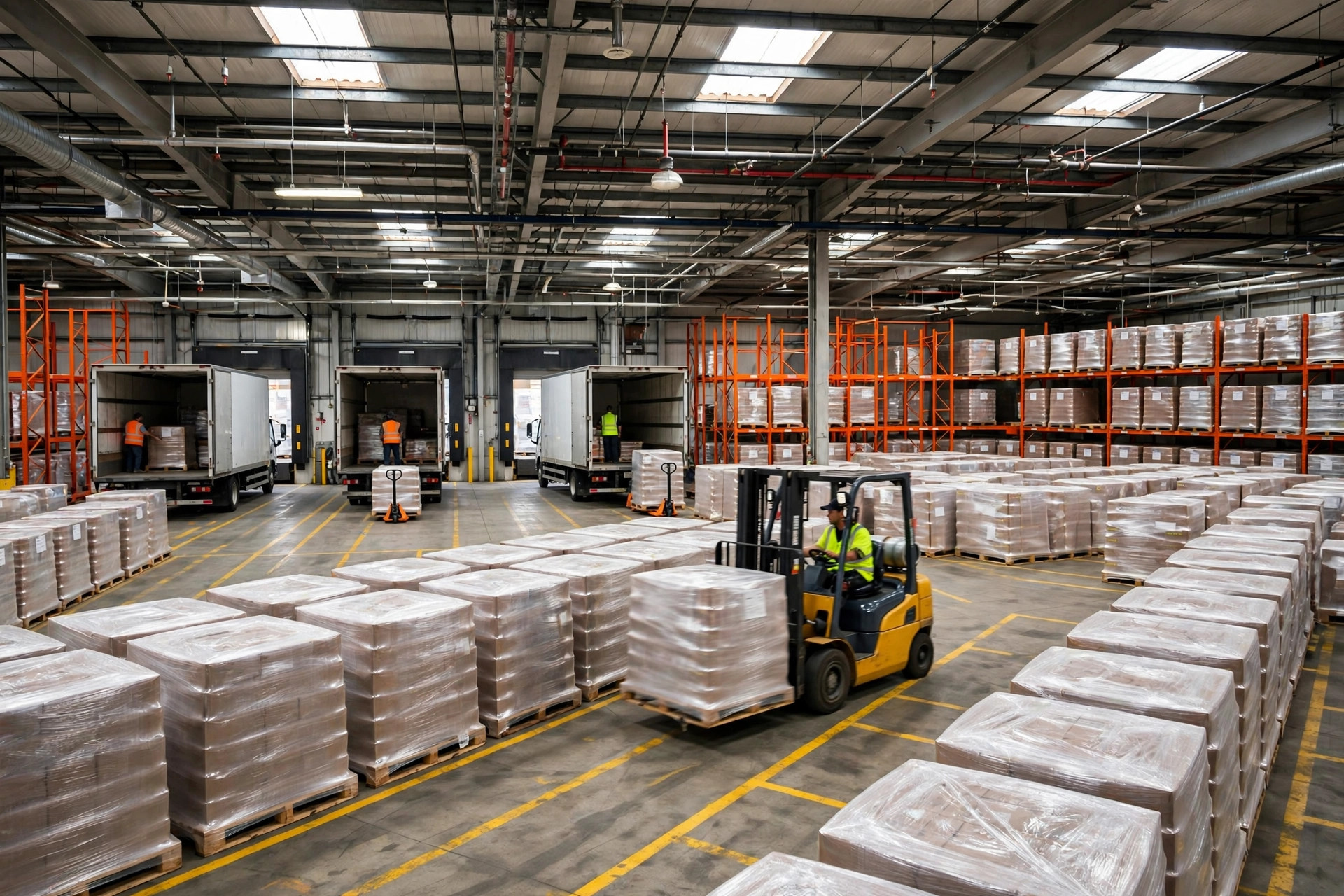
Stagger the yard too. Keep dock appointment windows clear of the changeover hour — push arrivals scheduled between 5:00 and 6:00 PM to after 6:30. Drivers stop idling at the dock door, and receivers stop unloading freight in the middle of the chaos. One cross-border e-commerce warehouse I know made just that one scheduling tweak and saw its dock-area scrape complaints fall off sharply.
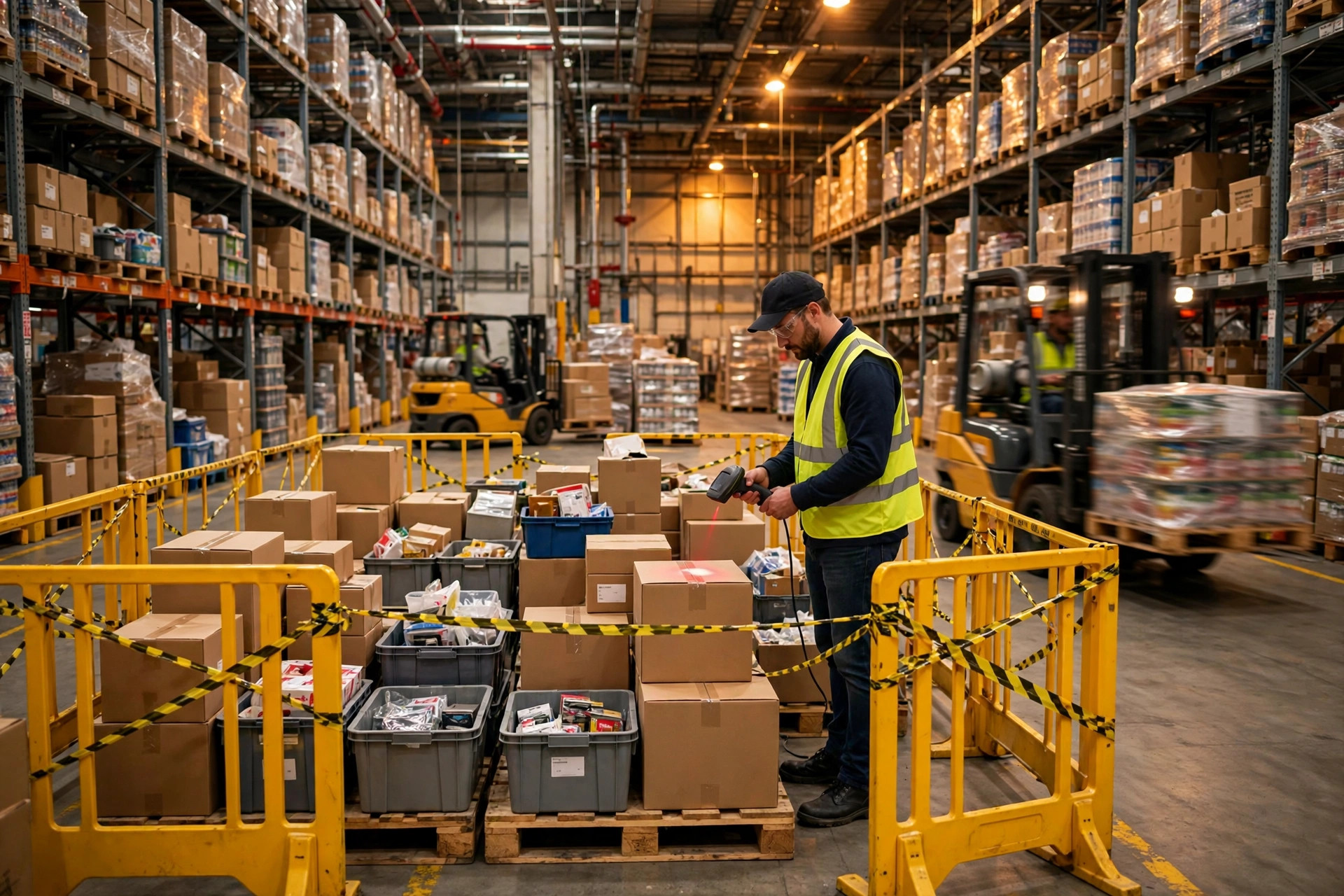
Zone the floor. For the hour around shift change, split the building into a people zone and an equipment zone: pickers stay in the pick modules, forklifts stay on the main aisle and the dock. Separate the two with temporary barriers or caution tape. This isn't a permanent remodel — it goes up for an hour and comes down after.
Run a one-way loop. Convert the main aisle to one-way circulation during the peak: forklifts travel clockwise only, and anything going the wrong way reroutes around. It sounds crude, but a one-way loop eliminates the most dangerous encounter of all — the head-on meeting. Floor arrows go down as removable decals ten minutes before changeover and peel up after, far cheaper than repainting the floor.
Make the handover impossible to skip
At too many warehouses, shift handover is two sentences shouted across the dock: "Dock 3's load isn't finished, keep an eye on it." Then the information dies. Night shift doesn't know what land mines day shift left behind, and day shift doesn't know what night shift dreads most.
One sheet of paper fixes it. The handover sheet doesn't need to be complicated — five lines are enough: open receipts and outbound orders, equipment issues (which forklift is low on charge, which pallet jack has a bad wheel), location exceptions (which slot's count variance is unresolved), safety notes (which area has an oil spill on the floor today), and customer follow-ups. Day-shift lead signs it, night-shift lead signs it, and it goes on the office door. The point of the sheet isn't the record — it's forcing two people to actually talk to each other.
The sheet lives on the whiteboard by the office door, and whoever signs owns it. No signature, no clocking out — if something blows up overnight, the first question is who skipped the handover. It sounds harsh, but nearly every changeover information gap I've seen came down to "I thought he knew."

Pop-up control points
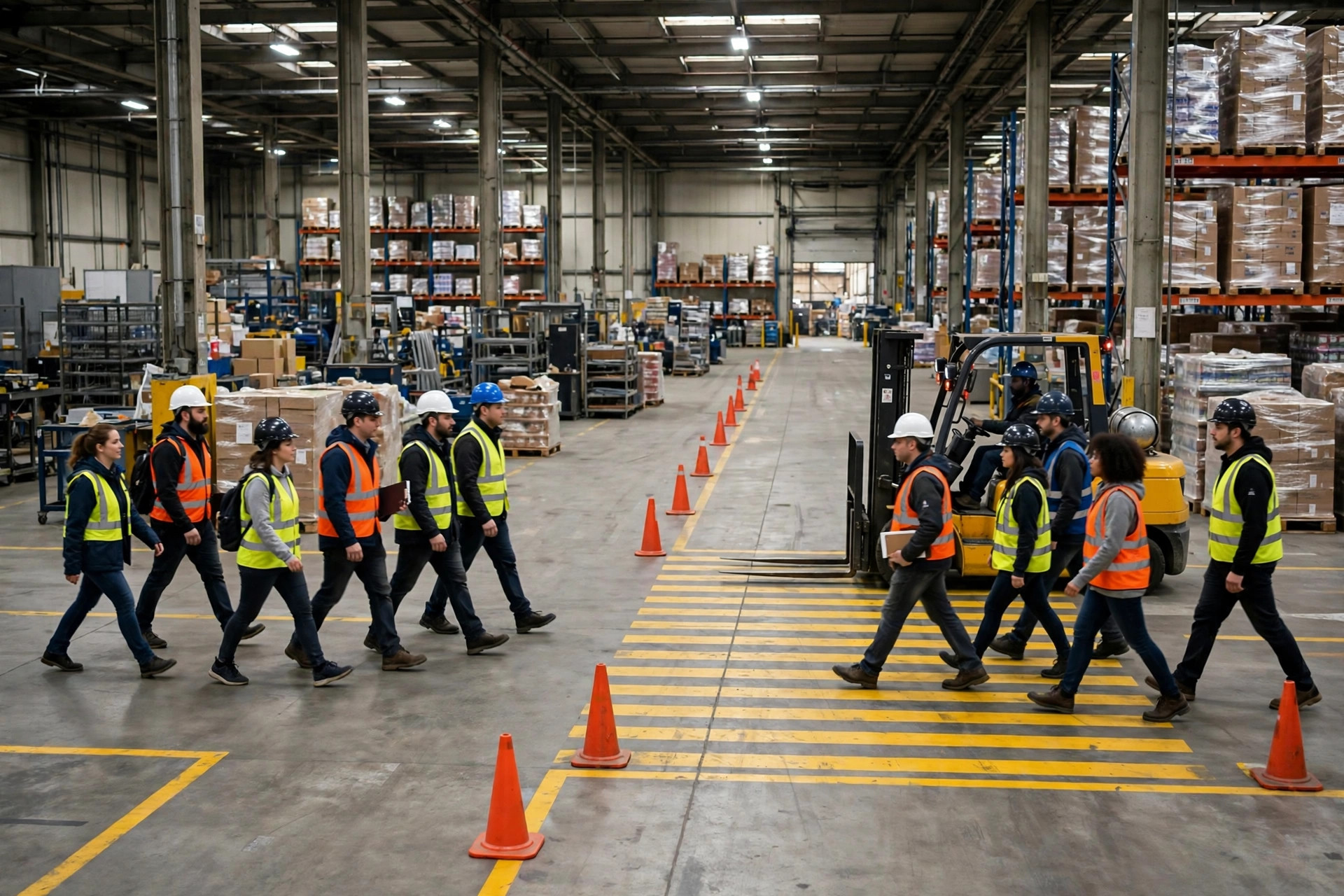
During the changeover window, set up temporary control points at three spots: the main aisle entrance, the dock area entrance, and the charging station door. Each point gets a hi-vis vest, two traffic cones, and a radio, staffed by the shift lead on rotation. The controller does exactly three things: stop forklifts going the wrong way, steer pedestrians onto the walkway, and clear a lane when a yard truck comes in.
The whole kit costs little more than the cones and vests, yet it's the only living safety measure in the building during that hour — cones don't move, but a person adjusts to what they see. I've watched warehouses spend serious money on proximity sensors and still descend into chaos at shift change, because sensors manage machines, not people.
Color the vests by shift, keep the radios on one dedicated channel, and have each controller walk the posts for ten minutes before going live. Everything is off-the-shelf; the trick is setting it up every single day without fail — traffic control is about consistency, not cost.
One detail that decides whether this works: the controller must have the authority to stop anyone. Plenty of sites set up control points where the controller won't flag down a supervisor's forklift going the wrong way, and then the whole thing is theater. Say it on day one: wrong way means stop, no exceptions, no matter whose forklift it is.
Don't forget temps and visitors. During the changeover hour, temps know the routes least and visitors wander most. Keep visitors out of the storage areas for that hour, and have leads walk temps in and out in groups. Normal flow resumes after — nobody misses that one hour.
Here's my one concrete suggestion: starting tomorrow, stagger your two shifts' start times by 15 minutes — the cheapest, fastest-acting shift-change control there is.