In my years as a tech lead at a systems integrator, I walked through dozens of warehouses a year. I have seen every kind of equipment failure. But what always made my stomach drop was never a machine breaking down — it was a person getting hurt.
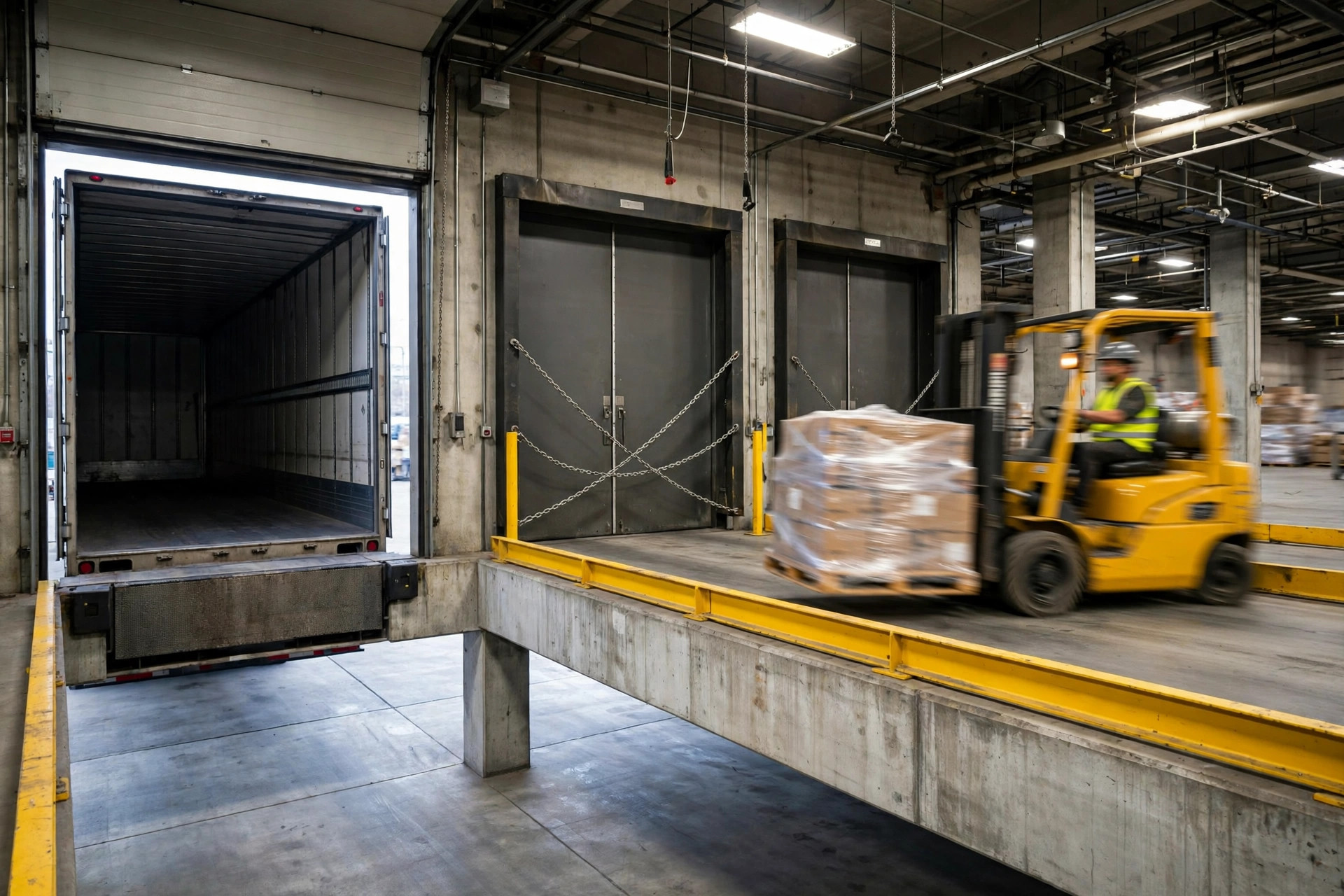
Autumn 2019, a third-party warehouse in Suzhou. Peak-season inbound, a forklift driver took a corner with his view blocked by a pallet stacked 1.8 meters high and ran over a temp worker bending down to pick up a label. Fractured tibia and fibula. The boss's first instinct wasn't a rescue protocol — it was his phone: "Talk to his family, settle it privately, 30,000 yuan, sign an agreement, keep this quiet."
The worker took the 30,000. Three months later the fracture wasn't healing right — possible permanent disability. His cousin knew a bit of law and filed a work injury recognition claim with the local human resources bureau. The employer had missed its 30-day filing window, but the worker had a full year to file on his own — completely legal. The claim was recognized: Grade 10 disability. That private settlement? Neither the bureau nor the court honored it. The company paid the full statutory benefits on top, spent an extra 40,000-plus yuan, and got an administrative penalty for good measure.
Nine out of ten bosses get the post-accident process completely wrong. Today I'm not talking about equipment — I'm talking about what happens after someone gets hurt: China's work injury recognition process. Think of it like equipment acceptance testing: filing the claim is submitting for inspection, evidence is the acceptance criteria, and the disability assessment is the re-test. The standards are written down. Follow the process and you won't get burned; take a shortcut and the shortcut costs the most.
What Work Injury Recognition Actually Recognizes
Article 14 of China's Work Injury Insurance Regulations lists seven situations that must be recognized as work injuries. The core is three phrases — working hours, the workplace, and work-related cause. Hit all three and the claim is nearly automatic. Forklift collisions, hands caught in conveyors, racking collapses, falling goods from high-reach trucks — if it happened while working, Article 14(1) covers it.
Two boundary lines bosses keep tripping over:
The commute. Article 14(6): traffic injuries on the way to or from work count — but only when the worker bears no primary responsibility. Your employee ran a red light on an e-bike? Not covered. Someone else hit them? Covered. Warehouse workers commute by e-bike in huge numbers, so this clause gets used constantly.
Deemed work injuries. Article 15 lists three situations treated as work injuries. The one warehouses actually encounter is item 1: sudden death from illness at work, or death within 48 hours of emergency treatment. Peak season, back-to-back overtime, a worker collapses from a heart attack and doesn't survive 48 hours — deemed a work injury.
The Filing Deadlines: 30 Days, 1 Year, 60 Days
Three numbers to memorize:
| Deadline | Whose obligation | Miss it and... |
|---|---|---|
| Within 30 days of the accident | The employer must file the recognition claim | The employer pays all benefit costs incurred between the accident and the late filing (Article 17) |
| Within 1 year of the accident | The worker, family, or union can file independently | After 1 year, the bureau won't accept the case — the door closes |
| Within 60 days of acceptance (15 if facts are clear) | The bureau issues its decision | — |
Many workers assume the one-year clock starts when they "learn they can file." It doesn't — it runs from the date of the accident or the date of occupational disease diagnosis. Real lesson: in 2022, at an e-commerce warehouse in Dongguan, a picker twisted his lower back, thought it was minor, didn't report it. Nine months later he was diagnosed with a herniated disc and filed — inside the window. Two months later and he would have had nothing.
And the "30 days": file on time and medical costs flow through the insurance fund. Stall, and every eligible benefit cost between the accident date and the belated filing comes out of the company's own pocket. Article 17 says so plainly. The shortcut costs the most.
The Burden of Proof Is Reversed — That's the Whole Point
In normal litigation, whoever makes the claim proves it. But Article 19(2) flips it: when the worker or their family asserts it was a work injury and the employer says it wasn't, the employer bears the burden of proof. The worker says "this was a work injury," the company says "it wasn't" — then the company must produce the evidence. Can't produce it? The bureau recognizes it as a work injury.
Second case. In 2021, a warehousing contractor in Kunshan used outsourced hands with no labor contracts — just "service agreements." One got his foot crushed by a pallet at the dock. The company insisted "he's a contractor, not an employee." The worker brought bank transfer records, shift rosters, and photos of himself in company uniform to arbitration, won confirmation of a de facto labor relationship, and the recognition followed. The dodge attempt bought five extra months of proceedings, months of advanced medical costs and recovery-period wages, plus arbitration costs — not a yuan less.
First item on any company's checklist: don't play games with the employment relationship. Payroll records plus attendance logs plus work assignments — any two of the three establish a de facto labor relationship. What you saved on premiums is pocket change next to what an accident costs.
The Disability Assessment: Grade Determines the Payout
Recognition is step one — passing initial inspection. Next comes the labor capacity assessment (Article 21): after treatment, when the condition is stable but disability remains, a municipal committee grades it on a 10-level scale, Grade 1 most severe. The grade sets the money (Articles 35, 37): Grade 1 means a lump-sum grant of 27 months of salary plus a monthly allowance at 90% of salary; Grade 10 — the most common for warehouse fractures — means 7 months of salary plus provincial one-time subsidies on termination.
The key: an insured employer pays most of this through the fund; an uninsured employer pays all of it out of pocket (Article 62). For a Grade 10 disability on a 6,000-yuan monthly salary, an insured company mostly covers recovery-period wages; an uninsured one pays lump sums, medical bills, and wages — 80,000 to 100,000 yuan at a starting point, plus fines. Was that money well spent? One number: the premiums you "saved" are a few thousand yuan a year; one uninsured accident starts at tens of thousands.
The Company Checklist: First 24 Hours
- Treat the person first. Call 120, advance medical costs without haggling. Being stingy here creates landmines later.
- Preserve the scene and evidence. Back up CCTV; have witnesses write and sign accounts. For equipment-caused injuries, do a separate equipment fault log — a safety requirement and your future evidence.
- Report internally within 48 hours. Policy: report to HR within 24 hours, HR prepares recognition materials within 3 days.
- File within 30 days. Three things needed (Article 18): the application form, proof of the labor relationship, the medical diagnosis. Don't wait for "the condition to stabilize" — recognition and treatment run on separate tracks.
- Don't expect a private settlement to buy you out. A grossly unfair agreement can be revoked, and statutory benefits can't be waived by contract. The Suzhou case is the textbook outcome — 30,000 yuan down the drain, full statutory benefits paid anyway. Negotiate only after you know what the statutory benefits are.
- Keep paying wages during recovery. Original salary and benefits stay unchanged (Article 33). Cutting pay to force someone back is the dumbest move available — you'll lose the arbitration and look malicious doing it.
The blunt engineer-style truth: this process tilts toward the worker — reversed burden of proof, a one-year filing window, a fund backstop. The only rational company strategy is to insure properly, file on time, and keep good evidence. Everyone I've seen try "no contract," "private buyouts," or "running out the clock" ended up losing. No exceptions.
Regulations get fine-tuned over the years — confirm the latest numbers with your local human resources bureau. But the skeleton — 30 days, 1 year, reversed proof, grade-linked compensation — hasn't changed in a decade. Memorize it.

By Da Liu, Automation Engineer