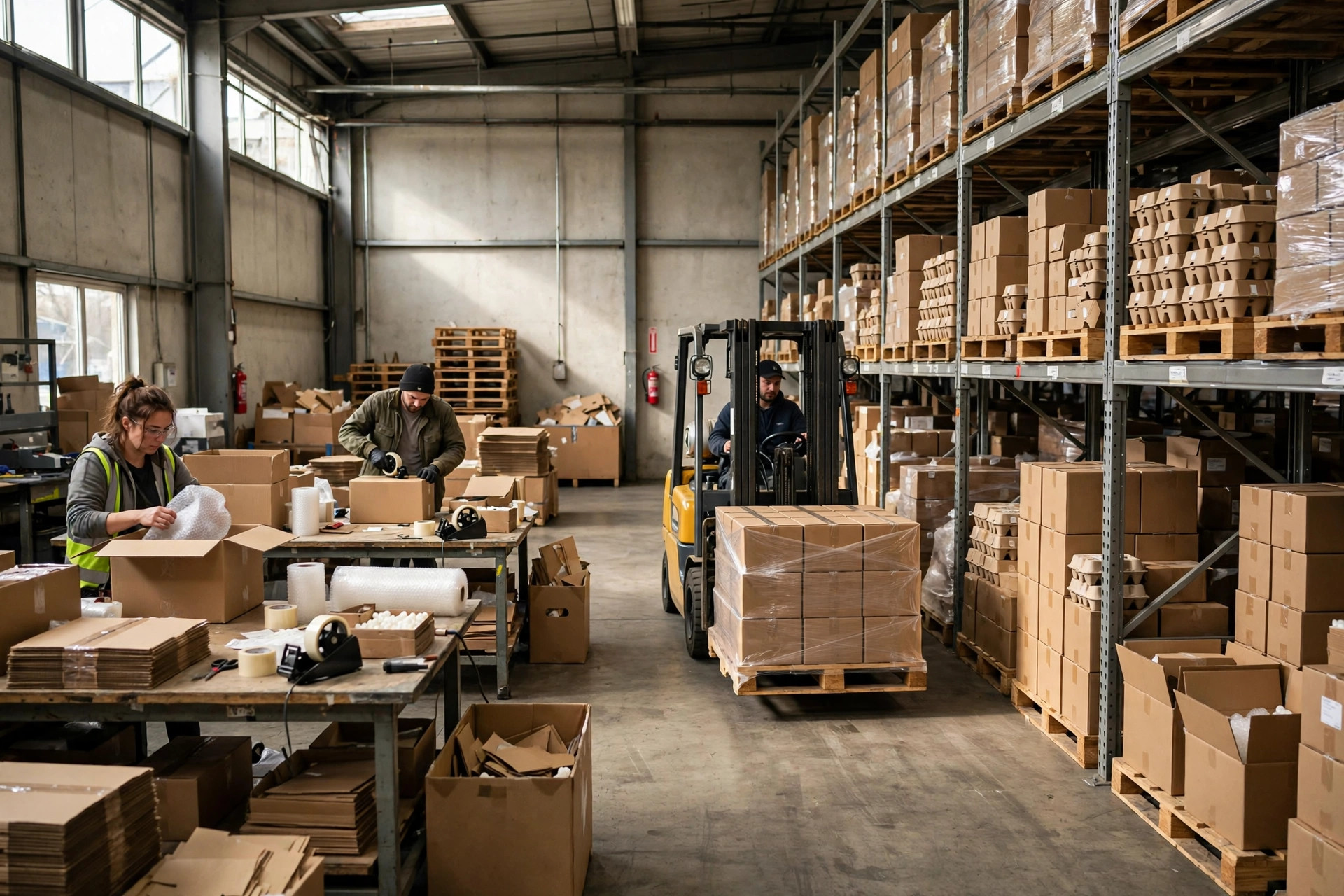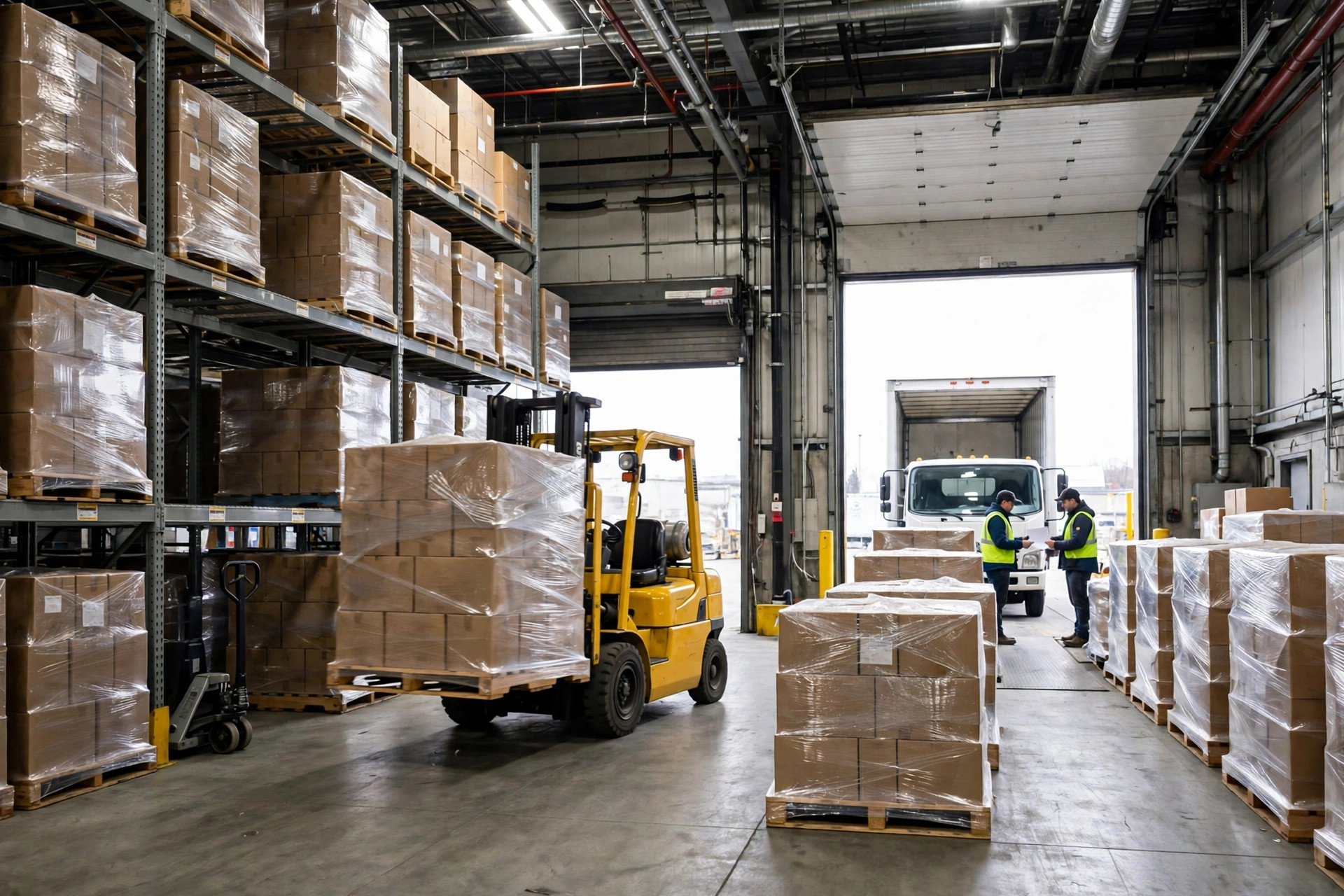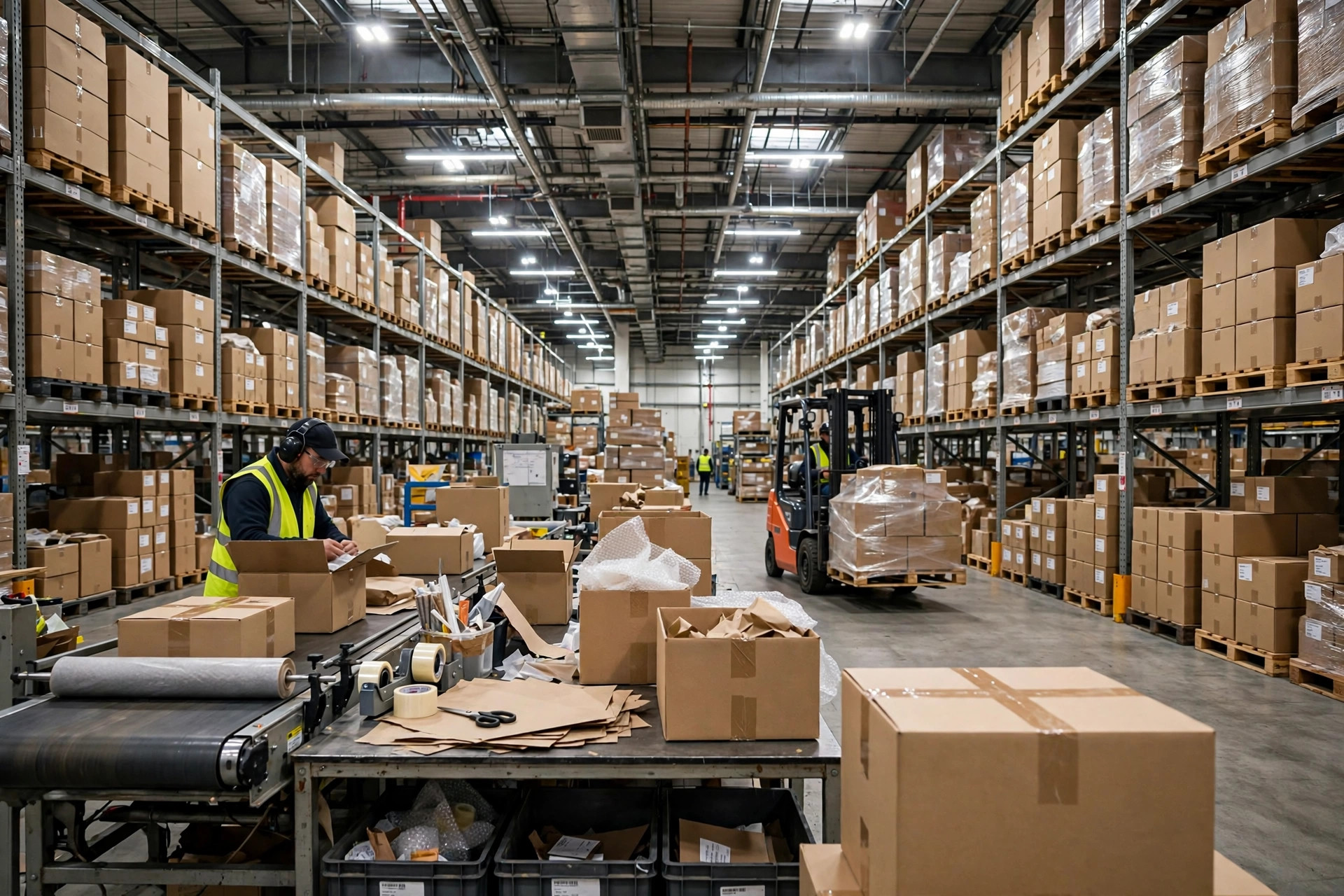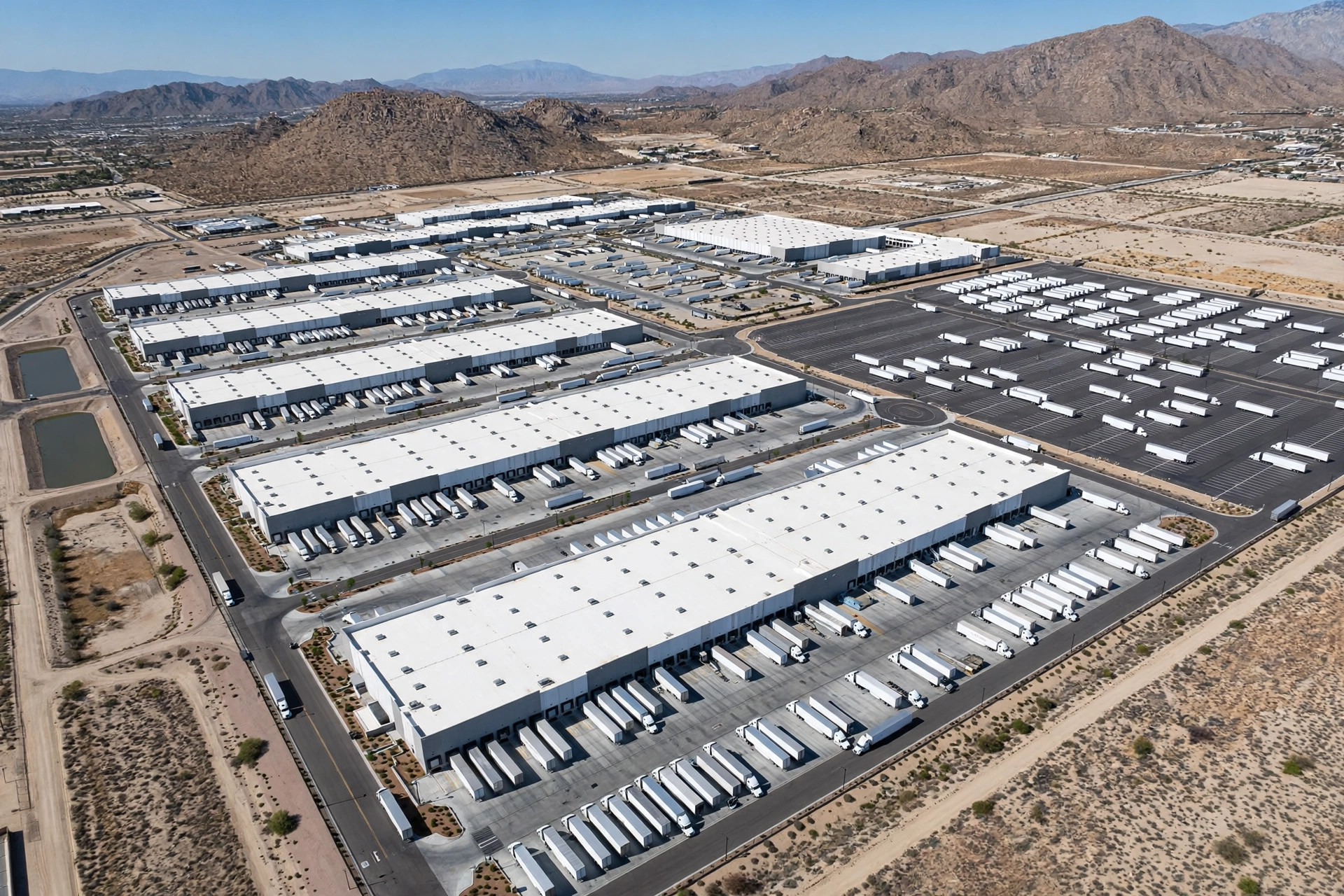
We have a client who signed 80,000 square feet in Fontana, in the Inland Empire, back in 2021, a five-year lease running through the end of 2026. That was a textbook landlord's market — peak rent, 3% annual bumps set in stone, and when he asked about free rent the landlord just smiled. This year, walking into the renewal negotiation, he carried the Kidder Mathews Q3 2026 Inland Empire industrial report under his arm: direct vacancy at 7.1%, average asking rent at $0.99 per square foot per month NNN. The landlord's tone was noticeably different. Fortunes turn, folks — and in warehouse leasing, that saying is literally true.
The Q3 2026 hand you're holding
Negotiation is an information game, so let's lay the public numbers on the table first. Kidder Mathews' Q3 2026 report (data through end of September, sourced from CoStar): IE industrial direct vacancy was 7.1%, down from 7.5% in Q2 and below 7.4% a year earlier. Count sublease space and total vacancy was 8.3%. Average direct asking rent landed at $0.99/SF/month on a triple-net (NNN) basis — a penny above Q2's $0.98, but roughly 3% below the $1.02 of Q3 2025.
Translation: the market favors tenants, but it's stabilizing. Brokerage SoCal Industrial Group nailed it — "tenant-favorable but stabilizing." Rents have come off their peak, yet vacancy is drifting down from 7.5% toward 7.1%, which means new supply is being absorbed. If you're waiting for "one more leg down" to time the bottom, think twice: what you're waiting for might be stabilization, not a crash.
One number that gets overlooked: tenants leased 9.2 million square feet in Q3, about 45 million square feet year-to-date — down 21% year over year. Demand isn't hot, but Perris alone moved 2.6 million square feet in a single quarter and Ontario did 1.85 million. Good buildings in good submarkets still get fought over. A tenant's market doesn't mean every warehouse negotiates easily; landlords in hot submarkets are still holding firm.
East vs. west in the Inland Empire: $1.05 vs. $0.93 — what the spread really buys
The IE is not one market. Kidder splits it into two groups: the West (Ontario, Fontana, Chino and neighbors) averaged $1.05 asking, the East (Perris, Moreno Valley, Redlands and neighbors) $0.93. That $0.12 gap on a 100,000-square-foot building is $12,000 a month, $144,000 a year. Looks like easy money — but anyone who's sold 3PL services knows cheap rent usually arrives with an expensive bill attached.
Another client spent two full weeks in early 2026 choosing between Perris and Ontario for a 120,000-square-foot distribution building. The East side saved roughly $170,000 a year in rent — but the extra daily mileage, driver hours, and the risk of peak-season congestion on the 91 clawed back about half of it. The bigger factor was labor: the Ontario/Fontana corridor has the densest logistics labor pool in the IE, which means faster hiring, faster backfills, faster peak-season ramp-ups. The East isn't unhirable; it's just thinner, and when temp labor tightens in peak season, wage premiums and turnover eat your rent savings. Get live quotes from the local labor market — don't price this year's contract with last year's wage data.
My advice: build site selection as a total-cost model, not a rent comparison table. Rent is only the first line. Below it go: mileage to the LA/Long Beach ports and your customer base, labor availability and cost, freeway congestion risk to your delivery commitments, and the building itself — dock door count, yard depth, clear height. The East fits freight that's insensitive to transit time, storage-heavy and slow-moving. The West costs more but sits closer to the ports and the population center — right for high-velocity distribution. There is no standard answer, only a fully loaded P&L.
Worth noting: Kidder's submarket spread is even wider than the east-west split — from $0.85 in Redlands and San Jacinto up to $1.30 in Beaumont. Beaumont isn't expensive because it's near the ports; it's expensive because the area skews toward newer big-box product. So take your rent comps down to submarket granularity. Walk into an Ontario negotiation quoting the IE-wide average and the landlord will know you didn't do your homework.
The Inland Empire's 2026 negotiation window: what landlords will give, and won't
Vacancy above 7% puts three things back on the table: free rent, tenant improvement (TI) allowances, and rent escalations. Clauses landlords wouldn't discuss in 2021 are discussable now. But understand the landlord's logic: they're underwriting your lease term and your credit. A tenant signing five-plus years with a strong parent guarantee negotiates in a different league than a three-year short-termer. Don't wave "high market vacancy" at a landlord sitting on a sought-after building — the likely answer is "then go look at the East side."
There's also a 2026-specific hunting ground in the IE: sublease space. Total vacancy of 8.3% includes sublease availabilities, which means tenants are quietly marketing short-term space. Subleases usually price well and move fast — good for 3PLs that need to ramp quickly or want term flexibility. But do the diligence first: check the remaining term on the master lease, how the landlord's consent right is written into the sublease clause, and whether the outgoing tenant's improvements and equipment convey. A bargain is only a bargain after diligence — don't inherit a 14-month stub lease to save a few cents.
Next time you're at the table, ask these three questions
One: "What are you offering right now on free rent and TI?" — Don't bid against yourself. Let the landlord open, and 7% vacancy is your leverage.
Two: "Can we move the annual bump below 3%, and what's the escalation compounding on?" — Escalations are compound interest. Over a five-year term, the gap between 3% and 2% is bigger than it looks.
Three: "How are sublease and early-termination rights written, and is the default cost capped?" — Nobody reads this clause in a hot market. When the market turns, it's the lifeline. What 2026 in the IE taught us: a lease isn't done when it's signed — negotiate your exit before you move in.
By Susan, 3PL Sales Director