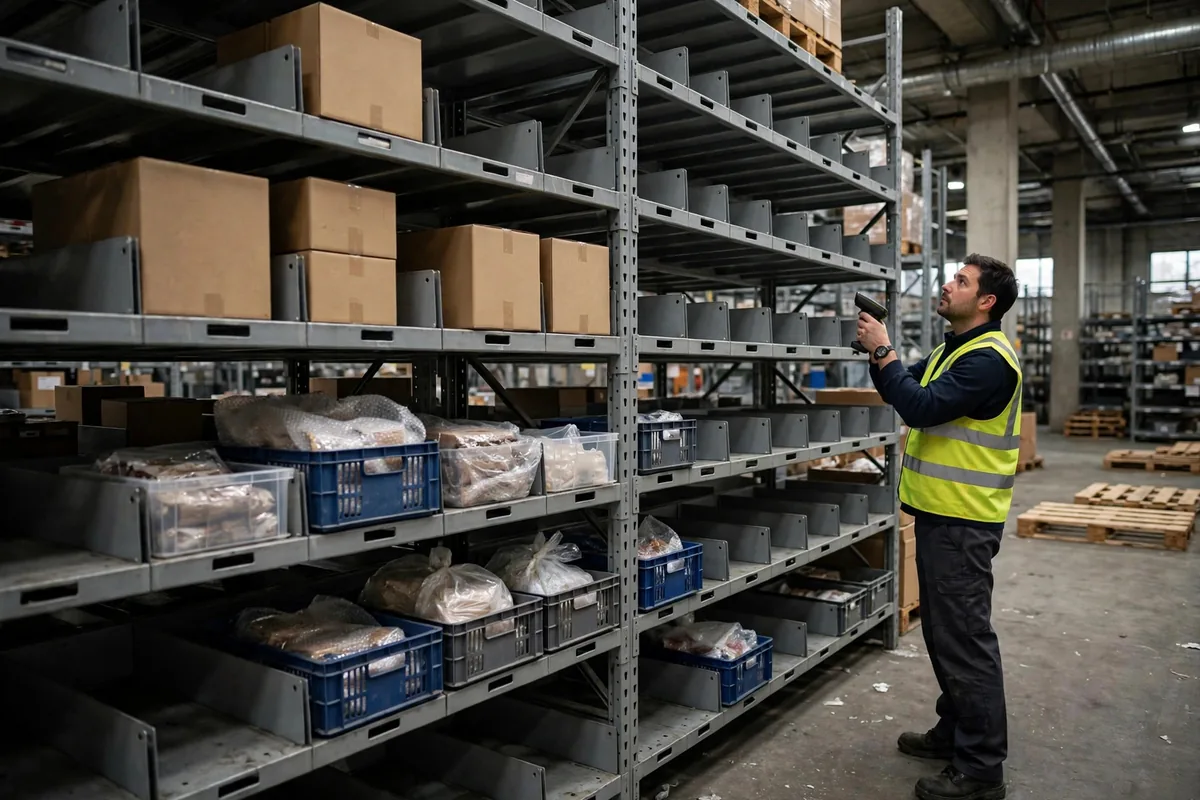
It was 6:40 in the morning. Replenishment had fallen behind again, and Lao Zhang's order was stuck in his hands.
I looked at my watch. The first wave started at 7:00, the driver was still eating breakfast, and the keys were still on the wall. It was the Wednesday before Singles' Day, with order volume more than double a normal day. That pick face had sat at half a case since the afternoon before. Twenty pickers stood in the aisle while one empty slot held up the whole line.
Here is the honest truth, folks: topping up the pick faces looks like a small job, and it trips a warehouse up more than anything. The stock sits on pallets in reserve, but if it is not on the pick face, the order does not ship. Our warehouse runs with more than 200 people and over 3,000 pick faces. We have changed our top-up routine three times, and every mistake cost real money.
Replenishment on Empty: the Easiest Way, and the Most Expensive
In the early days, we topped up on empty. A picker shouted, a driver ran over with a case. No math, no system.
The bill does not work that way. Your forklift crew spends the day firefighting: one picker waits, so the whole line waits. In peak season, twenty or thirty faces a day ran dry, and the crew ran all day while the pickers still complained.
Safety is the part nobody puts in the spreadsheet. When empty faces pile up, pickers go into reserve themselves, climbing racks and dragging pallets out. One winter, a young guy twisted his back doing exactly that and was out for two weeks. After that I made a hard rule: pickers never go into reserve. A short face gets reported.
Topping up on empty is still right for slow movers. A product picked a few times a year is not worth watching daily. We still top those up on empty, with one addition: when a picker sees a single unit left, he reports it right then instead of waiting for the face to run dry.
How We Set the Replenishment Trigger: Daily Usage Times Lead Time, Plus a Buffer
Later we switched to threshold top-ups: every pick face gets a minimum level, and the system creates a task when stock drops to it. The hard part is the number. Set it too high and the crew runs empty trips all day; set it too low and you are back to topping up on empty.
The formula is plain: trigger point equals average daily usage times top-up lead time, plus a safety buffer. Daily usage comes from actual picks over the past four weeks, not the sales forecast, which runs high. Pick counts are what the warehouse really consumed. Lead time runs from task creation to stock on the face: about two hours normally, three at peak. The safety buffer covers swings, usually half a day of usage.
Take an illustrative example. A shampoo picks 120 bottles a day. Lead time is 3 hours, one eighth of a working day, so usage during lead time is 15 bottles and the safety buffer is 60. The trigger point is 75. That sounds high, but at peak the same product picks 300 a day, and 75 bottles last two hours.
Take another illustrative example. A slow-moving seasoning picks 8 bottles a day: 1 bottle of usage during lead time, a 4-bottle buffer, a trigger point of 5. Fast and slow movers go through the same formula, and the numbers come out worlds apart.
This formula is not mine. In min-max replenishment, the trigger has to cover consumption while the refill is on its way, plus a buffer. Microsoft's warehouse documentation lists min-max as a standard top-up strategy alongside wave-demand top-ups; we follow the same logic with our own measured parameters.
Setting the trigger is only half the job; we review it monthly. One drink product picked 400 bottles a day in summer and 90 in winter, and we did not adjust in time. The crew spent a month making pointless trips to that face. Now the review sits on the roster: the first Monday of every month, someone owns that job.
Replenishment Quantities: How Much to Bring Without Stuffing the Face
The trigger decides when to top up; the maximum decides how much. What a face can hold is physical size, not opinion. If a slot holds 96 bottles, you cannot bring 120: the extra 24 have nowhere to go, so the driver stacks them at the aisle edge or squeezes them into the next slot, and the next day's count is a mess.
Our rule is simple: the maximum equals face capacity rounded down to whole cases. A face holding 100 bottles with 24-bottle cases maxes out at 96, not 100. The top-up quantity is the maximum minus current stock, minus any top-up already on its way. Skip that last subtraction and two tasks can collide on the same face.
How do the two approaches compare? Side by side, with an illustrative example for the numbers:
| | Top up on empty | Threshold top-up | | Picker waiting for stock | 20+ times a day at peak | 2-3 times a day | | Forklift travel | One trip per face, always urgent | One trip covers 4-5 faces | | Face occupancy | Often empty | Usually half full or better | | Best fit | Slow movers | Fast and medium movers | | Biggest risk | The picking line stops | Wrong threshold wastes trips |
The second row jumps out. With threshold top-ups, the system groups tasks on one aisle into a single trip: one forklift run tops up four or five faces. Topping up on empty can never do that, because tasks appear one at a time.
Here is a judgment that surprises new supervisors: a fuller pick face does not always mean a faster warehouse. A stuffed face looks reassuring, but the driver wastes time lining bottles up one by one while the picker waits. A face kept between half and seventy percent full is the fastest to fill and the easiest to pick from. We would rather send one extra trip than fill a face to the top in one go. The point of topping up is to keep picking moving, not to make the face look good.
The Routine We Settled On: How Three Shifts Split the Work
Our top-up routine now runs in three layers, and nobody crosses into someone else's.
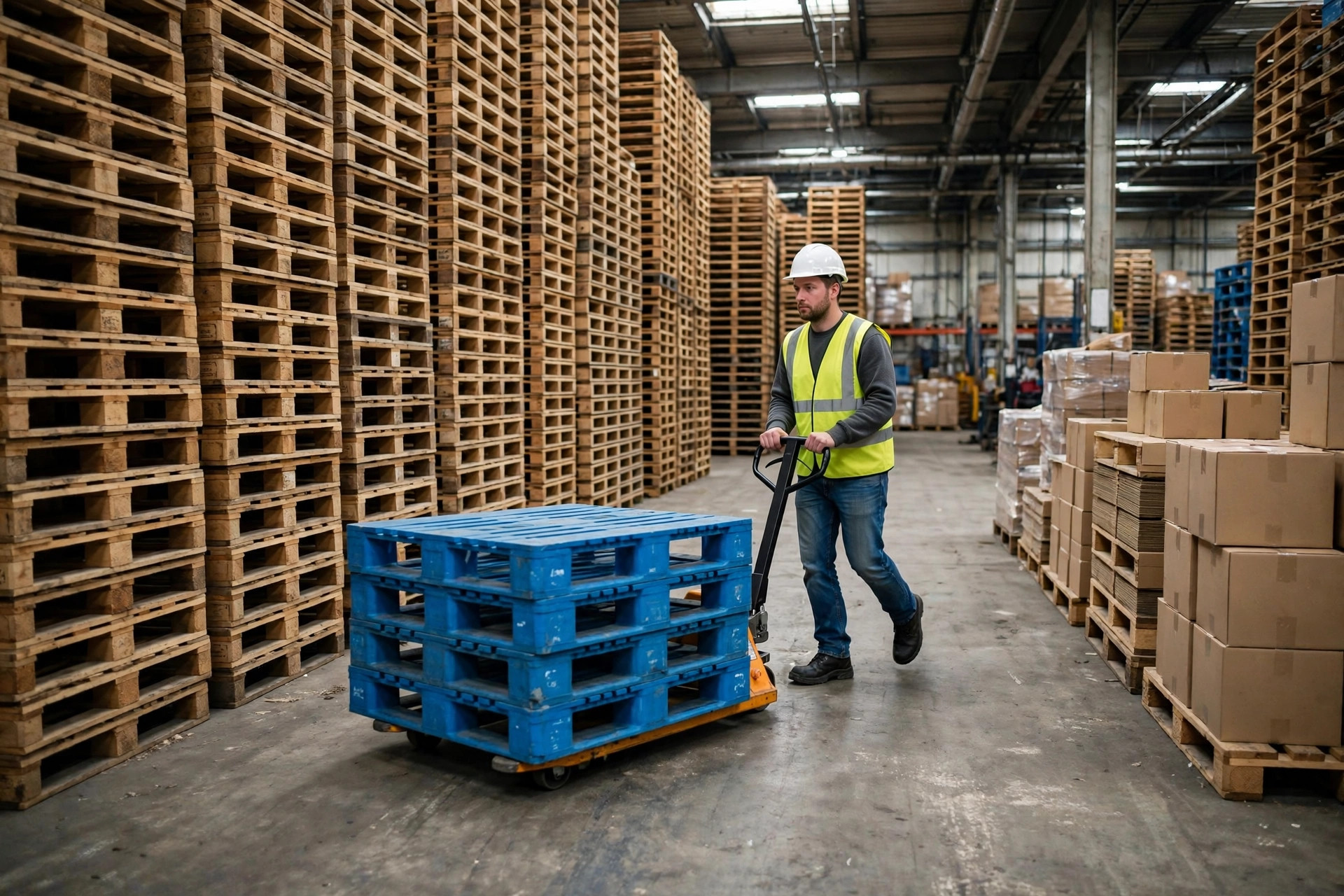
The first layer is the big top-up before picking starts. At 6:30 every morning, the forklift crew works through a system list, topping up the fast movers. That list is built the night before from the next day's wave volume. From 6:30 to 7:00 the pickers are not on the floor yet, the aisles are clear, and top-ups move fastest.
The second layer is threshold tasks during the day. Once picking starts, the system watches every face, and a task goes out when one drops to its trigger point. The crew takes tasks in aisle order, never cherry-picking the easy ones.
The third layer is the pickers' own eyes. When a face is down to its last layer, the picker taps "running low" on the handheld, and the signal goes into the top-up queue. A machine can calculate averages, but it cannot know that today's orders suddenly need ten extra bottles of one item. Human eyes catch what the math misses.
One iron rule connects all three layers: stock only moves from reserve to the pick face, never the other way. Extra stock on a pick face goes through the returns process, never straight back to reserve. Otherwise the books fall apart: the system thinks the face holds stock that is already gone.
We have run this routine for more than a year. Picker stoppages from empty faces dropped from twenty-plus a day at peak to two or three. Headcount did not change, and the crew makes fewer trips, because one trip covers several faces. The night shift supervisor says the biggest change is that people argue less. Pickers used to curse the forklift crew for being slow, and the crew cursed the pickers for rushing them. Now they say hello.
A word of warning: there is no standard answer for topping up a warehouse. Copying someone else's numbers will fail. The trigger has to come from your own daily usage and lead time, and face capacity has to be measured by hand. Start with your twenty fastest faces, run the numbers for a month, and roll it out only when the numbers prove out. Someone has to own the monthly review of the threshold table. A threshold nobody reviews is out of date within three months.
By Chen Feng, Warehouse Operations Manager