AI demand forecasting warehouse replenishment. Two years ago I wouldn't have given that phrase a second look. My warehouse is 3,000 square meters, six people, second-hand racking. AI forecasting? Come on. That's for the big players.
Then May 2025 taught me otherwise. A hardware fitting we'd sold steadily for years went out of stock for three straight weeks, and two customers walked away. On the very same day, a seasonal product sat on two full pallets, untouched for six months. A stockout and dead stock, same day, same warehouse. That's when I realized: guessing from memory wasn't cutting it anymore.
How a small warehouse used to reorder: by looking at the shelf
I'll be honest about how we used to do it, embarrassing as it is. We looked at the shelf. Shelf empty, reorder. Shelf full, don't. A regular customer called asking for 200 units, we ordered in a hurry. Peak season, add a bit from memory. Slow season, cut a bit by feel.
That rough method somehow held up for three years. Why? Few product lines, familiar customers, slow turnover. But after 2025 it broke: product lines grew from 400 to over 900, customers from 30 to 80. Nobody can keep that in their head.
The May stockout is the perfect example. That fitting sold about 600 units a month, and I stocked 500 out of habit. Then a customer landed a project order and took 800 units in one go. The shelf was empty. Replenishment took 12 days in transit. During those 12 days I watched two other customers place their orders elsewhere. Meanwhile those two pallets of dead stock were something I'd over-ordered at the end of 2024 "by feel," betting they'd sell in spring. Spring came, the customer switched models, and the stock was stuck.
That night I did the math. The lost orders cost roughly 40,000 yuan in gross margin (illustrative figure from my own ledger). The dead stock tied up over 60,000 yuan in cash. One month's work, wiped out. That's when I decided forecasting needed a proper method.
What AI forecasting actually does: lower your expectations first
Cold water first: AI forecasting is not a crystal ball. Search AI demand forecasting warehouse replenishment online and most of what you find is written for enterprises with data teams. It can't predict that your customer will suddenly land a big project order next month, or that a model will get swapped overnight. What it can do is dig through your last year or two of outbound data and tell you which items move steadily, which ones swing wildly, and which ones are quietly dying.
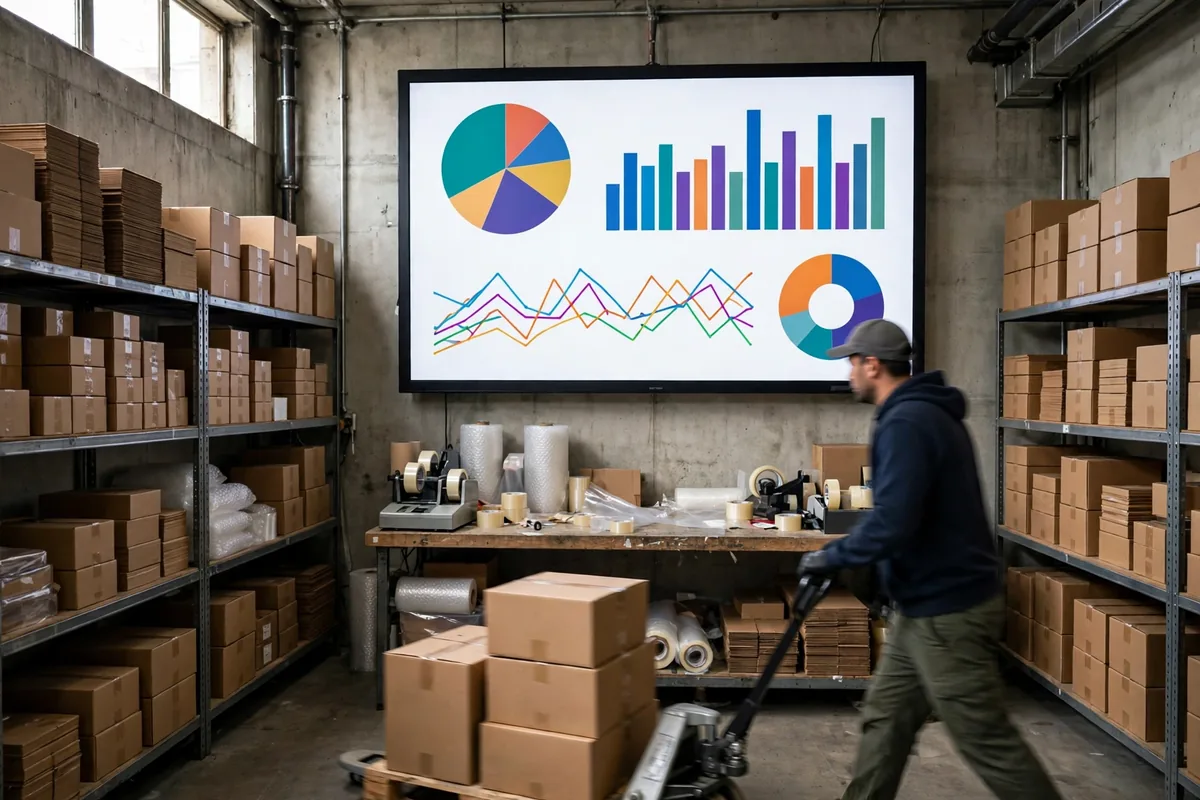
My first move wasn't even AI. I just exported the outbound records and plotted a simple sales curve per item. The result startled me: more than 30 items had been slowly declining, and I was still stocking them at the old level. Another dozen had peak-season spikes growing year over year, and I was understocking them every single year.
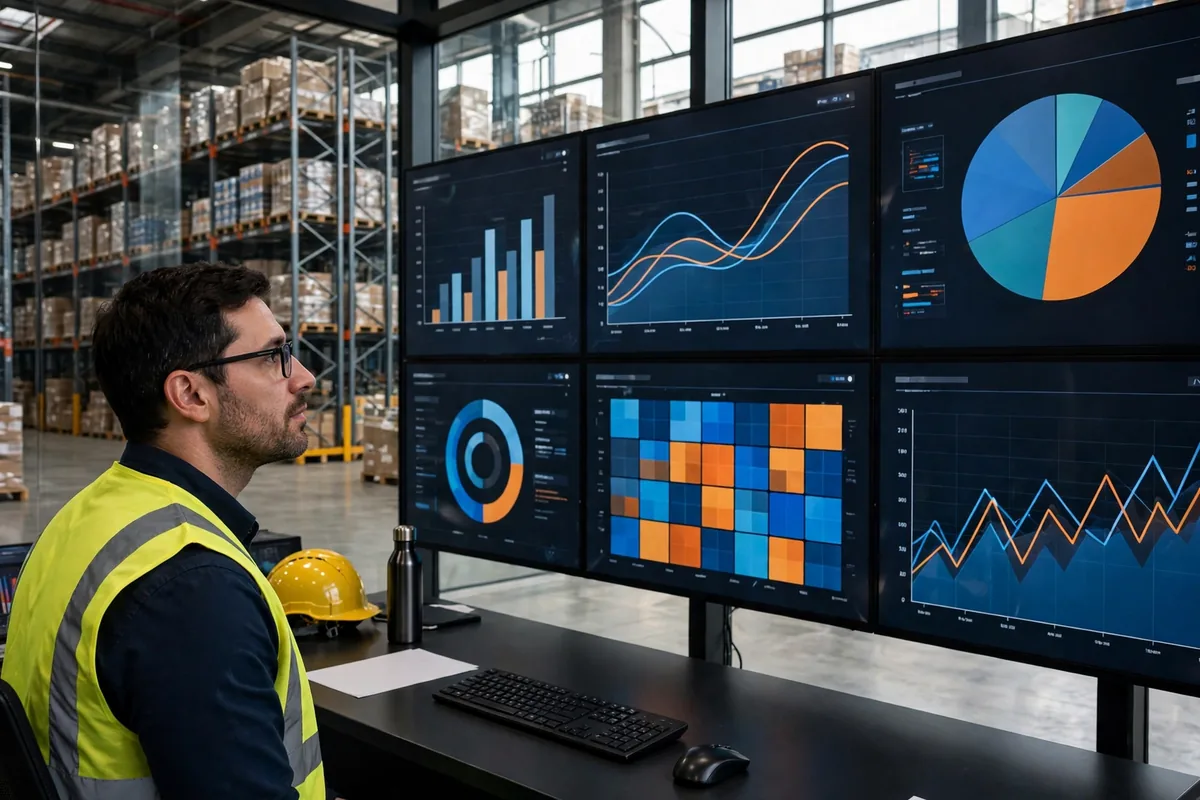
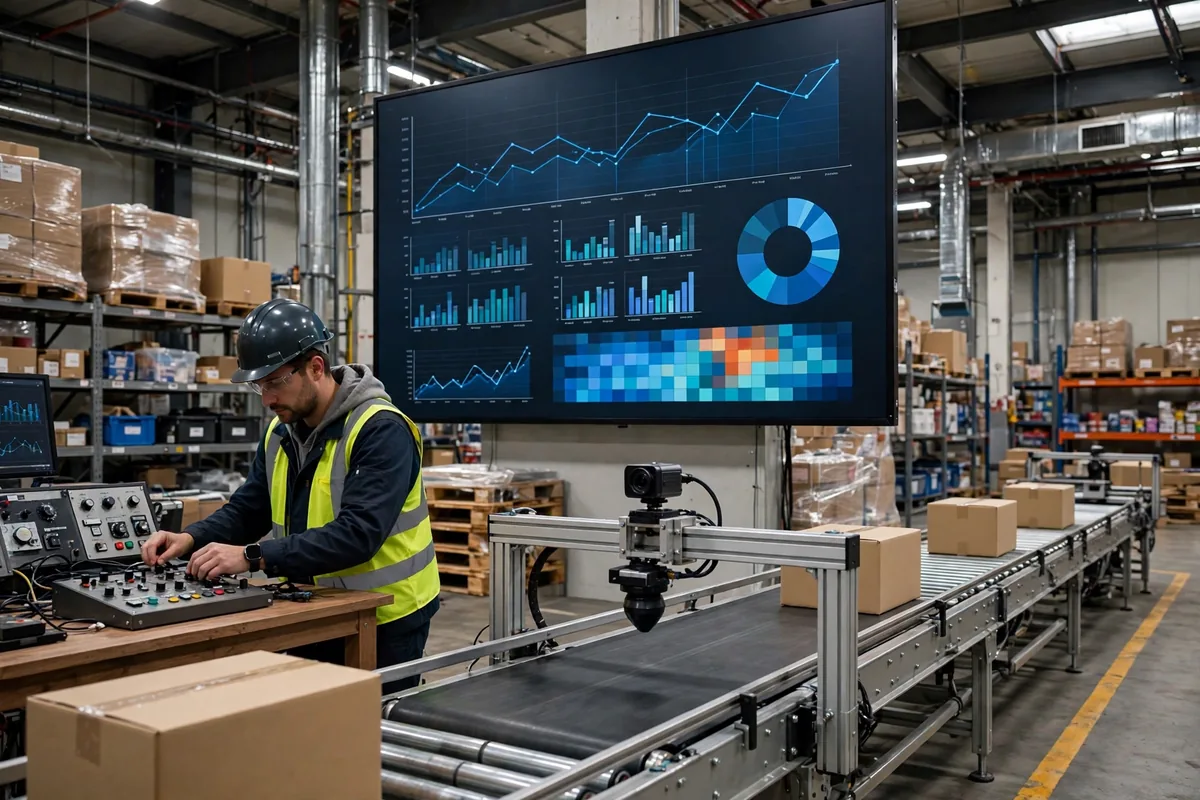
The second move actually touched AI: a lightweight forecasting tool on a monthly subscription — a few hundred yuan a month, cheaper than hiring anyone. I fed it historical outbound data, holidays, and customer order cycles, and it gave me a suggested replenishment quantity per item. After three months, the results: its suggestions matched my gut about 70% of the time. The other 30%, it beat me — mostly on slow movers I rarely paid attention to, warning me two weeks early that something was about to run out, where I used to notice only when the shelf was empty.
Here's the counterintuitive part: for a small warehouse, the biggest value of AI forecasting isn't accuracy. It's that it forces you to clean up your data. Once the data is clean, the problems show themselves. Most small warehouses don't have a forecasting problem. They have a data mess.
Data quality comes first: garbage in, garbage out
I need to stress this, because I stepped on this rake myself.
Before 2024, our outbound records were handwritten slips. Some had a product name but no specification. Some returns were never reversed in the books. And one batch of goods was a customer's consignment sitting in my warehouse — not my inventory at all. Feed all that into a forecasting tool and every suggestion comes out wrong: it told me to stock up on a discontinued model, and to cut back on a new item that was actually gaining ground.
I spent two full weeks cleaning the data: standardizing product names and specs, backfilling missed entries, reversing returns, flagging consignment stock separately. After that, the forecasts made sense. My conclusion: with dirty data, AI forecasting is just expensive fortune-telling. Clean the books first, then talk about prediction.
A small warehouse doesn't need a big system for this. One spreadsheet and one rule: scan everything out, log every return, write product names and specs the same way every time. Stick with it for a month and the data becomes usable. That's what we did. Crude, but it works.
When the forecast is wrong, someone has to own the call
This is the part I most want to talk about, and the part most people dodge.
When the forecast is wrong, who's responsible? Not the software vendor — the contract says so in black and white. The boss? In my little warehouse, the boss is me. Who would I blame? So there's only one answer: the forecast is a suggestion. The final call has to come from someone who understands the business.
My routine is simple. Every Friday afternoon I spend half an hour going through the forecast suggestions, sorted into three buckets:
| Forecast suggestion | What I do |
|---|---|
| Suggested quantity matches my experience | Order as suggested |
| Suggested quantity much higher than I expected | Call the customer — is a big order coming? Then decide |
| Suggested quantity much lower than I expected | Check for missing data or a model change |
After sorting, only about a dozen items actually need my brain. Half an hour, done. The AI does the math; I make the call. That division of labor can't be reversed: let the AI order on its own and one mistake becomes a pallet of dead stock. Rely entirely on gut feel and you're back to guessing.
There's a trade-off to think through, too: a good forecast saves inventory money, but a bad one costs you stockouts and overstock. My experience says err on the conservative side — keep about 10% safety stock rather than risking a stockout to save a little carrying cost. For a small warehouse, losing a customer costs far more than holding two extra weeks of stock.
The lightweight way a small warehouse can afford AI demand forecasting
For fellow small-warehouse owners, here's a playbook you can copy directly:
Step one, don't buy a big system. Export your outbound data and plot a sales curve per item. See what's declining and what's growing. Zero cost — a spreadsheet does it.
Step two, clean the data. Standardize names, backfill missed entries, reverse returns, flag consignment stock separately. Skip this and everything after is wasted effort.
Step three, try a lightweight forecasting tool. Monthly subscription, one product category, three-month trial. Expand to the full warehouse only if it works. Don't roll it out everywhere on day one.
Step four, set a decision routine. A fixed weekly slot to review suggestions, sorted into three buckets, with a human making the final call. The forecast advises; you're the commander.
After six months, here's what changed on my side: stockouts fell from 3–4 times a month to less than once. Items sitting over 90 days dropped from more than 40 to under 10. How much money did it save? I can't give you a precise number, because my customer mix changed too — but one thing is solid: for the same sales volume, my tied-up inventory cash fell by roughly a fifth (illustrative estimate: based on my warehouse's average monthly inventory of about 500,000 yuan, roughly 100,000 yuan freed up; figures are a hypothetical worked example for reference only).
AI demand forecasting warehouse replenishment is an efficiency tool for big warehouses. For a small warehouse like mine, it's first a mirror: it shows you how dirty your data is and how risky gut-feel reordering really is. Getting the forecast right is a skill. Having a human own the call — with safety stock as a backstop when it's wrong — is what makes AI something a small warehouse can actually afford.
Small warehouses have their own way of surviving. AI included.
By Xiao Ma, Small Warehouse Owner