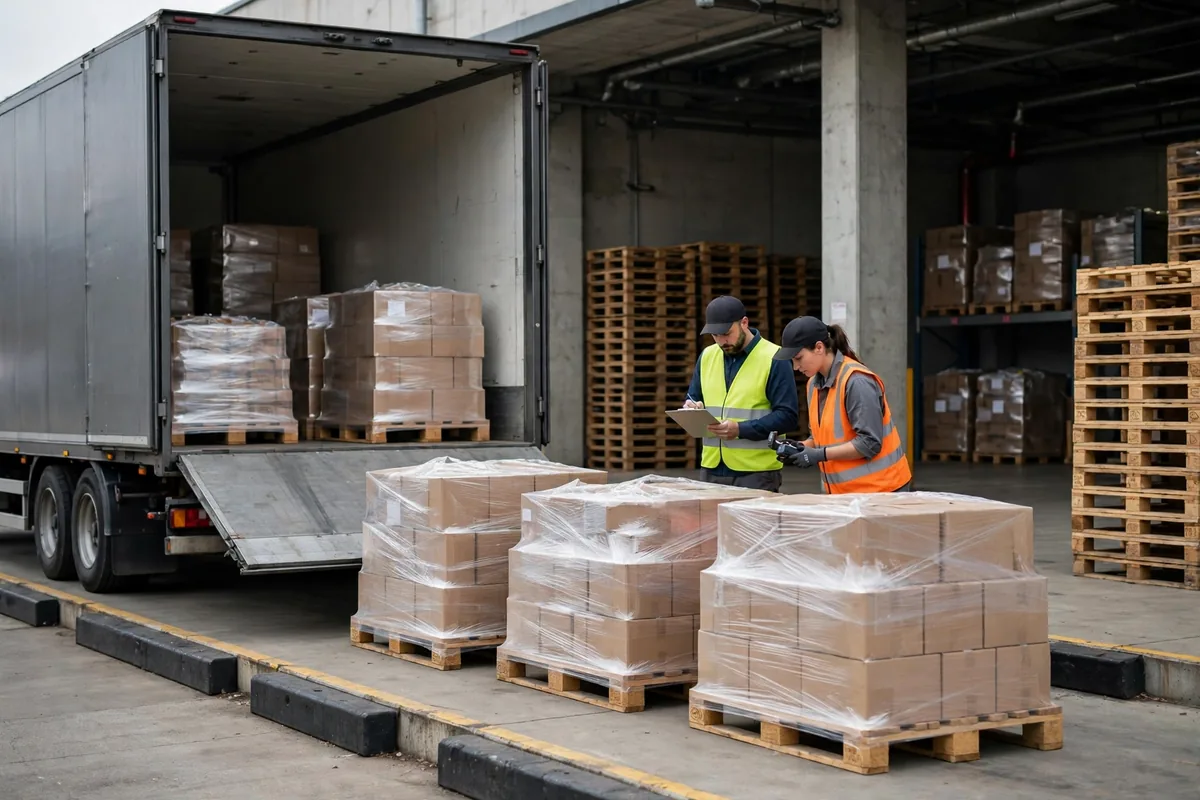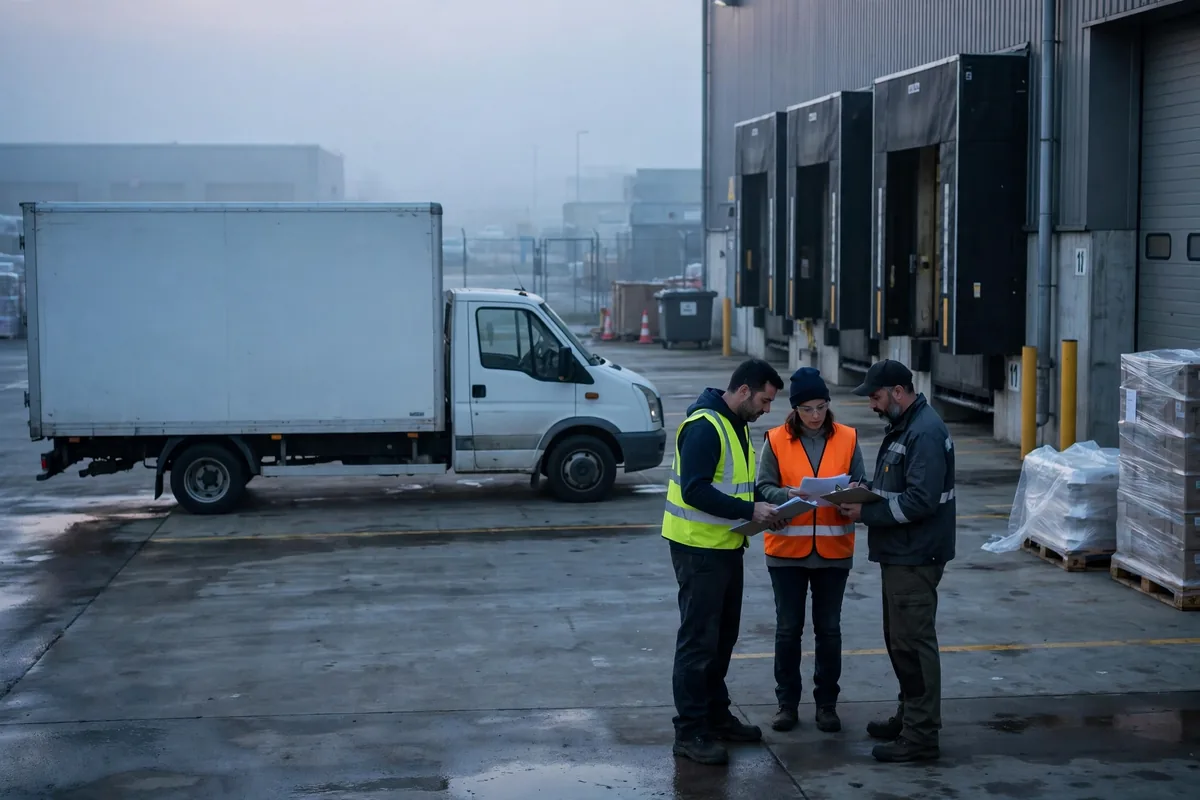
Tuesday morning, September 16, 2026, 7:40 a.m., Dock 3. Another warehouse receiving quantity discrepancy, right at the start of the shift. Lao Wang backed in, jumped down, and shouted, "Feng, unload me fast, I have two more runs after this one."
The PO said 1,200 cases of paper towels. We counted twice: 1,114. Eighty-six cases short. Lao Wang's face darkened. "That is what they loaded. You must have miscounted." Xiao Li, our receiver of three months, went pale and stood at the edge of the dock without a word.
Folks, I have seen this scene a hundred times. It happens two or three times a week in our warehouse. The driver wants to leave, the pickers need the stock, purchasing is calling. Whoever gives in first takes the blame. Here is the honest truth: receiving is not about muscle. It is about rules. When the rules are unclear, a night shift can turn into a shouting match. And morale takes a hit too. A receiver shouted at twice counts with shaky hands, stops pushing back, and the gaps only get bigger.
When the Count Doesn't Match the PO, Don't Sign Yet
A signature means you accept it. I tell every new receiver that on day one. Once you sign, a shortage becomes our loss. An overage becomes stock nobody can explain.
November 12, 2025, night shift, 10:30 p.m., Dock 2, right before the peak-season rush. One truck of household goods. The PO said 800 cases. We counted 714. Eighty-six cases short. The driver said that was all they loaded and asked us to sign now and sort it out later. Our senior man, Aqiang, did not sign. He moved the truck to inspection, unloaded into a separate stack, took photos, and recounted with a second person. That night cost us an extra hour and a half, and two guys left 40 minutes late. The next day the supplier checked and admitted it had loaded one pallet short. The 86 cases arrived three days later. If Aqiang had signed, those 86 cases would have been our loss.
March 4, 2026, 10 a.m., Dock 4, was the other side of the same problem. A truck of personal care products. The PO said 600 cases. We counted 840. Two hundred and forty cases over. The driver grinned and called the extra a gift. The younger guys thought we had scored a win. I did not take it. Those 240 cases had no PO behind them. Put them into stock and the books turn into a mess. Whose stock is it when it sells? How do you explain the surplus at count time? We held that truck three hours while purchasing and the supplier talked it out. The extra 240 cases went back on the same truck.
Those two nights taught me something surprising: a shortage is less scary than an overage. A shortage is a clear number. You know how many are missing, who owes them, and when they are due. An overage is a blurry number. It looks like free stock today and comes back to haunt you at count time and settlement. Our warehouse learned that the hard way, so we made a rule: over-delivered stock never goes into inventory. That is the counterintuitive part of a PO mismatch. Most people worry about getting less. In practice, getting more causes the bigger headache.
Short or Over: Count the Cost Before You Decide on a PO Mismatch
People rush to close a receiving discrepancy because the truck is waiting, but the three options cost very different amounts. The table below uses our own warehouse's experience numbers for one 40-foot load on a short city run. These are not industry statistics. They are what we have actually paid.
| Option | When we use it | What it costs us | What can go wrong |
|---|---|---|---|
| Receive what arrived, log the gap | Shortage under 10%, stock is urgently needed | Two people recount 1 to 2 hours, truck held about 2 hours | No written replenishment date the same day, and the gap rots |
| Reject the whole truck | Gap over 20%, or wrong product entirely | Return freight about $800 to $1,200, putaway delayed at least half a day | Driver and supplier clash, peak season can mean a stockout |
| Hold in inspection, receive nothing yet | Over-delivery, or nobody can say whose fault it is | One dock door tied up 3 to 4 hours, photos take about 20 minutes | Unclaimed by end of day, it becomes an orphan on the dock |
Here is the cost math in plain terms: holding a truck costs the driver money and blocks our dock for the next truck. Two people recounting for an hour and a half is half a shift gone. A return trip at $800 to $1,200 looks small, but three or four returns in a month add up to nearly ten thousand dollars. The most expensive part is a stockout. In peak season, one day without putaway means pickers walk empty aisles.
Our hard line now: a gap under 10% with urgent stock, we receive what arrived, write the gap on the sheet, photograph it, and post it in the group chat. Purchasing must give a replenishment date the same day. A gap over 20% goes straight to me. No receiver decides that alone. That 10% line was not guessed. We tried it for half a year. Too low and you reject trucks all day while drivers queue up shouting. Too high and the gaps pile up until the month-end count makes no sense.
Arguments with drivers get their own rule. Arguing is allowed. Shouting is not, and nobody holds a truck hostage. When voices rise, the team lead takes the driver inside for water and lets the receiver count in peace. A loud voice never changes a count. A warehouse receiving quantity discrepancy decided on the dock, in the heat of the moment, is how a wrong number becomes an official number.
Scheduling matters as much as counting. From 7 to 10 I put two senior staff with two newcomers. Seniors count and sign. Newcomers move and record. On nights, I would rather take one truck fewer than skip a second checker. One truck fewer is a visible loss. A missed discrepancy stays invisible until month-end count, when nobody remembers who was there.
Our Fixed Routine for Warehouse Receiving Quantity Discrepancy
This is how our warehouse does it now, taped to the wall in the receiving office. Every newcomer reads it first.
Count outer cartons before unloading the whole truck. If the outer count does not match, stop and call for a recount. Never unload and count at the same time. Two people count: one calls, one records, then they swap and count again. If the counts disagree, take the lower number and count a third time.
Once the number is set, take photos: license plate, seal, PO sheet, and the stack with the gap. Four photos, none missing. Post them in the receiving group chat for purchasing, the shift lead, and me. A spoken promise counts for nothing. A record in the group chat counts.
Write the discrepancy note on the spot: how many short or over, which item, which batch. Ask the driver to sign. If he refuses, write "driver refused to sign" and get a witness to sign beside it. Two copies: one travels with the goods, one stays in the inspection area.
Over-delivered stock goes in a separate area with a yellow tag, never mixed with normal stock. For a shortage, purchasing must reply the same day: replenish or deduct, and on what date. No reply by end of shift and the team lead chases it again. Three days with no movement and it comes to me. I call the supplier myself.
The hardest part of this routine is not the paper. It is the people. Aqiang mentors newcomers, and for the first month a newcomer only counts alongside someone else. Nobody signs alone that month. After a few arguments, even Lao Wang got used to it. Now drivers pull in asking, "Feng, how many counts today?" Once the rule holds, the arguing drops away.
One reminder for fellow warehouse folks: do not expect one count to come out right, or drivers and suppliers to police themselves. Put every gap on paper, in a photo, and in the group chat. Goods can wait half a day. Books cannot stay blurry for even one day.
By Chen Feng, Warehouse Operations Manager