Last month I sat down with a mid-sized warehouse to reconcile its books, and the manager pointed at the dock and said: yesterday we took one extra truck, worked until ten at night, and on paper it looked like just a few more hours. Then we spread out that day's labor hours, forklift trips, driver waiting time, and the orders that slipped to the next day. The real cost of that one unscheduled warehouse delivery receiving job came to more than three times a normal receiving job. An unscheduled delivery is never just one more truck. It is a bill that throws the whole day's rhythm off, and if you say yes before pricing it, you lose money without knowing where it went.
This article is not about how to welcome the truck in. It is about the three costs you must price before you accept it. Once you price them, you will find that some trucks are worth taking, some should wait outside, and some should simply be rescheduled.
Unscheduled Warehouse Delivery Receiving, Cost One: What You Pay on the Spot
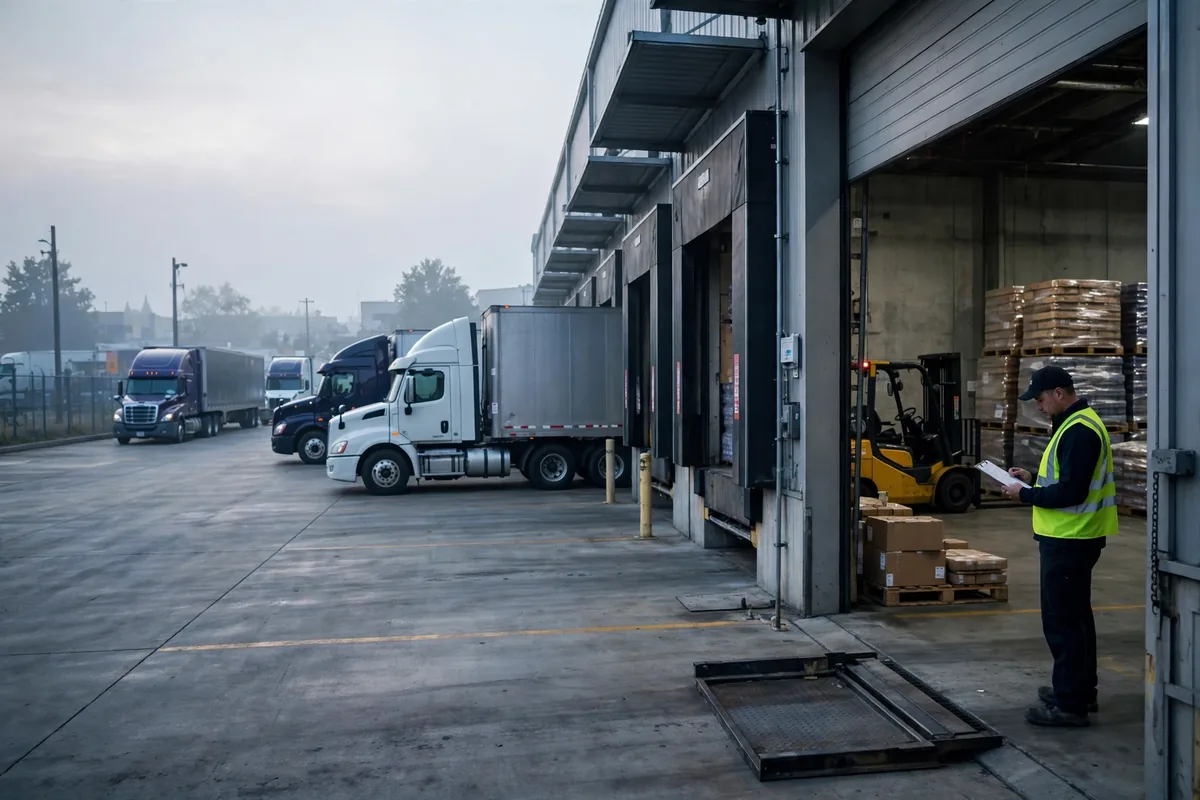
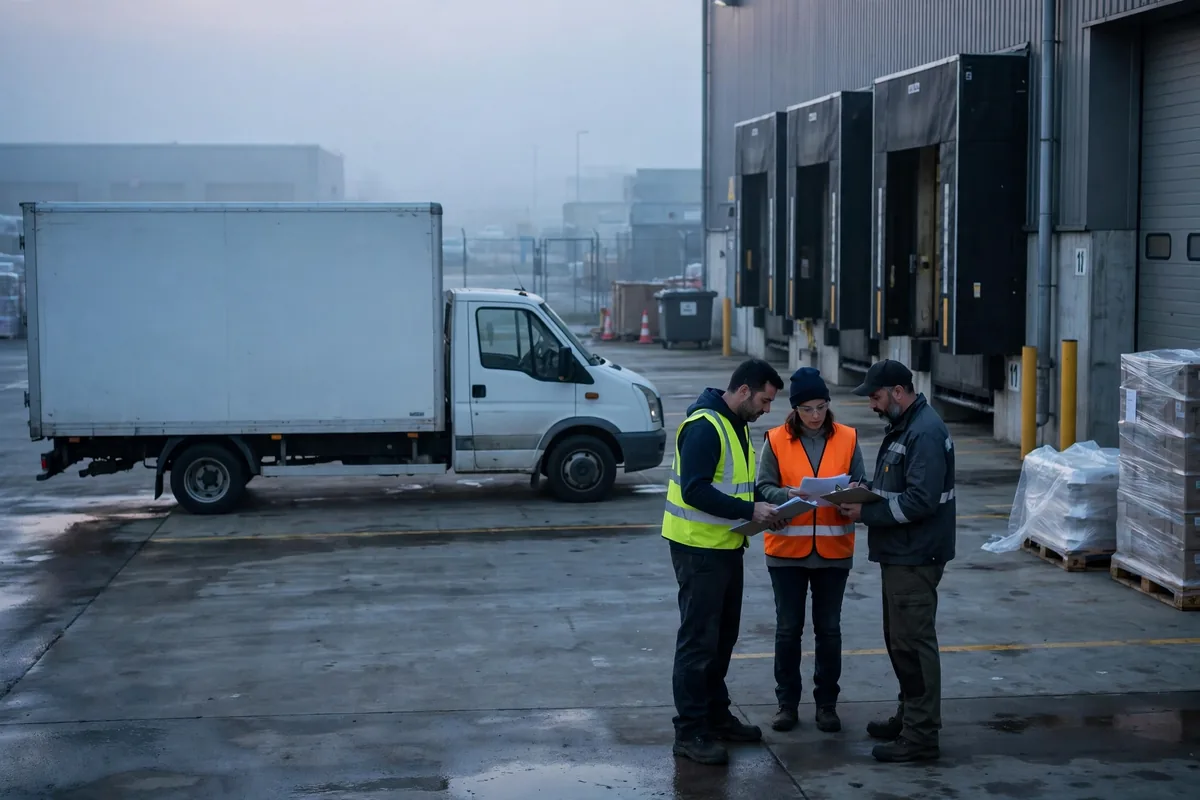
The first cost is the most visible, and still the easiest to underestimate. Last fall I watched this play out in a warehouse handling consumer goods: an unannounced truck arrived at three in the afternoon, right in the middle of the day's biggest outbound wave. Only one dock door was free, two receiving staff were pulled off their work to inspect the load, and three orders that were supposed to ship at four were pushed back. The driver waited outside for more than two hours, and the warehouse called in a temp worker to cover the gap.
Line up that day's slip and the direct costs are plain: temp labor, extra forklift trips, the driver's waiting time, and overtime paid to catch the next morning's shift. None of them looks large on its own. Together they exceeded what that shipment earned in warehouse service fees that day. Worse, none of this shows up as its own line in the monthly report. It dissolves into broad categories like labor and equipment, leaving everyone with the impression that the month was simply a little expensive across the board.
So my rule is simple: when an unscheduled warehouse delivery shows up, do not ask whether we can unload it. Ask whether the extra labor and dock time it consumes can be recovered in what we charge for it. If it cannot, that is not doing a favor. That is working at a loss.
Unscheduled Warehouse Delivery Receiving, Cost Two: The Orders It Pushes Aside
The second cost is more expensive than the first, because you do not pay it on the truck you accepted. You pay it on the orders that got pushed aside. The same warehouse learned this the hard way another time: an unscheduled load occupied the inspection area, so the next two scheduled arrivals had to wait on the dock, and the inspectors' queue kept growing. By the end of the evening shift, two orders that should have shipped that day had missed their cutoff and went out the next morning, and the customer docked the warehouse's service score for the month.
That is the real structure of the cost: it is not addition, it is substitution. Accepting this truck means pushing something else in the original plan back. What gets pushed might be an outbound shipment, a cycle count, or the inspection of another load, and each of those has its own deadline and price. When you price the job, you cannot only count what accepting this truck costs. You must also count what the displaced job is worth.
I have seen too many warehouse managers accept trucks by feel: if a dock door is free, take it; if it is busy, refuse. That standard is far too coarse. The right question is: what is being displaced today, work that can slip half a day, or work that costs money the moment it misses cutoff? The first can be negotiated. The second means the original plan comes first, every time.
The Third Cost: The Chain Reaction You Cannot See
The third cost is the hardest to price and the easiest to ignore: the chain reaction. An unscheduled delivery does not only disrupt that day; it drags the next day's rhythm off too. People who worked late are tired the next morning, inspection backlogs delay location updates, and pickers walk extra distance following yesterday's data. One warehouse took unscheduled trucks three days in a row, and by the fourth day the manager realized the week's cycle count had slipped two days, which then left the month-end variance unexplained.
Here is the counterintuitive judgment: many warehouses think that never turning a truck away is good service. In practice, accepting unscheduled warehouse delivery receiving jobs with no threshold is unfair to the customers who booked properly. Those customers followed the rules, reserved time, and staffed accordingly, only to be jumped in line by a truck that never called ahead. Do that long enough and the careful customers lose out, planning erodes bit by bit, and eventually every delivery becomes unscheduled. That is the most expensive outcome of all.
So my bottom line is clear: unscheduled deliveries can be accepted, but they must carry an explicit price and an explicit priority. They cannot run on goodwill and unload now, ask later.
Accept or Not: Let One Table Decide
Put the three costs into a decision table, and accepting a truck stops being a gut call:
| Situation | Action | Charging and recordkeeping |
|---|---|---|
| Dock, labor, and inspection all have slack, and no same-day cutoff order is displaced | Accept | Bill the unscheduled receiving surcharge and record it separately |
| It would displace a same-day cutoff order or inspection queue | Protect the original plan; let the driver wait or reschedule | State the waiting time clearly; do not promise same-day unloading |
| Unscheduled trucks have already been accepted for days and the weekly plan is behind | Pause acceptance until the plan recovers | Clear the backlog before reopening slots |
Exact surcharge terms vary by contract and policy, so confirm them against the latest published policy and your agreement rather than pricing from memory. But one rule is universal: the extra cost of an unscheduled delivery must be booked separately, never blended into regular labor. Only separate booking lets you answer the most basic question at month end: how much did we actually subsidize unscheduled deliveries this month? If you cannot answer that, you will subsidize them again next month.
Here is a conclusion you can calculate: acceptance cost equals extra labor plus equipment use plus the time value of displaced orders plus rework from the backlog. An unscheduled truck is worth taking the same day only when its service revenue exceeds that number and it displaces no cutoff order. Below that number, let it wait. Waiting offends one truck. Forcing it in can offend a whole day's plan.
By Lao Zhou, Logistics Cost Analyst