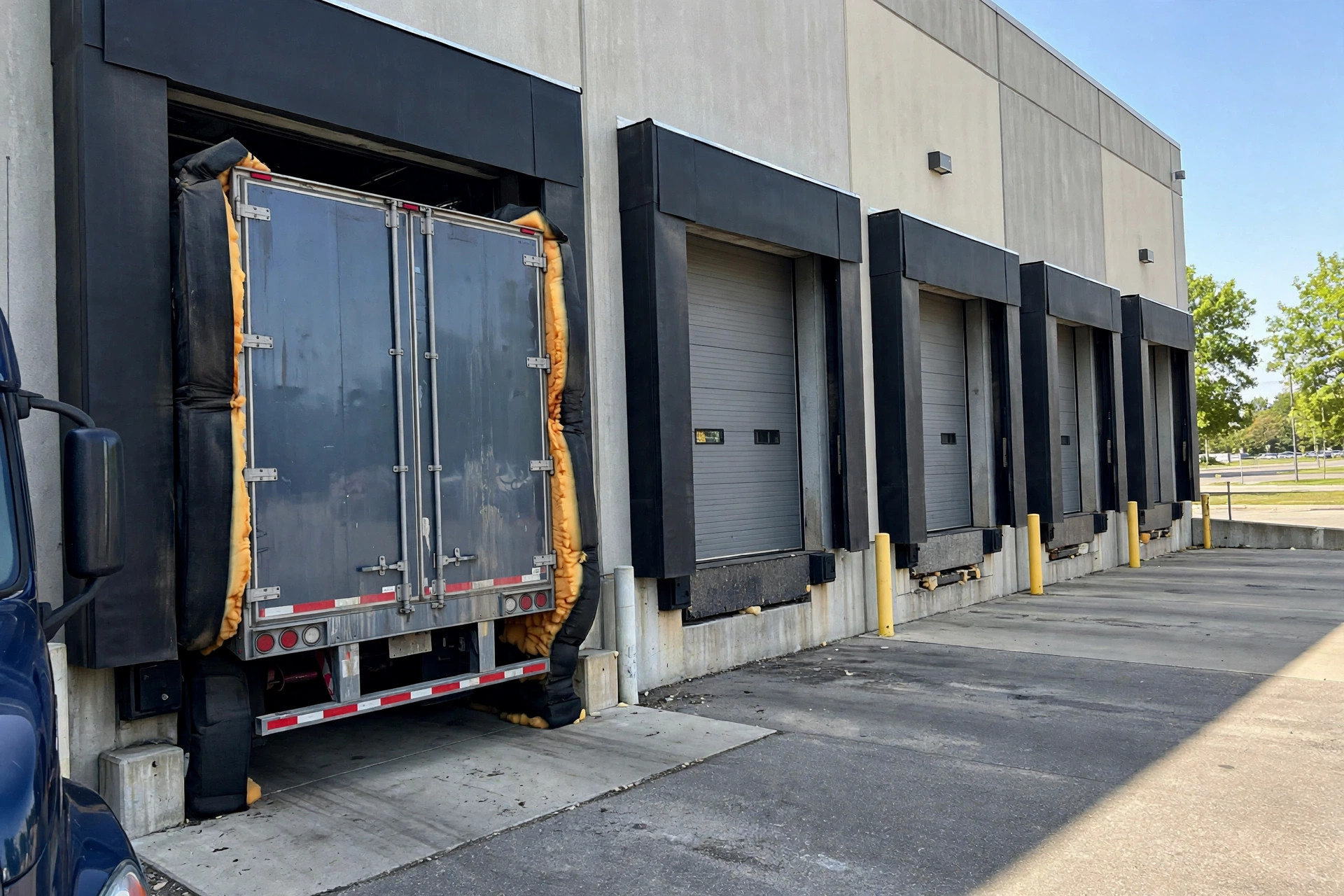
It was 6:40 when I walked into the receiving area. Four trucks were already lined up outside. Lao Zhang from the night shift handed me the paperwork, his voice hoarse: "Feng, yesterday's load still isn't counted, and three more trucks came in this morning. The staging area is almost full." Listen, folks, the warehouse receiving process is not most afraid of too many trucks. It is afraid of three steps waiting on each other: unloading waits for counting, counting waits for putaway, and putaway waits for the system. When one link jams, the whole receiving line backs up at the door.
Our warehouse used to work exactly like that. Trucks arrived, we unloaded, we stacked pallets in staging, and we counted them whenever someone had time. That is why this warehouse receiving process unloading counting putaway guide exists: to show how the three steps stop waiting on each other. After counting, we waited for a forklift to put them away. Every step looked busy, but the goods sat in staging for half a day.
Warehouse Receiving Process, Step One: Get the Paperwork Straight Before You Unload
What we do now is simple: the paperwork arrives before the truck. Suppliers send an advance shipping notice, and we list what is coming, in what quantity, and in how many cartons, against the purchase order. A common industry practice is to send that notice 24 to 72 hours before a domestic delivery.
When the truck reaches the door, do not rush to open the trailer. The receiver checks the paperwork with the driver first: license plate, seal number, purchase order number. Then the outside of the cartons: torn, wet, crushed? If the packaging is damaged, take photos, write it on the bill of lading, and get the driver to sign before you unload. Once the driver leaves, your leverage for a freight claim drops fast. We learned that the expensive way.
While unloading, count the pallets first and match them against the bill of lading, then move them to staging. We marked three zones in staging: to be counted, counting in progress, and counted, waiting for putaway. Nobody is allowed to push uncounted stock into the counted zone. The painted lines are the rule.
I still remember one morning clearly. This is a scenario illustration, not a real shipment. It was a Tuesday before peak season. Two trucks of household goods arrived at 7 a.m., one with 26 pallets and the other with 31. Two unloaders and one forklift cleared a truck in about forty minutes. I told them not to leave. We counted pallets and scanned carton labels on the spot, and found the second truck was two pallets short. The driver called the carrier right there. Under the old way, the freight would have sat until the afternoon count, the driver would have been long gone, and those two pallets would have been our loss.
Warehouse Receiving Process, Step Two: Count Against the Purchase Order, Not the Packing Slip
The easiest mistake in counting is to count against the packing slip. The packing slip says what the supplier meant to ship. The purchase order says what we ordered and what we are paying for. Count against the purchase order. If the numbers do not match, stop. Do not put the stock away first and promise to check later. Later almost never comes.
We count in two tiers now. New suppliers, high-value goods, and any supplier that has shorted us before get a full scan and a piece-level count. Trusted suppliers with a clean history get a carton count with sampling. Sampling is not cutting corners. It is saving effort for where the risk is. Carton-level counting is fast and cheap, but it trusts the supplier's case counts. Piece-level counting catches shortages at the door, but it takes much longer and costs more. There is no free lunch between fast and accurate. Which tier you pick depends on the value of the goods and the supplier's track record.
When counting finds a difference, deal with it on the spot. Shortage, overage, damage, mixed cartons: four situations, four ways to write them down. How many short, how many extra, which cartons are damaged, which cartons are mixed. Photograph everything, write it into the receiving record, and tell purchasing to reconcile with the supplier. Do not quietly change the expected quantity in the system to match what arrived. If you erase the variance, the supplier looks accurate, and the same mistake comes back next time.
Warehouse Receiving Process, Step Three: Put Away Fast, But Never Skip the Scan
Once goods are counted, they have to be put away. Putaway is not finished when the pallet is on a rack. It is finished when someone scans the product and scans the location, so the system knows that stock sits in that location and pickers can find it. A common target in the industry is to finish putaway within two hours of completing receiving. If two hours is out of reach, set your own deadline, write it on the wall, and look at it every day.
This is where we got hurt. One peak-season Friday, as a scenario illustration, three trucks arrived in the afternoon. Counting finished, but every forklift was busy with outbound orders, and putaway slipped to Monday. Over the weekend, an online promotion hit. The system showed stock available. Pickers walked to the location and found it empty, because the goods were still lying in staging. Customer service was chased by customers, operations chased the warehouse, and nobody slept well that weekend. After that we made a rule: stock that arrives today gets put away today. If it really cannot be done, the night shift leaves one person to clear staging.
One more point on putaway: if orders are already waiting for that stock, it skips storage and goes straight to the shipping dock. That is cross-docking. Fast-moving stock goes near the pick face, slow stock further away.
The Math: What Stock Stuck in Staging Really Costs
I do not like guessing at costs, so here is a worked example, clearly labeled as a hypothetical example. Suppose a warehouse receives 20 pallets a day, and counting plus scanning takes 15 minutes per pallet. One person working eight hours can clear 32 pallets in a day. On paper, staffing looks fine. Right?
The reality is that trucks do not arrive evenly. Twelve pallets come in the morning and eight in the afternoon. If you staff only one person in the morning, 12 pallets take three hours, trucks queue at the door, and the next appointment gets pushed into the afternoon, right into the outbound peak. Staffing looks right for the whole day and wrong for every single hour.
So we staff by the wave now, not by the clock: the appointment sheet, and the outbound peak. When the wave comes, add people. When it passes, those people help outbound.
| Step | The sign it is jammed | What we do now |
|---|---|---|
| Unloading | Trucks queue outside for more than half an hour | Work from the appointment sheet, paperwork first, then let the truck in |
| Counting | The to-be-counted zone is full | Tiered counting, carton or piece level by value and supplier history |
| Putaway | System shows stock, location is empty | Put away within two hours of counting, clear staging the same day |
The counterintuitive part: slow receiving is sometimes not the receiving team's fault.
When receiving is slow, the first reaction in many warehouses is to hire more receivers. We tried that. We added people, and the door still jammed. Then we saw it: the jam started upstream. Suppliers sent their shipping notices late, carton labels were messy, cartons were mixed, and counters spent half their time sorting freight instead of counting it. Another time, the purchase order quantity did not match what the supplier actually sent, and the counter counted three times and still would not sign.
So the first step of the warehouse receiving process unloading counting putaway flow is not really at the warehouse door. It is before the supplier ships. Is the shipping notice accurate, are the labels clear, are cartons mixed? Those three things decide whether receiving can move fast. Adding people at the door cannot fix chaos upstream.
Here is my reminder to other warehouse folks, and the whole point of this warehouse receiving process unloading counting putaway guide: tomorrow morning, stand in the receiving area for ten minutes. Do not watch how busy people look. Watch where the freight stops. Stock stopped in staging means counting is slow. Stock stopped in the counted zone means putaway is slow. Trucks stopped outside means scheduling is broken. Find where the freight stops, then find the fix. Do not start by hiring. Hiring is the most expensive and slowest fix there is.
By Chen Feng, Warehouse Operations Manager