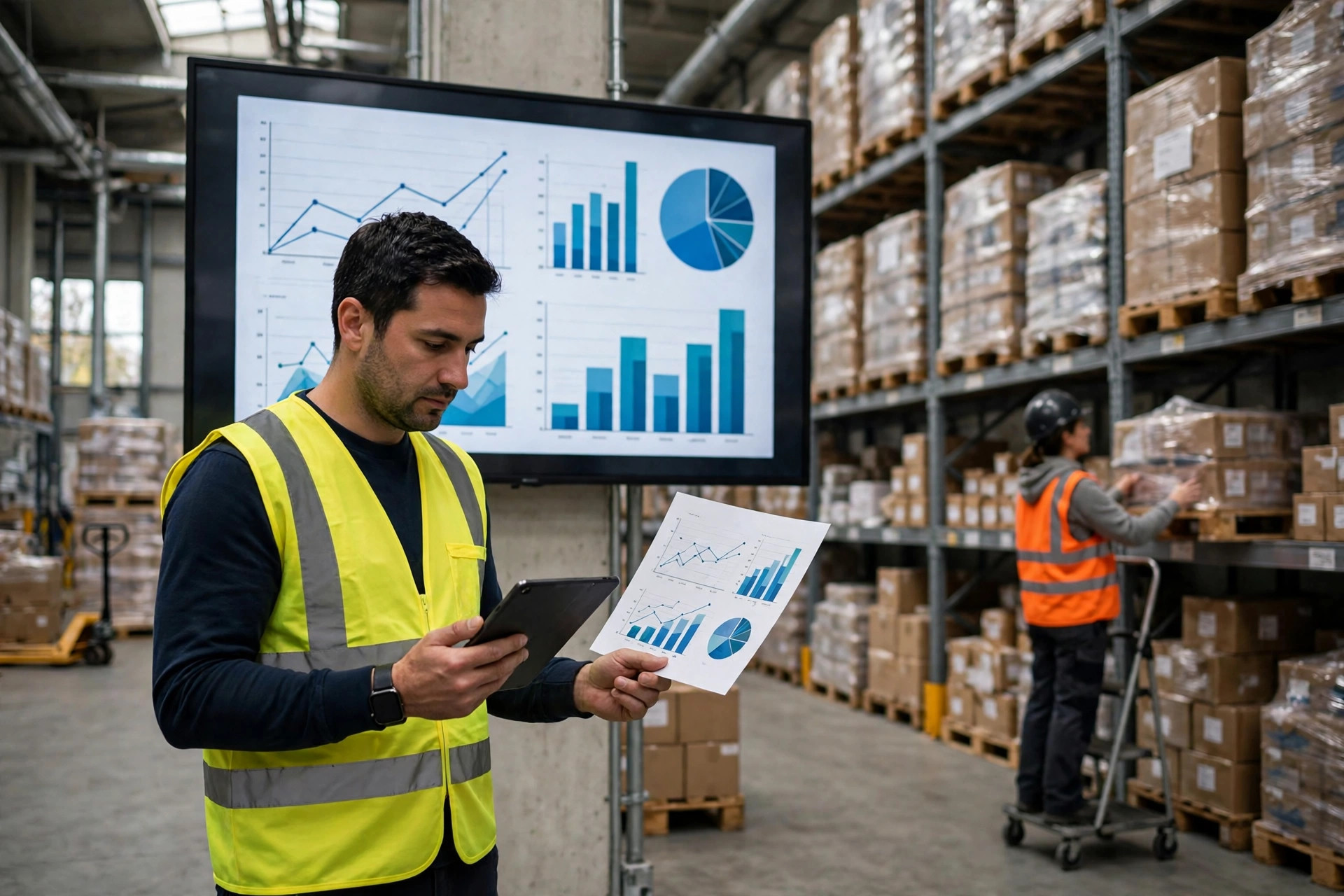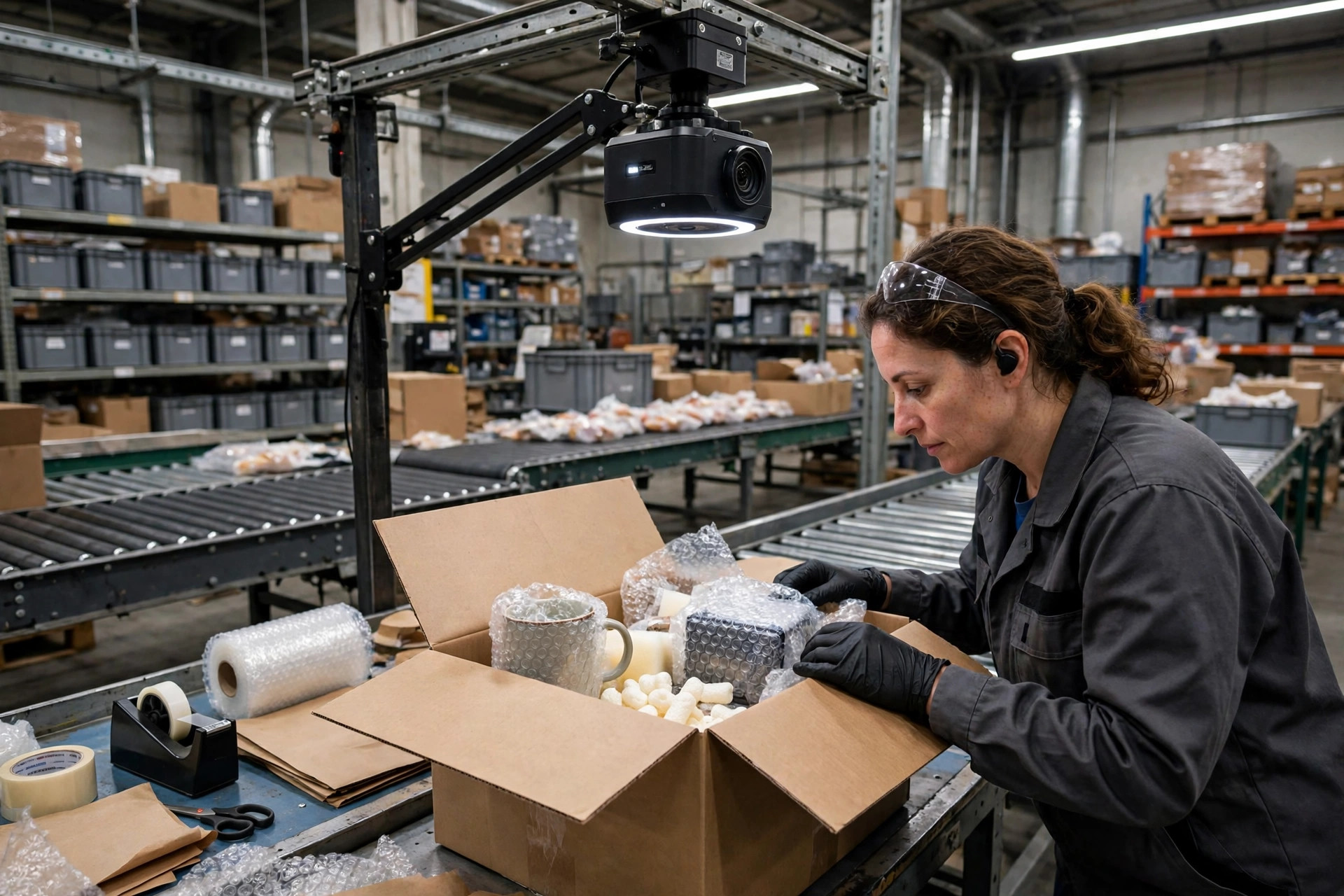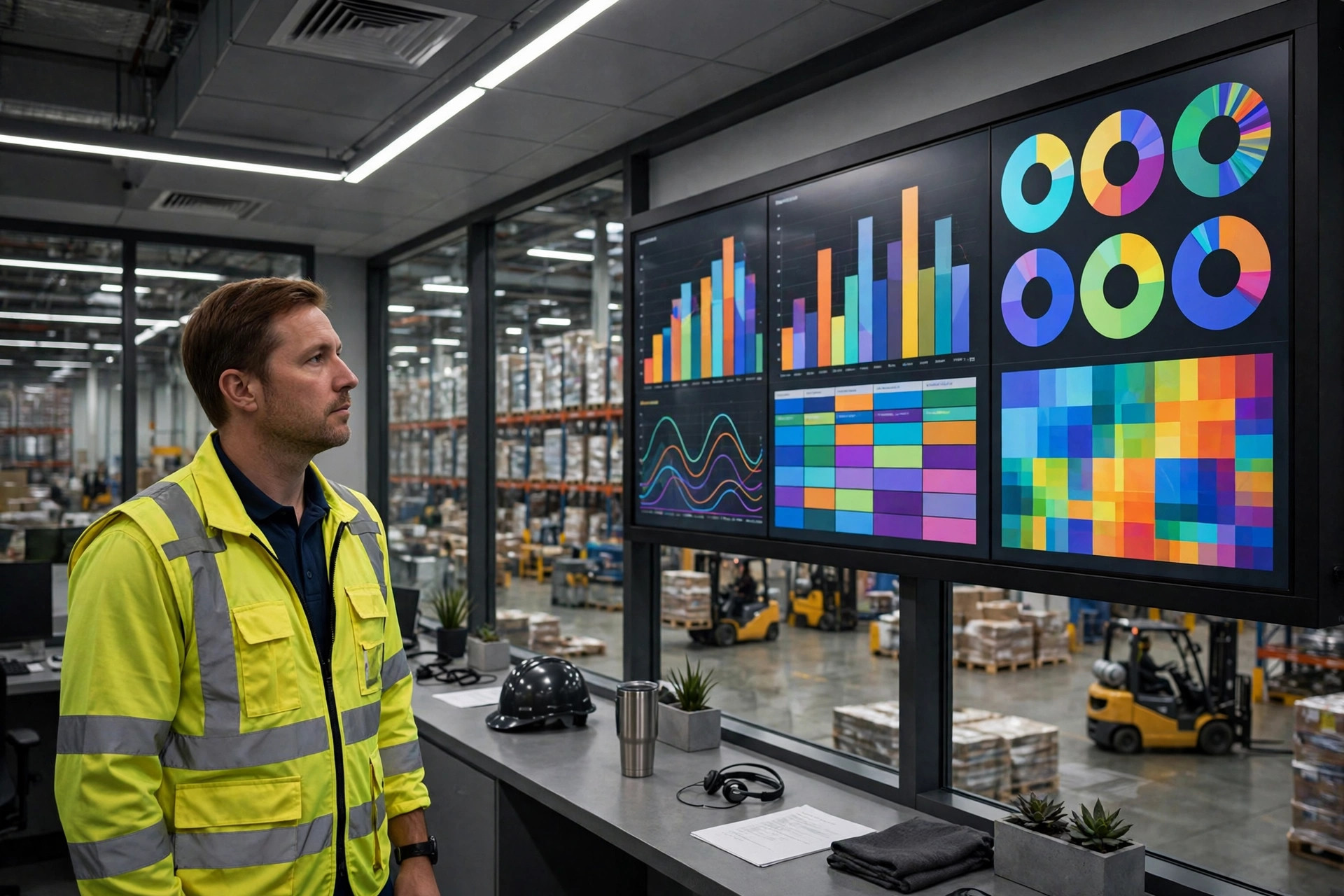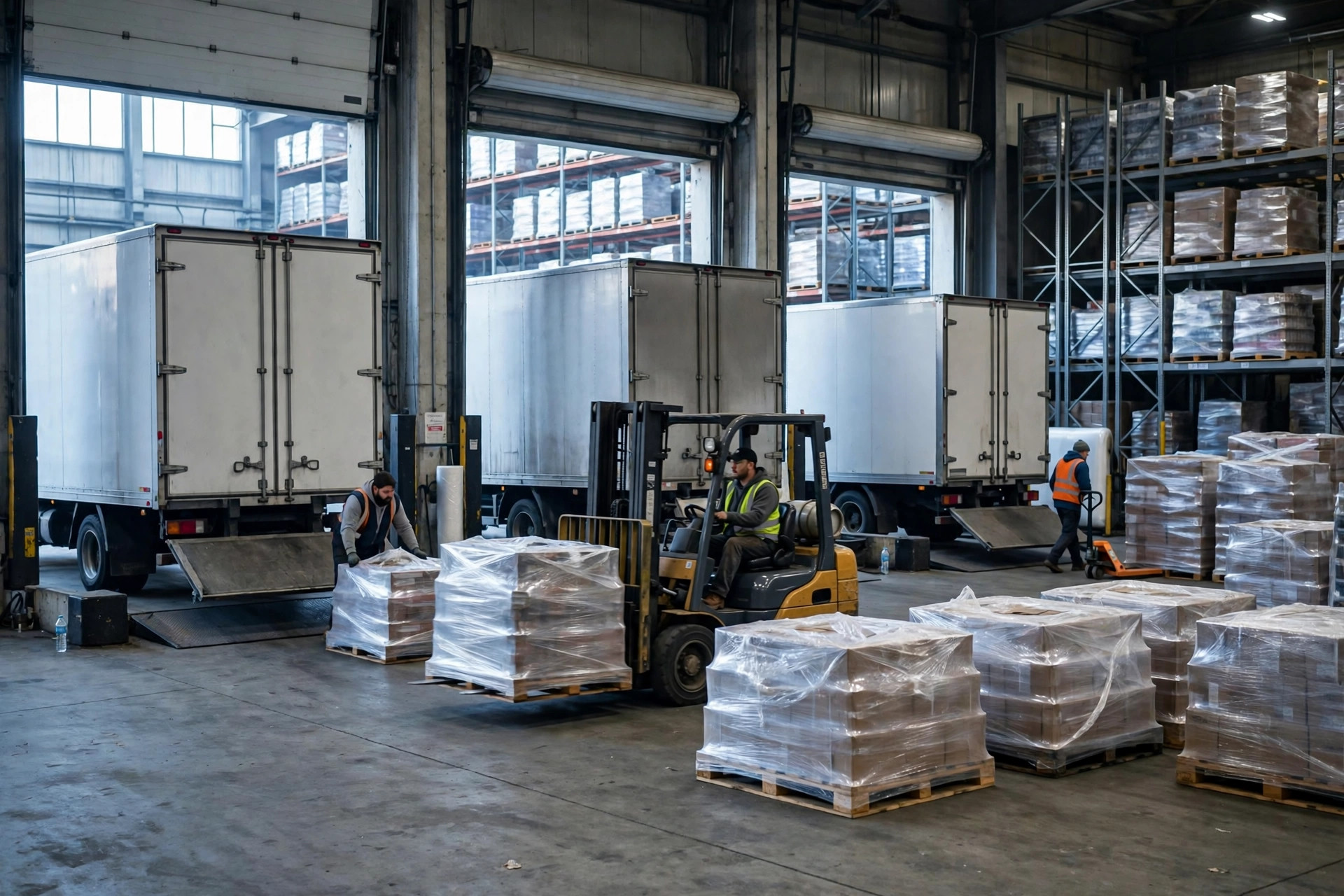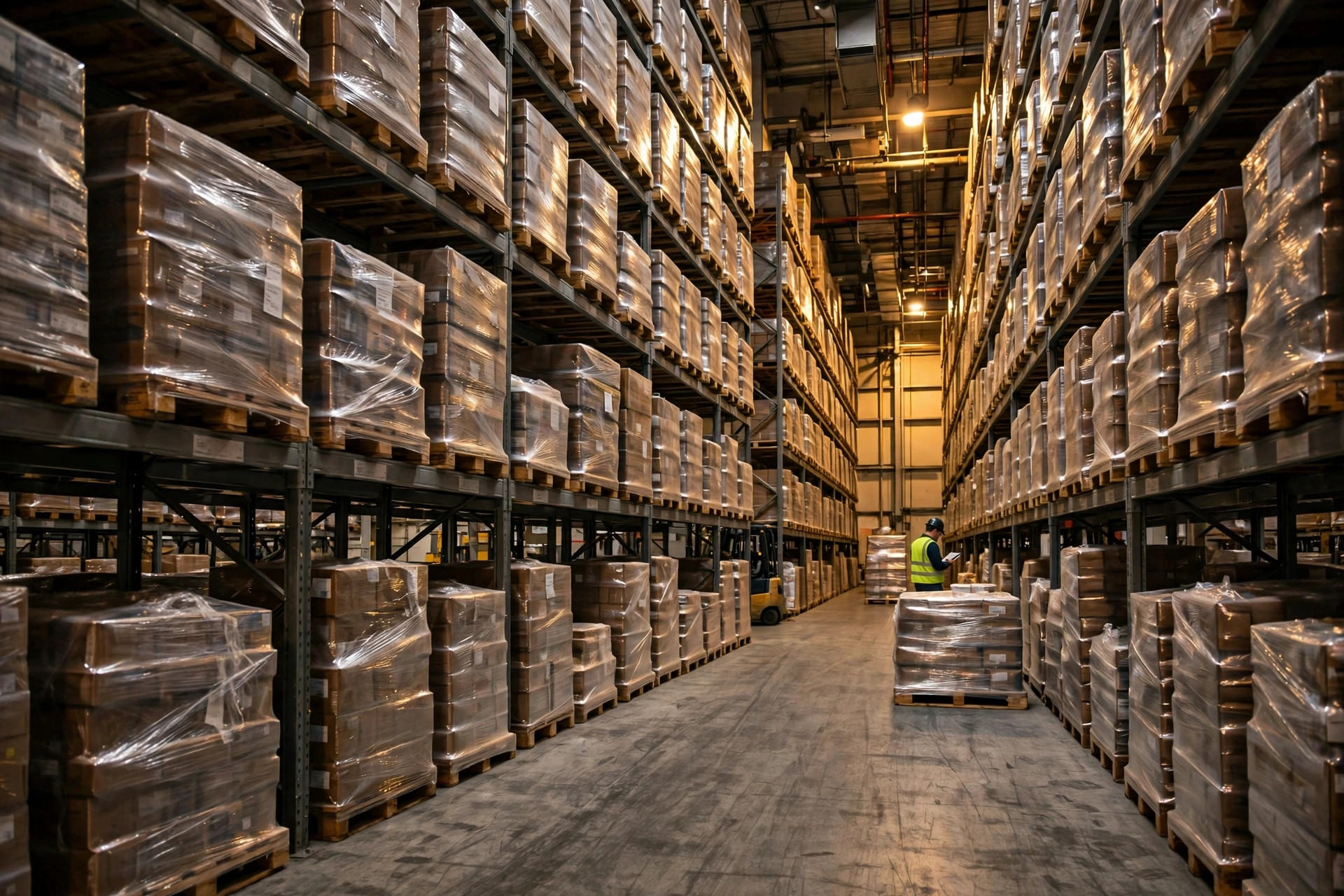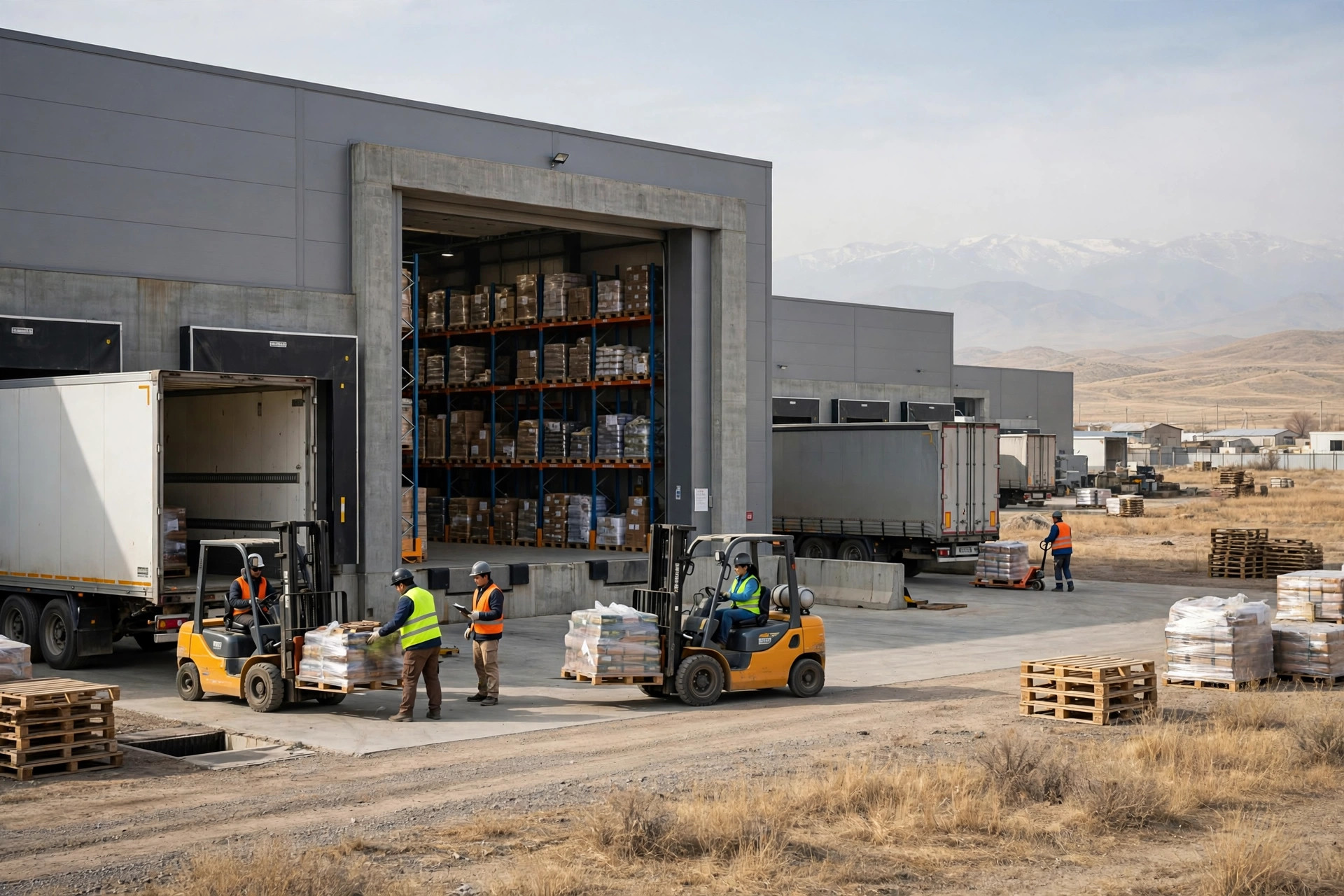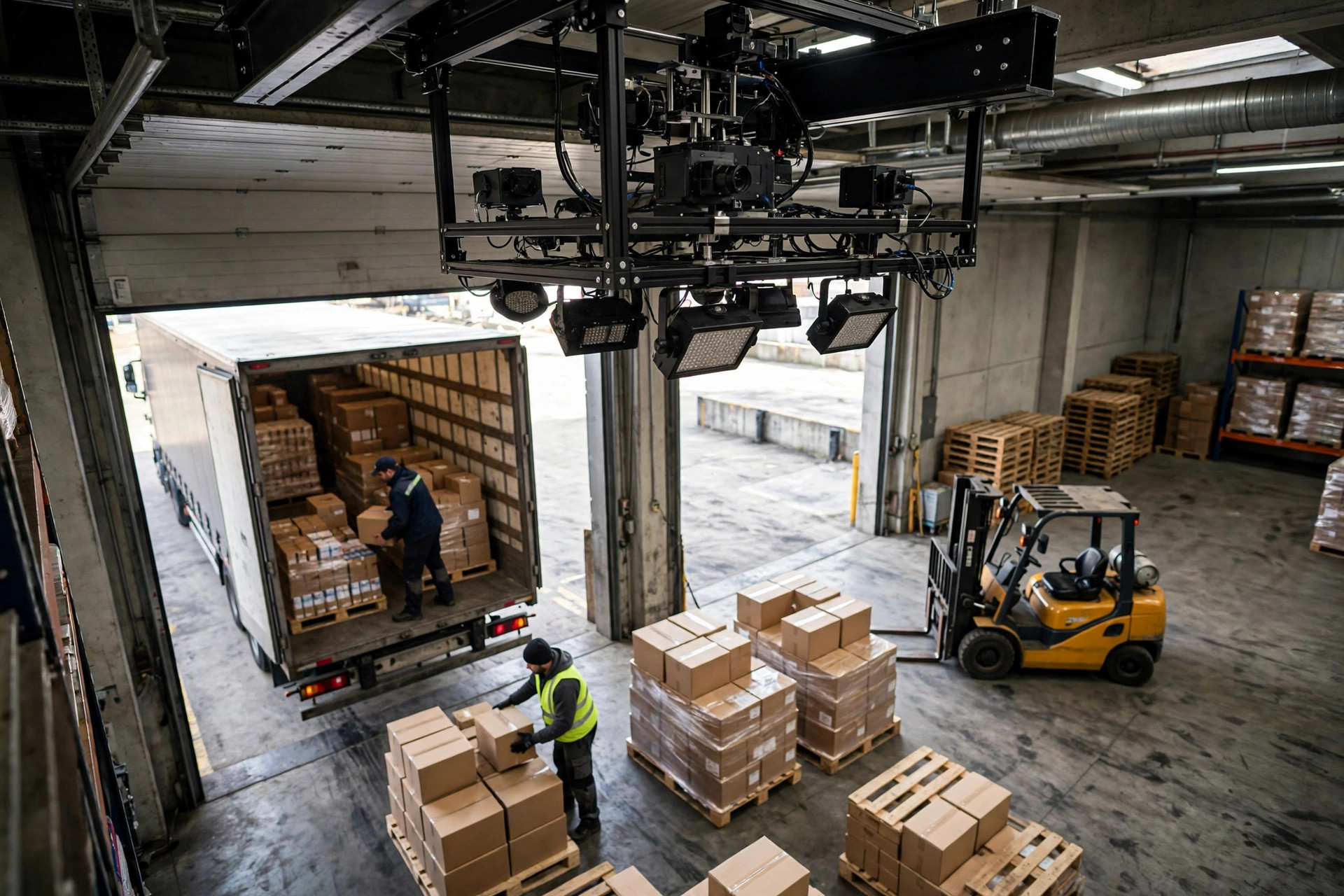
AI vision receiving has moved, in the last couple of years, from pilot projects into everyday use at a growing number of docks. A camera mounted above the unloading bay photographs each pallet and carton, and a model checks whether labels are readable, cartons are damaged, and counts match the paperwork. The promise sounds like full automation. Having watched several deployments up close, my reading is more restrained: the technology does change receiving work, but not in the way its first pitches suggested.
The phenomenon: cameras arrive before hands do
Traditional receiving depends on human eyes and hands: break down the pallet, count cartons, check labels, look for damage, and note exceptions. Its bottleneck is not speed as such, but consistency. A veteran spots faint water damage at a glance; a new hire may see only a darker carton. Night and day shifts drift apart, and exception notes are only as complete as the duty roster allows.
The first change vision systems bring is completeness of record. Every pallet passing the camera leaves a set of images, so an exception no longer lives only in one employee's memory, and a supplier claim can be traced to evidence captured at unloading. That change has value even if the model judges nothing: recording alone already lowers dispute costs.
In autumn 2024, I observed a deployment at an eastern China third-party warehouse handling roughly 40 inbound trucks a day across six dock doors at peak. Before go-live, damage exceptions were compiled after the shift, and suppliers often received photographs three days later, leaving ample room for argument. After go-live, images captured during unloading were linked to the receiving document, and dispute response fell from days to hours. What mattered most was not recognition speed, but that the evidence chain started earlier.
A second observation, from a returns area at a North American e-commerce fulfillment warehouse, pointed the other way. Freight there was heterogeneous — factory cartons, re-taped boxes, loose units without labels, sometimes mixed on one pallet — and operators intervened frequently. Together, the cases suggest a preliminary conclusion: vision receiving works best where inbound freight is most standardized.
Vision receiving in numbers: what it sees, and where it distorts
Any serious discussion of vision receiving has to ask how reliable its judgments are. Published industry reports and disclosed pilots do not give a single answer. Results vary widely across warehouses, lighting conditions, and packaging types: label reading may look stable in one setting, while damage detection in another generates so many false alarms that operators end up re-checking everything by hand. Treating one site's pilot figure as an industry benchmark would not be rigorous.
The error distribution matters more than any average. From the deployments I have seen, vision is relatively reliable at confirming label presence, roughly counting pallet layers and visible cartons, and flagging obvious damage such as major collapse or soaking. It is relatively unreliable at context-dependent tasks: whether slight deformation affects contents, whether re-taping means a carton was opened, or whether a creased label will still scan downstream. Those judgments carry tacit knowledge that models lack and experienced receivers possess.
A simple calculation clarifies the trade-off. A 1,200-carton truck takes about 6.7 person-hours to inspect fully at roughly 20 seconds per carton, versus 0.7 for a 10 percent sample — with higher missed-exception risk. Vision brings the marginal cost of photographing every carton near zero, so full coverage becomes feasible in principle. But photographing everything is not judging everything correctly: if operators must stop to confirm one carton in ten, review consumes the time saved. The real gain is the product of the false-alarm rate and review cost, not camera speed.
Why the messiest dock is the hardest to see
Here is a counterintuitive judgment: cameras lose accuracy precisely where the dock needs them most. The messier the dock, the worse the vision conditions. At peak unloading, pallets stand close together and cartons occlude one another; forklifts crossing the frame introduce motion blur; low afternoon sun slanting into the dock makes stretch wrap glare until labels wash out; pallets arriving in rain carry water stains that change carton color and texture. The clean sample conditions under which a model performs well in a laboratory barely exist on a real dock.
Behind this sits a general pattern: input quality depends on the dock's physical order, and physical order is exactly what a dock struggles to sustain. Volume surges, extra trucks, and inconsistent supplier packaging can undo a tuned camera angle and lighting setup within a week. Well-managed warehouses, where vision works best, need it least as a crutch; loosely managed ones, hoping it will compensate for disorder, get the least reliable results. Treating it as a substitute for dock discipline gets the direction wrong.
A second, often overlooked cause: many projects treat camera installation as completion, when the real bottleneck is exception handling. Once a suspect carton is flagged, someone must review it, record the decision, route any supplier claim, and decide receipt, quarantine, or concession. If those steps are undefined, a sharper camera merely produces more unprocessed images. Technical readiness and process readiness are different things.
What vision catches, what it misses, and what humans must still do
Seen as part of the dock's overall division of labor, the boundary of vision receiving becomes clearer. The table below is a framework drawn from observation, not a performance claim from any vendor, for judging where such a system fits.
| Task | What vision does well | What humans must still do |
|---|---|---|
| Label readability screening | Photograph labels and flag blur, absence, or occlusion | Judge whether a blurred label is still traceable and releasable |
| Rough quantity check | Count pallet layers and visible cartons, alert on mismatch with paperwork | Open and check occluded inner layers, resolve mixed pallets |
| Obvious damage marking | Capture collapse, soaking, and major damage, linked to the receiving document | Judge whether damage affects contents, and decide rejection, quarantine, or concession |
| Re-taping and tamper traces | Flag unusual tape or inconsistent carton condition | Weigh supplier history to judge whether re-boxing is normal |
| Evidence retention | Automatically archive images per pallet, tied to document and time | Supply context beyond the image when a dispute arises, such as transit weather |
From this division, the role change is easier to see. Vision replaces mainly repetitive checking and after-the-fact evidence assembly, not judgment grounded in experience. The job shifts from checking every carton to handling flagged exceptions — a change in the work's nature, not a disappearance of responsibility. The headcount-cut calculation gets the arithmetic wrong: hours saved on full inspection are partly offset by exception review and coordination. Net gain depends on the exception rate, which depends on inbound quality and dock discipline.
Compliance deserves the same restraint. Inspection requirements for imported goods, food, and pharmaceutical products vary by jurisdiction; confirm the applicable standard against the latest official policy. Vision records can supplement an internal evidence chain, but they do not automatically satisfy a regulatory inspection procedure.
The trend to watch: exception handling, not headcount
Following this logic, the likelier development over the next two to three years is not an endless rise in recognition rates, but maturation of exception handling: standardized capture conditions such as fixed dock lighting and positioning guides; deeper integration with warehouse management systems, so exception images sit on the receiving document itself; and graded handling, where clear damage triggers quarantine, doubtful cases enter human review, and minor anomalies are archived without stopping flow.
That judgment carries a timeline: the return curve is flat before it steepens. Early on, false-alarm review and process adjustment consume most of the gain, and managers may reasonably conclude the system works poorly. After roughly six months, accumulated data shows which suppliers have the most packaging problems and which windows carry the highest damage rates, informing purchasing and scheduling. The images become a continuing record of upstream quality, not merely a single-event tool.
Once the dock has eyes, the questions change: who judges flagged exceptions, where those judgments are recorded, and how patterns feed back upstream. No camera answers those directly. They point back to enduring subjects — order, process, and responsibility. Vision makes them more visible, and that may be its most concrete change so far. How far it reshapes headcount will only become clear after more warehouses complete a full annual cycle with exception rates and review costs in the open — a question worth keeping open.
By Dr. Chen, Supply Chain Researcher