Warehouse dock leveler maintenance is the kind of job most warehouses only think about after something goes wrong. Forklifts cross it dozens of times per shift and nobody gives it a second thought, until one morning the lip will not sit flat on the trailer bed, or one side of the deck rises higher than the other, and the whole dock is out of action. A dock leveler is not a steel plate. It is a moving mechanism that wears, leaks, and collects trouble in its pit. Treat it like a plate and it will fail like a plate that was never meant to move. Treat it like equipment and it is actually easy to look after.
How Warehouse Dock Leveler Maintenance Starts With the Load Path
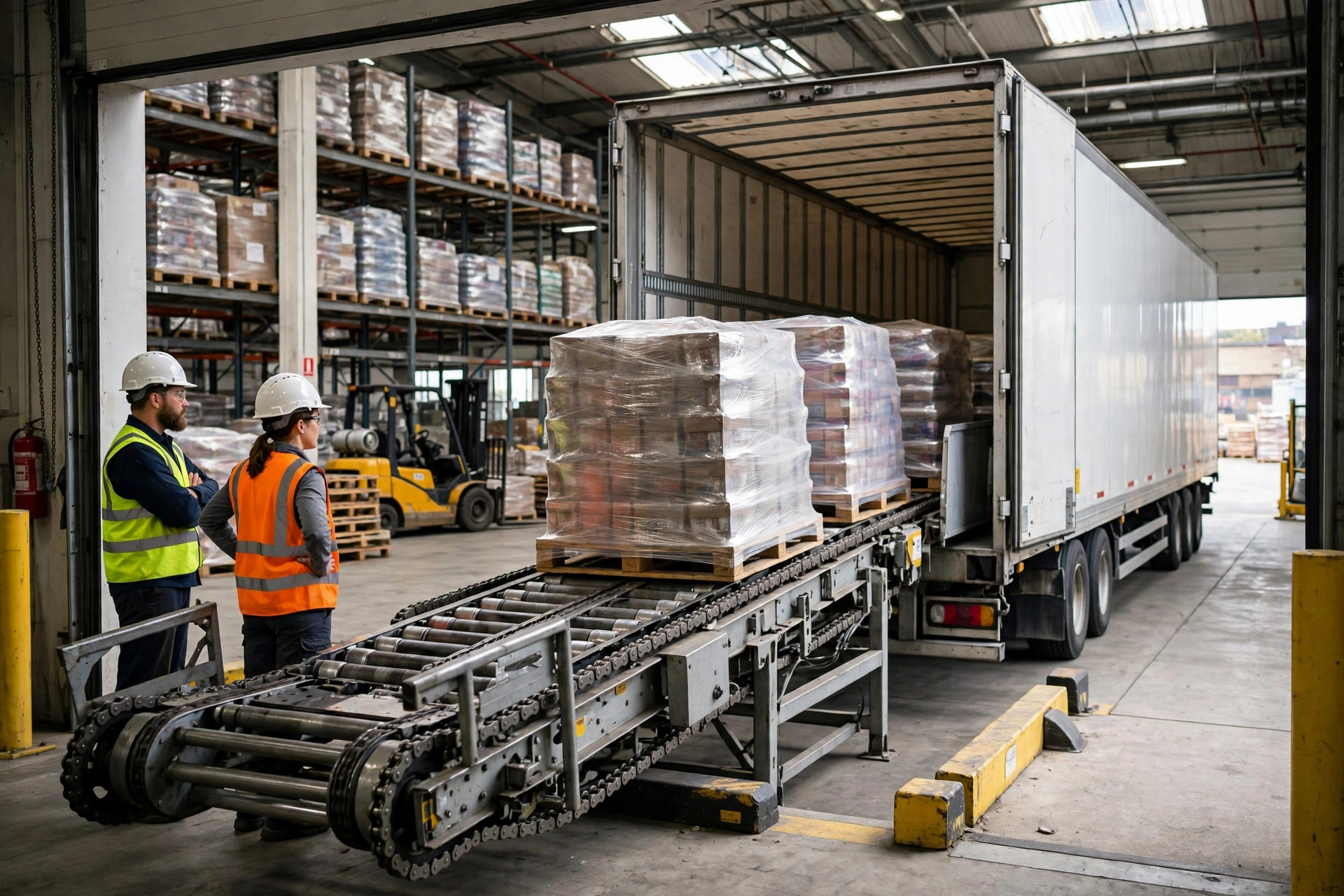
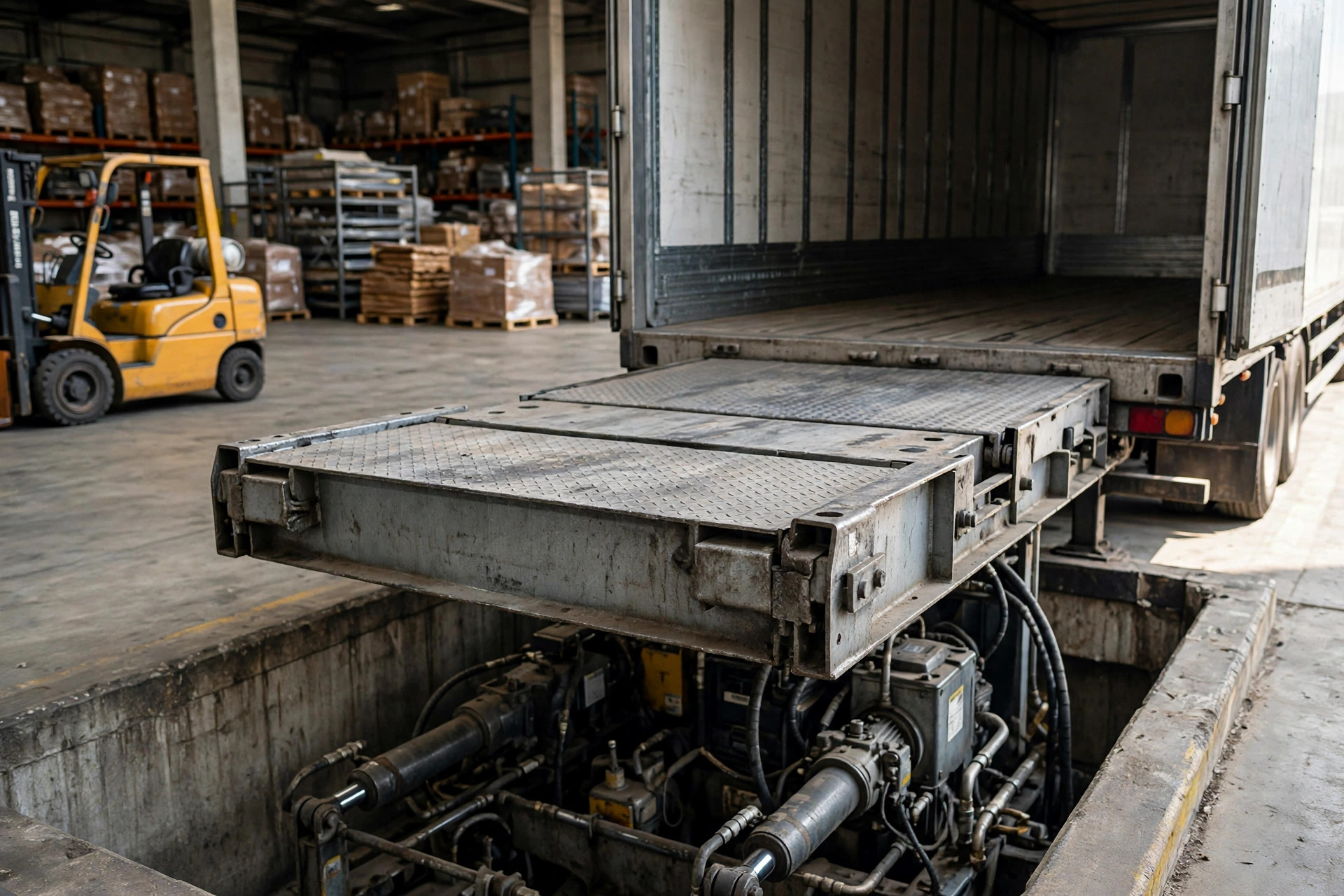
Before any checklist makes sense, it helps to see how the machine carries load. A dock leveler has four parts working together: the deck, the lip, the hydraulic system, and the support structure. The deck carries the load, the lip bridges the last gap onto the trailer bed, the hydraulic cylinders raise and lower the deck, and the support legs and pit frame pass the force into the ground once the deck is parked in position.
Think of it as a small bridge that rises and falls every day. A crossing forklift does not spread its force evenly: it hits the lip first, then the hinge, then the cylinders and support legs, so whichever part loosens first ends up carrying more than its share. That is why I judge a leveler by three things first, not by how new its deck looks: whether the lip sits flat, whether the hinge has play, and whether both sides travel together. If those three are right, a bit of rust is cosmetic; if any one is wrong, even a new-looking deck is a breakdown waiting for a busy shift.
I saw the hinge version of this failure on a morning shift at one warehouse. A truck had just docked and the forklift driver crossed as usual. One end of the lip sat down properly and the other hovered a finger-width above the trailer bed. Assuming the truck was parked crooked, the driver repositioned and crossed again. The lip clunked at the hinge and tilted to one side. Taken apart, the hinge pin had worn thin and the pin holes had worn oval: fine under no load, finished under a real load. Nobody was hurt, because the speed was low, but that dock closed for the rest of the shift, dozens of pallets were rerouted through the next dock, and the crew worked late to catch up. The hinge did not fail suddenly; it wore a little every day until it could no longer pretend to be sound.
Another warehouse taught me the opposite lesson, and the trouble was in the pit. It was an older building with poor pit drainage, and after a wet season the pit floor had collected silt and wood debris. The deck grew heavier to raise and lower, so the operators assumed the hydraulics were losing power and changed the oil. The deck was still heavy. Only when it was raised and the pit cleaned did the cause appear: silt had built up against the linkage, so every movement dragged through mud. Once the pit was cleaned and the drain cleared, the deck moved freely again. When a lip will not sit flat, do not blame the hydraulics first. Look down into the pit. The pit never complains, and that is exactly why it causes so much trouble.
Daily Checks vs Quarterly Warehouse Dock Leveler Maintenance
Maintenance fails when nobody owns it, or everybody assumes somebody else does, so the division of labour and the stop conditions have to be written down plainly.
| Check | Who does it | Frequency | Stop the leveler if you find |
|---|---|---|---|
| Lip seating and hinge play | Shift operator | Before work each day | One end of the lip floating, hinge noise or visible play |
| Deck travel level and smooth | Shift operator | Before work each day | Sides travelling unevenly, deck sticking halfway |
| Hydraulic lines and cylinder leaks | Shift lead | Weekly | Spreading oil stains, oil level falling steadily |
| Pit water, silt, and debris | Maintenance technician | Weekly | Water reaching the linkage, debris jamming moving parts |
| Support legs and pit frame cracks or distortion | Maintenance technician or contractor | Quarterly | Any visible crack, leg that will not retract or hold |
The daily check needs no tools and no disassembly. Raise and lower the deck once with no load, listen, and watch whether both sides stay level. Extend and retract the lip once, check the seating, and feel the hinge. Walk around the deck, look for oil, and look into the pit opening for debris. It takes a few minutes and catches most sudden failures before they happen. The quarterly service is where the real work happens: hinge pins removed and measured for wear, seals replaced, the pit cleaned out, support leg locks checked, and the deck tread cleared of debris. Keep a record for each leveler — unit, date, parts replaced, sign-off — and compare one quarter with the next. That record is what turns warehouse dock leveler maintenance from guesswork into a trend you can act on.
Here is a counterintuitive judgment that surprises a lot of teams: more grease on the hinge is not better. Some warehouses grease every hinge until grease squeezes out everywhere, believing extra grease means extra protection. The surplus traps dust and wood chips against the pin and grinds into an abrasive paste, wearing it faster. Use the amount the equipment manual specifies, then wipe off the excess. In maintenance, as in most things, doing the right amount beats doing the most.
There is also a false fix worth calling out. When a deck moves slowly, the instinct is often to fit a bigger hydraulic pump. In most cases slowness is not a lack of power: it is internal leakage, ageing seals, or something dragging in the pit. Check the leaks, the pit, and the linkage first, and only talk about replacement parts after those checks come back clean. Fitting a bigger pump to a dragging mechanism is like buying faster shoes for someone running with sandbags tied to their ankles: it does not fix the drag, and it can overload the next weakest part.
When One Leveler Fails, How to Reroute the Work
Even good maintenance cannot prevent every failure, so the rerouting plan has to exist before the failure, not after it. The moment a leveler is taken out of service, tag it and lock out its controls so nobody restarts it out of habit. Then move that shift's trucks and loads to a neighbouring dock, but only after confirming that the neighbouring leveler passed its daily check that day. Moving freight from a broken leveler to a half-healthy one just moves the failure along the dock.
If the neighbouring docks are full, split the work. Small, urgent loads go through another route by hand or with smaller equipment; heavy, bulk loads wait for the repair verdict. Never rush a forklift across a leveler whose lip is not seated, just to save a shift. An unseated lip can flip under a forklift, turning a dropped load into a safety incident. Losing a few hours of dock time hurts the schedule; forcing a broken leveler risks the whole shift.
The repair verdict needs to be specific. A worn hinge pin or leaking seal is a parts replacement: after the repair, run the deck empty several times, then under a light load, and only release it when travel is level and the lip seats properly. A crack in a support leg or pit frame is different. Do not patch it on the spot and carry on; structural repairs should follow the manufacturer or a qualified repair provider's advice, and the leveler stays out of service until it passes reinspection. The plan is finished not when the deck moves again, but when it can carry load as steadily as before the failure.
So is the money worth it? Judge it by one number: whether a dock shift was lost to a leveler failure this month. No lost shift means the daily checks and quarterly service spent the money up front, where it was cheapest. One lost shift means going back to the cause and asking whether the daily check missed it, the quarterly service slipped, or the pit simply had nobody looking after it. In the end, the bill is not about parts replaced, but whether someone looked at the machine before it started making noise.
By Da Liu, Automation Engineer