A warehouse rack beam safety lock is the kind of part nobody looks at until something goes wrong — and then it is the first thing everyone asks about. Here is my position up front: when a forklift bends an upright, your first move should not be "order a replacement." It should be isolate, grade, then decide. Get that sequence wrong and you are not just spending money badly — you are leaving the load-capacity question for the whole bay unanswered.
What a Warehouse Rack Beam Safety Lock Actually Locks
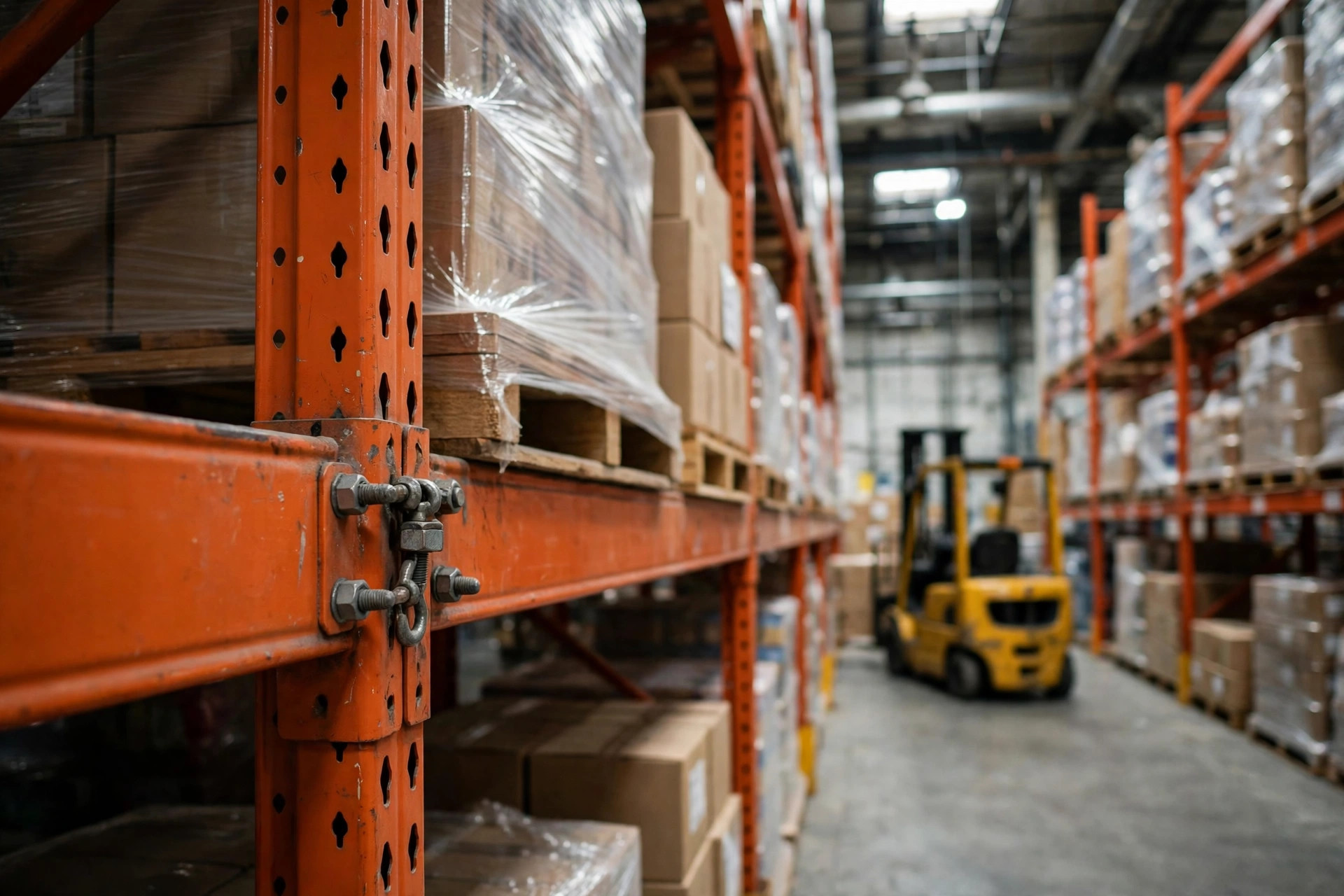
Think of it this way: a beam hangs on an upright by hooks, and those hooks only resist downward force. What stops the beam from being knocked upward and out of its slots — by a forklift raising a pallet a little too high, or a pallet clipping the beam on the way in — is the safety lock. You can understand it as a seatbelt: you never notice it on a normal day, and it is the only thing that matters on the bad day.
And here is the annoying part: the lock is the cheapest component in the rack and the one most often missing. A forklift driver knocks one off. A maintenance tech pulls a beam to change a level height and forgets to put the pair back. A walk-through inspector glances from the aisle and never sees it. Then one day you look closely and an entire row is short on locks.
So my rule is simple: a safety lock is not an accessory, it is part of the connection. A beam with a missing lock gets treated as a fall risk — unload it, fit the correct lock, and if you do not have the right model on hand, take that beam level out of service. Do not improvise with wire or zip ties. I have seen a beam held by zip ties in a working warehouse, and I will say it plainly: a zip tie's breaking strength is nowhere near the impact load of a pallet strike. That is fake savings, the kind that manufactures an accident.
Grade It Before You Replace It
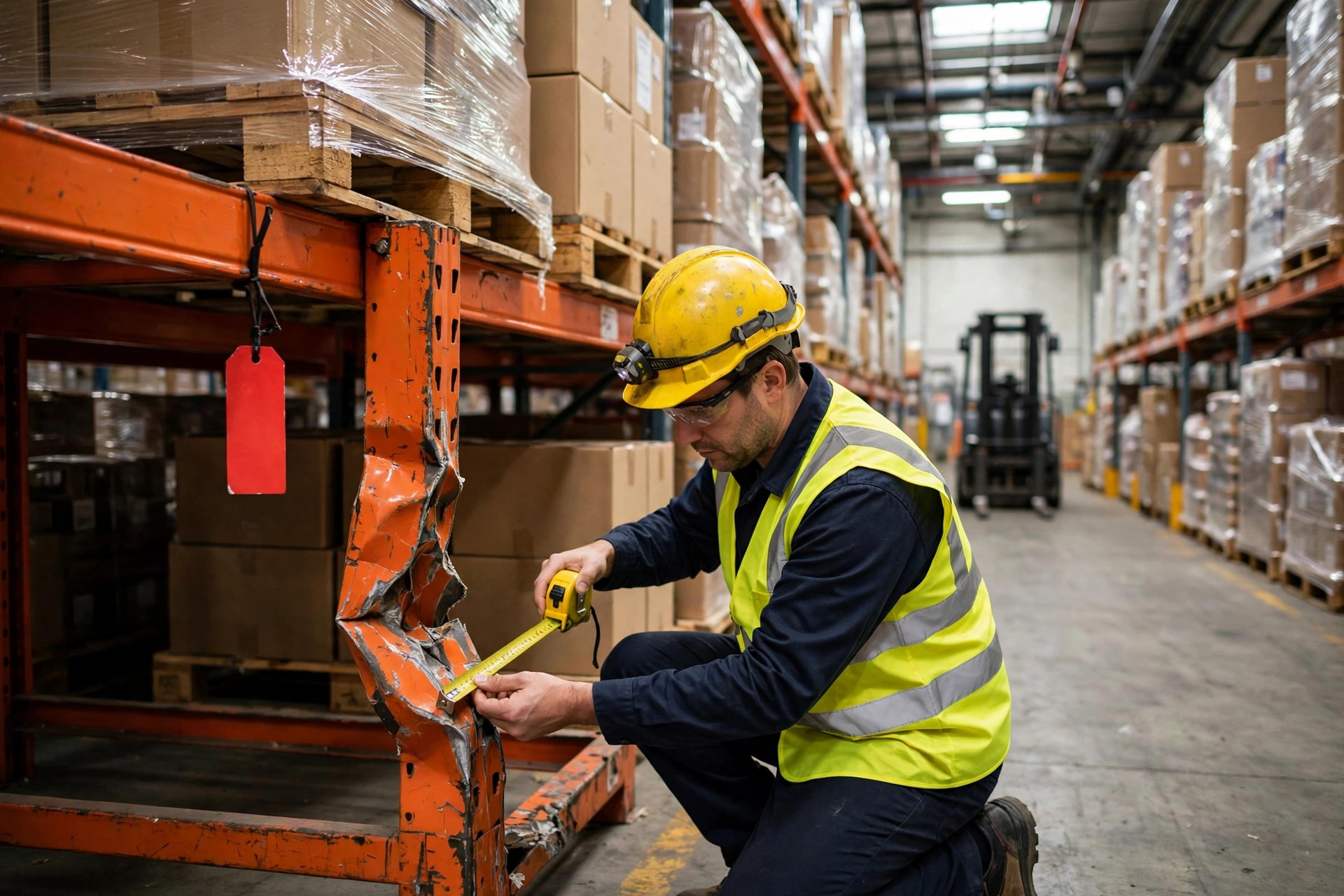
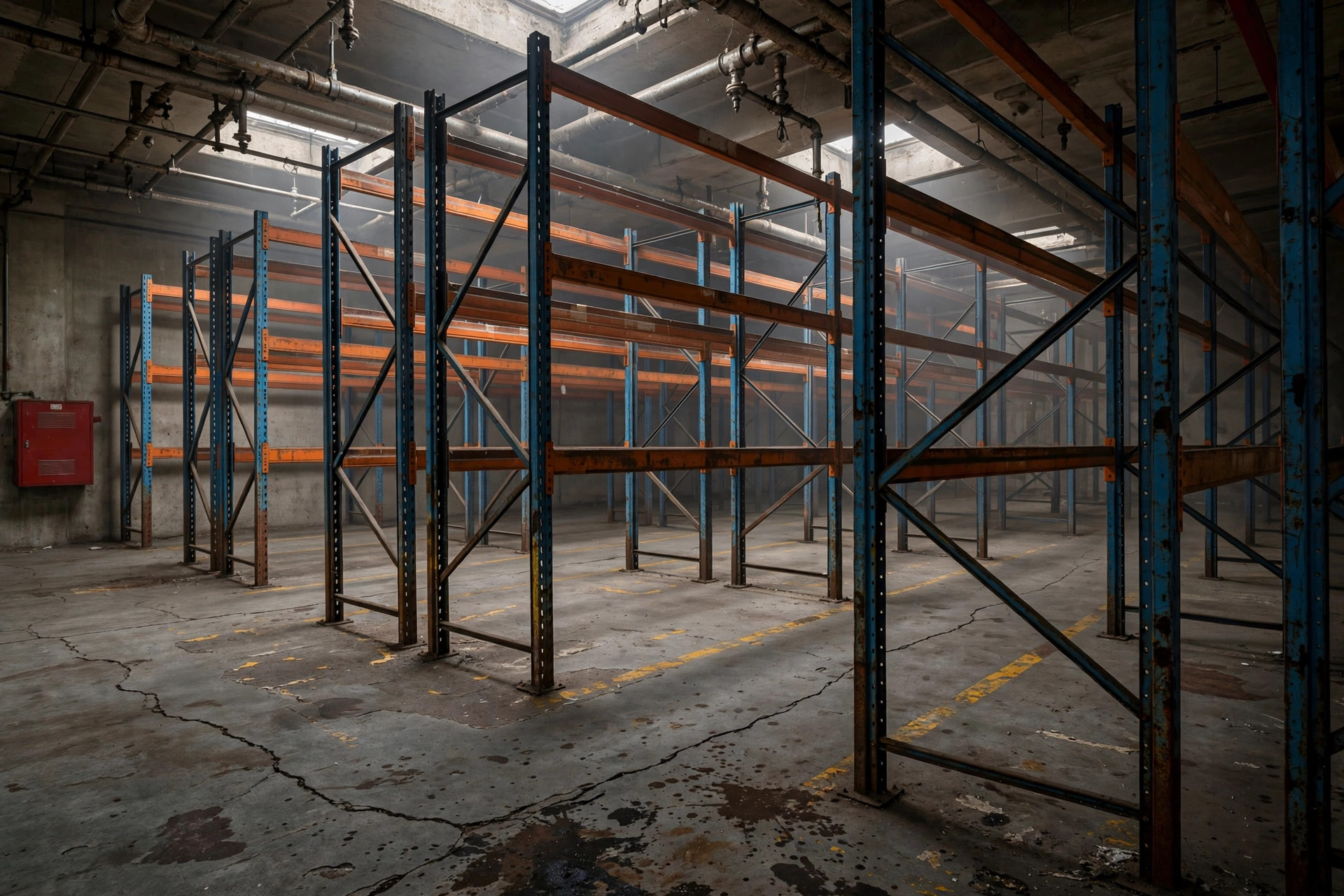
One autumn in 2023, I was walking a 3PL warehouse in California's Inland Empire when a forklift clipped a ground-level upright while reversing. The upright face was dented, paint scraped off, and one beam safety lock on the adjacent level had popped out. The warehouse manager's first question was "how much for a new upright?" Mine was "tape off these three bays." That is not overreacting. The current industry standard is unambiguous on sequence: once damage that could affect load capacity is identified, isolate the affected portion, start a mitigative response — repair or replacement — and do not return it to service until a registered design professional certifies it has been restored to at least its original design capacity. Isolate, assess, act, certify, reuse. Skip a step and you are gambling with people standing nearby.
In the field I grade damage into three tiers. A site crew can make the rough call in ten minutes; the precise call still belongs to the current standard and the manufacturer's instructions:
| Tier | What you see | What you do |
|---|---|---|
| Tier 1: surface | Scuffed paint, light scratches, no visible deformation, no beam sag, locks intact | Photograph it, keep using it, flag it for the next inspection |
| Tier 2: suspect deformation | Visible dent or twist in the upright, loose beam connection, lock missing or damaged | Isolate the bay and its neighbors, unload, call for professional assessment, no reuse before assessment |
| Tier 3: structural | Torn or cracked upright, loose or missing baseplate anchors, a row visibly out of plumb | Take the whole row out of service, cordon it off, professional assessment decides repair or replacement, certified before reuse |
Here is the counterintuitive part: the most dangerous upright is often not the one that took the hardest hit — it is the one that only lost some paint. A badly bent upright gets taken out of service by everyone who sees it, so it is safe by default. A lightly scraped one keeps carrying full loads while its steel may already have yielded underneath, and it fails without warning. I would rather over-grade a Tier 1 as a Tier 2 and lose a few bays for a few days than under-grade a Tier 2 as a Tier 1. The cost of over-grading is some throughput; the cost of under-grading is a collapsed bay.
One more trap: do not decide repair versus replacement on the parts price alone. A repair must be manufacturer-recognized or professionally assessed — not every dent is repairable. A replacement must match the original system, same maker, same spec: another maker's upright may look identical, but different hole spacing and steel thickness mean a different capacity curve. Mix makers and you void the row's capacity certification.
The Beam Safety Lock Checklist: Three Things, Every Inspection
The night before a peak-season sale in 2024, I did a pre-go-live inspection at an e-commerce warehouse: twelve bays, checked lock by lock. Seven locks missing, two more deformed and not seated. Seven sounds small until you know the upper levels of that row were fully loaded with heavy goods. One beam knocked loose during peak week would not have dropped one pallet — it would have started a cascade. We restocked locks overnight and cleared the row for loading the next day. A half-day delay in loading is recoverable. A dropped beam is not.
My checklist has exactly three items, and none of them is optional:
- Every beam end has its safety lock in place and seated. Check it by hand — try to move it. A lock you can flick open with a finger is the same as no lock.
- No visible beam deflection, no cracked connectors. Beam deflection has a standard limit expressed as a fraction of span; the exact figure is whatever the current standard and the manufacturer specify. A beam that still sags when empty has passed its yield point — replace it, no debate.
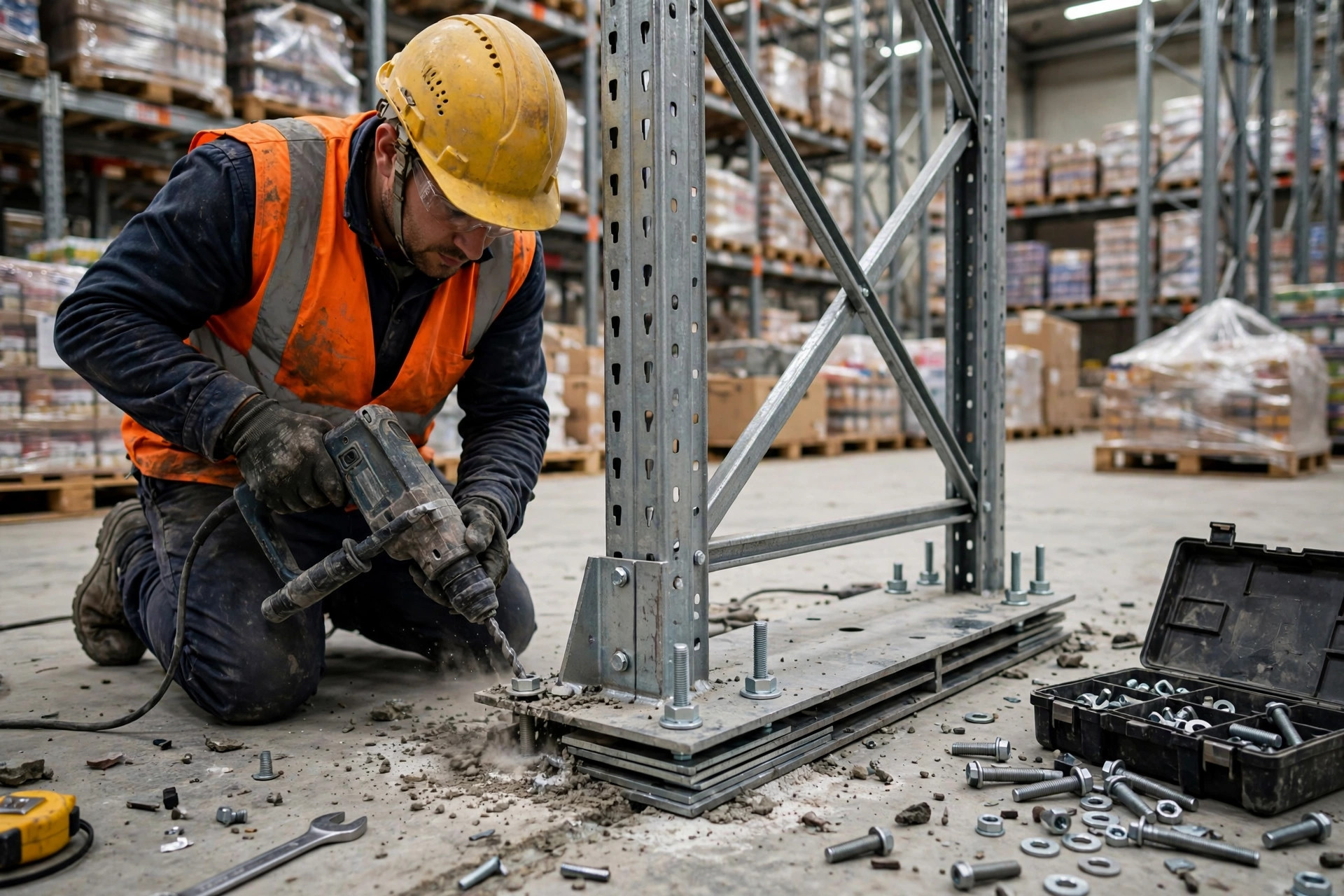
- Upright plumb and baseplate anchors. Out-of-plumb also has a standard limit expressed as a fraction of height, and anchors that are loose, missing, or sitting on a deformed baseplate push the bay to Tier 2 or higher.
Photograph everything with the bay number and the date. Why the paperwork? Because the next time that bay gets hit, you need to prove it was sound before the impact, and a photo proves it while a memory does not. Inspection records are also your compliance trail — when an auditor or an insurer asks, the file is the answer.
The Cost Math: Repair, Replace, or Shut It Down
Is this money well spent? Look at one number: the cost of shutting down a bay and the cost of one accident are not in the same universe.
Run the site math. Replacing an upright costs three things: the part, the labor, and the downtime — the part plus its connectors, the crew time to swap and re-inspect, and the throughput lost while that bay and its neighbors sit idle. Repairing (where a professional assessment allows it) is usually cheaper on parts and labor, but you add the assessment and certification cost, and not all damage is repairable. Shutting a bay down costs no parts at all, but the throughput loss keeps compounding — the tighter your space, the more expensive every idle bay becomes.
So the decision framework writes itself:
- Tier 1: keep running, log it, recheck it. Cost is near zero.
- Tier 2: shut it down, get it assessed. If repair is approved and cheaper than replacement with certification achievable, repair. Otherwise replace.
- Tier 3: price it as replacement or whole-row work. Do not burn days debating whether it "might be fixable" — those days are downtime cost too.
- Missing locks: the cheapest fix with the highest return. Fitting a lock takes minutes. Leaving it missing means betting a full beam level of load against the price of a clip.
One last operational note: stock warehouse rack beam safety locks by model number. Different makers use different clip shapes and spring tensions, and a wrong-model lock forced into place may look seated while never engaging. Keep the common models in the parts cabinet so a missing lock gets fixed on the spot.
The bottom line is not "never replace an upright." It is "never skip the sequence." Isolate, grade, decide, certify, reuse — that order is itself the cheapest option, because it is the one that takes a collapse off the table entirely.
By Da Liu, Automation Engineer