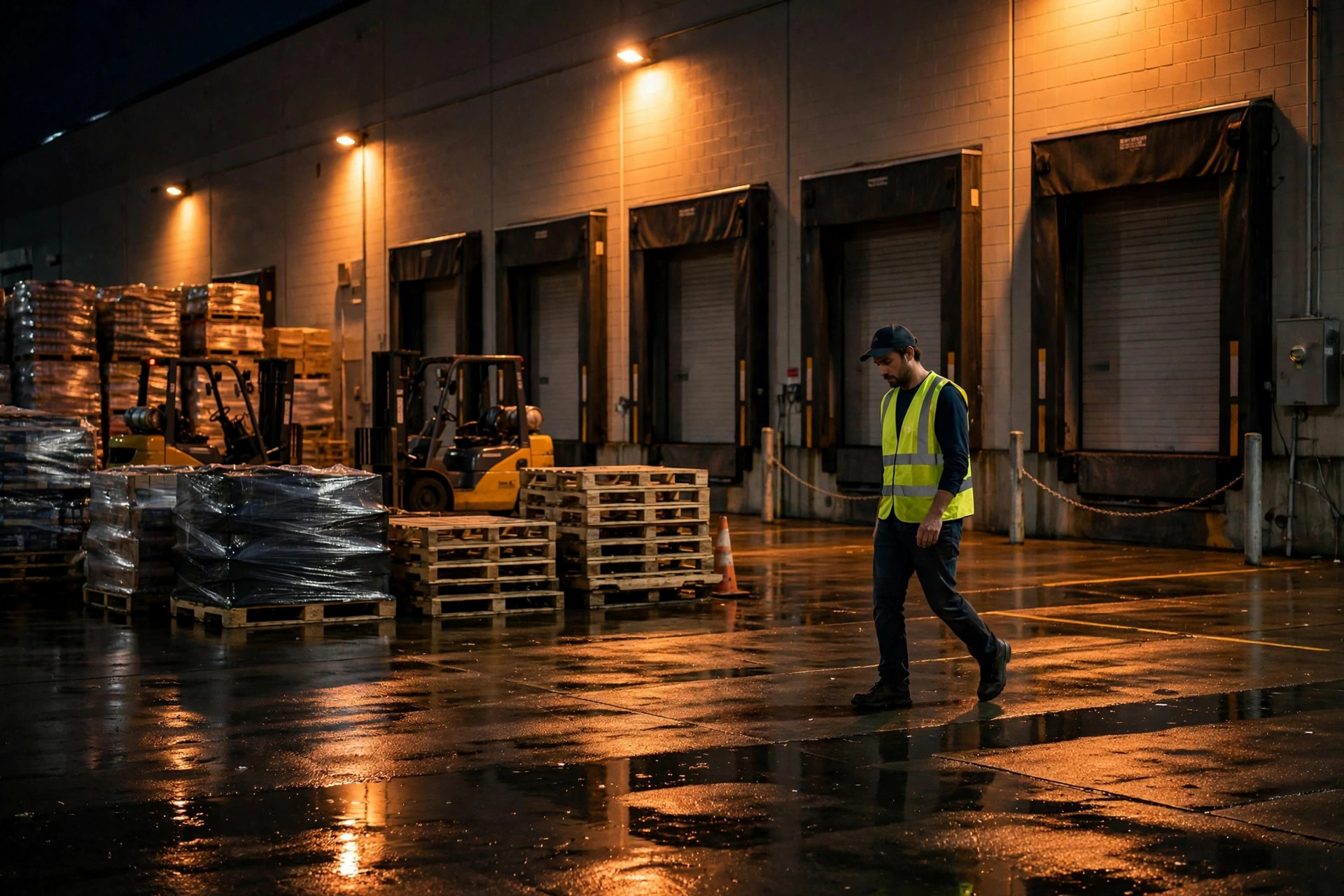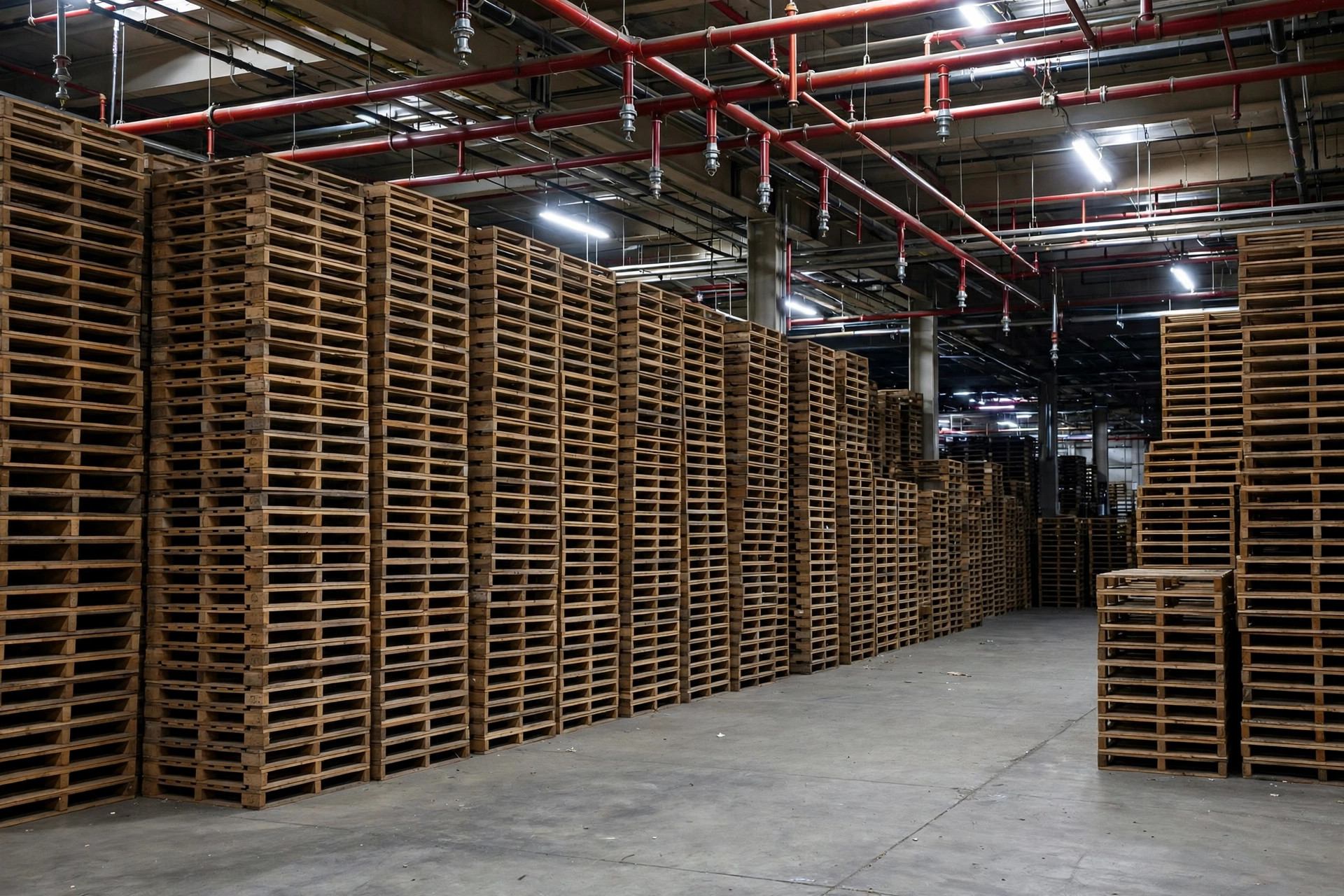
Let me do the math first. A 50,000-square-foot distribution center, a dozen forklifts, a hundred-plus employees, two recordable injuries last peak season. Suppose an inspector walks in this year and writes up six serious violations. At the 2025 inflation-adjusted maximum — $16,550 per violation — that's $99,300. That doesn't include the cost of hiring counsel, the output lost during abatement shutdowns, or the premium you pay when remediation has to be done on a rush basis. Money spent in vain? Absolutely. But here's the more painful part: spending the same money ahead of time on inspection readiness would probably cost less than a third of that.
That's the calculation this article is about. OSHA's National Emphasis Program (NEP) for warehousing and distribution centers launched on July 13, 2023, and was renewed effective July 31, 2026 — running straight through to 2031. Five years. The odds of an inspector walking through your door only go up. Rather than gamble, do the math and get ready.
Background: Why the NEP Is Camping on Warehousing for Five Years
The NEP doesn't create new rules; it tells OSHA where to aim its enforcement resources. The original directive, CPL 03-00-026, was renewed under the same number in 2026, effective through July 31, 2031. Check the directive text on OSHA's website for the fine print — what follows is the part that affects your wallet.
Why warehouses? The numbers: more than 1.8 million warehousing workers in the U.S. (GCCA figures), more than doubling over the past decade. From 2020 to 2024, general warehousing posted a recordable injury rate of 5.2 per 100 workers and a DART rate of 4.4, against all-industry averages of 2.6 and 1.6 — roughly double. In the first 18 months of the original NEP, OSHA cited more than 1,700 violations and removed some 37,000 workers from hazardous conditions, per Adams & Reese's review of enforcement data. High injury rates, a huge and growing workforce — where else would enforcement go?
The critical point: these are programmed inspections. OSHA builds its inspection lists on neutral, objective criteria. Your facility doesn't need a complaint or a major incident on record — if you're on the list, the inspector comes. The covered industry codes are public: postal processing (NAICS 491110), couriers (492110), local delivery (492210), general warehousing (493110), refrigerated warehousing (493120), farm product warehousing (493130), and others. Betting on "we've never had an incident, so we won't be inspected" is a miscalculation from line one.
The 7 Hazard Categories OSHA's Warehousing NEP Targets
The renewed NEP is explicit about its checklist — seven categories. When the inspector walks in, this is the list in hand:
| # | Category | Common citations | Self-check |
|---|---|---|---|
| 1 | Powered industrial trucks (forklifts) | Uncertified operators, missing daily inspections, speeding or riders | Pull 10 operator certs and inspection sheets; check for gaps in dates |
| 2 | Materials handling and storage | Overloaded racking, unstable stacking, damaged pallets | Walk the aisles, photograph 20 rack sections, review each one |
| 3 | Walking-working surfaces | Oil on floors, trip hazards, blocked pedestrian aisles | Inspect floors and aisles after the night shift |
| 4 | Means of egress | Locked exits, blocked exit routes, missing signage | Monthly exit-route check, treated like a fire drill |
| 5 | Fire protection | Expired or blocked extinguishers, storage under sprinklers | Check every extinguisher's gauge and monthly tag against the location list |
| 6 | Heat | Water stations, rest areas, heat illness plan | Review the heat plan before summer |
| 7 | Ergonomics | Repetitive lifting, awkward postures, complaint clusters | Look for musculoskeletal clusters in the 300 logs |
Note on categories 6 and 7: the renewal dropped the mandatory heat-and-ergonomics screening, but left it to each area office's discretion — if the inspector sees a reason, it goes back on the list. "Not mandatory" is not "not inspected."
The First 60 Minutes After the Inspector Walks In
The opening conference typically goes like this: the compliance officer verifies your NAICS code and headcount, then asks for records — the OSHA 300 log, the 300A summary, and 301 incident reports, for the current year plus the three prior calendar years. Recordkeeping is an explicitly named NEP priority; a missing year of 300 logs, or 301s that don't reconcile with the 300 log, are ready-made citations.
Then comes the walkaround, employee interviews, and document requests. The interviews are practical: were you trained before starting, do you know who to report an injury to, can you use a fire extinguisher — if workers can't answer, the officer pulls your training records, and if those don't line up either, that's another citation. One thing many operators miss: the renewal spells out expansion triggers — a fatality, catastrophe, complaint, or referral during the inspection can convert a limited-scope NEP visit into a comprehensive inspection on the spot. The scope at entry is not the scope at exit.
Here's the most common script I see in these inspections: the officer finds two unrecorded cases in the 300 log from the year before last; on the floor, two of three extinguishers have monthly tags with a two-month gap; last week's forklift inspection sheets are blank. Three issues, three separate citations, three serious violations at a floor of roughly $50,000. And all three could have been fixed in a single weekend a month earlier, at negligible cost. That's what I mean by "in vain" — you're not fined for what you didn't know, you're fined for what you didn't do.
The Real Math: Getting Cited vs. Getting Ready
Penalty levels first — public numbers, inflation-adjusted January 2025 (on OSHA's website): serious violations up to $16,550 each; willful or repeated violations up to $165,514 each. Note "repeated": the same deficiency cited last year and found again this year jumps a whole penalty tier.
| Reactive: getting cited | Proactive: inspection-ready | |
|---|---|---|
| Citations | 6 serious violations, roughly $99,300 | Self-audit fixed them first: zero |
| Legal and response | Outside counsel on top of everything | Near zero |
| Shutdown and slowdown | Abatement-period slowdowns; hard to quantify but real | Remediation folded into planned maintenance windows |
| Remediation cost | Rush jobs at rush prices | Planned spend at normal prices |
| Aftermath | A record on file; "repeated" multipliers waiting next time | A system in place, reusable every year |
The most expensive line in that table is "repeated." The first citation is tuition; the second citation for the same deficiency is priced at the willful-or-repeated tier, where a single item can cost more than six serious ones combined. Money spent in vain — you be the judge.
A Conclusion You Can Calculate
Skip the fancy models. One rule: this year's compliance budget = 3 serious citations = capped at $50,000. 3 × $16,550 ≈ $49,650; round to $50K. Take that $50K and spend it down the seven categories above. Here's a reference split:
| Spend it on | Rough magnitude | Maps to category |
|---|---|---|
| Forklift operator recertification and new-hire certification | ~$12,000 | Category 1 |
| Outsourced extinguisher inspections, replacing expired units | ~$6,000 | Category 5 |
| Professional review of three years of 300/300A/301 records | ~$8,000 | Recordkeeping |
| Redoing exit signage and emergency lighting | ~$7,000 | Category 4 |
| Racking safety inspection, replacing damaged beams | ~$10,000 | Category 2 |
| Heat illness plan, water and cooling stations | ~$4,000 | Category 6 |
| Reserve: ergonomics assessment | ~$3,000 | Category 7 |
Those are order-of-magnitude figures — get real quotes from your local providers — but the structure is the point: spend where the inspector will definitely look, not a dollar on window dressing.
Then ask yourself three questions: Are the last three years of 300 logs complete? Is last week's forklift inspection sheet blank? Is there a gap in the extinguisher monthly tags? If you can't answer one of them, do those three things before anything else.
The conclusion is simple: $50,000 spent proactively will always cost less than one reactive inspection. Because on a reactive inspection's bill, the inspector writes the numbers — not you.
Remember, compliance follows the same logic as insurance: you're not buying "nothing goes wrong," you're buying "when something goes wrong, I'm the one in control." An inspector walking in isn't the scary part. The scary part is when the books and the floor don't match after they do.
By Lao Zhou, Logistics Cost Analyst