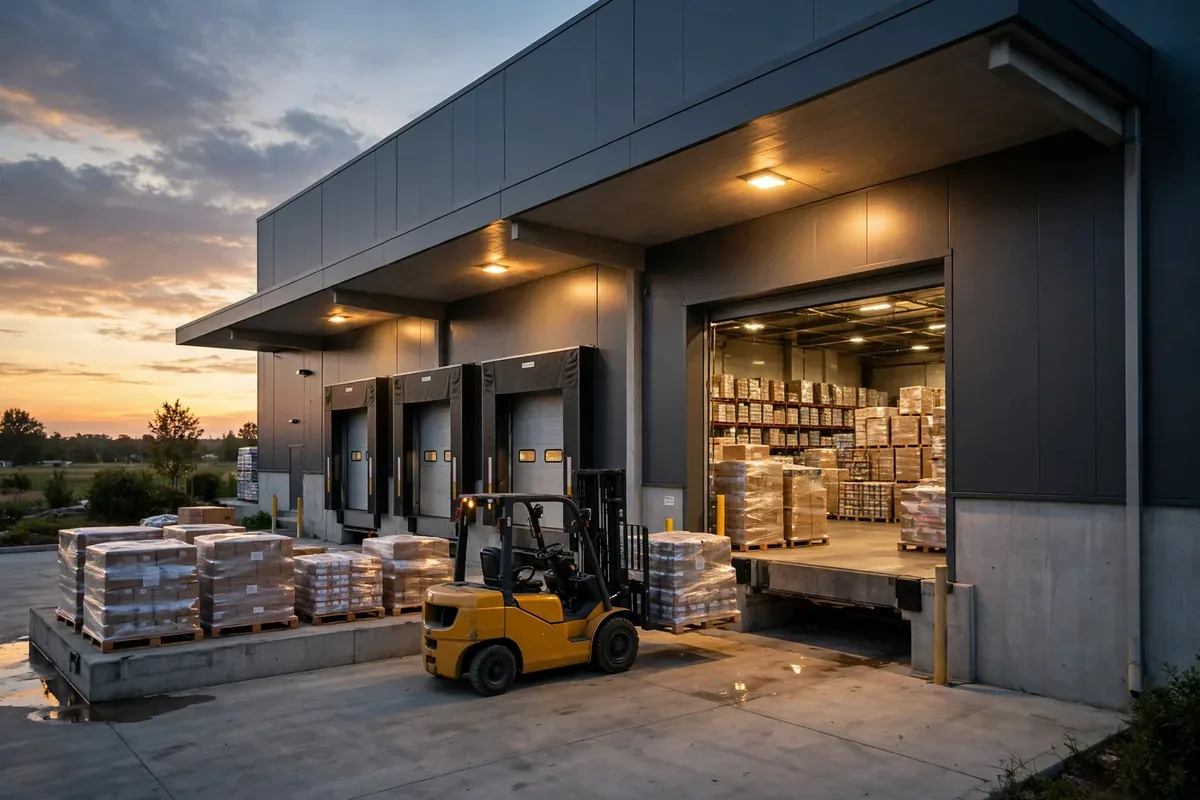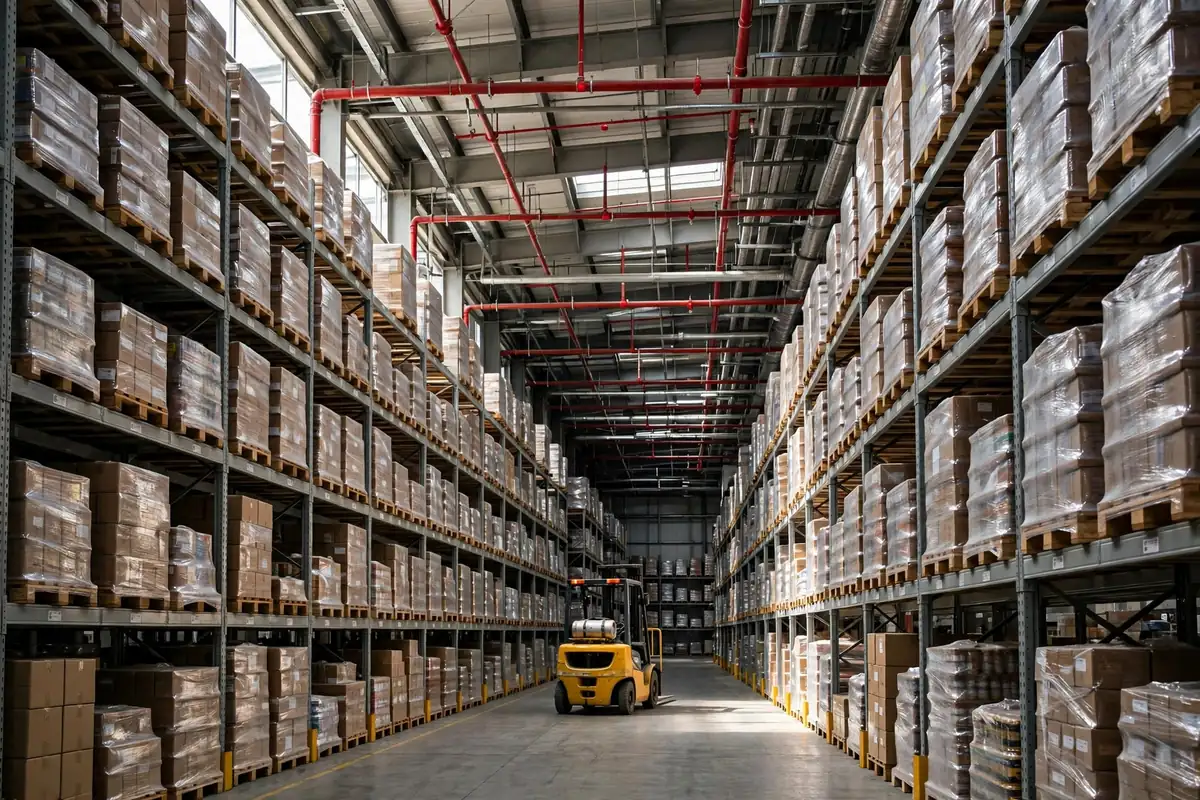
A single shipment leaves the factory, loads onto a line-haul truck, unloads into a warehouse, and ships out again — and its cargo insurance has to keep up, because across that journey the goods change their legal identity three or four times, while most cargo owners hold only one policy and assume they are covered throughout. The gap between warehouse cargo insurance and transit coverage hides precisely in those transitions: when the goods sit in the warehouse, the transit policy has already expired; when they are on the road, the storage policy has not yet begun.
According to industry discussions and published claims case reviews, disputes of this "covered by neither" type are not uncommon in cross-border e-commerce and third-party warehousing, where cargo owners typically focus on premium levels when signing and rarely check, clause by clause, where one policy's liability ends and the other's begins. The two cases below are illustrative scenarios, adapted from common dispute patterns, with figures used as hypothetical examples to explain structure rather than as citations of real judgments.
What the Storage-Transit Coverage Gap Looks Like
The first scenario takes place in a bonded warehouse in South China. In mid-2024, a cross-border seller stored goods there when a fire sprinkler discharged by mistake one night and dampened a number of cartons. The seller filed under the transit policy, and the insurer replied that transit liability had ended once the goods were unloaded, received, and signed into the warehouse, so water damage inside the facility fell outside transit coverage. The seller then turned to the storage policy, only to find that sprinkler malfunction was listed under an exclusion or a sub-limit in the storage wording, and recovered only a small fraction of the loss. The cargo owner had never treated the "receipt into storage" moment as a risk point before the loss occurred.
The second scenario is more typical, and harder to spot. A shipment travelling from East China to North China was damaged in a rear-end collision while the truck was stopped at a highway service area. Transit cover generally applies "during transit," but the contested question was whether temporary stops, transshipment, and waiting for collection count as being in transit at all. Some policies expressly extend cover to "temporary storage," while others require "continuous transit," and if the cargo owner did not confirm this at placement, the wording is discovered to be unfavourable only at the claims stage.
Both scenarios point to the same structural issue: storage and transit cover are not two chapters of one policy, but two different risk logics — transit covers goods in motion, storage covers goods at rest — and between motion and rest there is always a stretch that is neither, where claims disputes concentrate.
Cargo Insurance, Storage vs Transit: What Each Policy Actually Covers
The clearest way to explain the relationship is to compare the two side by side. Based on publicly available product descriptions and standard policy wordings, the differences are broadly as follows:
| Dimension | Transit coverage | Storage coverage |
|---|---|---|
| Subject matter | Goods in transit | Goods in storage and warehousing liability |
| Liability begins | On loading and departure (as worded) | On receipt into the warehouse |
| Liability ends | On unloading, delivery, and acceptance | On loading out and leaving the premises |
| Main perils | Collision, overturning, theft, natural perils | Fire, water damage, theft, third-party liability |
| Grey zone | Transshipment stops, temporary storage | Dock area, apron staging, goods awaiting loading |
| Pricing basis | Cargo value, route, mode of transport | Cargo value, facility condition, fire and security standards |
| Common exclusions | Improper packing, inherent vice, delay losses | Natural wear, infestation, undeclared high-value goods |
This table is a structural summary; specific terms and premiums are governed by each insurer's latest wording and quotation. This article cites no specific premium rates, because rates vary with cargo value, commodity, route, and risk-control conditions, and any rate quoted without a specific subject matter has no reference value.
The row that deserves the closest attention is the grey zone. Apron staging, dock-area stacking, goods awaiting loading — these happen every day in warehouse operations, yet on paper they are frequently acknowledged by neither policy. A common fix is to state the liability for "loading, unloading, and temporary storage" expressly in both policies, or to agree a separate "handling continuity" clause assigning the grey zone to one side.
How the Cargo Insurance Gap Forms: Three Causes
The gap usually forms for three reasons, each matching a different management weakness.
The first is misaligned liability start and end points. If the transit policy ends at "unloading and receipt" while the storage policy begins at "entry into the racking area," the interval between them can be hours, or even days — especially with third-party warehousing, where goods often sit on the dock awaiting inspection before putaway. Responsibility for that interval must be checked word by word before placement, not after a loss.
The second cause is inconsistent declaration of value and commodity. Transit cover is written on the declared value at dispatch, while storage cover is written on the inventory value at receipt. If goods gain value in transit, are split, or repackaged, or if part of a consignment ships out while the rest remains in storage, the subject matter under the two policies no longer matches — and inconsistency at claims stage can mean a reduced settlement or a declined claim altogether.
The third cause is the casual assumption that liability has been merged. Many cargo owners assume that because a 3PL provides both warehousing and transport, its insurance naturally covers everything, but a 3PL's warehousing liability policy covers the operator's own liability, not the cargo owner's goods, and a transit policy covers goods in the transport leg, not goods in the warehouse. Cover for the cargo owner's own loss must be placed by the owner, or the contract must state expressly who places it, for what sum insured, and with what deductible; cover not written into the contract effectively does not exist.
The counterintuitive judgment is this: the most expensive cost of a policy is not the premium, but the days it leaves uncovered. Premium is a certain, annualised expense; a loss during an uncovered interval is a one-off, potentially large, uncertain expense, and the premium saved in a year on one policy may not cover a single loss that falls in the gap. From a risk-management perspective, the marginal cost of closing the gap is usually far lower than the expected loss the gap itself carries — a conclusion that holds only if the gap has first been found.
Trend Outlook: Cover Is Moving from Single Points to the Full Chain
Looking at the direction of the industry, the boundary between storage and transit cover is being redrawn. More insurers now offer integrated logistics packages covering "storage plus transit" under a single policy, writing loading and transshipment into the same wording so the grey zone shrinks; and the spread of digital warehousing has made goods' location and status traceable, so insurers are beginning to assign liability on the basis of actual trajectories, giving disputes over start and end points a data foundation.
For cargo owners, this implies two things. First, negotiating leverage at placement is growing: complete records of a facility's fire protection, security, and operating procedures widen the room for negotiation on premiums and wording — with specific figures subject to the insurer's latest quotation. Second, cover is shifting from "pay after the loss" toward "risk control before the loss plus payment after it," with insurers paying growing attention to the warehouse's own risk controls rather than to cargo value alone.
But a trend is not the present. Until integrated packages become truly common, most cargo owners still hold two separate policies, and the gap still has to be closed by hand — this year the fix is aligning start and end points, and next year it may be data interfaces and trajectory-based liability.
Returning to the opening question: whether the goods are in the warehouse or on the road, the policy must not break. One thing that can be done tomorrow is to lay the transit and storage policies currently in force side by side, check the liability start and end points, the grey zone, and the deductible clauses line by line, draw up a list of the gaps, and take that list to the insurance broker. Before that negotiation, the minimum requirement is to know exactly which pieces are missing; whether the list leads to amended wording, a different package, or an accepted risk is a decision for after the numbers are clear — and the open question remains how quickly the market's integrated products will catch up with the gaps cargo owners are still closing by hand.
By Dr. Chen, Supply Chain Researcher