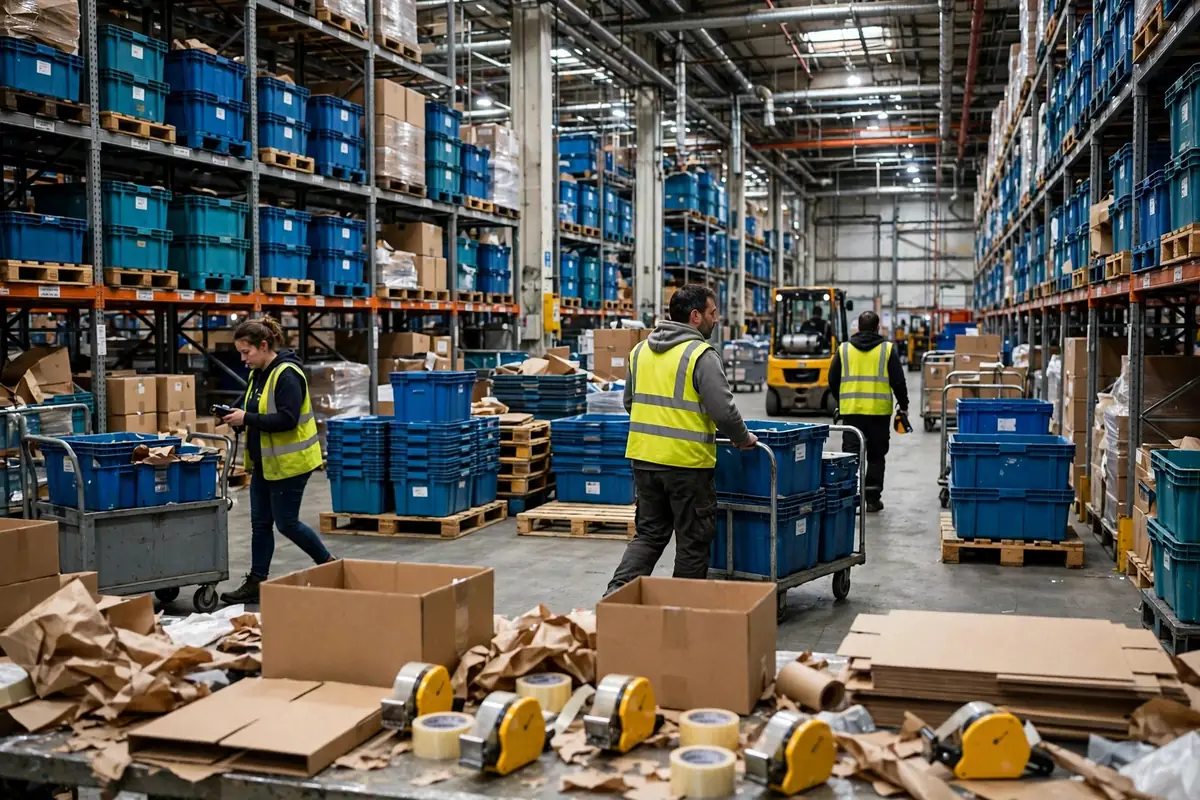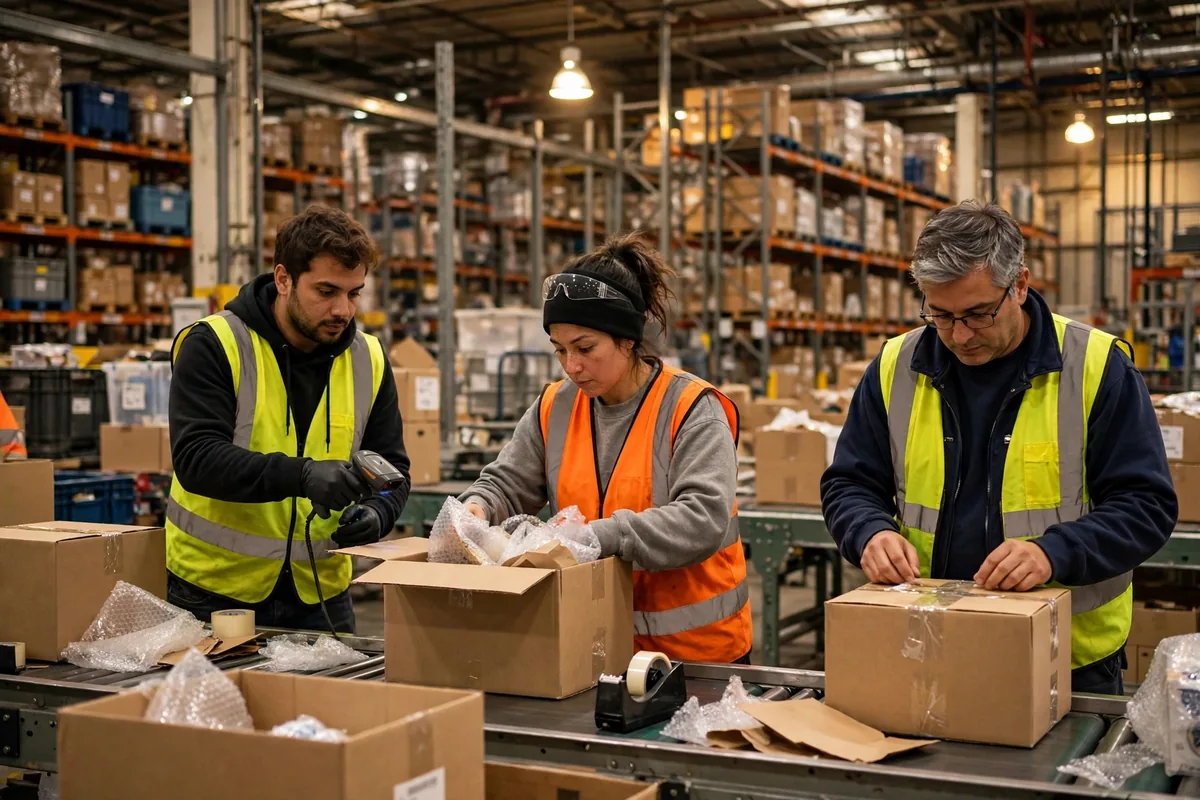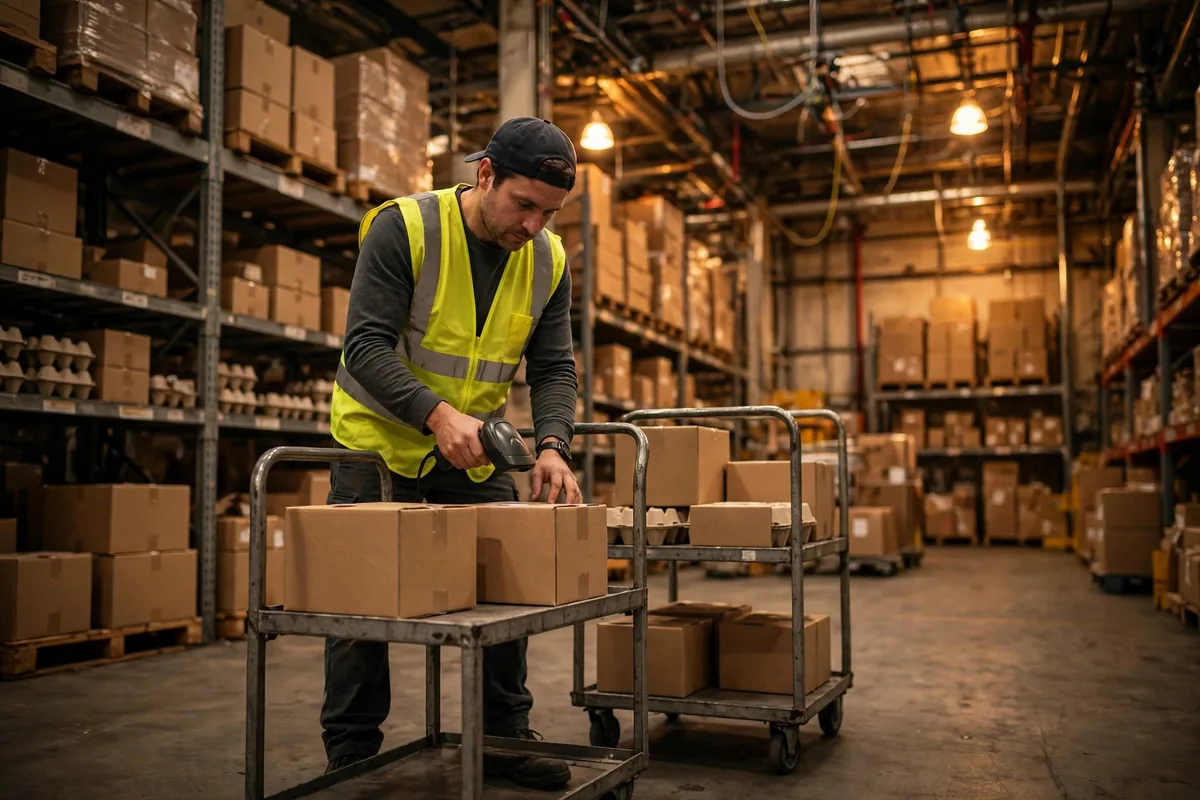
November 10, last year, 6:40 in the morning. I had barely walked into the warehouse when Xiao Zhang from the check station stopped me with three return slips in his hand. Picking accuracy had slipped from 99.6% to 98.9% after Singles' Day presales exploded two days earlier, and speed was up — everyone was picking 40 more lines per hour. My first thought was one number: was those 40 lines worth it?
Let me be straight with you. I have run warehouses for over a decade, and the warehouse picking accuracy vs speed balance is a scale I weigh every single day. Go fast and you ship wrong. Go slow and you bleed money. Nobody can draw that line for you. You have to work it out from your own numbers.
Right before that peak, we had switched to piece-rate pay. Thirty-five cents a pick. The more you picked, the more you earned. For three days the numbers looked beautiful. Average throughput jumped from 62 lines an hour to 98. On day four, customer service started ringing. Wrong items, missing items, extra items — more than 30 bad orders a day. I had Xiao Zhang pull every error and match them up. The worst offenders weren't the hard picks. They were the lookalikes: two shampoos, one bottle a shade darker; two phone cases whose packaging differed by a single letter. Pickers running at full speed never gave them a second look. The scanner beeped and they moved on, never knowing they had scanned the wrong slot.
I called the shift leads in for a short meeting. No shouting. Just one question: did the extra piece-rate money from those three days even cover the cost of those bad orders?
Warehouse Picking Accuracy vs Speed: Price One Bad Order First
Here is a number the industry actually publishes: median picking accuracy sits around 99.5%. Good warehouses hold 99.68% or better — that is the WERC best-in-class line — and operations with scan verification can push past 99.9%. Sounds high, right? Run it the other way and it stops sounding high. Ship 20,000 orders a month at 99.5% and 100 of them are wrong. Drop to 98.9% and that is 220 wrong orders. That is 120 extra mistakes.
So what does one mistake cost? Industry estimates usually land between $15 and $65 per error once you count return freight, reshipping, customer service, and rework. In our own warehouse, one mispick breaks down roughly like this: freight to bring it back, freight to send the right one, labor to re-pick and re-check, and the service rep's time. Even for a small item, you are looking at around $20 before you count the customer you may have just lost. One hundred and twenty extra bad orders in a month is two or three thousand dollars gone. The extra piece-rate pay didn't come close to covering it.
That is why we made a rule: speed is negotiable, accuracy is the floor. If accuracy drops below 99.5%, we stop that day and find the cause. "It's peak season, this always happens" is not an answer.
Where Picking Accuracy Breaks Down
One speed target for the whole warehouse is the fastest way to wreck your accuracy. We run ours in tiers now.
High-frequency, error-prone SKUs go slow. How do we define error-prone? Last month's top 20 error SKUs, anything that looks like its neighbor, anything packed almost identically, anything sitting on the shelf right next to its twin — all of it goes into the slow-pick zone. Pickers there get a lower speed target, 60 lines an hour, but their accuracy bar is 100%. One mistake costs them more than it would anywhere else. And I staff that zone with careful veterans, not the fastest runners.
Low-frequency standard items get to run free. Big, distinctive, picked a few times a month — the error risk is low by nature, so the target can go to 110 lines an hour. Pickers move without second-guessing themselves, and that is where overall throughput comes from.
New hires and veterans get different scorecards too. For the first two weeks, a new hire has no speed target at all, only an accuracy target of 99.8%. Miss it and you stay paired with your trainer. Veterans get targets set from their own last three months, not from the fastest person in the building. Set the bar at your fastest picker and everyone starts running on empty. That is exactly how error rates climb.
After half a year on this system, the numbers are roughly this: overall speed is less than 5% below the one-target days, and accuracy holds around 99.7%. Honestly? Trading 5% of speed for 0.8 points of accuracy is a deal I will take every time.
Where to Put the Check Step So It Pays
A lot of warehouses check everything — every order weighed and scanned again. It sounds safe. In practice you just do the picker's job twice, and the check station becomes the new bottleneck. We tried full checks once. During peak, the queue at the check station stretched to half an hour, drivers were cursing at the dock door, and freight wasn't leaving.
Now we check in tiers. Error-prone items get a 100% check, no exceptions. Regular orders get a random 10% sample. New hires get every order checked for their first two weeks, then drop to sample checks once they graduate. The checkers rotate daily, so nobody ever checks their own picks.
Here is the counterintuitive part: the warehouse with the strictest checking is not always the one with the fewest errors. Checking is a safety net, not a cure. Errors start at the pick face — messy locations, lookalike products stored side by side, labels you can't read. Stricter checking catches mistakes; it doesn't prevent them. What actually cut our error rate was moving lookalikes into separate aisles, swapping the error-prone location labels for large-print ones, and adding one line to the pick slip under the product name: "Careful: looks like XX." Those three fixes cost less than one checker's monthly wage.
The Speed-Accuracy Framework We Actually Run
Here is the tier table we use in our warehouse. Treat the numbers as an illustrative example — run them against your own volume and order value before you copy anything.
| Tier | Speed target (lines/hour) | Accuracy floor | Check method | Applies to |
|---|---|---|---|---|
| Slow pick | 60 | 100% (zero tolerance) | 100% check | Error-prone, lookalike, high-value SKUs |
| Standard | 85 | 99.5% | 10% sample | Regular items |
| Fast lane | 110 | 99.0% | 5% sample | Low-frequency standard and bulky one-offs |
| New hire | No speed target | 99.8% | 100% check for 2 weeks | All categories |
Score it weekly, not daily. Score it daily and pickers sprint for the last half hour of every shift — and that is exactly when the errors pile up. Score it weekly and they pace themselves.
One more thing: I post the top five on the speed board. Never the bottom five. Post the bottom five and the slow ones give up and run even faster, making even more mistakes. If someone needs to get faster, the shift lead talks to them one on one. Don't humiliate people in public. At the end of the day, running a warehouse is running people.
There is no standard answer to this scale, folks. My one suggestion: don't touch your speed targets this month. Pull your error orders instead, and break them down by SKU, by person, by time of day. Where the errors are, that is where you draw the line. Draw it right, and you stop having to choose between fast and accurate.
By Chen Feng, Warehouse Operations Manager