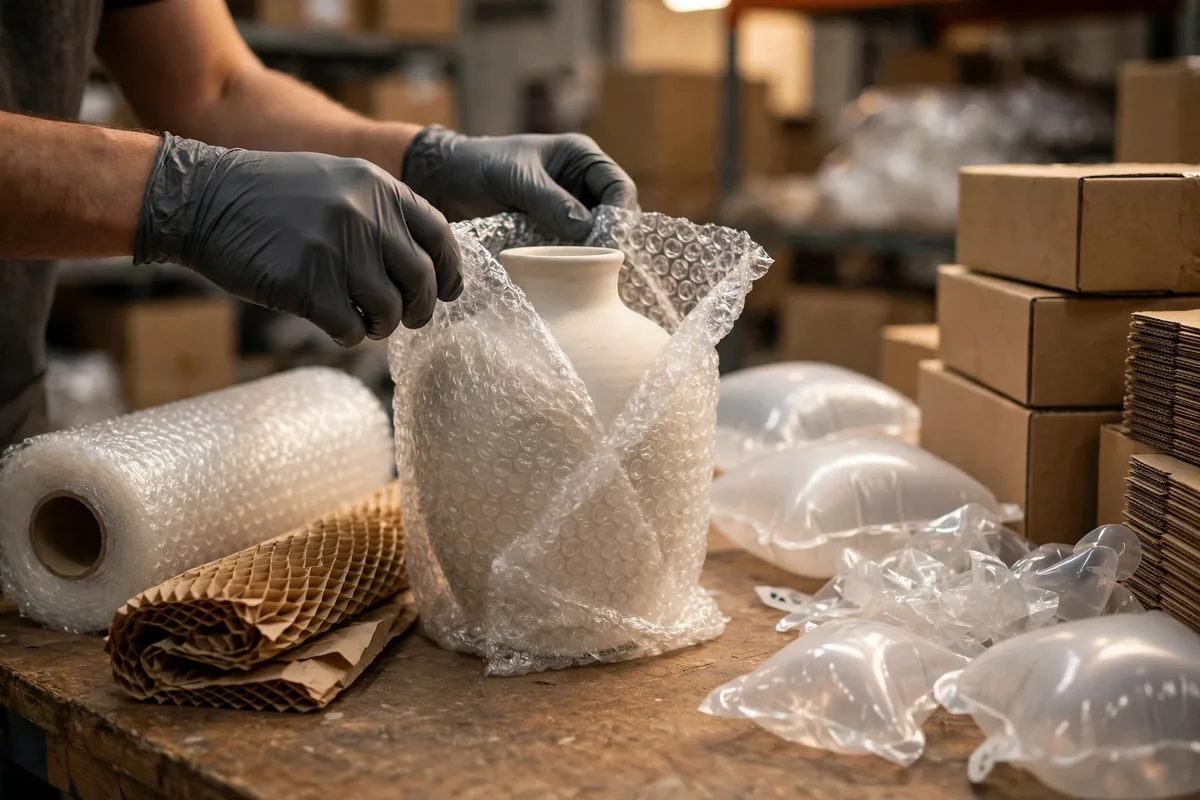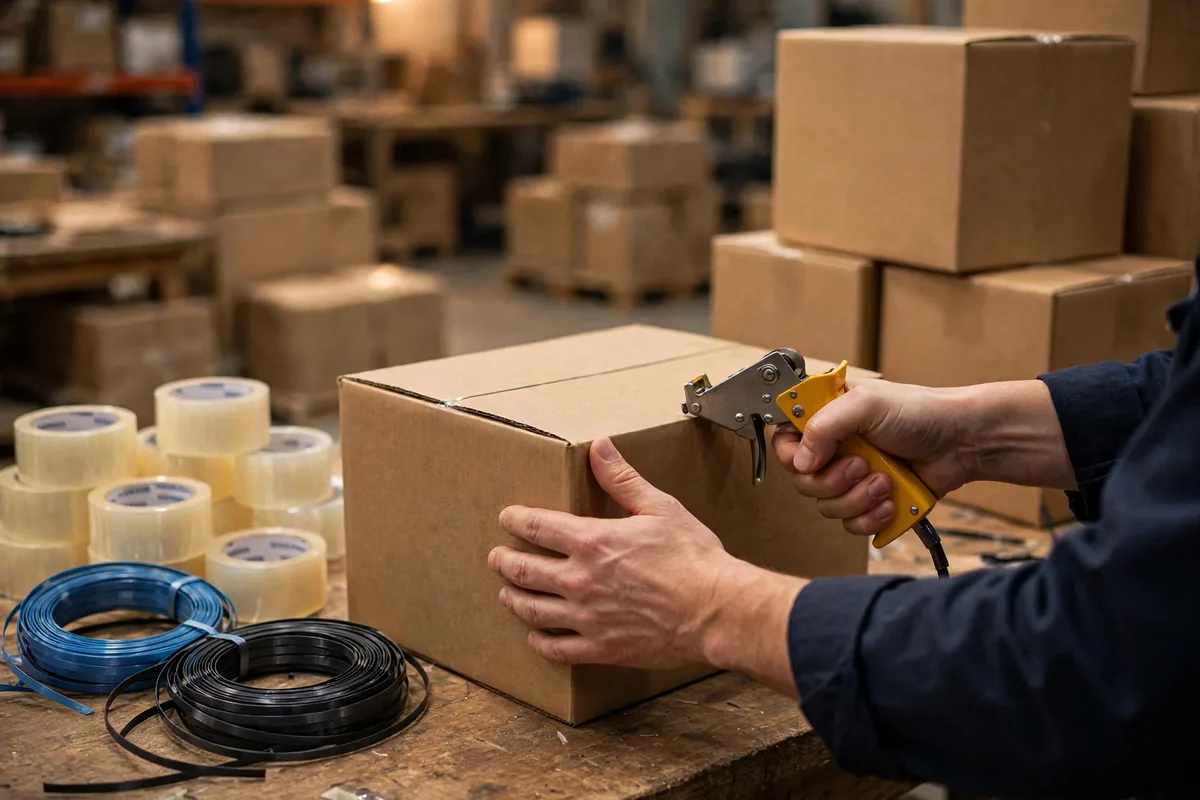
We are a small warehouse. We cannot afford to burn money like that. And I said that to a carton of packing tape. If there is one packing tape strapping selection warehouse lesson our twelve-person operation learned the hard way, it is that tape is never just tape.
Here is what happened. Last year, right before the big sale season, I sat down and added up our consumables bill. I just stared at the number. Tape, strapping, bubble wrap — the boring little stuff — was eating enough money every month to pay two packers. My first thought was: is someone taking this stuff home? I checked for days. Nobody was stealing anything. We were wasting it ourselves, and wasting it with total confidence. Packing tape strapping selection warehouse shoppers at big companies have a whole procurement team to compare options. We do not have that. We just bought whatever was cheapest online, found out it would not stick, and then bought something even cheaper. A perfect little doom loop. Nobody writes a packing tape strapping selection warehouse manual for a twelve-person operation, so we ended up writing our own on the wall above the bench.
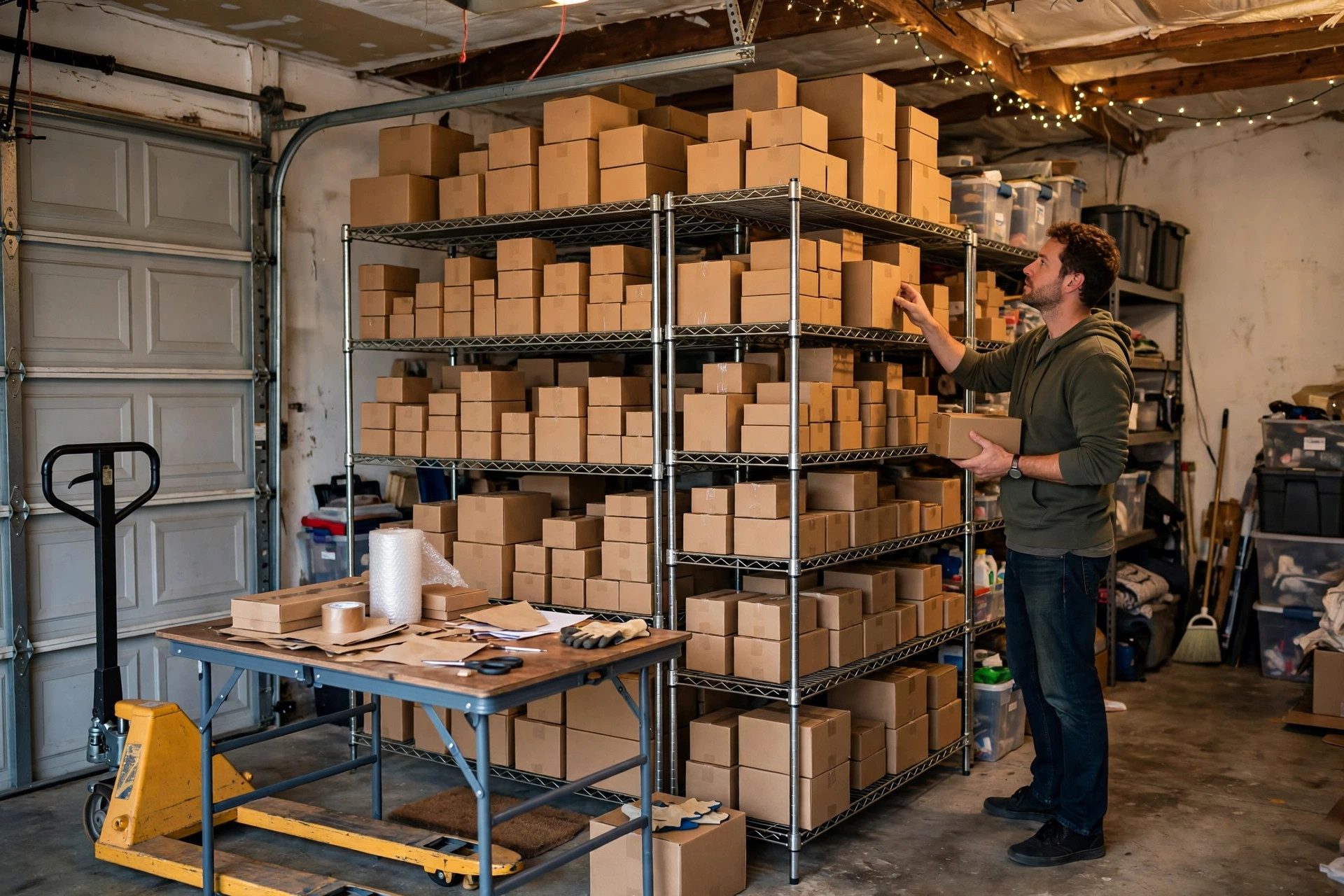
Let me start with our situation. Our warehouse is about 3,000 square meters, a dozen people, a few hundred orders a day in peak season. Two packing benches. Tape lying around everywhere, whoever finishes a roll just tosses it. For a while we had four kinds of tape in the building at once: clear, tan, wide, narrow, all bought at different times because each was cheap that week. Xiao Li, one of our packers, told me: boss, this roll does not stick, boxes are arriving open. I said, then wrap it twice. He did. Our tape usage doubled overnight. Then a customer complained that a box burst open in transit, goods everywhere. We paid for the damage and lost the customer. That was when it finally clicked for me: packing tape looks like nothing, but over a year it can eat a serious chunk of margin.
Packing Tape and Strapping Selection: The Math That Finally Made Sense to Me
I have a rough-and-ready way of doing the math: ignore the price per roll, look at the cost per box. What a roll costs means nothing. What matters is what it costs to seal one carton. A cheap roll that looks like it saves you half the money is thin and weak, so your packer wraps twice around, and the cost per box goes up, not down. Never mind the damage claims when boxes pop open — one claim can pay for a whole pile of tape rolls.
Here is a worked example, and I want to be upfront about it: a hypothetical scenario built from our order volume, not a measured quote, just to show the thinking. Say a small warehouse ships 6,000 orders a month, and each carton takes about 2 meters of tape. Cheap tape is low-priced, but packers get in the habit of wrapping twice, so usage becomes 4 meters per box. Decent tape does the job in one pass, 2 meters per box. Over a month, the cheap tape burns an extra 12,000 meters. Add damage claims — say just 3 burst boxes a month, each costing a few hundred yuan in refunds and reshipping — and you are out over a thousand yuan extra a month. The day I finished that math, I never bought the cheapest tape again.
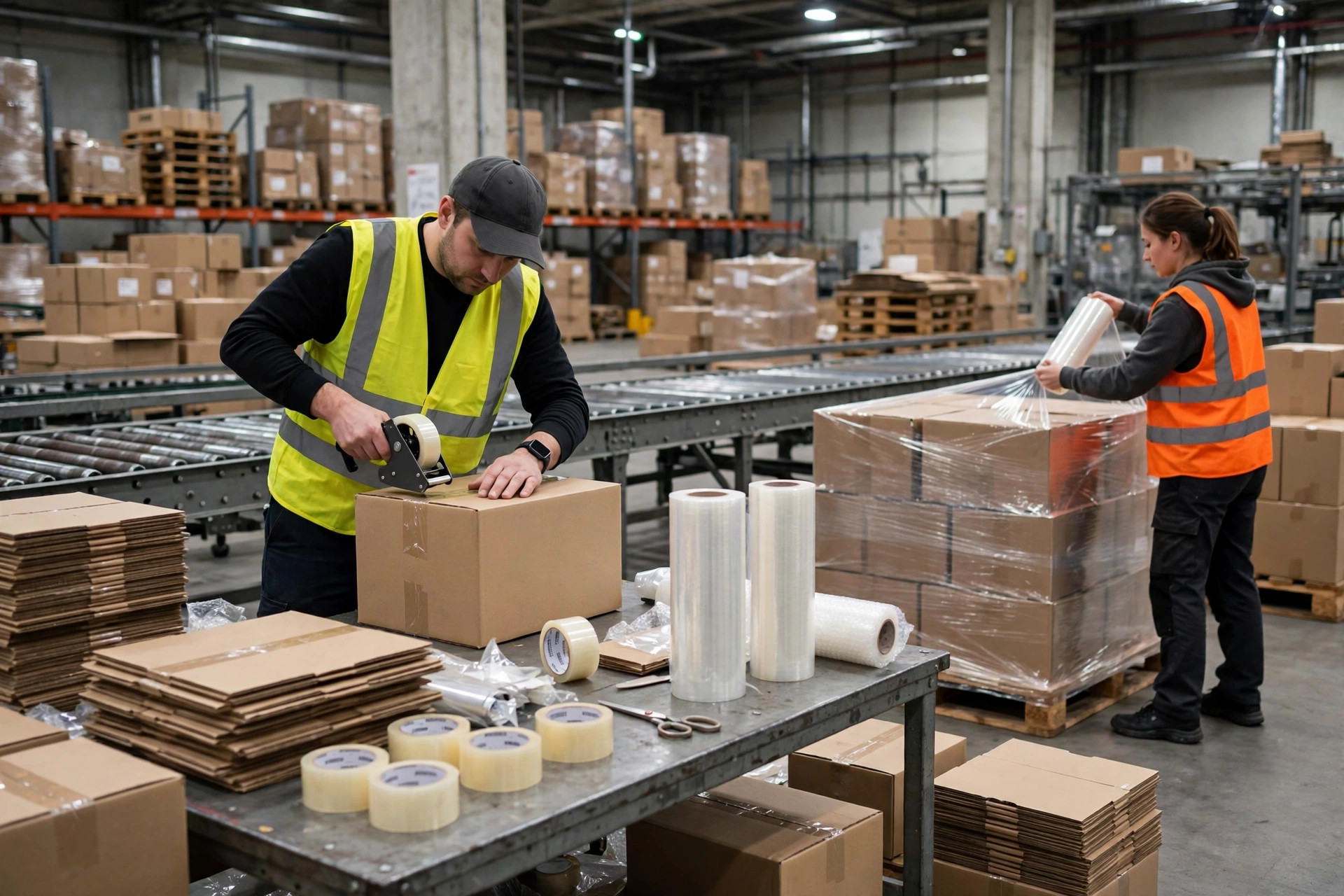
We have tried all three kinds of tape. BOPP clear tape is the most common: cheap, easy to buy, fine for light, clean cartons. But its grip falls off when it gets cold, and in a warehouse with no heating in winter, that is exactly when it fails. Cloth tape sticks hard and tears tough, great for heavy boxes and rough carton surfaces — but it costs more, so we save it for high-value goods. Kraft paper tape is eco-friendly, tears by hand, and customers love opening it. It hates damp weather though, so be careful with it in a humid spring. That comparison is taped to the wall above our packing bench, and every new packer reads it on day one.
Strapping is the same story. PP strap is the cheapest, fine for light goods and short trips, but its breaking strength is limited — do not trust it with heavy cartons. PET strap is far stronger, the pick for heavy boxes and long-haul shipping, more expensive but it does not snap. Steel strap is the strongest of all, but it is heavy, it rusts, and it is dangerous to handle. We barely use it in our warehouse. The big-company playbook does not fit us. Here is the counterintuitive part: the cheapest consumable is usually the most expensive consumable. Every yuan you save on the purchase order comes back doubled in damage, rework, and refunds. That lesson cost me two years to believe.
Quotas and Sign-Outs: The Other Half of Packing Tape and Strapping Selection
Picking the right tape is only half the job. You have to control how it gets used. That wall chart is our whole packing tape strapping selection warehouse system: pick by the goods, lock up the good stuff, count it weekly. Our method is embarrassingly low-tech, but it works. First, quotas. Each packing bench gets a fixed daily amount of tape and strapping. Run out, sign for more. The packers grumbled at first — they thought I did not trust them. I told them it is not about trust, it is about knowing what this stuff costs. Second, tape and strapping live in different places, and the good expensive tape stays locked in a cabinet, only for high-value goods. Ordinary goods get ordinary tape. Third, we count stock once a week: how much is left, how much was used. If one bench suddenly doubles its usage, we ask why the same day.
The results were better than I expected. In the first month, tape usage dropped. Not because anyone was being stingy, but because the wrap-it-twice habit went away. Our packers now seal a box in one and a half turns — the technique got better. Damage complaints dropped too, because the tape finally matched the job and boxes stopped popping open. There was even a bonus I did not see coming: the packing benches got tidy. Tape rolls used to roll around everywhere. Now every roll has its own spot. Do not laugh at that. A messy bench puts packers in a bad mood, and a bad mood packs bad boxes.
One more detail: the tape machine. A handheld tape gun looks cheap, but it is slow and it cuts fingers. We eventually gritted our teeth and bought a semi-automatic case sealer, matched to the right tape width. The machine and the tape have to be bought as a pair. Tape too narrow and the machine cannot grip it; too wide and you waste it. Ask for the machine's tape specs before you order — not like me the first time, when the machine arrived and none of our tape fit, and it sat idle for two weeks.
Small Warehouses Have Their Own Way to Survive
You might be thinking: it is just tape and strapping, why write this much about it? Because a small warehouse has no procurement department, no quality control team, no slack. The price difference on one roll of tape comes straight out of the owner's profit. A big company picks the wrong consumable and somebody absorbs it. We pick the wrong one, and the money comes out of our own pocket.
A few suggestions for other small warehouses like ours, all earned the hard way. First, do not compare the price per roll — compare the cost per box, and count damage and rework before you compare. Second, grade your tape and strapping by the goods: save the good stuff for where it matters, do not use one standard for the whole building. Third, quotas plus sign-outs. It is low-tech and a bit old-fashioned, and it genuinely works. Fourth, test your tape's grip before winter arrives. Do not wait for customer complaints to find out your tape cannot handle the cold. Fifth, buy the case sealer and the tape as a pair — ask for the specs first.
We are a small warehouse. We cannot afford to burn money like that. But honestly, being unable to afford it is exactly why we have to do the math properly. Small warehouses have their own way to survive, and ours is this: treat small money like big money.
By Xiao Ma, Small Warehouse Owner