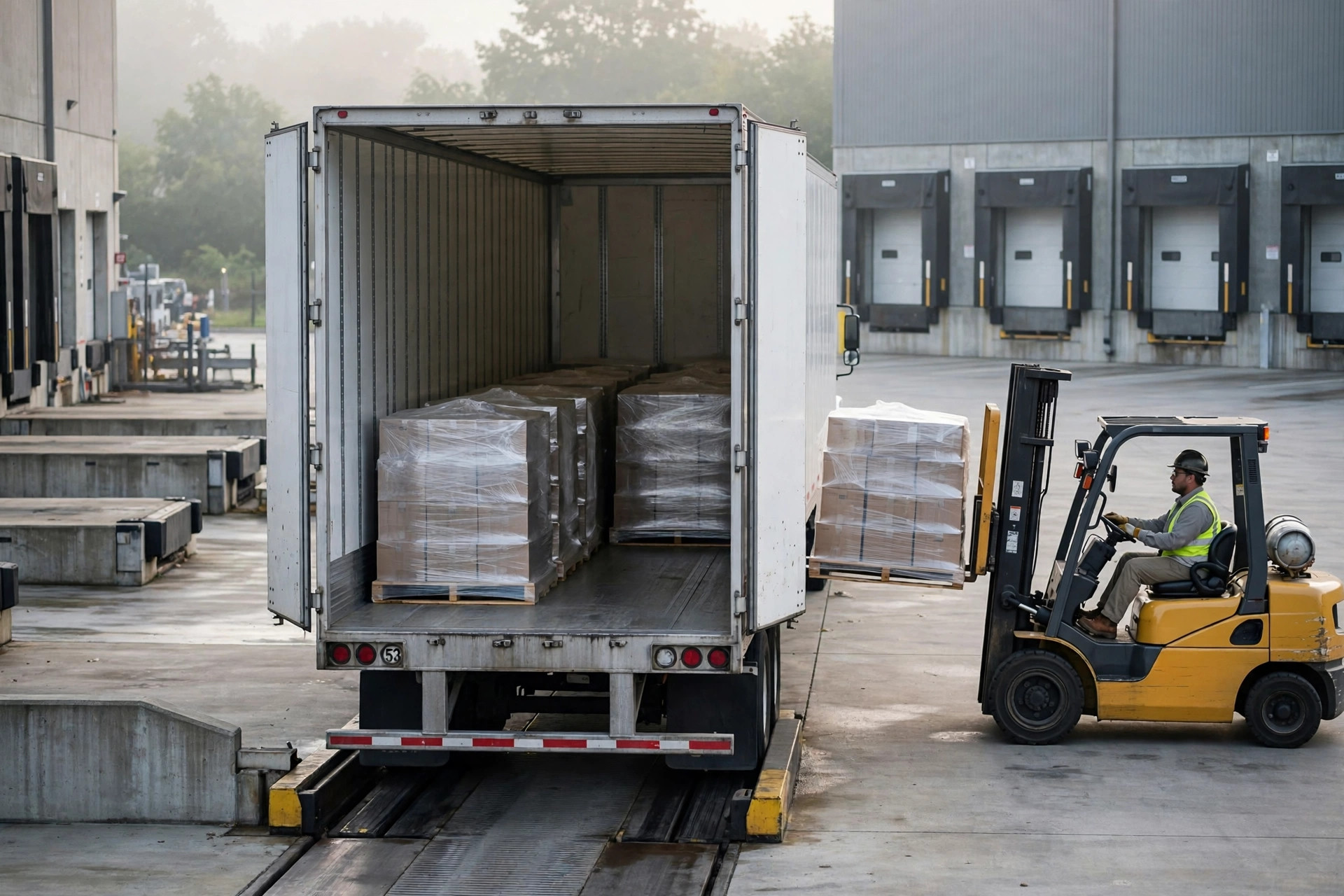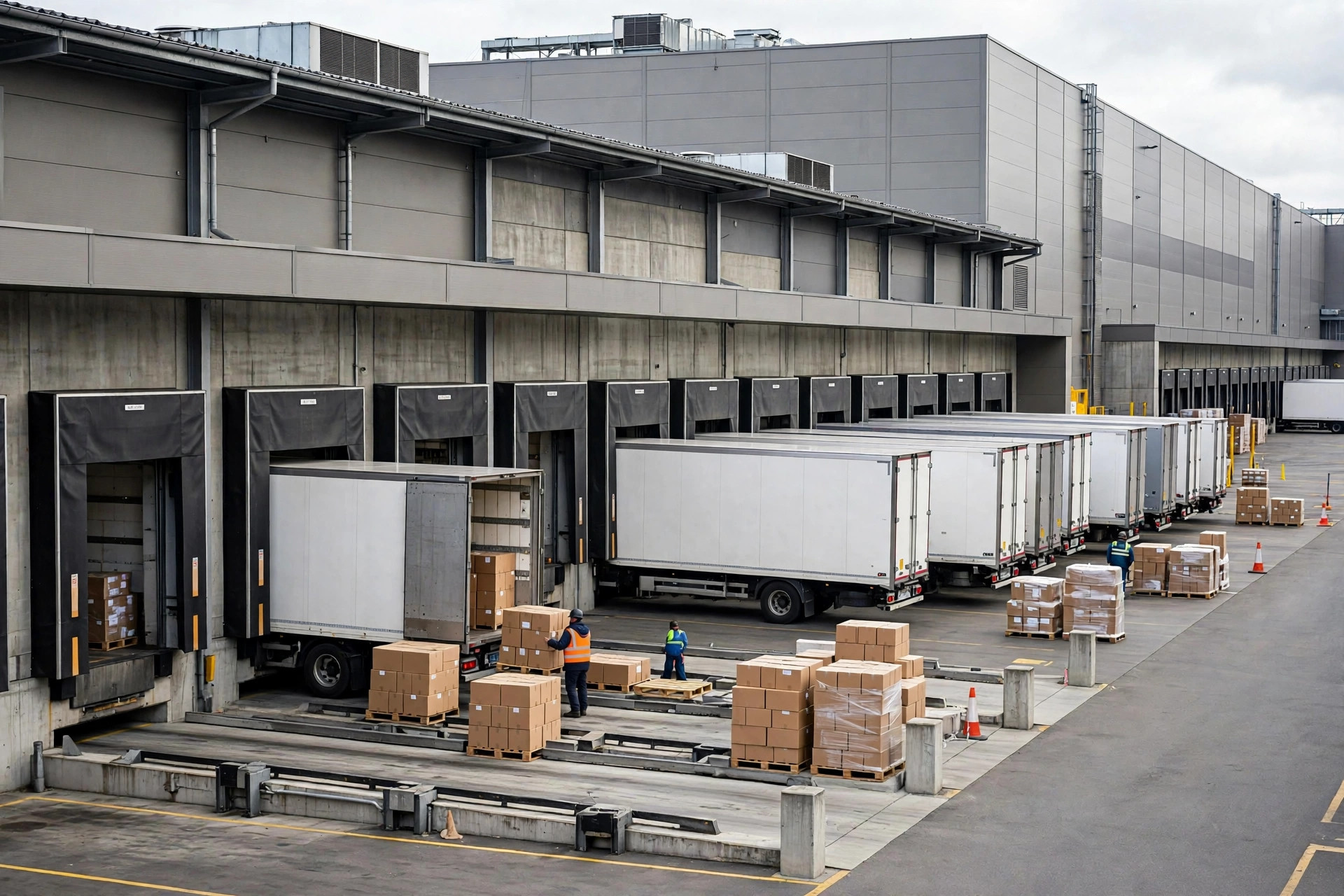
Here is the answer up front on warehouse order consolidation packing: if the same customer places three orders to the same address inside the same cutoff window and every item is in stock, ship them in one box. Shipping them separately means paying the fixed freight charge three times, buying three sets of packaging, and running the checking routine three times. That is pure waste. Warehouse order consolidation packing is the discipline of deciding which orders may be combined, how long you may wait for the next order, and what to do when one item is missing.
When Warehouse Order Consolidation Packing Makes Sense: Four Rules, No Exceptions
Every consolidation project I have fixed failed for the same reason: the matching rules were too loose. Consolidation is allowed only when four conditions all hold. Miss one and the orders ship separately.
Rule one is same customer, same address. A matching customer ID is not enough. Name, phone, province, city, street, and building number must match line by line. In November 2023, a baby-products seller in Guangzhou learned this the hard way. One customer ordered diapers in the morning and bottles in the afternoon. The system matched the customer ID and consolidated automatically, but the afternoon order was addressed to the office front desk while the morning order went to the home address. The parcel sat unclaimed while the customer traveled, and redelivery plus a return took four days to sort out. Any address field that fails the match goes to manual review.
Rule two is the cutoff window. Only orders inside the same cutoff window may be combined. Orders after the cutoff belong to the next batch, even if they arrive five minutes later. A window drawn around the carrier cutoff, for example 3 p.m. daily, keeps the operation predictable. Stretch the window to chase a higher consolidation rate and delivery complaints rise with it. I have seen this failure three times, and the pattern never changes: operations widens the window, the rate looks great for two weeks, and then on-time delivery collapses.
Rule three is stock completeness. If one of the three orders is short, the whole box stalls. Decide in advance whether to wait for replenishment or ship what is ready. My working rule: if the missing item exceeds one order worth of volume, or replenishment will take more than half the promised delivery window, ship the available items now and send the missing item separately without charging the customer a second freight fee. Write that rule into the customer service script before go-live. If agents invent the answer on each call, customers hear a different version every time.
Rule four is product compatibility. Battery products, liquids, fragile goods, and temperature-sensitive items each carry their own packing requirements. They do not share a carton just because the address matches. Promotional gifts also need a rule: a gift rides along with its parent order and must never generate its own order line. A gift that becomes a standalone order inflates both freight and handling counts.
Warehouse Order Consolidation Packing: The Hold-or-Ship Decision
The hardest part of consolidation is not software. It is deciding whether to wait. Wait too long and customers complain about speed. Ship too early and the consolidation rate stays flat. Stop guessing and use a decision table. When three of the four conditions point to waiting, wait. Otherwise ship.
| Decision factor | Wait | Ship now |
|---|---|---|
| Time left on the delivery promise | More than 24 hours remaining | Less than 12 hours remaining |
| Customer ordering history | This customer often places two or three orders on the same day | This customer almost always orders once |
| Likelihood of a second order | Same-category top-up, bundle discount period, active promotion | Random single item, no bundle signal |
| Replenishment time for a missing item | Arriving today, within the promised window | Unknown arrival, or next day at the earliest |
In March 2024, a consumer-electronics accessories warehouse in Shanghai launched consolidation with a fixed rule: hold every order for six hours before shipping. Urgent orders were delayed by six hours as well. Delivery complaints doubled that week and two large sellers left. Switching to the table above kept the consolidation rate intact and complaints fell back to the pre-launch level. The lesson is blunt: the hold window must follow the delivery promise. Tighter promises mean shorter windows, no exceptions.
There is also a counterintuitive judgment worth stating plainly: a higher consolidation rate is not always better. Pushing the rate above 90 percent usually means trading delivery speed for freight savings, and the cartons get bigger, damage rates climb, and oversize surcharges appear. A rate around 60 to 70 percent often gives the better balance of cost and speed. Chasing the last ten points of consolidation costs more in damage claims and lost customers than it saves in freight.
System logic should run in this order: group incoming orders by customer plus address, place the group in a waiting pool, cut the pool into batches by cutoff window, run the stock completeness check, release complete batches to wave picking, and run one final merge check at the packing bench. Any step that fails must send the order back to the ship-separately flow automatically. An order must never sit in limbo waiting for someone to rescue it manually. Exceptions need their own queues: address mismatches go to manual review, short orders go to a replenishment queue, and a missing gift never blocks the parent order. It is logged as a pending top-up instead.
Packing Bench Checks, One Label, and Returns That Do Not Create Chaos
The packing bench is where consolidation succeeds or fails, so the go-live night checklist must carry a dedicated consolidation page. The checking routine runs like this: scan the pick lists for all three orders and confirm every item landed in the same carton, then scan each item inside the carton so the system ticks off every line. One item missing triggers an alert. One extra item triggers an alert too. Print a single shipping label using the consolidated address, and place a merged packing list inside the carton showing all three order numbers and their item lines so the customer can check the delivery.
Label and invoice merging follow different rules, and confusing them causes trouble. The label merges into one, and freight is calculated on the combined weight and volume. That is where the saving comes from. Invoices follow the customer request: combine them when the customer allows it and list all three order numbers, or split them by order when the customer needs separate records, making sure invoice totals match the packing list. Put one gift in the carton, not three. A gift multiplied by the number of merged orders is a quiet cost leak that nobody notices until month-end.
Returns need a single agreed script shared by customer service, the warehouse, and finance. When a customer returns one order from a consolidated box, that order returns on its own and the other two orders keep their status. Return freight is split by the value and weight of the returned order, never charged in full to that one order. When the whole box comes back, the warehouse counts against the packing list order by order, and any shortage is booked against the order it belongs to. Agents should explain it in plain language: one box carries three order numbers, returning one order does not affect the other two, the refund follows the amount actually paid for the returned order, and the freight split is visible in the order detail. Align that script before go-live.
The savings model is simple enough to run on your own numbers. Do not copy a rate table from the internet. Shipping separately costs three fixed freight charges plus three packaging sets plus three checking routines. Consolidation costs one fixed freight charge plus one packaging set plus one merge check. Subtract the cost of waiting time and a damage-risk allowance, and the remainder is the net saving. The fixed freight charge is the big lever: the larger the fixed share inside your average freight cost, the more consolidation saves. Packaging and labor are smaller, but at several thousand consolidated orders a month the saved cartons alone fill half a shelf. Plug in your own figures from last month: average freight per order, average packaging cost per order, and average packing labor minutes per order. If a specific carrier rate cannot be verified, follow the latest policy on the official carrier site instead of trusting a copied table.
By Lin Xiao, WMS Implementation Consultant