Here's my verdict up front: for FBA inbound freight, the Amazon partnered carrier is the right call eight times out of ten. But the other two times are the ones that decide your year's profit. This cuts both ways — a cheaper freight quote doesn't mean a cheaper total cost, and I've watched too many sellers do this math wrong.
Strip it down to one line: the partnered carrier is Amazon buying freight capacity in bulk on your behalf; bringing your own carrier is you haggling in the open market. Bulk pricing is usually lower — but bulk freight plays by bulk rules, which means waiting your turn. Once that clicks, every dilemma below answers itself.
Where the Partnered Carrier Wins — and Where It Loses
Start with the wins. For small parcel delivery (SPD), it barely has competition: punch your box count and dimensions into the Send to Amazon workflow, UPS shows up at your door, tracking flows into Seller Central automatically. The price? You'll see claims online that it's 45% cheaper than independent carriers; Amazon's own page says 25% lower than alternatives. Two numbers, two stories. My rule is simple: believe neither slogan — believe the actual quote in your shipment workflow. Trust the number, not the marketing.
There's also a quiet perk most sellers miss: shippers on the program can qualify for offerings like In-Stock Head Start, where eligible inventory becomes available for sale before it even checks in. During a product launch, that's worth far more than a few dollars off freight.
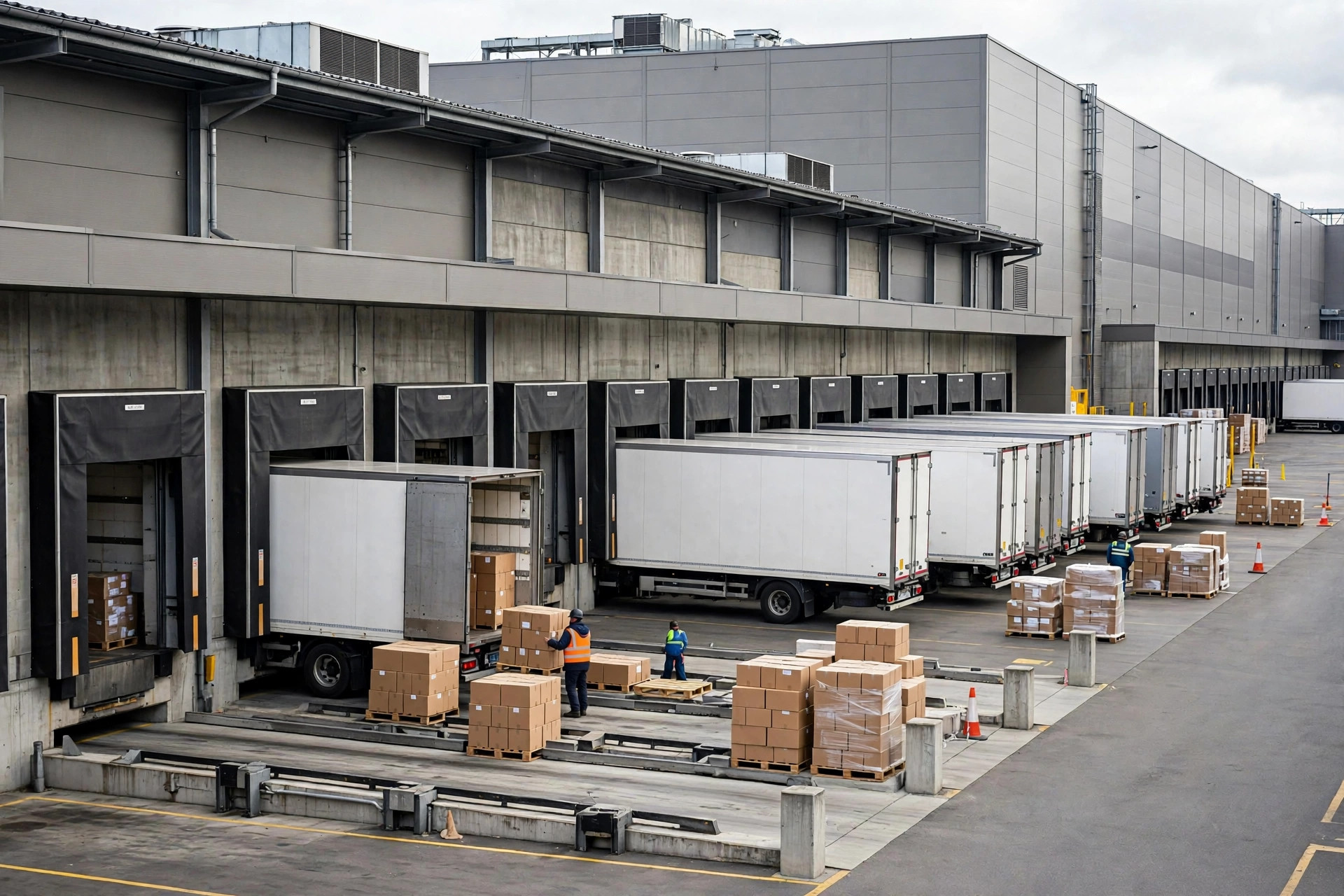
Now the price you don't see on the quote. With partnered LTL, Amazon tenders your freight to whichever carrier bids lowest, the trailer gets dropped at the fulfillment center, and from that moment you don't control when it gets unloaded or checked in. Seller communities have documented peak-season cases where palletized freight sat three to four weeks before check-in; small parcels typically clear within days. The freight you saved and the stockout risk you bought — that's the trade-off.
Peak season is the amplifier. When partnered delivery appointments tighten, your available unload dates slide further out, and every day in transit is inventory cost. I've seen sellers save a few hundred bucks on freight and lose ten-plus days of sales. That math gets done backwards more often than you'd think.
Q4 2024. A home-goods seller in Ontario, California came to me through a mutual friend to review his logistics costs. Before Black Friday he'd sent six pallets to a California fulfillment center on a partnered LTL booking — a few hundred dollars cheaper than the quote from his own trucking contact, and he was pretty pleased with himself. Then the trailer got dropped, the unload appointment landed three weeks out, and his inventory didn't check in until the week before Black Friday — after a ten-day-plus stockout. His own post-mortem: the freight savings didn't cover a fraction of the lost sales. Cheap on the freight invoice doesn't mean cheap for you.
When Your Own Carrier Comes Out Cheaper
Scenario one: your pallet count climbs. Partnered LTL prices on pallets, weight, and freight class; once you're approaching a full truckload — twenty-some pallets — negotiating directly with a carrier as a full load usually beats it on unit cost. Amazon's own program guide notes that at a certain pallet count, in the low teens, they may assign a full truckload carrier — but "may" is doing a lot of work in that sentence. Walk in with a full truckload of volume and the negotiating leverage is yours. One practical note: LTL pricing leans hard on freight class, and low-density freight gets punished on classification; negotiating directly, you can argue density-based reclassification with a carrier — flexibility the partnered program's fixed process doesn't give you.
Scenario two: you already have carrier relationships. Plenty of sellers who came from traditional importing hold annual contracts with trucking companies at rates the spot market can't touch — and when you need hard control over arrival dates, your own truck wins. Scenario three is the simplest: peak season, racing the clock. When the partnered carrier can't offer a workable unload date, your own carrier plus your own appointment puts control back in your hands — at the cost of doing the appointment and compliance work yourself.
And the counterintuitive one: don't bring your own carrier for small shipments. I've watched new sellers ship thirty or forty cartons at walk-up retail parcel rates — the partnered quote for the same boxes would make their eyes water. The community rule of thumb: partnered SPD caps at 200 boxes per shipment, 500 for non-partnered (rule of thumb — Seller Central is the source of truth). Under 200 boxes, the partnered carrier barely has a rival.
Going Solo Gets Expensive in the Places You Don't See
With a non-partnered LTL or full truckload move, you book the delivery appointment yourself through Amazon's carrier appointment system, your bill of lading has to match, and your PRO number and tracking have to flow into their system. Miss the window, a late driver, a paperwork mismatch — best case you rebook and queue again, worst case the load gets refused outright. Going partnered bundles all of that: Amazon books the appointment, tracking syncs automatically, and when something goes sideways, Amazon argues with the carrier, not you. Whatever you save on freight, subtract the labor of managing that process — yours or your forwarder's — and subtract the cost of one bad day. Most sellers compare freight quotes and never price this layer.
Run These Three Steps Before Your Next Shipment Plan
| Partnered carrier | Your own carrier | |
|---|---|---|
| Freight cost | Usually lowest at small volume — go by your actual quote | Can win at high volume or with annual contracts |
| Delivery appointment | Amazon books it — zero hassle | You book it — flexible, but it's on you |
| Tracking & compliance | Auto-synced; Amazon handles disputes | BOL and PRO numbers are yours to get right |
| Check-in speed | SPD fast; LTL can queue for weeks in peak | Your truck, your timeline |
| Best for | SPD parcels, a few pallets, new sellers | Near-full truckloads, existing carrier relationships, peak-season rushes |
The three-step decision:
Step one, sort by size. Dozens of loose cartons go SPD; palletized freight goes LTL; twenty-some pallets get quoted as a full truckload. Get the tier wrong and everything after it is wasted math.
Step two, get both quotes. The partnered rate comes straight out of Send to Amazon; your own from at least two carriers or forwarders. And add Amazon's inbound placement fee to both sides before comparing — I've seen freight come in $100 cheaper and placement $140 more expensive.
Step three, do the time math. What does one week late cost this shipment in lost sales? For peak season and never-out-of-stock SKUs, that number is usually an order of magnitude bigger than the freight difference. Only after the time math does "which is cheaper" have a real answer.
So stop asking "which is cheaper" and ask a better question: is this shipment worth queueing for to save a little freight? Answer that, and you'll know exactly which button to click in Send to Amazon.
By Lao Mi, Supply Chain Veteran (20 yrs)