We had a client, a beauty brand in Ontario, California, whose first order accuracy audit came too late. The first three months were quiet. Then one big promotion weekend blew up: their inbox filled with "wrong shade" complaints, and more than 40 returns landed in a few days. That weekend is why I insist on a post-shipment order accuracy audit. The founder called me and asked, point blank, whether the warehouse had changed crews.
Nobody had changed crews, and the picking process had not changed either. What was missing was someone looking back. Thousands of orders went out every day. When an order was right, nobody noticed. When it was wrong, the warehouse only found out when the customer complained. That is the difference I keep explaining to clients: checking an order before it ships stops one mistake. An order accuracy audit finds the pattern behind the mistakes. One saves a parcel. The other saves the account.
An Accuracy Audit Is Not About Blame
The moment people hear the word audit, they imagine someone hunting for a person to blame. I have watched warehouses turn an audit into exactly that, and the result is always the same: frontline staff start hiding problems, the numbers look prettier, and the real errors keep shipping. A useful audit works the other way around. The orders have already left. You pull a defined sample, work backward through the original order, the pick record, the check record, and the shipping label, and you answer three questions: how often did we get it wrong, which step produced the error, and what changes so it does not happen again?
I use three layers of sampling, and none of them requires fancy statistics. First, random sampling: a fixed number of orders every day, across categories and shifts. If a site ships about 800 orders a day, pulling 30 at random is a workable starting point. Second, targeted sampling: bestsellers, new products, high-value items, and anything recently moved to a new location get extra pulls, because those are the orders most likely to go wrong. Third, trigger sampling: when complaints cluster around one client, one channel, or one picker, pull every related order from that window right away. Random sampling catches systemic drift. Targeted sampling catches known risks. Trigger sampling stops a small fire from becoming a warehouse fire.
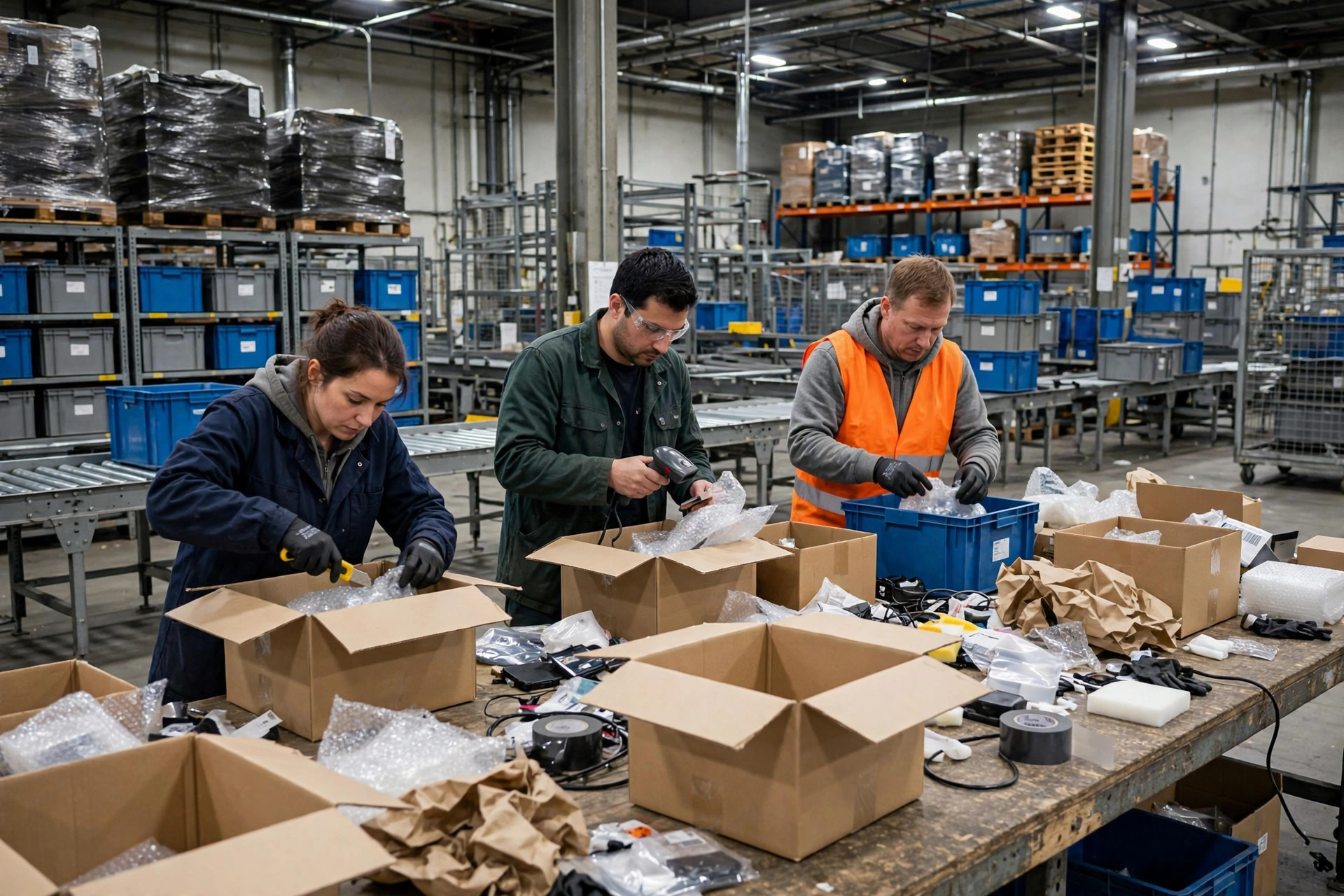
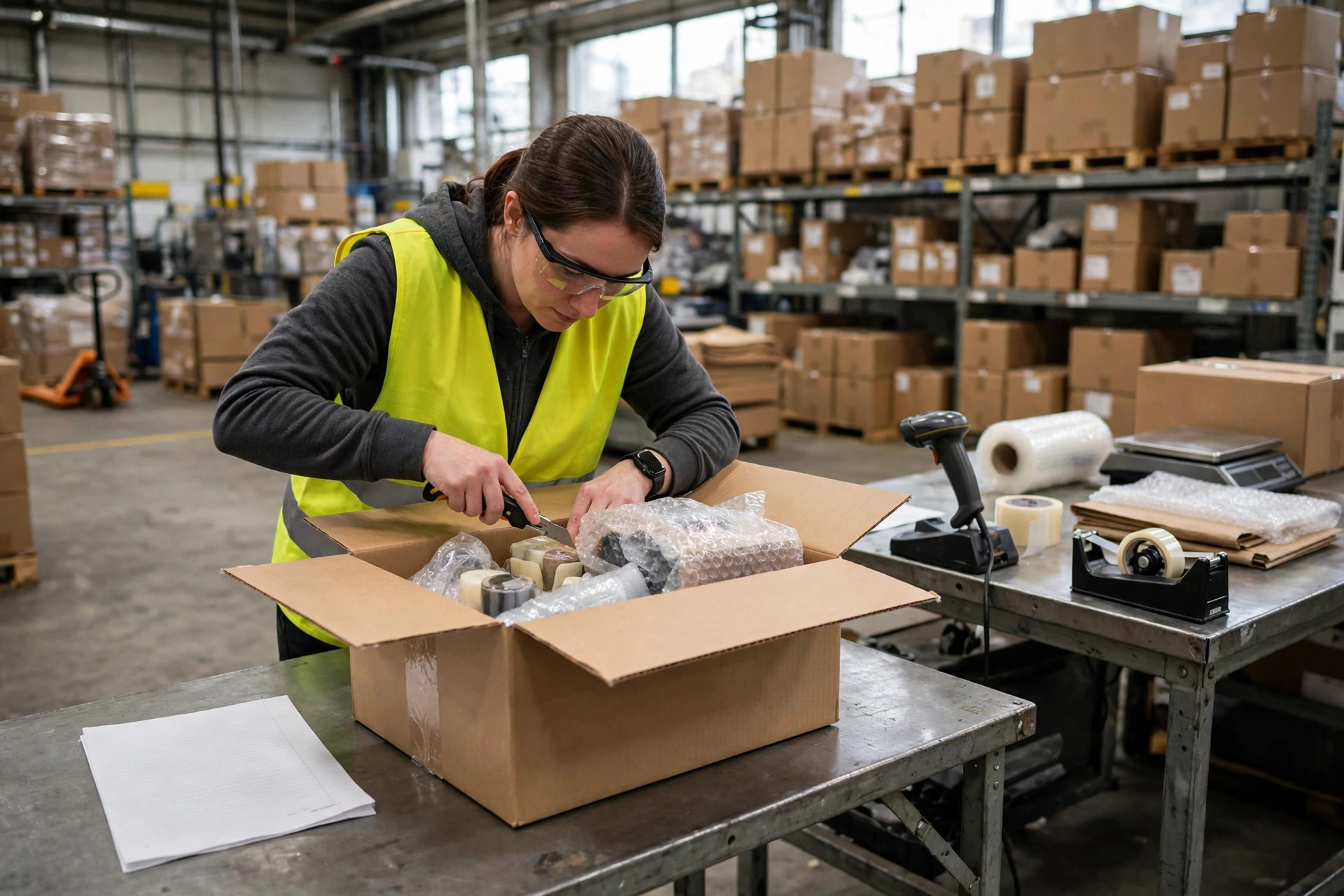
Checking a sampled order means comparing more than the system status. A status that says "completed" tells you nothing about whether the right item went into the box. Compare the original order, the pick path, the check record, and the label. Where possible, walk a few sampled picks backward in the building itself: look at the shelf layout, the pick prompt on the scanner, and the packing step. Many errors are not carelessness. They are design problems, like two similar shades stored side by side or two product names that differ by one word on a small screen.
Grade the Errors in Your Accuracy Audit, or the Numbers Will Lie to You
The fastest way to ruin an audit is to lump every mistake together. A wrong item and a crooked label are not the same problem, and treating them as equal buries the problem that actually loses customers. I push clients to agree on three grades before the first audit report ever lands on their desk:
| Grade | Typical case | Response |
|---|---|---|
| Grade A, serious | Wrong item, wrong customer, short shipment, wrong quantity | Notify the client the same day, with root cause and corrective action within 48 hours |
| Grade B, standard | Damaged packaging, missing free gift, label details that do not match the contents | Track in the weekly report, and trigger a process review when the count crosses an agreed threshold |
| Grade C, minor | Label placed in the wrong spot on the outer carton, uneven sealing tape | Count it, do not chase individuals over it, and watch it as a signal of floor discipline |
Grading protects both sides. The client gets numbers they can act on: if Grade A errors fall, complaints fall. If Grade B errors keep repeating, something in training or system setup needs attention. The warehouse, meanwhile, does not have to write a three-page apology for a crooked label, and can spend its energy on the errors that cost money and trust. I once helped a home-goods client through a renewal where the buyer wanted a price cut because the overall error rate looked bad. When we opened the graded data, Grade A errors were actually falling; the headline number was being dragged down by Grade C issues. The price cut went away, and we renegotiated the weighting of minor defects instead. That is what graded data does at a negotiating table.
Here is the counterintuitive part: a headline accuracy rate can mislead both sides. A warehouse at 99.8 percent sounds excellent, but if the remaining errors all hit one large client's bestseller, or if they are all Grade A wrong-item errors, that client will still call the operation a failure. A warehouse at 99.5 percent, with errors spread evenly and mostly minor, may be the safer partner. Any serious report should therefore show three numbers together: overall accuracy, the Grade A error rate, and how concentrated the errors are. One total, on its own, is a nice slide and a poor decision tool.
Closing the Accuracy Audit Loop Is Where the Value Lives
A report without follow-through is an expensive piece of paper. That is the real point of an order accuracy audit: not the report itself, but the fix it forces. My closing loop has only four steps, but each one needs a named owner and a date: attribute, fix, re-sample, and tell the client.
Attribute the error to a step, not a person. A wrong order should trace to picking, checking, the system prompt, or the shelf layout, or a combination of those. Take the beauty client: we sampled 300 orders from that promotion week and found 11 problems. Eight of them came from two similar shades stored next to each other, picked wrong during peak hours. The fix was not to punish the pickers. We separated the shades, enlarged the shade name on the scanner prompt, and added a second shade confirmation during peak periods. The following week, a fresh sample of 300 orders showed only one error of the same kind. That change in the number is what keeps a client renewing.
A home-goods client in Dallas, Texas, showed the opposite pattern. We sampled 200 orders and found only two Grade A errors, but missing free gifts showed up 17 times in one month. The root cause was not picking at all. When a promotion was entered into the system, the gift line was not tied to the main product, so it was easy to miss when shifts changed. The fix was systemic: make the gift a mandatory pick line so an order cannot be sealed without it. A pre-shipment check could never have caught that, because the checkers did not have a gift list either. Only a post-shipment audit, pulling scattered complaints into one picture, revealed the pattern.
After a fix, re-sample. This is the step warehouses skip most often. They change something, declare victory, and the same error returns in the next audit cycle. Re-sampling proves the fix worked, or tells you honestly that it did not. Then tell the client, in one page: how many orders were sampled, how many Grade A errors were found, what caused them, what changed, and when the next sample will run. Clients can live with errors. What they cannot live with is a partner that does not know about its errors, or knows and stays quiet.
Next time you negotiate a warehousing contract, ask three questions. First, how is accuracy measured, and are errors graded? Second, who runs the post-shipment sample, how large is it, and how often do you get a report? Third, when Grade A errors cross the agreed line, what is the deadline for corrective action and re-checking? Get clear answers to those three, and the audit stops being a report the warehouse files away. It becomes a rule both sides can live with.
By Susan, 3PL Sales Director