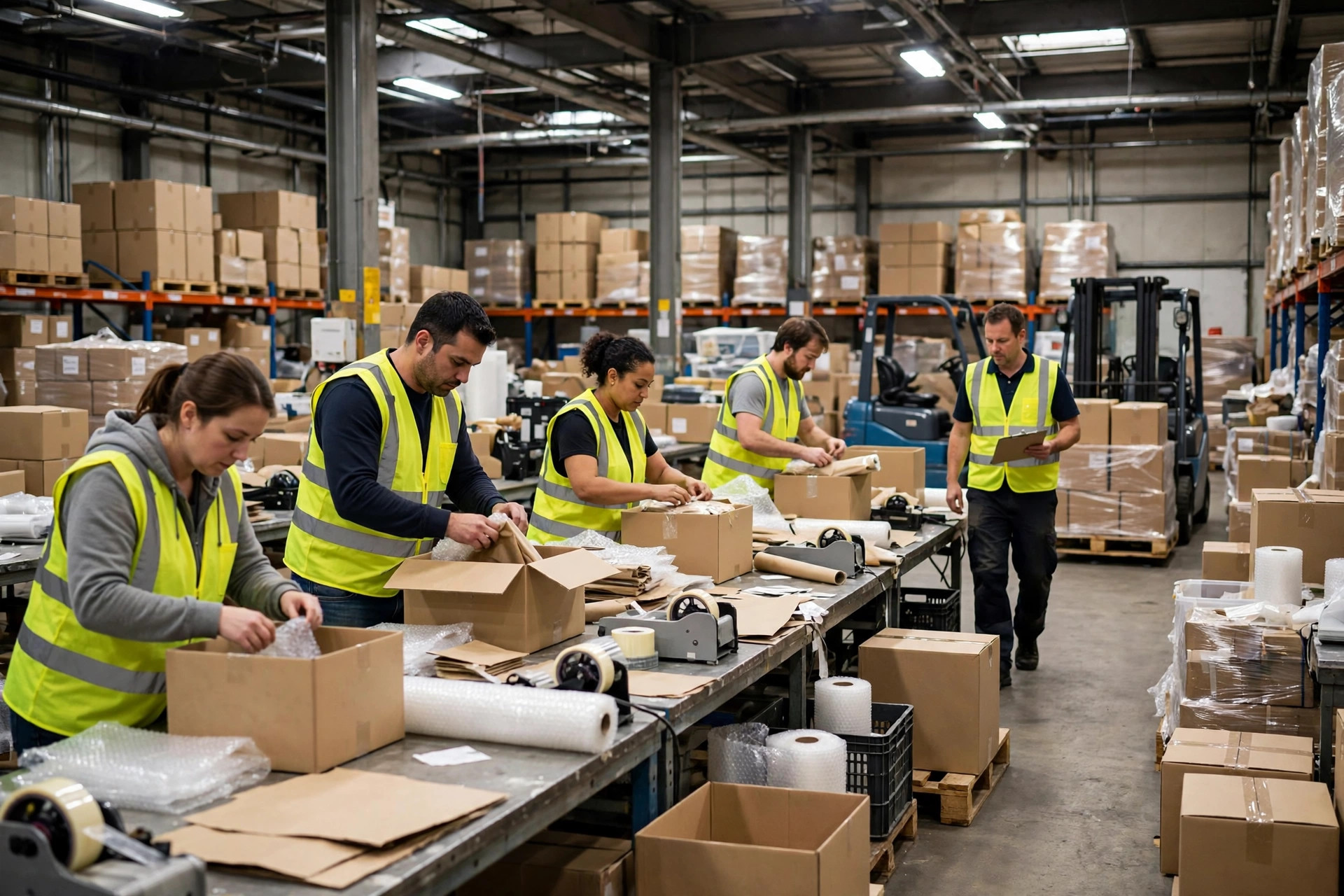
The phone went off at 4:30 in the morning, a week before Double 11 last year. It was my night-shift lead, voice gone hoarse. The market stalls had dumped more than three hundred replenishment orders on us overnight, and forty people working until dawn had only cleared about half of them. By the time I got to the warehouse, six three-wheelers were already lined up at the gate, drivers squatting by the curb smoking, saying their stalls opened at eight and a missed morning delivery meant a lost day of sales. That morning taught me something I keep coming back to: in a Yiwu small-commodity warehouse, peak season breaks the people before it breaks the shelves.
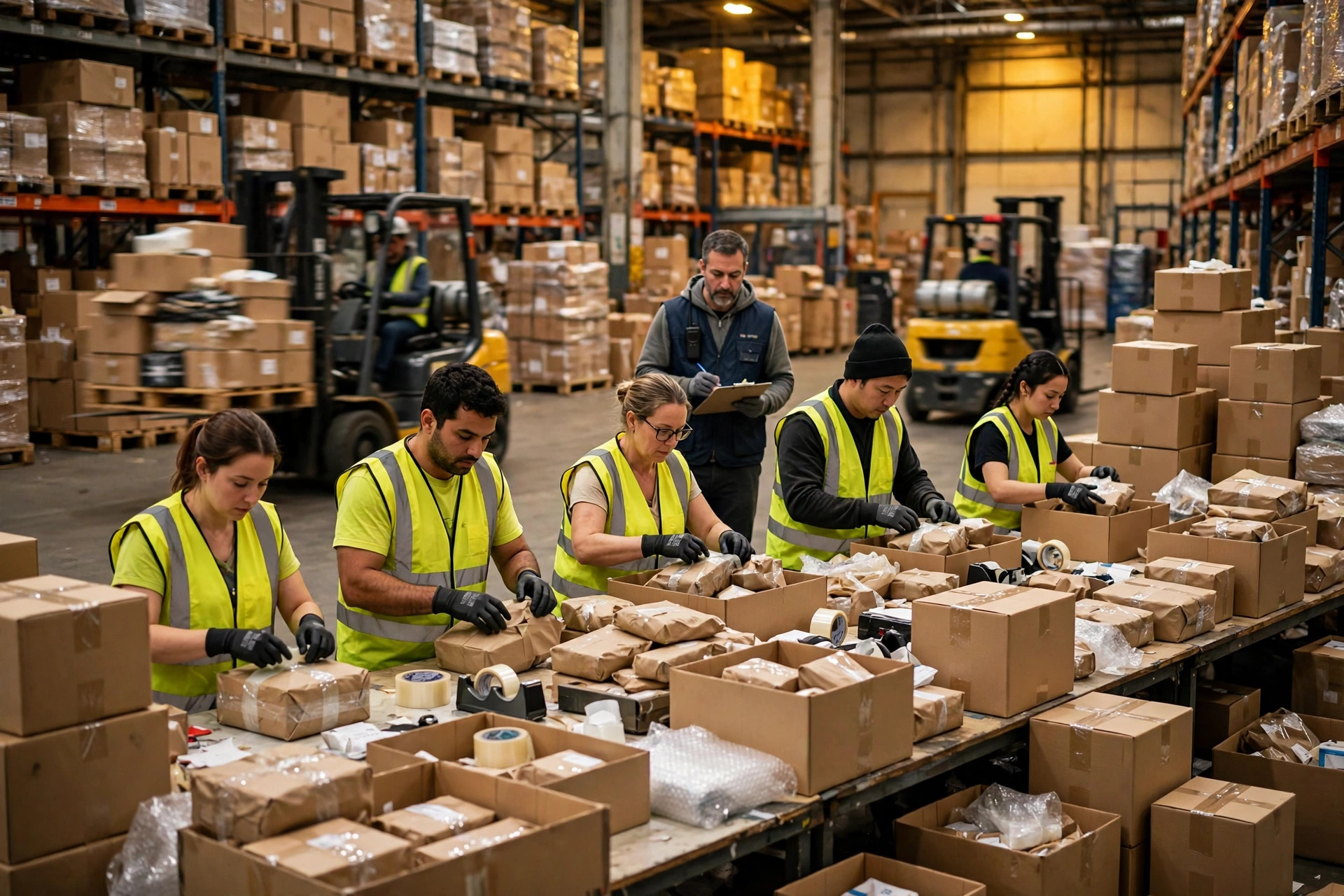
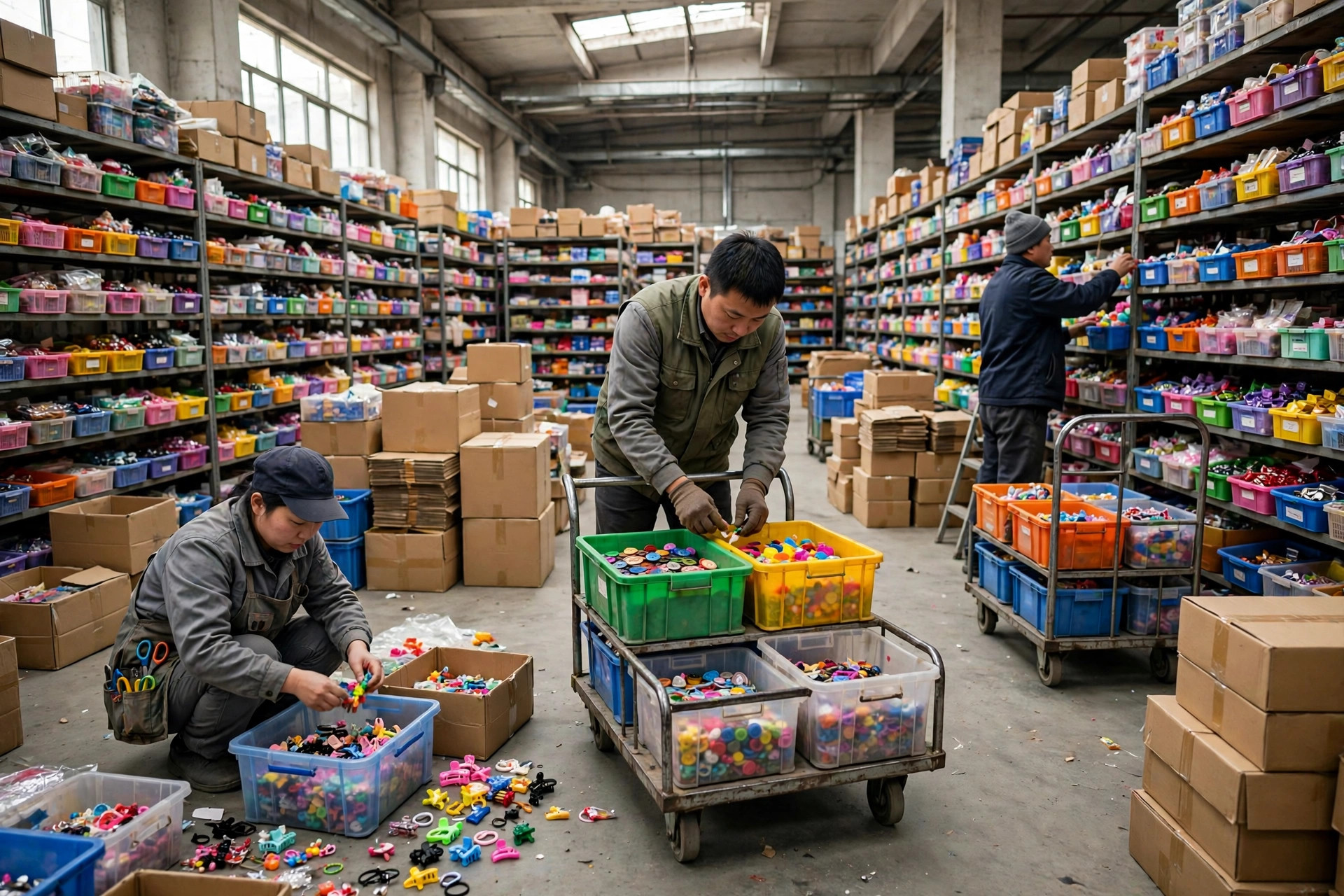
Our warehouse is not big. Around sixty people in normal times, serving dozens of stalls around the International Trade Mart. The goods tell you everything about the job: thousands of small items, tiny orders, styles that turn over fast. One day a stall wants twenty cartons of hair clips, the next day fifty packs of phone cases, the day after that a seasonal run of socks. Stall owners order late in the afternoon and expect the goods on the shelf by morning. Piecework sounds like the honest answer here. You pick more, you earn more. But let me be straight with you: a piece rate used badly does more damage than no piece rate at all.
The week our own piece rate tripped us up
In late October 2024, as Double 11 stocking kicked off, replenishment orders more than doubled. We paid pickers 0.35 yuan per piece. A veteran could pick fourteen or fifteen hundred pieces a day, which came to over five hundred yuan, and morale was genuinely good. Then, on the third day, the shortcuts started. To chase volume, some pickers skipped the scan-and-verify step and packed from memory. That week we shipped 41 wrong orders. Twenty-seven came back from the stalls, and rework plus redelivery ate two full days of labor. Worse, one stall owner, hit with two wrong shipments in a row, moved his business to the warehouse next door.
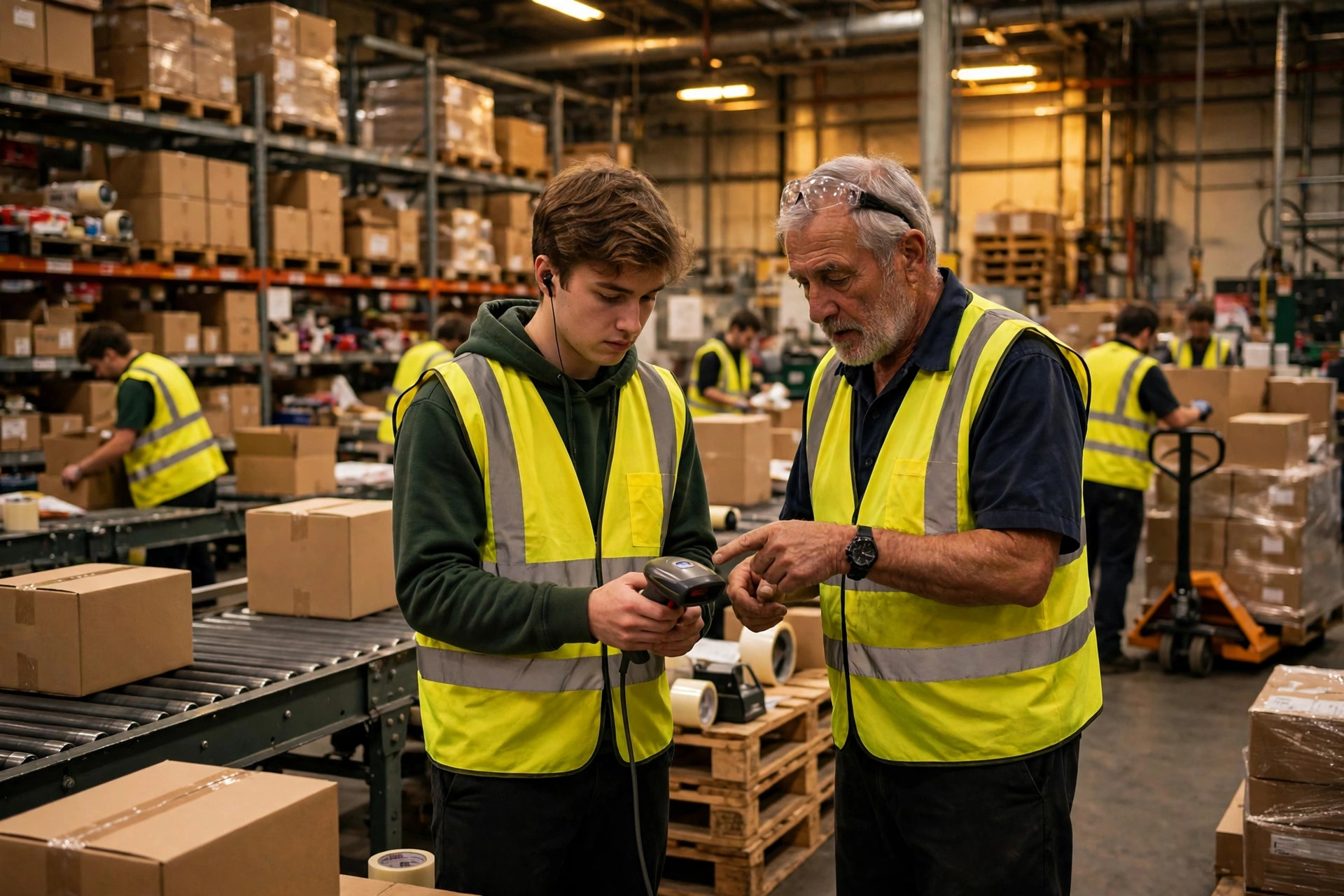
After that I changed one rule, and only one: piecework counts verified pieces only. A piece that skipped scanning, or went out wrong, does not count, and the rework time comes out of the picker's own tally. The day that rule landed, picking speed dropped twenty percent, and a few guys told me to my face that this was a pay cut in disguise. I did not argue. I put the week's error list on the wall and walked them through it, order by order: 41 errors, 19 person-days of rework, and the money each of them lost that week was bigger than anything the slowdown cost them. By the second week, speed was creeping back and errors were down to six. That is when they bought in. Piecework pays for correct pieces, not fast pieces.
Hiring fast for peak season cost us more than hiring well
Peak hiring in Yiwu has always been a scramble, and I paid for that habit in August 2023. We had a back-to-school stationery rush, so I hired 18 hourly temps in three days, at an hourly rate higher than what our veterans earned. Within two days, seven had walked off. Of the rest, half could not tell our zones apart, and their error rate ran three times the veterans'. Veterans had to stop their own picking to teach, which cut their piecework earnings, and the resentment spread fast. In the end the veterans carried the orders, working until one in the morning, while we still paid the temps in full and paid again for the rework. It cost more than simply paying our own people overtime would have.
So we changed how we staff peak season. All year, we keep a list of former workers who left on good terms, and we stay in touch — a message at New Year, a word at Mid-Autumn Festival, nothing fancy. Two weeks before peak, we call them first. They come back at the same hourly rate as our veterans, and anyone who stays through the whole peak gets a retention bonus at the end. For Double 11 in 2024, we brought back 14 familiar faces and hired only six true newcomers. Every newcomer was paired with a veteran, no more than two newcomers per veteran, and the veteran got a daily mentoring allowance of 30 yuan. Newcomers shadowed for the first week and did not pick solo until the second. Their early mistakes were not docked from their pay; they went on the mentor's verification record instead, which made the mentors check twice as carefully. On paper, wages ran higher than hiring strangers off the street. In practice, errors stayed under control and we did not lose a single stall account. The most expensive labor cost in peak season was never the wage. It was the wrong shipment and the lost customer.
How we split piecework and hourly pay now
What we run today is a split system, and it has held for two peak seasons. Work you can count and verify — picking and packing — goes on piecework, and the rate only changes once a year, in the slow season. We never raise it mid-peak to chase volume. Work that is hard to count and easy to get quietly wrong — cycle counts, tidying, putaway — goes on hourly pay, because steady matters more than fast there.
Here is the math from our own warehouse, so you can see the shape of it. These are our internal rates, not a market survey, and anything touching wages or working hours should be checked against the latest local rules where you operate:
| Task | Pay method | Peak daily output (veteran) | Error rate |
|---|---|---|---|
| Picking | Piecework, 0.35 yuan per piece | About 1,300 pieces | About 0.4% |
| Packing | Piecework, 1.2 yuan per carton | About 220 cartons | About 0.3% |
| Counting and tidying | Hourly | Per shift roster | Noticeably fewer count variances |
There is a judgment in that table that runs against instinct: raising the piece rate in peak season usually loses you money. The moment the rate jumps, everybody fights over the easy picks, the awkward small orders sit untouched, and the urgent stall orders end up last in line. In Double 11 2024 we held the rate flat and put the money into attendance and retention bonuses instead. Nine more people stayed the full peak than the year before, and nobody had to call me at four in the morning.
One more thing, because every warehouse manager in Yiwu has lived it: the 2 a.m. argument at the loading gate. On November 10, 2024, a driver who had waited two hours threatened to leave empty, and he and my team lead were shouting at each other in the yard. The fix turned out to be embarrassingly simple. Loading order is no longer decided by who shouts loudest. It follows stall opening times, posted on a board at the gate the night before. Eight o'clock stalls load first, nine-thirty stalls wait their turn, and every driver can see his place in line when he arrives. Drivers do not actually need to go first. They need a straight answer about when they leave, and once they have it, the shouting mostly stops.
If you run a small-commodity warehouse, here is the reminder I would leave you with. Do not set your piece rate by asking what a piece is worth. Work out what one wrong shipment costs you in rework, then how long it takes to win back a stall owner you lost, then what it costs to replace a veteran who quit feeling cheated and train the stranger who replaces him. Once those three numbers are on the table, the piece rate almost sets itself.
By Chen Feng, Warehouse Operations Manager