Let me be straight with you: in all my years running warehouses, the thing that scares me most is not a broken machine. It is warehouse multilingual workforce safety communication done badly, an instruction that never actually landed.
It was a peak-season night shift, past two in the morning, and we needed to move a batch of freight off the dock. I called over the radio for the forklift to hold while pedestrians cleared the aisle. The message reached the floor and a few newer guys read it backwards. They thought I was telling them to hurry up and clear the freight. Luckily the shift lead had sharp eyes and stopped people in time. Nothing happened. I stood on the dock that night thinking one thing: this was not about effort. These guys work hard. They simply had not understood what I said.
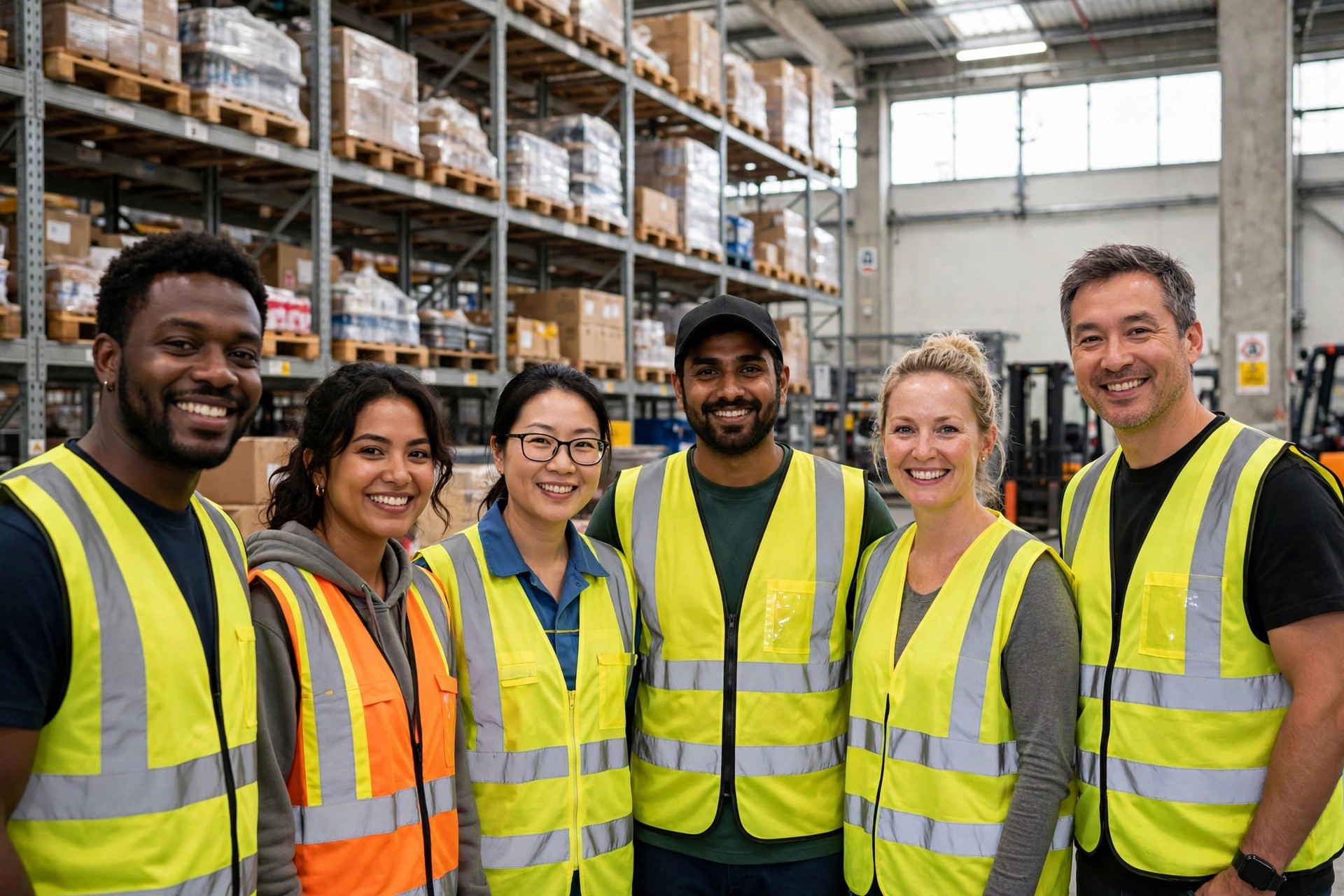
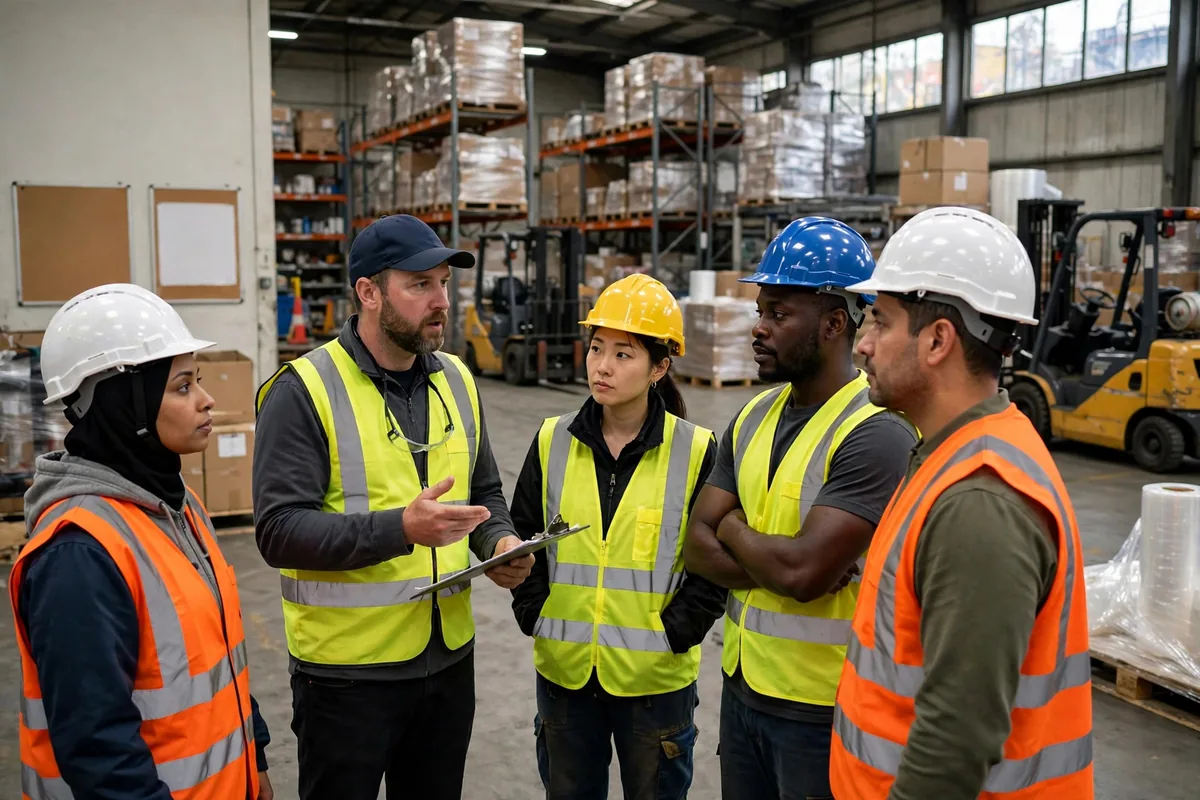
At our busiest we ran about 200 people, speaking English, Spanish, and a few other languages on the same floor. This is our account of how that went wrong, and what we actually do about it now.
The Night Shift When the Instruction Got Flipped
I went over that night three times afterwards. The radio was fine. My voice was fine. The problem was an assumption I never noticed: that because I said it in English, everyone understood it.
The reality on the floor was messier. Long-timers caught maybe three quarters of it. Newer hires caught about half and guessed the rest, mostly by watching what other people did. Watching other people is a terrible way to learn a safety instruction. One person walks east to fetch a tool, and the new guy reads it as "walk east." Night shifts make it worse: dim light, loud noise, more guessing.
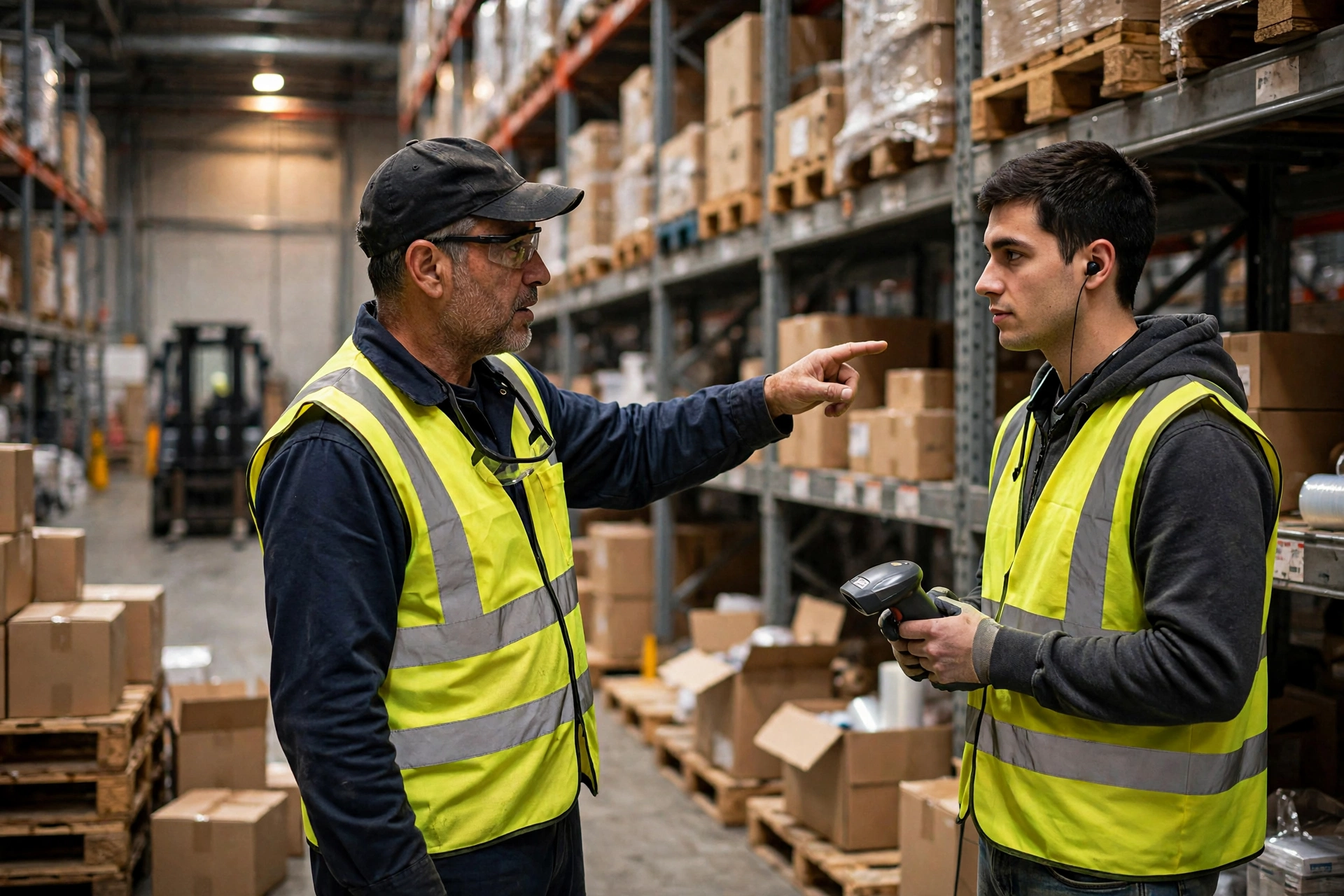
After that night we made a hard rule. Critical instructions never travel by voice alone. Stop, clear the aisle, lock out power, overhead lift: say it, show the hand signal, and point at the spot on the floor. If those three do not match, nobody starts work. The crew grumbled at first, but we have not had another flipped-instruction moment on nights since.
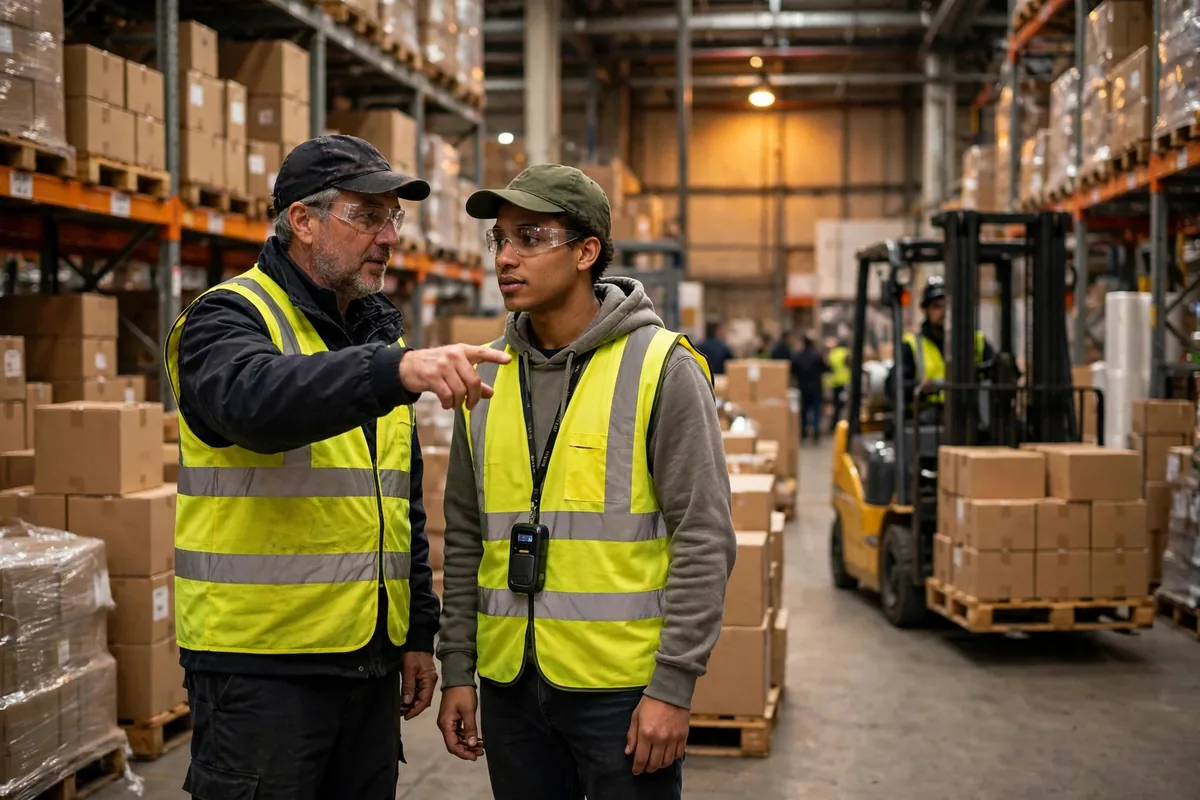
I remember another new hire in his first week who mixed up two kinds of pallets. He was not careless. His trainer had talked at him in English for a long stretch, he nodded all the way through, and he had really only caught "put it here." So we changed onboarding. For the first three days, a new hire shadows one veteran who speaks his language. The veteran does it first, the new hire does it second. A nod does not count. Doing it right counts.
Warehouse Multilingual Workforce Safety Communication Is Not Translation
I got translation wrong at first too. I had the safety manual translated into Spanish, pinned it on the wall, and figured we were covered. Six months later I asked a few guys about the emergency exit route. About half could not describe it.
Two plain reasons. Some folks do not read much in any language, so a written manual is a wall of text. And the translated words were not our floor words: the manual said "forklift operating zone" while everyone on the floor says "the forklift lane."
So we flipped the approach. Words now cover only the few most critical lines. Everything else is pictures and color. A red zone means do not enter. A yellow line means pedestrians stop here. A green arrow means this way out. Pictures need no translation. Once a month I grab a few people at random, no test, just a chat: "If there is a fire, where do you run?" If someone cannot answer, they get walked through it again that same day.
Pictures and color cost less than the old way. Printing manuals and paying translators ran to a few thousand dollars a year and did not move the needle, while pictures plus floor coaching mostly cost our leads' time.
Warehouse Multilingual Workforce Safety Communication Fixes That Stuck
This is what we actually do now. Not theory. Every item below was paid for with a mistake first.
One safety topic per shift briefing. We used to cover five or six items in a pre-shift meeting and people remembered half. Now it is one item, done properly, then demonstrated on the spot. Blind spots on forklifts? We stand people in the blind spot so they can see it. Falling objects from high racks? We point at the rack while we talk. Ten minutes, then back to work. Fewer words, better memory.
A bilingual buddy in every crew. Each crew has at least one person who can explain a safety instruction clearly in two languages. That person is not always the lead. Often it is a veteran. We give that person a small premium and the title to go with it. When someone is unsure, they ask the buddy instead of guessing. Buddies rotate so no single person burns out.
Three days with a mentor, no exceptions. As I said, a nod does not count. A new hire does not work a high-risk job alone in week one. At the end of day three, the mentor signs off, not on "training completed," but on three specific things the new hire can now do correctly on his own. I do not accept vague signatures. The three things have to be named.
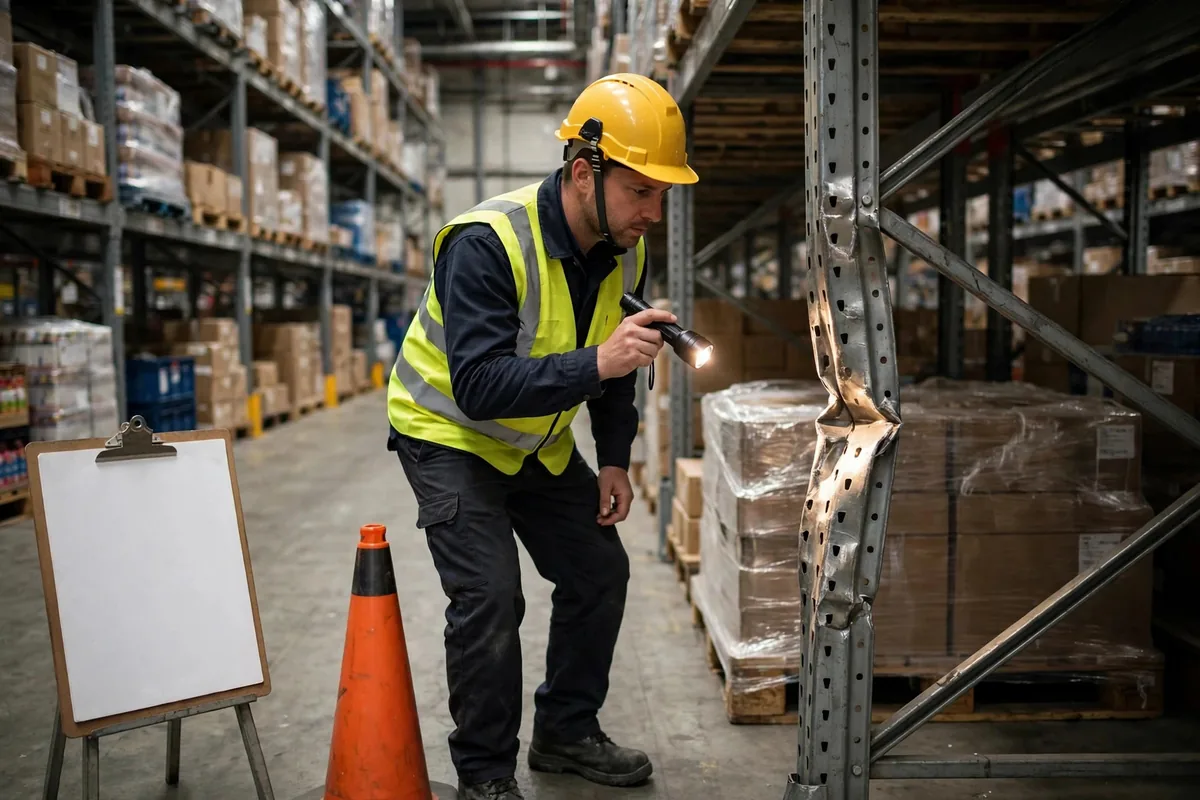
Signs checked twice a year. Signs are a classic "install and forget" item. They fall down, get dirty, get hidden behind freight. Twice a year, in our quieter periods, a lead walks the floor with a checklist and replaces or moves anything that is not visible.
| Fix | What it costs | What breaks it | | One topic per briefing | Almost nothing, ten minutes | A lead turning it into a ramble nobody remembers | | Pictures and color signs | One-time setup, then upkeep | A sign in the wrong place, or hidden behind freight | | Bilingual buddy | A small premium | The buddy calls in sick and the crew has no backup | | Three-day mentor pairing | The mentor's time | A mentor signing off to save time |
I keep that table on my office wall as a reminder: every fix has a weak spot, and the weak spot needs an owner too.
A Counterintuitive Lesson
Most people think the root problem in a multilingual crew is language. After years on the floor, I think the root problem is "we assumed they understood."
Language is only the surface. The real hole is management cutting corners: training, signatures, and signs all treated as formalities. Flip it around, and something surprising happens. When nobody shares a first language, you cannot assume anything, so you make people show you they can do it. That standard, once it is in place, makes the whole warehouse safer, because it catches the quiet misunderstandings that happen in a single-language crew too, where people nod rather than admit they did not follow.
There is a trade-off I owe you honestly. One-topic briefings, three-day mentoring, and keeping new hires off high-risk jobs all slow onboarding down a little. In peak season, when you are short-staffed, that pressure is real. But getting someone on the floor three days faster saves a few days of labor, while one accident costs a person, a shutdown, and the morale of the whole building. I will take the slower start.
A Warning for Fellow Managers
If your warehouse has a multilingual crew, do not start by buying translation software or printing a multilingual manual. Spend one night shift on the floor first. Listen to how instructions actually travel. Look at whether anyone really reads the signs. Ask a few new hires what they actually understood on training day.
There is no permanent fix for this. Our system is not perfect either; when the bilingual buddy is off, we scramble like everyone else. But two rules cover most of it: never accept a nod in place of doing it right, and never accept "we posted it" in place of "they understood it." Block those two shortcuts and you close most of the gap.
Get the words right, and everyone goes home safe. That matters more than anything else on the floor.
By Chen Feng, Warehouse Operations Manager