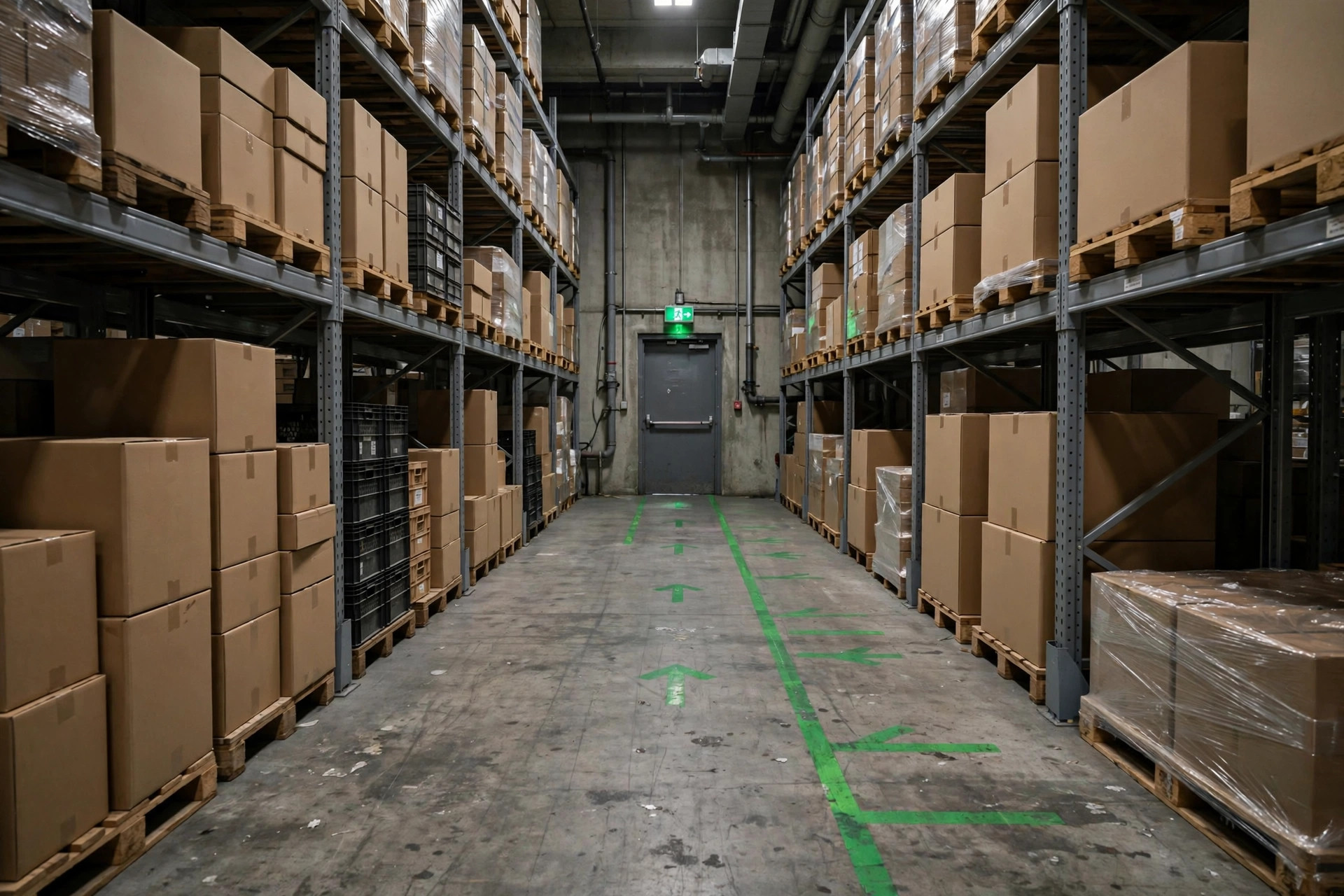
I'll say it straight: the most dangerous repair in a warehouse isn't working at height. It's the tech who says, "It's just two screws, I don't need to kill the power."
In 2018 I was walking a 120,000-square-foot e-commerce fulfillment center in Ontario, California, when a carton jammed on a conveyor. The maintenance guy climbed onto the frame to fish it out—line still live, power still on. A coworker at the far end, who couldn't see him, hit start. The belt moved. By sheer luck he wasn't pulled in; he walked away with scrapes. That afternoon I told the shift supervisor: from today on, anyone who works on that line without locking it out is done here.
I'm not being dramatic. I've run the numbers. An hour of sorter downtime costs a few thousand dollars—real money, sure. But one caught-in incident brings OSHA fines, a shutdown investigation, and workers' comp that add up to a year's worth of downtime. Downtime versus safety was never a real trade-off. One is a cost. The other is the floor.
LOTO—lockout/tagout—is OSHA's answer, spelled out in 29 CFR 1910.147, "The Control of Hazardous Energy." The whole standard boils down to one sentence: before anyone services a machine, isolate every energy source, lock it in the safe position, and tag it so nobody re-energizes it by mistake. It lands in OSHA's top-ten most-cited violations almost every year. Not because it's hard. Because everyone thinks it won't happen to them.
It's Not the Electricity You're Locking Out—It's Everything That Can Move
Most people hear LOTO and think "flip the breaker." That thinking gets people hurt. A warehouse holds at least four kinds of hazardous energy.
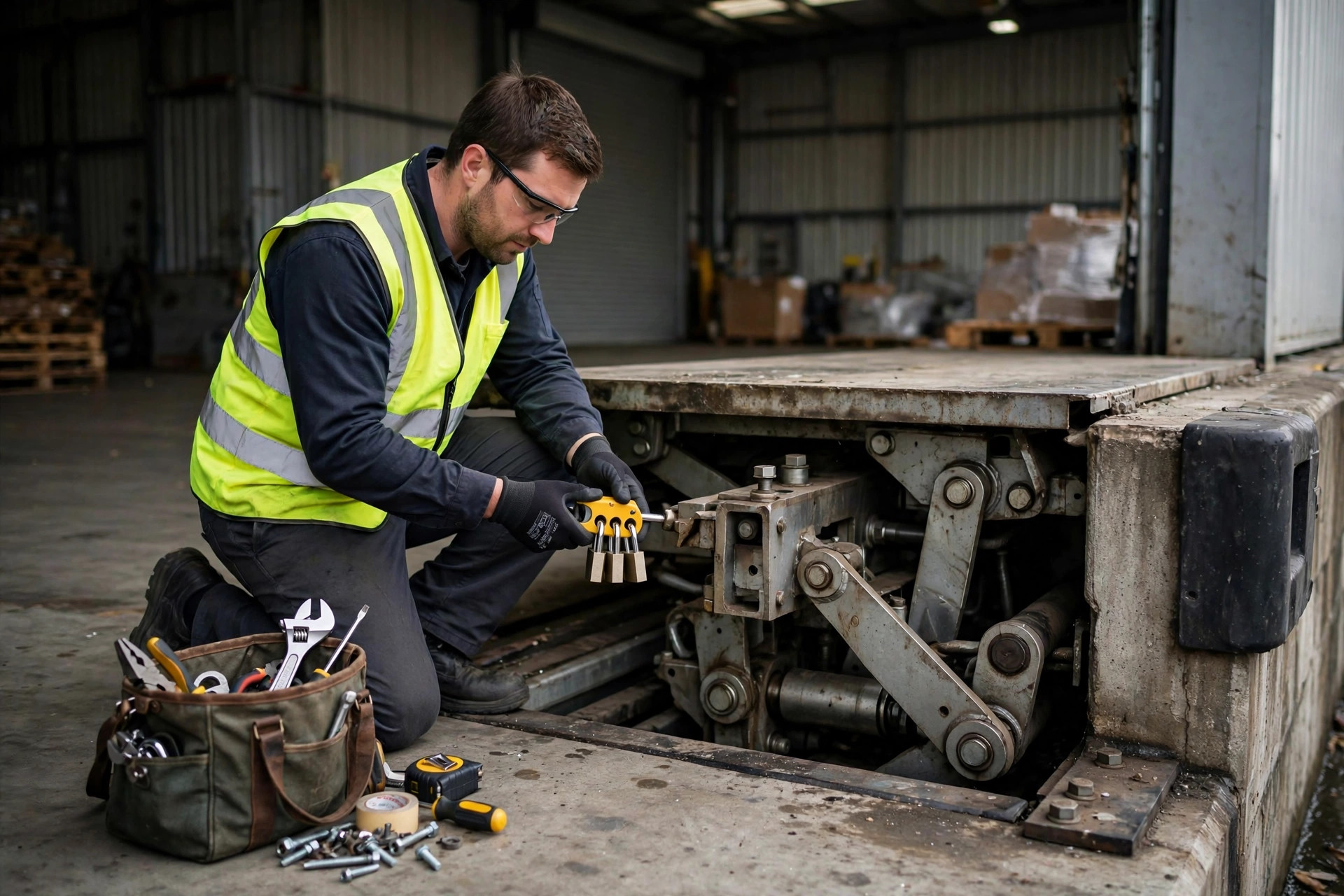
Electricity is the obvious one—conveyors, lifts, dock doors, battery chargers. Kill the panel and it feels safe. But then there's compressed air. Pneumatic diverters and clamps keep residual pressure in the lines after the power dies, and a cylinder can still punch. Third: hydraulics and gravity. The classic is the dock leveler—power off, and that steel deck, several hundred kilos of it, is still hanging in midair. One slipped hydraulic lock, one bumped control, and it comes down. Fourth: stored energy. Tensioned belts, springs, counterweights, residual charge in capacitors.
So the real procedure was never "flip the breaker." It's four steps: isolate, lock, release, verify. Isolate every energy source. Lock each point with your own personal lock—key stays in your pocket. Release the leftovers: bleed the air, lower the suspended deck, test for dead. Then try to start the machine and confirm it's dead before you touch it. Skip any step and the whole ritual is theater.
Small-warehouse owners always ask me: we've got one electrician and two conveyor lines, do we really need all this? My answer never changes: the smaller you are, the more you need it. Big sites have safety staff watching. Small sites get hurt precisely because "it's just us, we told each other." A verbal heads-up is not a control. A lock is. In 2019 I toured a 60,000-square-foot cross-dock outside Chicago where a leveler repair ran on a "heads-up": the tech was under the deck swapping a hydraulic hose while a driver, never told, backed onto the dock. The deck didn't drop—pure luck. If anyone had touched that control box, I don't want to think about it.
The Minimum That Actually Works: A Lock Box and a Checklist
Don't start by writing a fifty-page procedure. A small warehouse can't sustain it and nobody will read it. My minimum viable LOTO is three things.
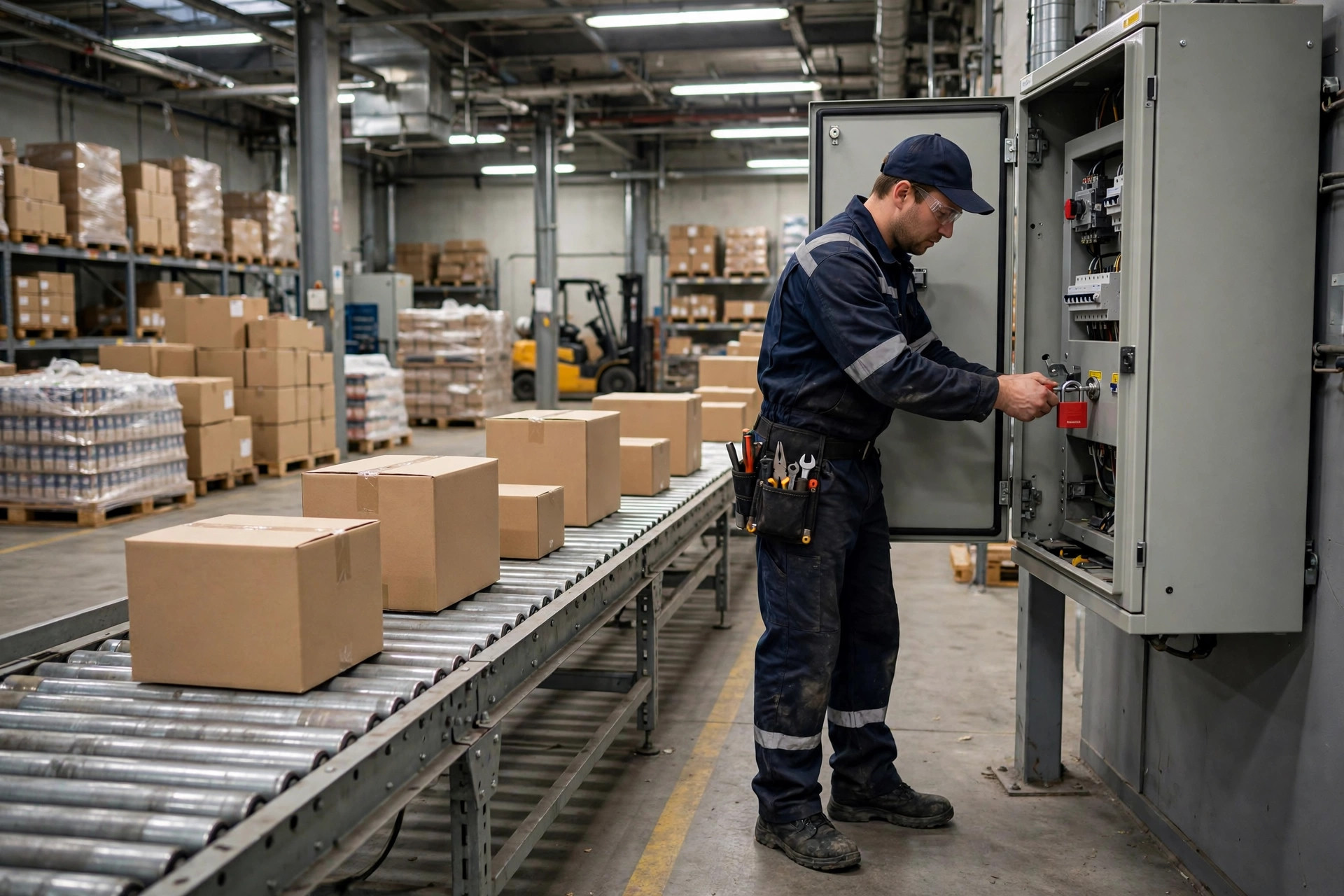
First, a lockout station on the maintenance room wall. Stock it with five to eight padlocks—one key each, names engraved, one lock per person, never shared. A stack of tags marked "Under repair—do not energize," with name and date. A few breaker lockouts, valve lockouts, plug lockouts. The whole kit runs a couple hundred dollars. A couple hundred dollars for every maintenance worker's life. You don't need me to do that math.
Second, a lockout checklist taped inside each machine's control cabinet door. Three lines only: this machine's energy sources—where's the breaker, where's the air valve; which points get locked; and what to do to release stored energy. The tech checks them off before touching anything; the supervisor spot-checks. That sheet of paper converts "I thought it was dead" into "every item on the list is confirmed." Memory is unreliable. Paper isn't.
Third, a shift-change rule: locks don't come off mid-repair. Shift handoffs are where lockout dies—day shift's lock is still on when nights arrive, or day shift pulls theirs and nights never knew the machine was under repair. One rule: whoever applied the lock removes it, in person. If they're gone, the lock stays. At handoff, the incoming tech applies their own lock first; only then does the outgoing tech remove theirs, after a proper handover. That's group lockout, and the standard spells it out. Too much trouble? Then don't carry repairs across shifts. Finish the job.
Now the three ways I've seen LOTO reduced to theater. First: tag without lock. A "do not operate" tag on a breaker that anyone can flip back on stops nobody. The standard demands lockout first; tagout alone is only allowed where lockout is genuinely impossible, with equivalent protection. Conveyors and levelers can take locks. Don't be lazy.
Second: shared locks, stray keys. One lock passed around the whole crew opens for anyone—which means it locks out no one. The iron rule is "you lock it, you unlock it," one person, one lock, one key. The worst I ever saw: the key sitting in the lock, hanging on the wall like a decoration. That's not formalism anymore. That's performance art.
Third: power cut, pressure not bled. The conveyor's dead but the air line still holds pressure; the leveler's dead but the deck still hangs. A tech cracks a fitting and the hose whips—bang. That's why verification is non-negotiable: after locking, hit the start button and confirm the machine does absolutely nothing. Ten seconds. It filters out ninety percent of "I thought."
Your move this week: buy each electrician and tech a padlock with their name on it, hang a lockout box on the wall—a couple hundred dollars, done by Friday. Monday morning, one sentence at the standup: from today, anyone who services equipment without locking out stops work. LOTO was never a binder. It's a habit. And habits start with the first lock.