The rent clock started on March 1. The first pallet didn't roll into the building until June. Nothing was wrong with the racking, the dock doors, or the lease rate — the deal itself was fine. What ate three months was a piece of paper: the building's fire-safety acceptance documents were still registered under the previous landlord, and nobody had ever transferred them. New materials, a rebooked site inspection, three months gone. Rent accruing the whole time, not a single carton inside.
I've watched this movie more than once. So here's the rule I give every client leasing warehouse space in China: sort out the fire-safety paperwork before you sign, or your rent-free fit-out period will turn into a fire-compliance renovation period.
The paperwork follows the building — but that doesn't mean it covers you
The basic logic first. Fire-safety design review and completion acceptance documents — or the filing receipts for projects that go through the record-filing track — attach to the building, not the landlord. Sell the building, sublease it, and the paperwork doesn't evaporate.
"Doesn't evaporate" is not the same as "works for you." Three things go wrong most often.
The use changed. Plenty of warehouses started life as factories, and converting a factory into a warehouse can change the fire-hazard classification. Storing non-combustibles one day and packaged electronics or apparel the next is not the same fire risk, and the approval paperwork has to reflect that. When a landlord tells you "it passed inspection back then," it passed for his use case, not yours.
The fit-out triggered it. Add partitions, move sprinkler heads, rewire sections of the floor — an interior renovation of a certain scale triggers its own fire-safety procedure. Plenty of tenants learn this after the work is done, which means work stops while the paperwork catches up.
The process itself moved. Since 2019, construction fire-safety review and acceptance in China moved from the fire departments to the housing and urban-rural development authorities. Special construction projects go through full review and acceptance; everything else goes through a filing-and-spot-check system — if your building gets sampled, it's judged against the acceptance standard. Older buildings carry documents issued under the old process, with old agency names and old form titles, and those are exactly the ones that jam up during transfers and renewals.
So when the landlord shows you his paperwork, "having it" is not the test. The test is whether it matches: the address, the floor area, the stated use — against what you are about to rent and what you are about to do in it.
The sublease chain is where deals quietly die
This deserves its own section because it's the failure mode I see most. The person signing the lease with you is often not the owner. Industrial parks in China run on layers of sublandlords, and the actual property owner can be in another city — sometimes outside the country entirely. Every extra link in that chain is another person whose cooperation you'll need when documents must be transferred, reissued, or stamped. Long chain, low controllability.
Before you go further, trace the whole chain on paper: owner, to sublandlord one, to sublandlord two, to you. Get the authorization documents for every link, all the way back to the real owner. If anyone in the middle gets vague about producing them, treat that as information, not as a minor delay. I once saw a three-layer sublease in Dongguan where the real owner lived overseas and every authorization letter took two weeks to arrive — the tenant ended up starting every renewal two months early, year after year.
And ask about the building's history while you're at it. What was it used for before? Did the use or the fire-hazard classification ever change? A landlord who can't answer clearly usually has a reason.
What I ask to see before anyone signs
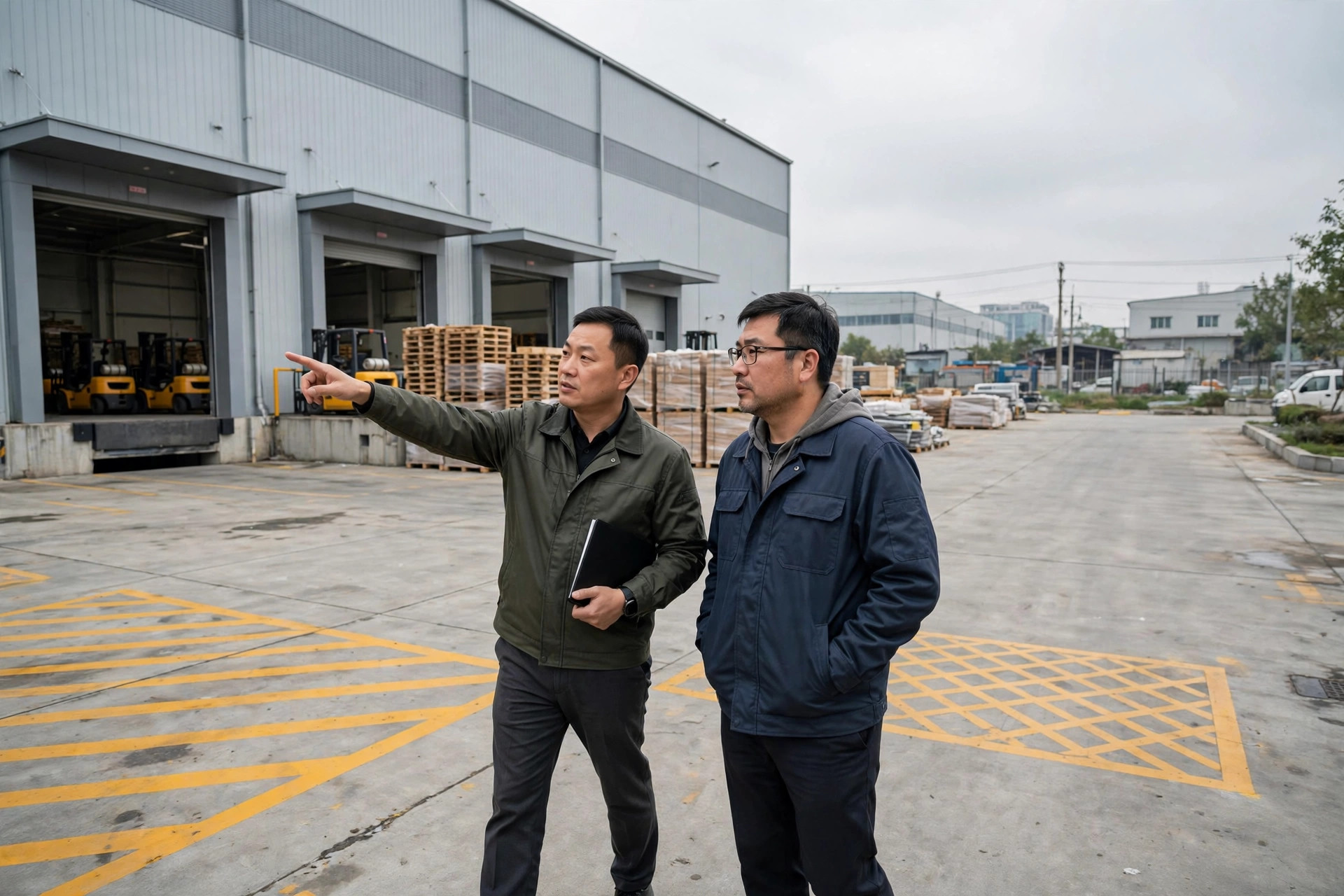
Do the document check during the site visit, not on signing day. My usual order: proof of ownership first — the property title certificate is the gold standard, and without at least the planning and construction permits proving the building was legally built and belongs to him, there's nothing to discuss. Then the fire-safety documents themselves, originals, not copies — anyone can hand you a photocopy. Check the stated use on the form against your intended use. Then the sublease chain, link by link, back to the owner. Then the history questions. And before you finalize your own fit-out drawings, have someone who knows the system look at whether your renovation triggers a new round of fire-safety procedures. Ask first, build second.
Three clauses that belong in the lease
Verbal promises about paperwork are worth nothing. It goes in the contract or it doesn't exist. Don't be shy about raising it — framing it as protection for both sides works.
One: who gets the fire-safety paperwork completed and transferred, who pays, and what happens if it can't be done. Assign the responsibility, the cost, and the penalty in writing.
Two: if the paperwork stalls past an agreed number of days, the rent-free period extends day for day; past a longer deadline, you can walk away, with prepaid rent refunded and your direct losses covered. Contract language is how you hedge an uncertain move-in date.
Three: the landlord's cooperation duties during fit-out — providing the original fire-protection drawings, stamping documents, showing up to sign when required. A shocking number of delays come down to four words: the landlord wouldn't cooperate. If it's not in the lease, you have no leverage when that day comes.
One last move before signing: take half a day, bring the building's address to the local housing-and-construction service window and ask, or hire a third-party fire-safety technical firm for a one-time document review. It doesn't cost much. What it buys is certainty about your start date — and three months of rent ticking while nobody's paperwork moves is the kind of lesson you only want to learn once. The cheapest rent in the market is still expensive if you can't move in.