
Folks, let me be straight with you — I've been chewing on warehouse labor shortage solutions for years. One Monday morning last November, 6:40 AM, I stood at the entrance of Zone A in our warehouse. The schedule said 38 people. Thirty-one showed up. Seven empty slots meant everybody's workload just went up twenty percent. Peak-season freight was already lined up at the door, drivers honking. Labor shortage isn't just "can't hire people" — it's that the people you hire don't stay, the ones who stay take forever to get up to speed, and the ones who are up to speed can't cover peak. Here's every wrong turn we took and the playbook we run now.
Where the Warehouse Labor Shortage Actually Hurts
First, get the math right. According to Zebra's warehousing research, a new hire takes an average of 4.7 weeks to reach full productivity. During those 4.7 weeks, they're drawing full pay, doing half the work, and eating up a veteran's time for training. Worse, plenty never make it to 4.7 weeks — two weeks in, they decide it's too much walking, and they're gone. Everything you spent on recruiting, onboarding, and uniforms goes in the trash.
Our warehouse ran the numbers before the 2024 peak: three straight weeks of hiring brought in five people, three quit, net gain of two. Meanwhile the rest of the crew worked an extra one to two hours a day, overtime at time-and-a-half, and that one month of overtime cost us several thousand dollars — more than two additional hires would have. That's the real price of the shortage: you're not paying for missing people, you're paying a premium for being short-handed.
So stop asking "where do I find people." Break it into three problems: how people come in, how they stay, and how the work gets lighter. Three roads: pay, retention, automation.
Pay: Structure Beats Another Dollar an Hour
Let's talk money first. When most warehouse managers can't hire, the reflex is to raise the hourly rate. Raises help, but how you raise matters more. We tried bumping starting pay from $19.50 to $21 an hour. Applications went up — and three months later we realized turnover went up too, because the warehouse next door went to $21.50 and our people walked. Competing purely on starting wage is an arms race you never win.
We restructured instead, and it worked better:
- Keep starting pay slightly above market middle — respectable, not the highest on the block
- Make the night-shift differential real: $3.50 an hour between day and night shifts. Nights are the hardest to fill — pay the premium there and you attract night people without raising everyone
- Split the sign-on bonus into three payments: $500 total — $100 at hire, $200 at 30 days, $200 at 90 days. Leave before 90 days and you don't collect it all. That money doesn't buy "showing up," it buys "staying"
The core logic: spend the money on keeping people, not on outbidding for them. Starting wage wins the hire; structure wins the stay. When a new hire makes it to 90 days, the repeat-recruiting cost we've avoided already covers that $500 several times over.
Retention Runs on Scheduling and Mentoring; Automation Cuts the Walking
Now retention. Real talk: when warehouses can't keep people, eight times out of ten it's not the money — it's that the job feels miserable. Three things are locked in at our warehouse now:
First, fixed schedules. We used to rotate — days this week, nights next week. Young workers hated it; it wrecked their dating lives and school pickups. Now schedules are set for three months at a time. Days means days, nights means nights, and swaps are between coworkers. That one change cut our probationary-period quits dramatically.
Second, a buddy system. Every new hire gets assigned a veteran for the first month. The mentor gets a $200 bonus — clawed back if the new hire leaves within 60 days. When Old Wang mentored Xiao Li, the kid was picking independently by week three, way ahead of that 4.7-week average. Why? New hires had someone to ask instead of fumbling alone, which cuts the frustration in half.
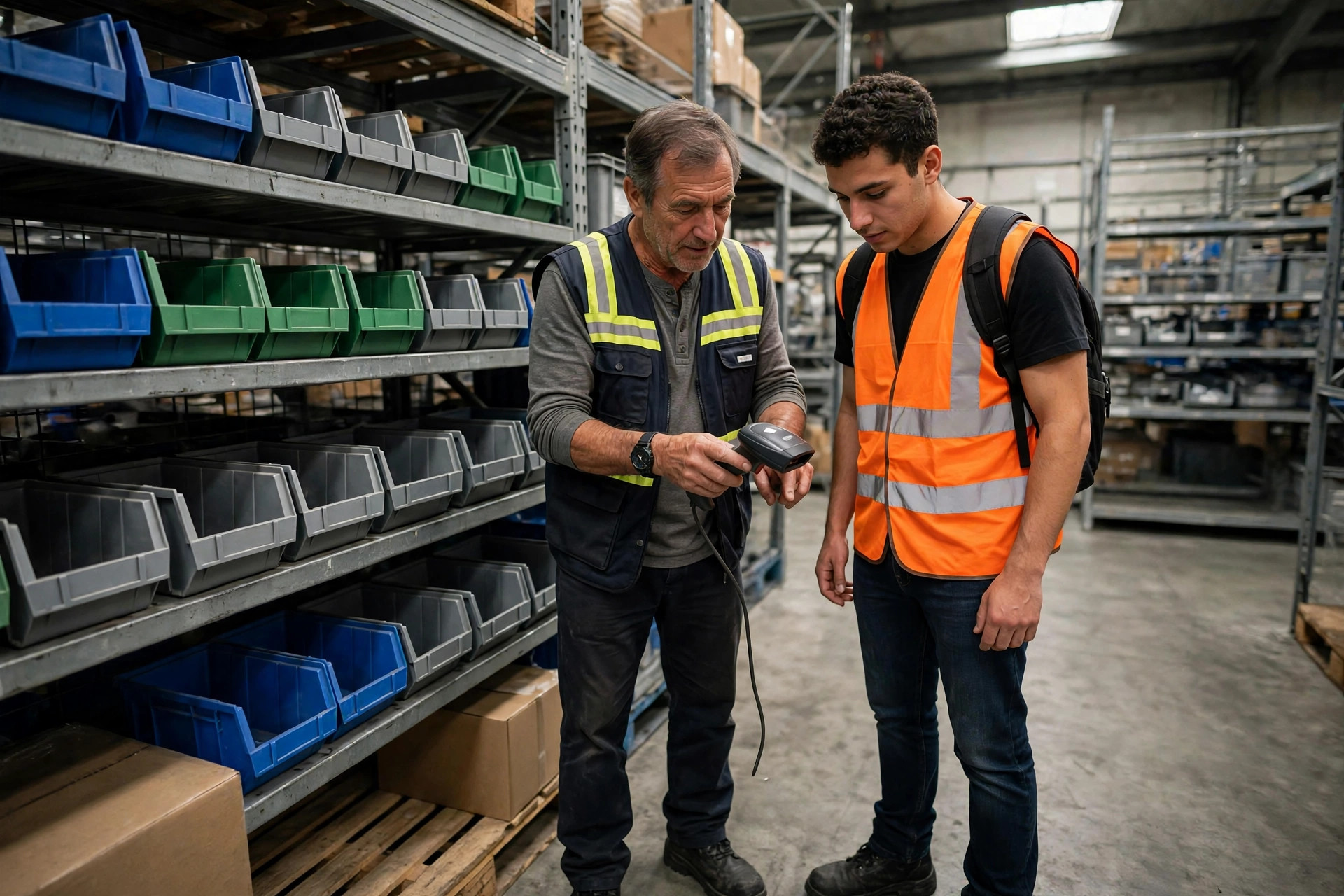
Third, kill the empty walking. We measured it: pickers routinely walk 20,000 to 30,000 steps a day, and at least a third of that is wasted — messy slotting, bad batching, hunting for product. Move fast movers to the golden zone, sequence wave picks properly, and each person walks 3 to 4 fewer kilometers per shift. Legs stop aching, attitudes improve. Costs nothing — pure management.
Then automation. People hear "automation" and think layoffs. Our experience says the opposite. Early in 2025 we brought in a few AMRs for one simple job: hauling picked goods from the pick zone to packing — the stretch everyone used to walk with carts. Result? Not one headcount cut. What dropped was overtime and turnover. Peak season used to mean two hours of daily overtime; now people mostly clock out on time. Pickers aren't marching all day, so far more of them make it past the one-year mark.
Here's the counterintuitive part: automation's first savings aren't labor cost — they're overtime pay and recruiting cost. And remember: process first. Fix your slotting, waves, and travel paths before buying equipment. Deploying AMRs into a messy process just means the robots join you in the chaos.
One Reminder for Fellow Operators
The three roads aren't sequential. Pay gets people in the door, retention keeps them there, automation makes the work survivable. That's how we run our warehouse today: a pay structure that retains, scheduling and mentoring that develop people, AMRs that cut the walking. Since turnover came down from its worst year, peak season actually feels calmer than it used to.
One last thing: don't wait until a month before peak to start hiring. Hiring works like inventory — you build it in the slow season so you can spend it in the busy one. Start now, and next peak you'll thank yourself.
By Chen Feng, Warehouse Operations Manager