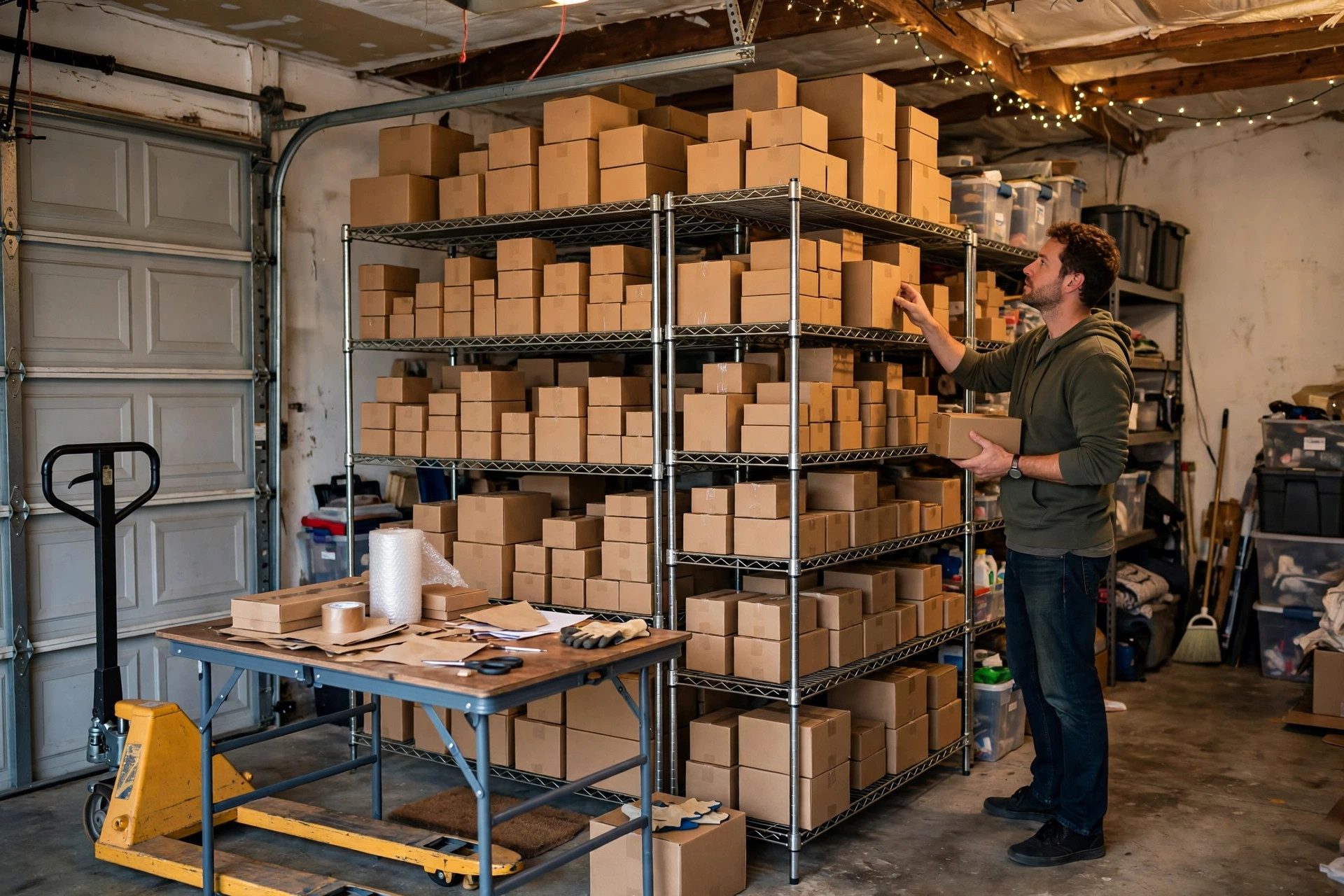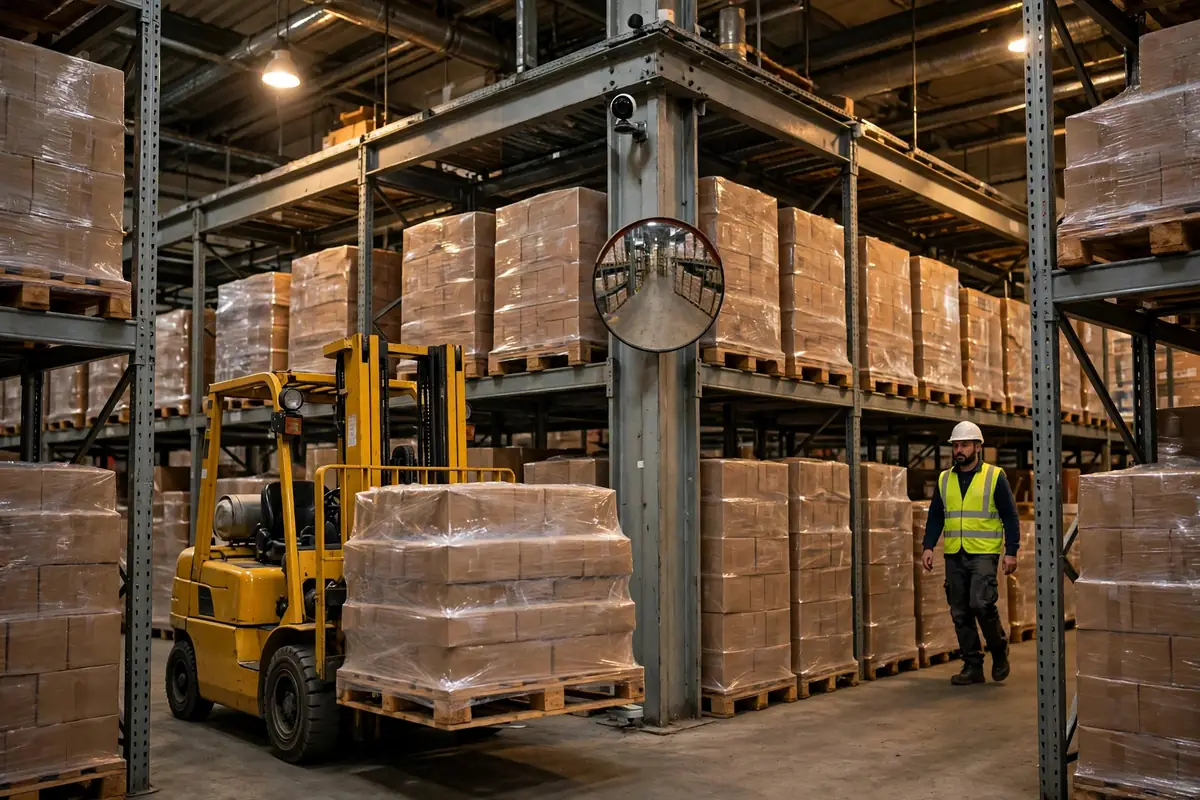
Let me be honest with you: our little warehouse cannot afford to burn money on fancy systems. But in-transit inventory — the goods sitting on a truck somewhere between two warehouses — has burned more of our money than I care to admit.
Here is our embarrassment, plain as day. Last fall, my 3,000-square-meter warehouse was doing split fulfillment for three clients at once. A shipment left the main warehouse and spent four days on the road. Client A's customer service team kept asking me, "Has it arrived?" I checked the system: stock zero. I checked the tracking number: "picked up." So where was the goods? Whose was it? I could not answer. Then came month-end stocktaking: the system said 200 cartons, the physical count said 170. The missing 30 cartons were still on the road — but because nobody recorded in-transit stock, the count reported a straight loss, and I nearly paid a client compensation for goods that were never lost. Talk about injustice.
It took me a while to figure out the real problem. It is not that goods disappear. It is that the books have no place for goods on the road. The system only knows two states: "in stock" and "not in stock." Everything on a truck becomes a ghost. And once ghosts pile up, customer service cannot promise delivery dates, sales cannot take rush orders, and stocktakes never tie out.
Warehouse In-Transit Inventory Visibility Starts With Three Rules
The first step of our homegrown fix was to agree the rules with clients in writing. Just three:
First, the moment goods leave the shipping warehouse's door, they are in-transit, not available stock. When customer service promises a delivery date, in-transit goods can only be described as "on the way, expected on such-and-such a day" — never sold as available. The day we made this rule, oversold orders dropped by more than half.
Second, in-transit ownership follows the shipment, not the truck. One truck can carry two clients' goods. If a pallet gets unloaded to the wrong client, the mess is instant. Our rule: every in-transit shipment gets one unique in-transit number, tied to client, product, quantity, and ship date. Trucks can be shared; shipment numbers cannot be mixed.
Third, arrival must be reconciled the same day. When goods arrive, the receiver checks the in-transit number before anything goes on a shelf. Only then is that shipment closed. We used to reconcile on weekends. Once, a shipment arrived two cartons short, and we only noticed three days later — by then, arguing with the carrier was pointless, because we had no timely evidence.
| Checkpoint | Old way | New way | Result |
|---|---|---|---|
| At dispatch | Verbal notice, a tracking number in a chat group | In-transit record created at dispatch | Shipped means recorded |
| While in transit | Customer service answers from memory | Look up status by shipment number, one voice | No more guessed promises |
| At arrival | Shelve first, reconcile when free | Same-day reconciliation, same-day exception report | Differences never sleep over |
One In-Transit Ledger — A Spreadsheet Is Enough
I know what you are thinking: small warehouses do not have fancy systems, so what then? Truthfully, we still have not bought a dedicated system for this. One spreadsheet runs the whole thing. Eight columns: in-transit number, client, product and spec, quantity, ship date, expected arrival, carrier tracking number, status (in transit / arrived / exception). Every morning meeting takes five minutes to walk through it: which shipments are due today, which are overdue, which have exceptions.
Here is a counterintuitive judgment: the simpler the in-transit ledger, the less likely it rots. I have seen a peer build a fourteen-column masterpiece — volume, weight, batch, temperature control, everything. The person filling it in gave up after three days because it was too much work. A ledger nobody maintains is worse than no ledger at all, because you believe someone is tracking it when nobody is. Eight columns is exactly enough. One more is a burden.
A second story, from this summer. A client ran a big promotion and pulled stock from two split warehouses into mine at the same time. Under the old way, arriving goods went straight onto shelves. On day one of the promotion, the system showed 500 units available; only 300 could actually ship. The other 200 units were another client's identical product, mixed in. After that we made an iron rule: in-transit goods go to a holding zone first, and only enter regular locations after reconciliation. The holding zone is just a marked patch of floor by the door. It costs nothing, and mixed-stock accidents have not happened since.
Reconciling In-Transit Stock Across Warehouses: Three Moves
Transfers between warehouses are where in-transit books get messy. I have three moves:
Move one: the shipping warehouse records first, the receiving warehouse confirms. Warehouse A ships and creates the in-transit record that same day. Warehouse B, on arrival, does not shelve directly — it first "claims" that in-transit number, and only reconciles once quantities match. Both sides keep a record, and the books tie. If only one side records, the other side is always guessing.
Move two: chase every overdue shipment. If the expected arrival date passes and the goods are not here, the row goes red, and someone calls the carrier that same day. We learned this the hard way: a shipment sat six days late while nobody asked, and it turned out the carrier's hub had mis-sorted it to a neighboring city, where it sat for a week. An overdue shipment you do not chase turns a small delay into a big problem.
Move three: reconcile the whole book monthly. At month end, pull every "arrived but unreconciled" and "overdue in transit" record and confirm each one with the client. It sounds tedious, but it once recovered two shipments a client believed lost — they had arrived long ago and simply never been closed out. When the books are clean, trust comes back.
The bottom line: managing in-transit inventory visibility is not about how expensive your system is. It is about whether there is a ledger, and whether someone watches it every day. Big companies talk about end-to-end visibility and real-time digital twins. Sounds beautiful. We cannot afford that. But an eight-column spreadsheet, a holding zone by the door, and a rule that "differences never sleep over" keep our in-transit books honest.
Small warehouses have their own way of surviving: we may not see things in fancy dashboards, but every carton on our books has a whereabouts.
By Xiao Ma, Small Warehouse Owner