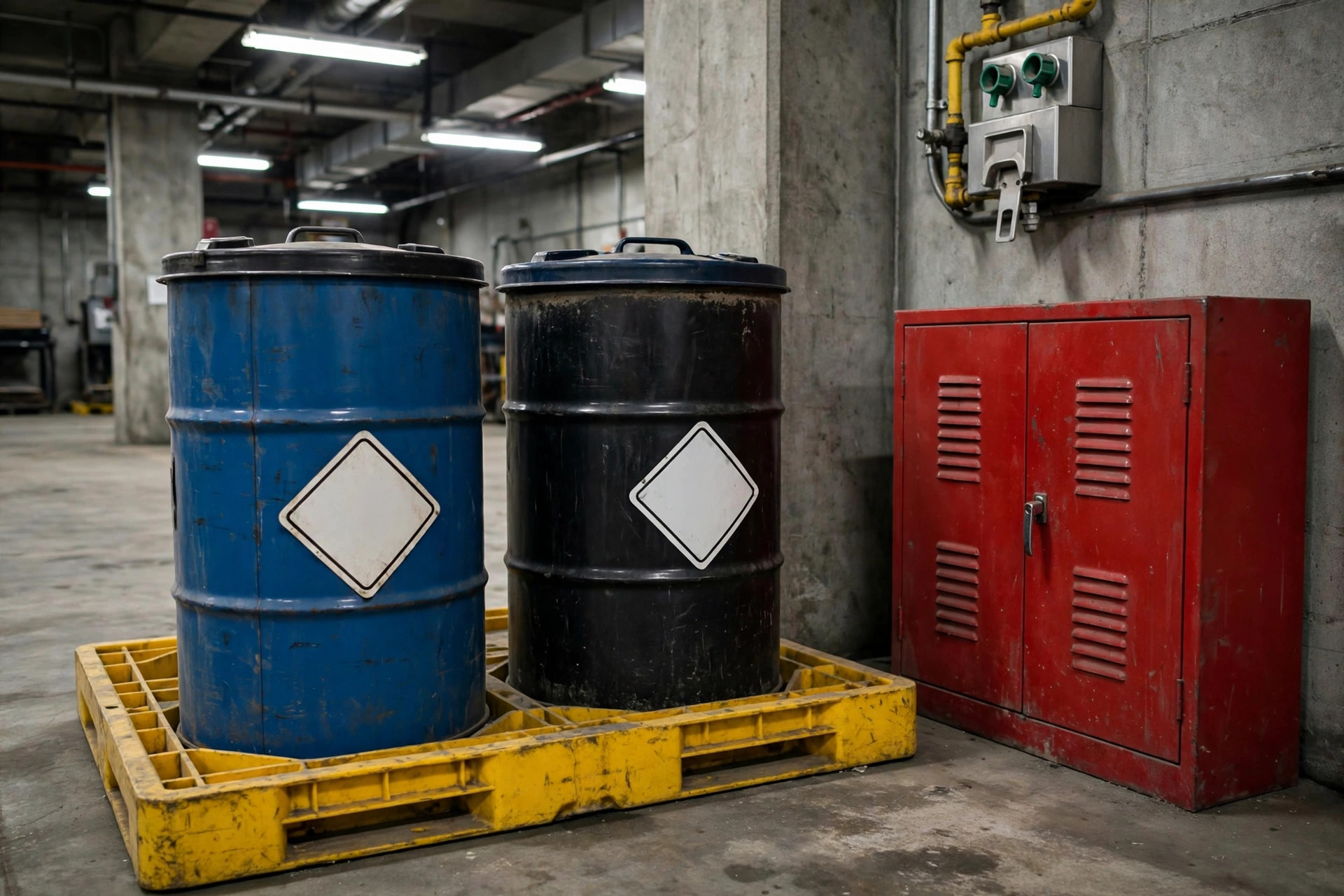
Walk into the back corner of almost any American warehouse and you'll find them: a couple of drums of used motor oil nobody has touched in months, a stack of dead forklift batteries, a trash bag of solvent-soaked rags sitting next to the regular dumpster. The operation can be otherwise excellent. But when an EPA or state environmental inspector walks in, this corner is the first thing they look at — and the fines start in the tens of thousands of dollars. That's when the warehouse manager learns how expensive the word "temporary" can be.
Warehouse hazardous waste is, in practice, a short list: used motor oil and hydraulic fluid from equipment maintenance, spent lead-acid batteries from forklifts and pallet jacks, rags and packaging contaminated with solvents or paint, mercury-containing lamps from lighting retrofits, and expired cleaners and adhesives. This article covers three things: how to identify and label it, how the 90-day clock works, and what records to keep. Wherever a specific deadline or classification threshold is uncertain, defer to the latest requirements from the EPA and your state environmental agency — that's not a disclaimer, it's how this field works, because states can and do go stricter than the federal baseline.
Know what counts before you touch anything
Step one is not treating hazardous waste like regular trash. Used oil, spent batteries, mercury lamps — the federal rules define listed wastes and characteristic wastes (ignitable, corrosive, reactive, toxic). The specifics live in 40 CFR Part 262 and related sections; read the current EPA text, not someone's blog summary.
The ones warehouses most often miss: rags soaked in a listed solvent can themselves be classified as hazardous waste — they don't belong in the regular trash. Spent lead-acid batteries are managed as universal waste in many states, which is less burdensome than full hazardous waste rules but still not "stack them anywhere" — follow your state's program. Mercury lamps are a special headache once broken, because mercury cleanup is its own ordeal; the practical move is to outsource lamp replacement to a qualified vendor who takes the old lamps for proper disposal.
My low-tech method: once a year, walk the maintenance area, the battery charging station, receiving, and the lighting replacement log, and write up a "hazardous wastes this warehouse can generate" list. Pin it on the safety board. Update it yearly, and add a line whenever a new chemical enters the building. It costs nothing, and when an inspector asks, it proves you did the identification work. Attitude points matter.
Labels and segregation: the two things inspectors check first
An inspector looks at the accumulation area first and the drum labels second. A compliant label has three elements: the words HAZARDOUS WASTE, the accumulation start date, and the waste's hazard characteristics or codes. The start date is what the 90-day clock runs on — get it wrong or leave it off and your whole time-limit management collapses. Use oil- and water-resistant labels on the drum body, in a visible spot. Never on the lid — lids get swapped, and I've watched that exact mistake three times.
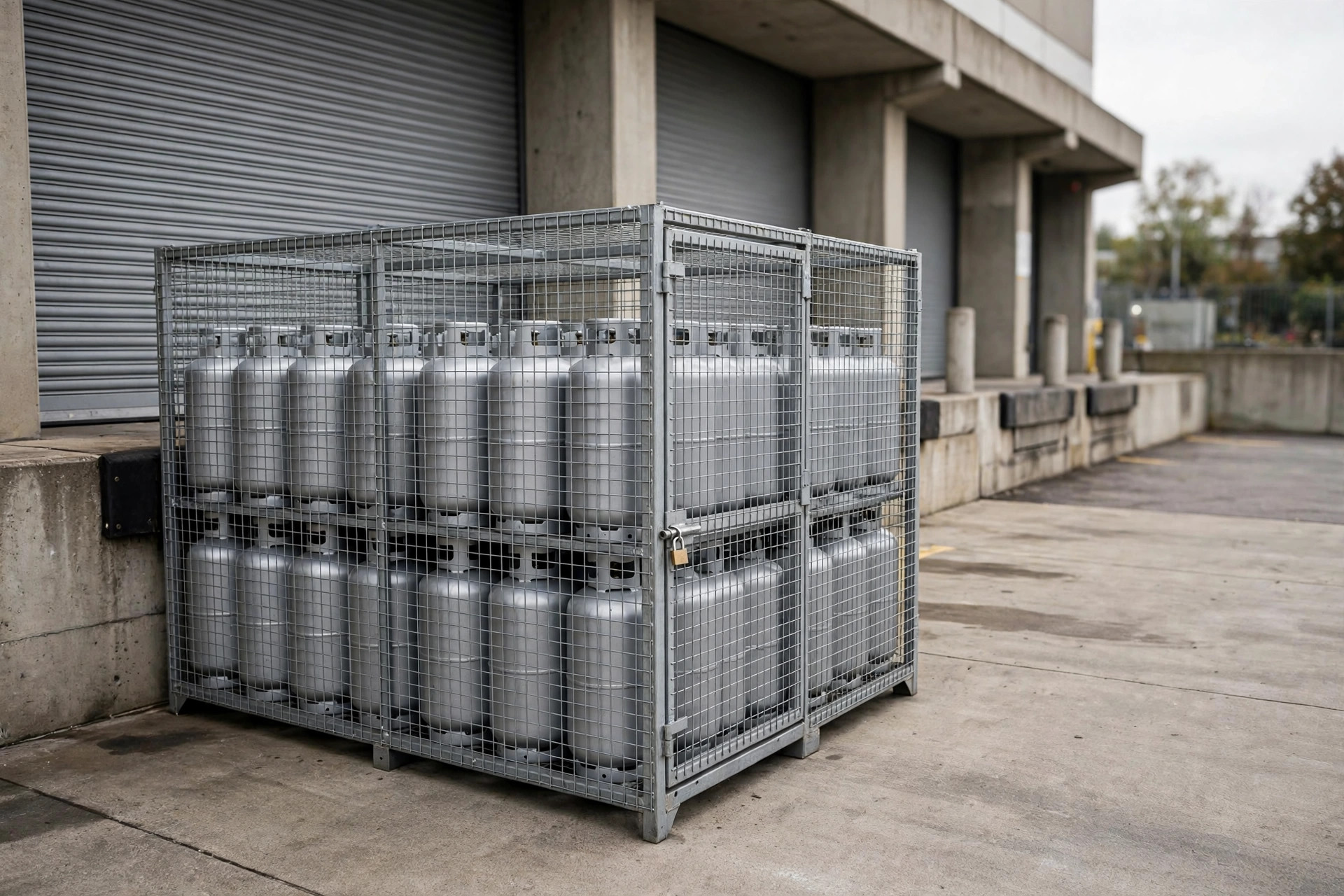
Segregation matters more. Incompatible wastes must be separated: acids from bases, oxidizers from flammables. A leak that mixes them can react violently. The accumulation area needs secondary containment or spill pallets, an impermeable floor, a fire extinguisher and eyewash station nearby, and emergency contacts plus spill procedures posted at the entrance. Batteries sit separately, terminals up, short-circuit protected, ideally on acid-resistant pallets.
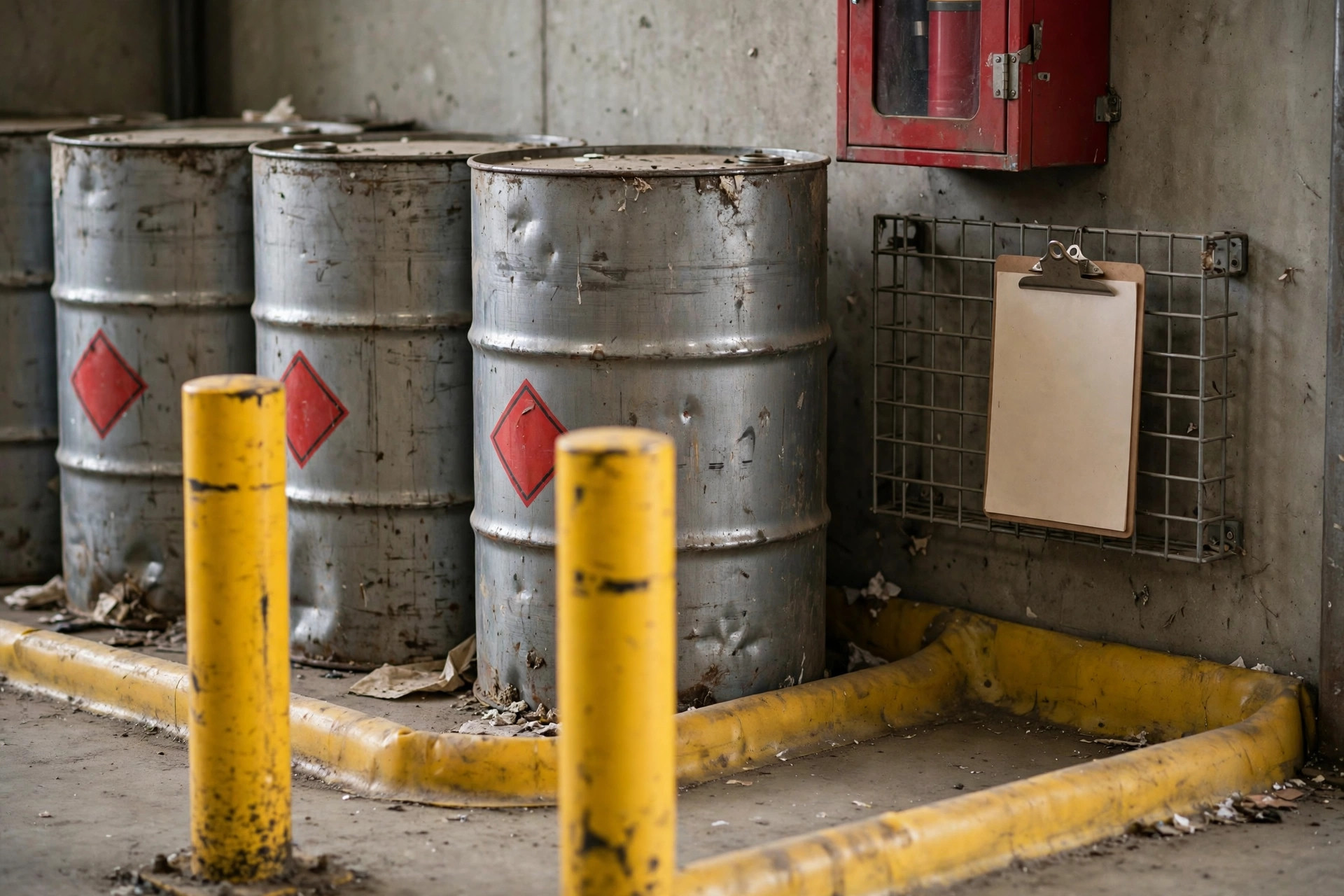
One practical detail: the small "as generated" containers at the workbench — the regulations allow satellite accumulation at the point of generation, but once the quantity limit is reached the waste must move to the main accumulation area within the required timeframe. Limits and timeframes vary by state, so check the latest EPA and state requirements. My rule is simpler: satellite points hold one shift's worth, cleared to the main area before end of shift. No gray zones.
The 90-day line, and the paperwork that saves you
This is RCRA's most famous rule. Based on monthly generation volume, a warehouse is typically classified as a large quantity generator (LQG) or small quantity generator (SQG) — check the current thresholds with the EPA and your state agency. At the federal level, LQGs face a 90-day accumulation limit, an iron rule that hasn't changed in decades; SQGs get a longer window, but the exact number of days varies by state implementation, so verify locally.
When does the clock start? The day waste first goes into the drum — the start date on the label. Not the day you remember to deal with it. One day over is a violation, and state agencies can penalize per day. Off-site shipment must go through a licensed hazardous waste transporter with an EPA ID, using the manifest system: the manifest gets signed by the warehouse, the transporter, and the disposal facility, and the warehouse keeps its own copy.
What if you've already blown the deadline? Don't do anything stupid — dumping it quietly or mixing it into regular trash turns a civil violation into potential criminal exposure. The right move: call a licensed transporter immediately to schedule pickup, and proactively contact the state agency to explain and correct the records. A 3PL warehouse in California handled exactly this in 2022: two drums of used hydraulic oil sat 40 days past the limit. They arranged same-week pickup and self-reported. They paid a fine, but the case never escalated. Voluntary versus caught — the fine differs by an order of magnitude.
Records are the last thing an inspector asks for, and the only thing that saves you when something goes wrong. A defensible file includes monthly generation logs (which support your LQG/SQG classification), accumulation start and shipment dates per batch, manifest copies, the disposal facility's confirmations, and training records — who was trained, when, on what. Keep them for as long as EPA and state rules require; I keep everything, scanned, because a year's worth is a few dozen PDF pages. The record people forget is training: relevant employees must be trained in hazardous waste handling before starting the work, with refreshers on schedule. Forklift operators, maintenance techs, and receiving staff belong on that list, no exceptions.
So here's the uncomfortable question worth asking this week: if an inspector walked into your warehouse tomorrow morning, would every drum have a label and a start date — and would any of those dates already be past your limit?