Here is the verdict up front: good warehouse handheld scanner selection does not start with the quote. It starts with rack heights, floor, and WMS screens. Across the go-lives I have worked on, scanners almost never fail because they cost too much. They fail because someone bought the wrong one: a gun that flies at arm's length but cannot reach a pallet label three levels up, or a tough-looking gun that misses scans after its second drop. This is a pit I have seen three times, and the script is always the same — purchasing saves a little, the floor pays it back with interest. What follows is the order I use now: distance, drops, form factor, code types, and go-live compatibility.
Warehouse Handheld Scanner Selection Starts With Distance, Not Price
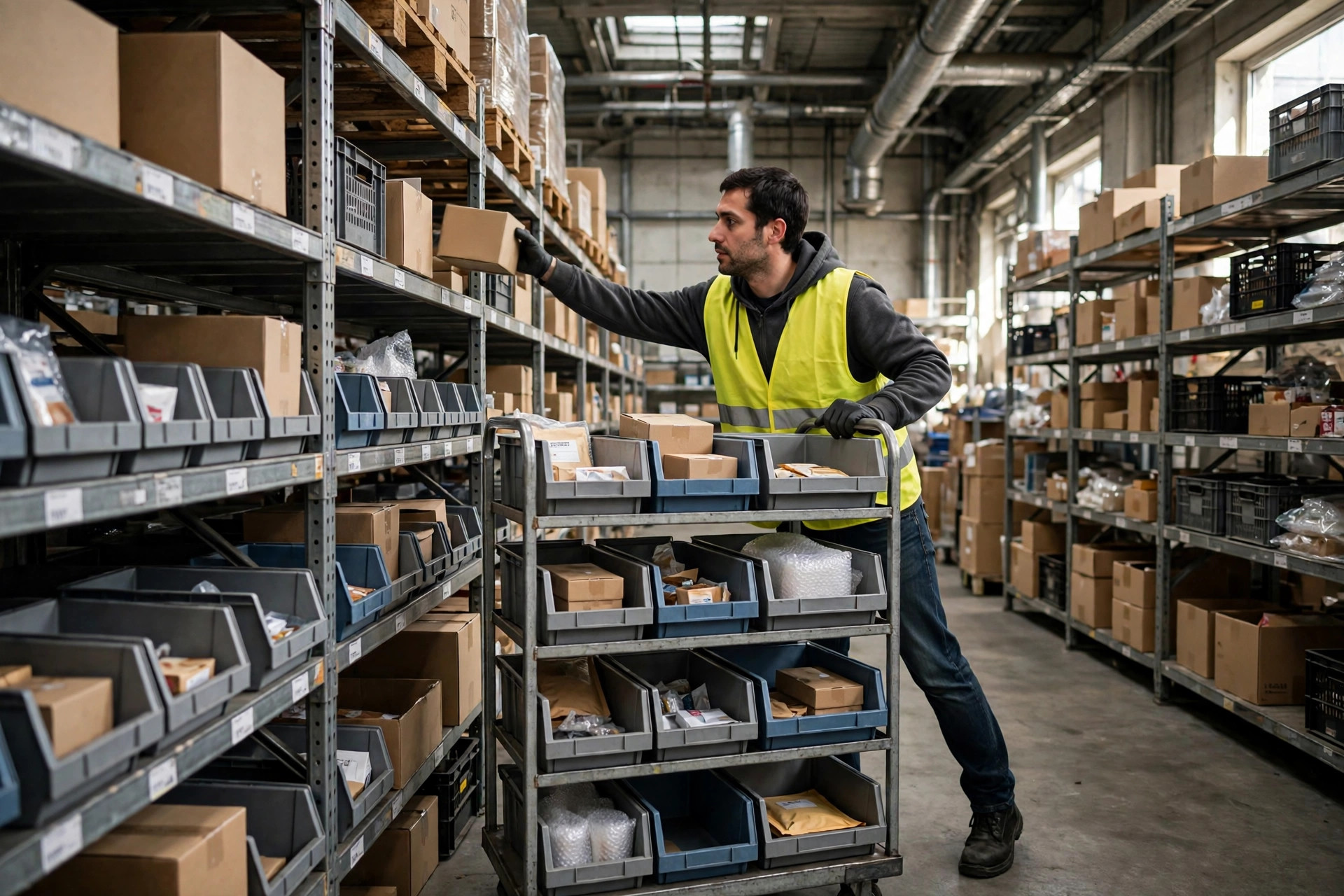
In fall 2023, a small-appliance warehouse in Dongguan, Guangdong, brought me in for a WMS go-live. Picking and packing both sat at ground level, so purchasing chose short-range guns based on how they felt at the pick face. For a week, everyone loved them. Then came the cycle count in week two. Counters had to read pallet labels on the third level and above, codes a couple of meters overhead. The guns simply could not read that far. The team ended up on ladders, two per aisle, and a two-day count dragged into a fourth night.
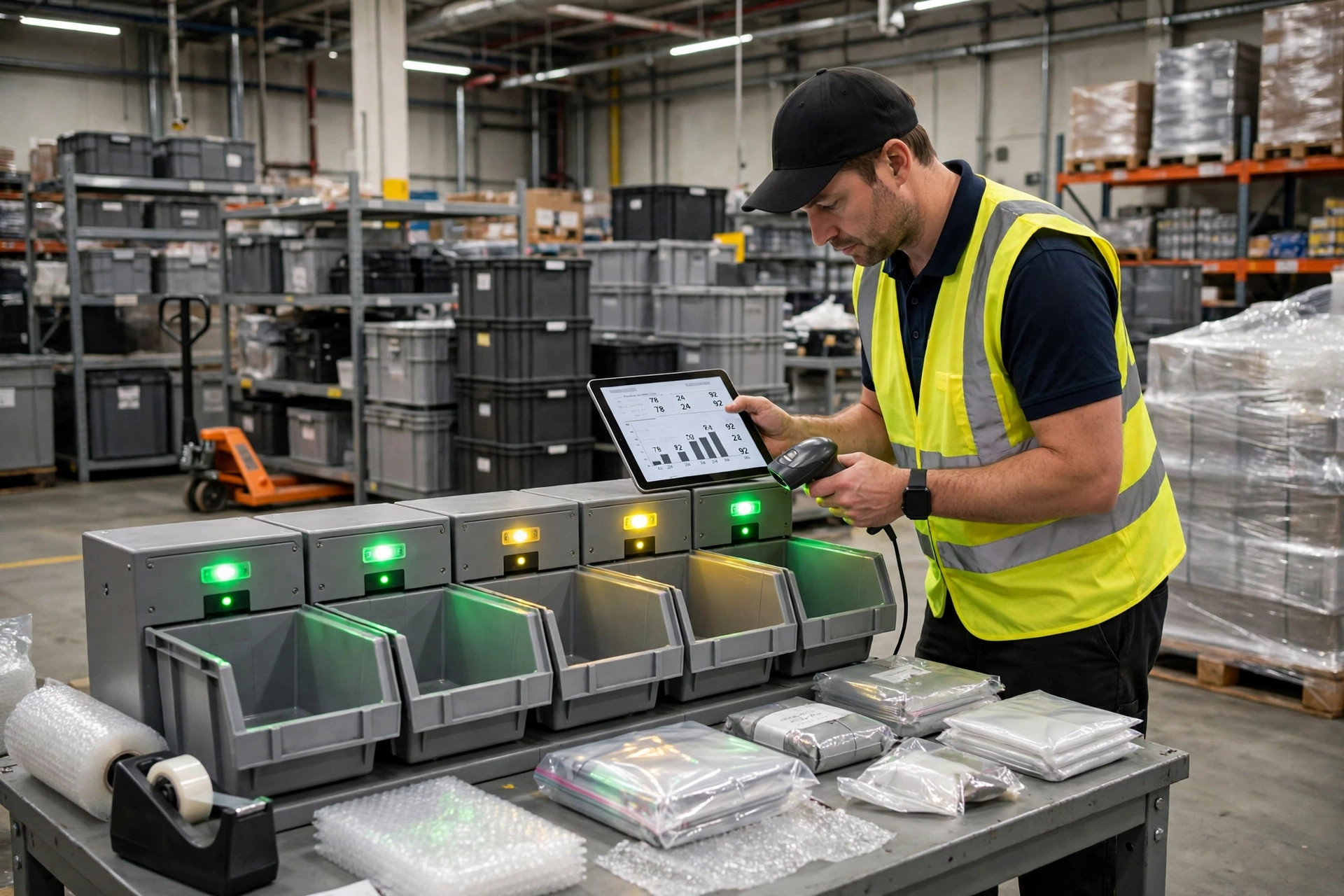
The lesson is simple: scanning distance is not one number, it is two lists. The short-range list covers picking, verification, and packing, where the gun sits well under half a meter from the code and the job is speed across hundreds of scans. The long-range list covers cycle counts, high-bay racks, and forklift drivers reading plates from the seat, where distance stretches to several meters and the angle is awkward. One gun for both lists guarantees one end suffers.
Measuring distance is unglamorous work, and it works. Walk the floor with a tape measure and record the real gun-to-code distance for each job: three pick stations, take the farthest; the highest pallet label counters must read; the driver's seat to the rack plate. Spec for the farthest case, never the average. One factor people miss is the label itself. A big, high-contrast pallet label reads fine from far away; a small, crooked, or reprinted one does not. Leave a margin for that drift, because label quality changes without anyone telling IT.
| Job | Typical gun-to-code distance | What to demand |
|---|---|---|
| Picking, verification, packing | Under half a meter | Fast repeat scanning, comfortable all shift |
| Cycle counts, high-bay racks | Several meters, scanned at an upward angle | Genuine long-range reading, skewed-angle tolerant |
| Forklift location plates | Several meters from the driver's seat | Readable from the seat, clear beep on success |
Here is the counterintuitive part: more range is not always better. A long-range gun has a wide read window, so at a pick face it can grab the neighboring location's code instead of the item in hand. One wrong scan costs verification three times the pick time. Give long range only to jobs that truly need it, and keep fast short-range guns at the pick face. Splitting guns by job looks more expensive until you price mis-scans, rework, and overtime counts — each costs more than a scanner.
Warehouse Handheld Scanner Selection: The Drop and Dust Bill Nobody Budgets
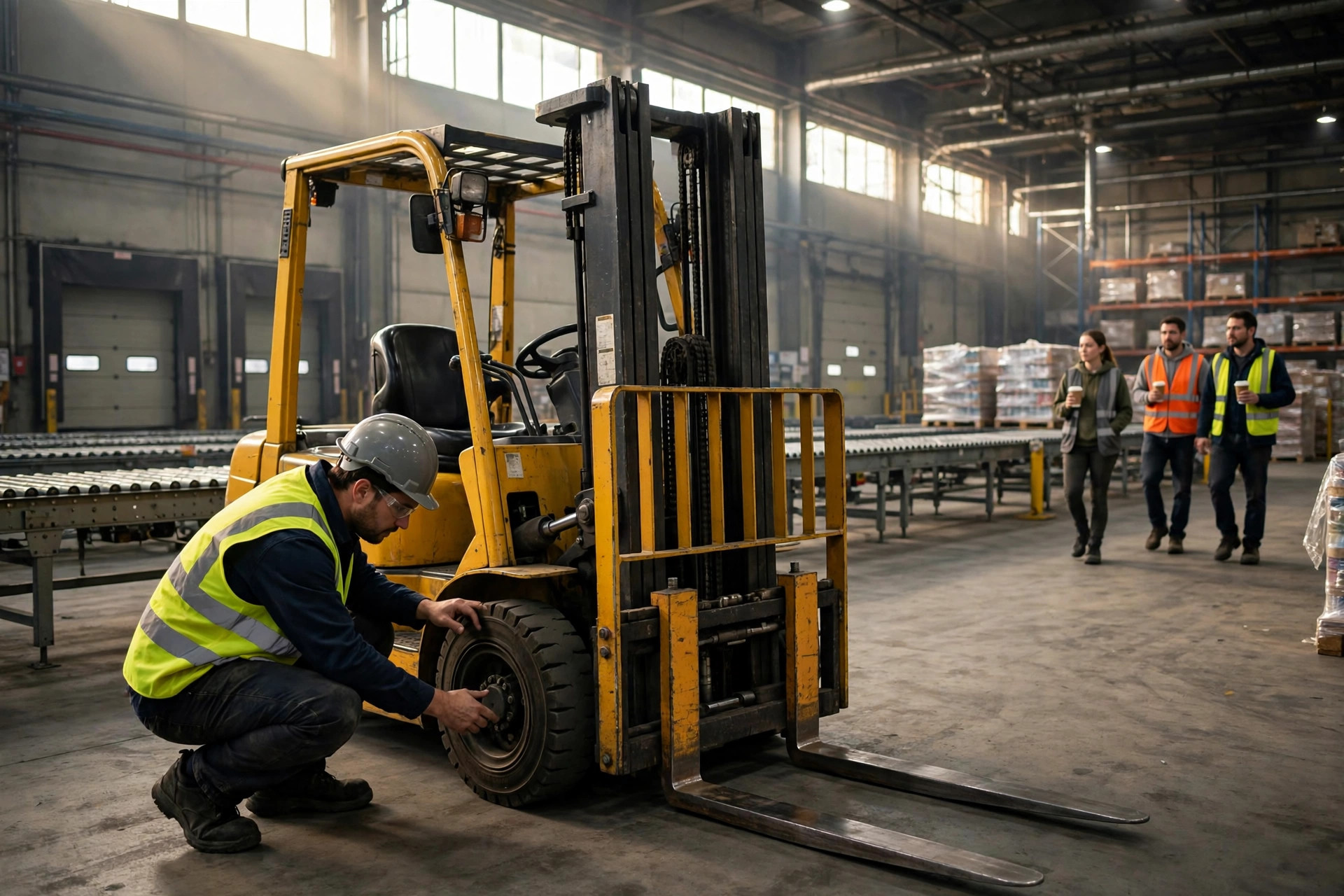
In the winter of 2024, a cold-chain warehouse in northern China taught me to respect drops. The epoxy floor frosted overnight, workers in thick gloves dropped guns constantly, and in the first month after go-live the site replaced 11 guns. They were not smashed but wounded inside: shells looked fine, scanning turned intermittent. Intermittent is the worst failure mode — nobody can tell code from gun, so workers scan everything twice or three times and takt time collapses.
Do not judge drop toughness by one spec-sheet number. It comes from lab conditions, while your floor is concrete, steel plate, or frost. Ask three questions instead: how high does the gun actually fall from — a standing hand or a forklift step? What is the floor made of? And how do you accept a gun after a drop? My rule is 50 consecutive successful scans, not 10, because internal damage shows up only under sustained scanning.
Sealing follows the same logic: think real hazards, not rating tiers. A dry warehouse worries about dust. A cold-chain site worries about condensation when guns move between freezer and ambient zones. An outdoor dock worries about rain. List the water, dust, and temperature swings that genuinely exist in your building, and buy protection for those alone. A dry site paying for waterproofing wastes money; a cold-chain site skipping condensation protection spends every shift wiping fogged lenses.
Run the money once and the case closes itself: the saving on a cheaper gun never covers one batch repair cycle of shipping, spare stock, waiting workers, and discrepancy investigations. Worse is the first month after go-live, when workers decide whether to trust the system. A gun failing every other day teaches them to pick from memory, and once that habit sets in, no dashboard restores data integrity.
Form Factor and Damaged Codes: Match the Gun to the Posture
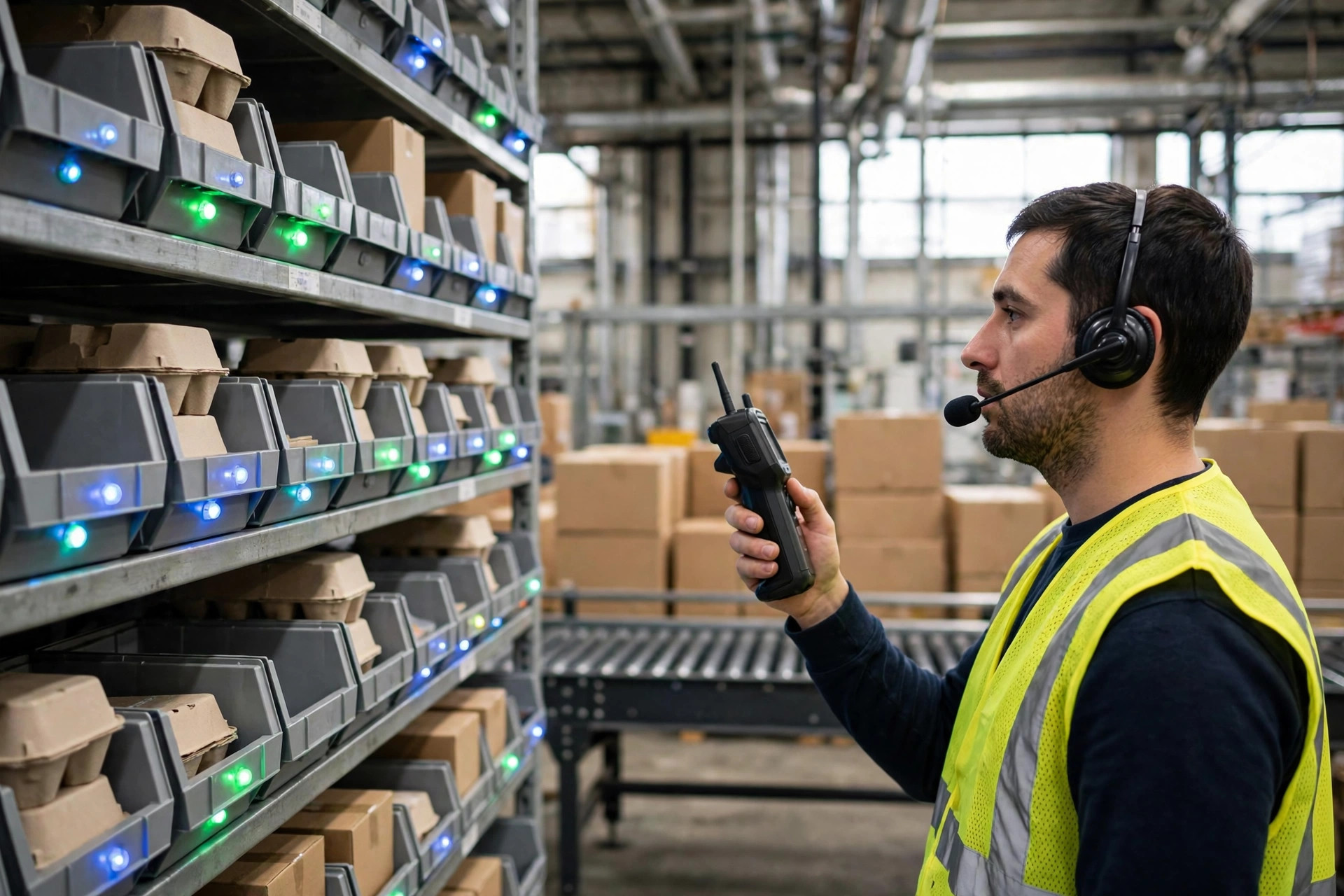
Three shapes own three jobs. Corded guns are cheap, never need charging, and suit fixed stations: verification benches and packing tables where the gun never leaves the bench. Wireless guns suit roaming jobs — picking, counting, putaway — but they come with a charging bill: guns per shift, cradle placement, who charges at handover. Skip that system and the advantage turns into "the gun is dead" complaints by day two. Ring scanners free both hands for handling goods, which pickers love, but they demand workable hand posture; test with gloves on and low labels before ordering, never on imagination alone.
The trade-off is this: the freer the form factor, the heavier the management load — corded means zero charging management, wireless means a charging routine, ring means posture training. Choose the shape your team can actually run, not the coolest one. A 20-person warehouse with no one owning charging discipline is better off with corded guns and a smooth process than wireless guns nobody charges.
Code types are the other trap. Inventory every code in your building before you buy: one-dimensional, two-dimensional, damaged, reflective-film, and frosted freezer codes. Damaged codes are the real test — pallet labels scraped by forklifts, carton labels rained on, labels half-covered by tape. Test with genuine damaged labels from your own floor; freshly printed perfect labels prove nothing. Watch reflections too: laminated labels and plastic pallets glare under bright light, so test at your brightest workstation, not in a dim meeting room.
The Go-Live Night Checklist: Eight Steps Before a Single Gun Reaches the Floor
When guns arrive, I lock them in the office and run eight steps before anyone on the floor touches them. Skipping this gate costs tenfold on go-live day.
Step 1, count everything: guns, batteries, cradles, cables, spare batteries. Log gaps now, not when a worker finds them. Step 2, test every gun: 50 scans each, including 10 genuinely damaged codes, and recheck the whole batch if one gun misses. Step 3, test distance on site: the pick face, the highest rack, and the forklift seat, confirming long-range jobs work. Step 4, test inside the WMS: scan into live screens, check each field lands right — quantity, location, batch — and beep and screen feedback are obvious at arm's length. Step 5, test offline: cut the network, scan a few codes, confirm data is cached, not lost. A gun that drops scans offline has no business on the floor. Step 6, drop-test samples: take two guns, drop them from real working height, then run 50 scans. Step 7, rehearse charging and handover: have night and day shifts swap guns once under the real routine, confirming cradles suffice. Step 8, post a one-page fault card at each station: failed scan, try another label, then swap the gun, then call the named person.
After the guns go out, keep two spares on the floor, not locked in a storeroom. Spares are not just replacements; they make workers willing to report a faulty gun. With one in reach, trouble gets reported immediately. Without one, workers nurse a half-broken gun through the shift, and data rots a little at a time.
In the end, warehouse handheld scanner selection is about the last centimeter between the WMS and the real world. System inventory can be perfect, but one misread code puts physical and system counts one unit apart. Measure the distance, price the drops honestly, test the real codes, and run the checklist before go-live night.
By Lin Xiao, WMS Implementation Consultant