Here's my verdict up front: if a visitor or a driver gets hurt inside your warehouse, your warehouse general liability insurance probably covers it — but that word "probably" is where the trouble starts.
This cuts two ways. On one side, the policy does cover bodily injury and property damage to third parties on your premises. On the other side, what counts as a "third party," what counts as "your premises," and what counts as "your fault" — the insurance company's definitions may look nothing like your gut feeling. Bottom line: you pay for this policy every year, but whether it actually pays out comes down to three things you almost never look at: the policy language, the exclusions page, and what you did in the first 24 hours after the incident.
I've seen too many warehouse owners treat this policy like some kind of cure-all: an employee gets hurt — call GL. Product goes missing — call GL. A forklift hits something — call GL. Wrong. This policy does exactly one job: it stands between you and a claim filed by an outsider.
Let me tell you about a pit I watched someone fall into.
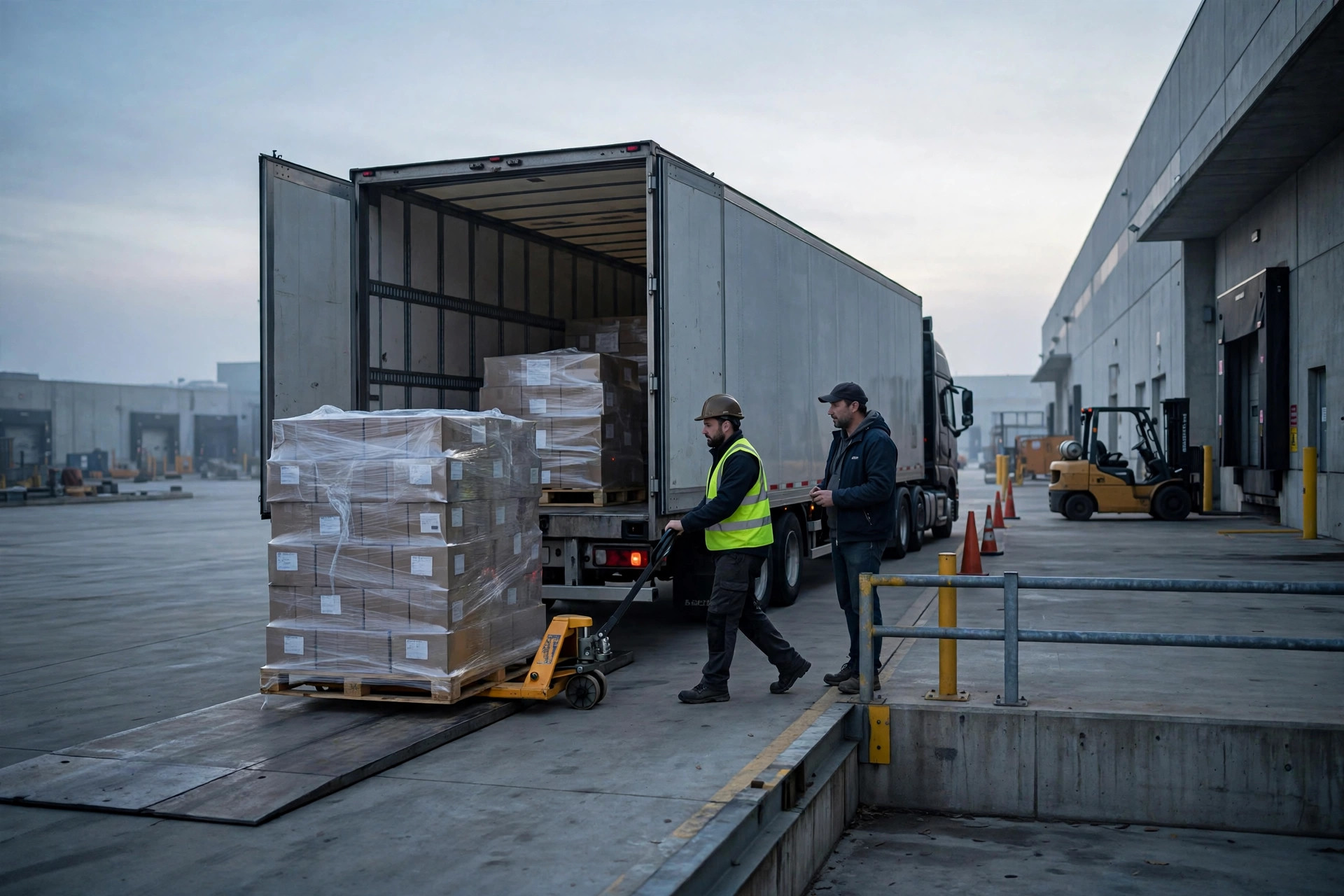
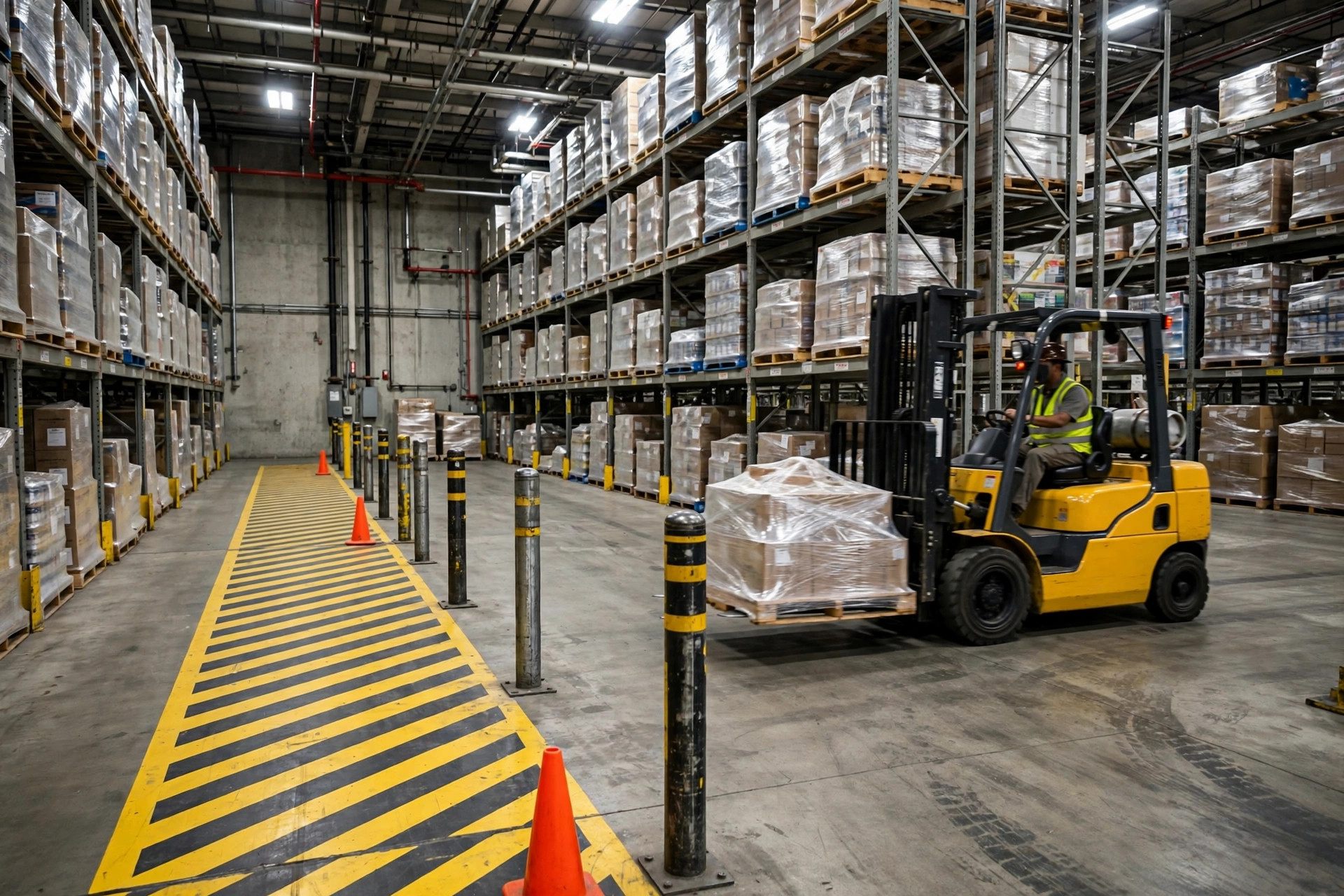
Fall of 2021, a 3PL warehouse in Ontario, California — about 120,000 square feet, fulfilling for two e-commerce brands. Around 2 a.m., a delivery driver waiting at the dock got bored sitting in his cab, stepped out for some air near the dock door, and walked straight into the path of a reversing forklift that never saw him. The counterweight clipped his leg. He went down with a fractured tibia. The ambulance ride, ER, and surgery came to just under $40,000 in medical bills; the driver couldn't work for three months, and once lost wages and attorney fees entered the picture, the demand letter was well into six figures.
The owner's first reaction was the same as most people's: "He's not my employee — how is this my problem?" His second reaction: "I have insurance, let them handle it." Then the adjuster showed up, opened the policy, and asked three questions the owner couldn't answer: one, do you have any record of safety briefings for visitors and drivers entering the facility? Two, was there a marked pedestrian walkway in the dock area that night? Three, who moved what after the incident, and is the security footage still intact?
Each of those questions was worth tens of thousands of dollars. Because a GL claim is never just about "did someone get hurt" — it's about "did you act like a responsible premises operator." That night, the pedestrian walkway happened to be blocked by a staged pallet — and the other side's lawyer had photos. The carrier did pay in the end. But at renewal, the premium jumped nearly 30%. The owner told me later: "If I'd known, I'd have repainted that walkway twice a year. Costs almost nothing."
Bottom line: general liability doesn't insure you against accidents happening. It insures you against standing alone when they do. But the carrier only stands with you if you were acting like a responsible operator in the first place.
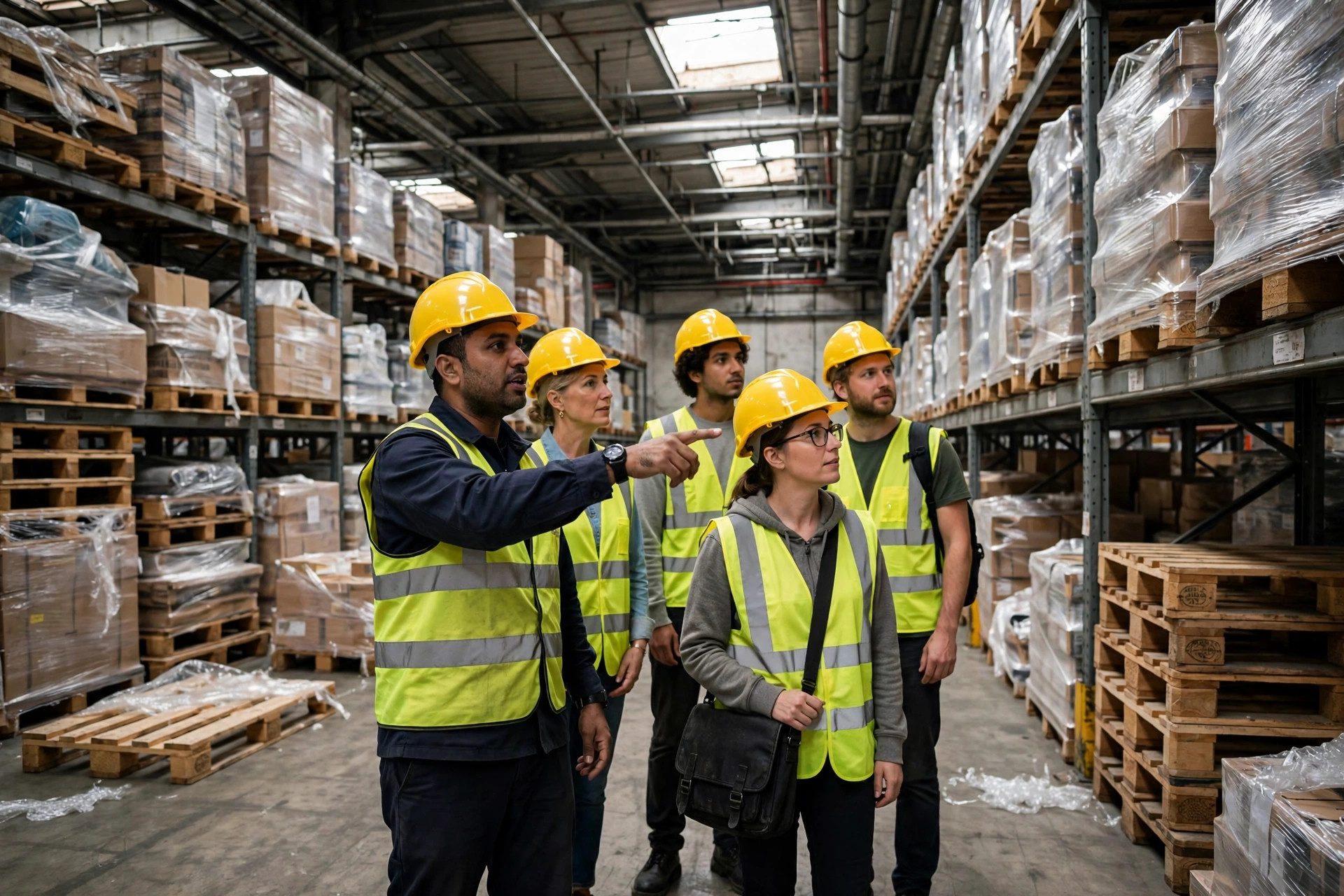
A second scenario, even more common: the customer tour. Early 2023, a warehouse in Dallas. A client's purchasing manager came for a site visit, walked through the pack-out area, and slipped on a wet patch — the cleaning crew had mopped the night before, the floor wasn't fully dry, and nobody put out a caution sign. She went down hard, hurt her back, spent two nights in the hospital. Her company sent the medical bills and lost-wage claim straight to the warehouse. This time the owner was smarter: reported the claim within 24 hours, preserved scene photos, the cleaning crew's schedule, and the security footage. The adjuster saw a complete evidence chain and closed the file in two months. Same policy, both cases — the entire difference was what management did before and after the incident.
What Warehouse General Liability Insurance Covers — and What It Doesn't
| Scenario | Covered? | Which policy handles it |
|---|---|---|
| A visitor, driver, or delivery person is injured inside your warehouse | Yes | General liability (premises liability) |
| A third party's property is damaged on your site (e.g., you hit a customer's equipment) | Yes | General liability (property damage) |
| Your own employee is injured | No | Workers' compensation |
| Your own inventory is lost or damaged | No | Property / cargo insurance |
| Your forklift hits someone on a public road | No | Commercial auto |
| Bad advice you gave a client causes them a loss | No | Professional liability (E&O) |
| A chemical spill causes pollution | Usually no | Pollution liability (separate policy) |
Remember one thing: general liability only covers outsiders — never your own people, never your own stuff. Employees go to workers' comp, freight goes to cargo, vehicles go to commercial auto. Four drawers. Don't expect one drawer to hold everything.
Buy Less Limit, Set the Deductible Right
Here's the counterintuitive part, and most owners get it backwards: a higher limit matters less than a well-set deductible.
I've watched small warehouses buy $1M/$2M per-occurrence/aggregate limits — the most common GL bracket for small US businesses — because a bigger number feels safer. Then they pick a $2,500 deductible without thinking. Then come two minor incidents in one year: a visitor twists an ankle ($8,000), a driver gets his hand clipped by a pallet ($12,000). Both go through insurance. At renewal, the broker delivers the news: two claims in two years, premium up 25%. Do the math the owner finally did: $20,000 in small claims, and the premium increase eats that $20,000 back within three years — plus a "high-risk account" label that follows you.
Look at it from both sides. On one side, yes, the limit has to be enough — a serious injury can easily produce a six-figure demand, and if the limit falls short, the owner pays the rest out of pocket. On the other side, the deductible is the number you'll actually touch year after year. Bottom line: this policy exists to protect you from the one blow that could kill the business, not to reimburse every scraped knee. My rule: set the deductible at the number that stings but doesn't break you. For small and mid-size warehouses, that commonly lands between $5,000 and $25,000 depending on cash flow — confirm with your broker. Anything under $5,000, eat it yourself and don't call the carrier.
Annual premiums run anywhere from a few thousand to tens of thousands of dollars depending on square footage, business type (hazmat costs far more), claims history, and state — treat any "average premium" you see online with suspicion and get a real quote from your broker. Same for policy language: every carrier writes exclusions differently. When in doubt, go by your actual policy wording and your broker's written confirmation.
After an Incident: Your 24-Hour General Liability Checklist
Print this and pin it on the office wall:
- People first. Call 911. Don't move the injured person unless there's a secondary danger.
- Freeze the scene. The forklift stays where it stopped. Don't move product, don't mop the floor — that puddle and that blocked walkway are evidence.
- Photograph everything: where the person fell, floor conditions, warning signs, walkway markings. Over-document.
- Get every witness: the driver, the escorting employee, other visitors — names and phone numbers.
- Notify your broker within 24 hours. Most policies require "prompt notice" — wait more than a week and the carrier can question or even deny the claim.
- Admit nothing, promise nothing. The most you say is "we will fully cooperate with the investigation." One sentence of "this was our fault" becomes an exhibit.
- Preserve the records: that day's visitor log, security footage, cleaning and maintenance schedules, the forklift operator's training certificate. That's exactly what the adjuster will ask for.
One last piece of advice: before every renewal, take your broker to lunch and walk through the exclusions page line by line. You buy a policy on price; you use it on exclusions. When was the last time you actually read yours?
By Lao Mi, Supply Chain Veteran (20 yrs)