Warehouse floor coating is the question I get asked a dozen times a year, and it is usually asked backwards. People show me color swatches and ask which one looks more premium, as if a warehouse floor were interior decoration. It is not. It is part of the equipment. Every day it takes several tons of wheel load, the sideways shear of forklifts turning, and the scraping of dragged pallets. Get the choice wrong and the pretty finish lasts six months; a single rework that shuts down an aisle during peak season costs more than whatever you saved on installation.
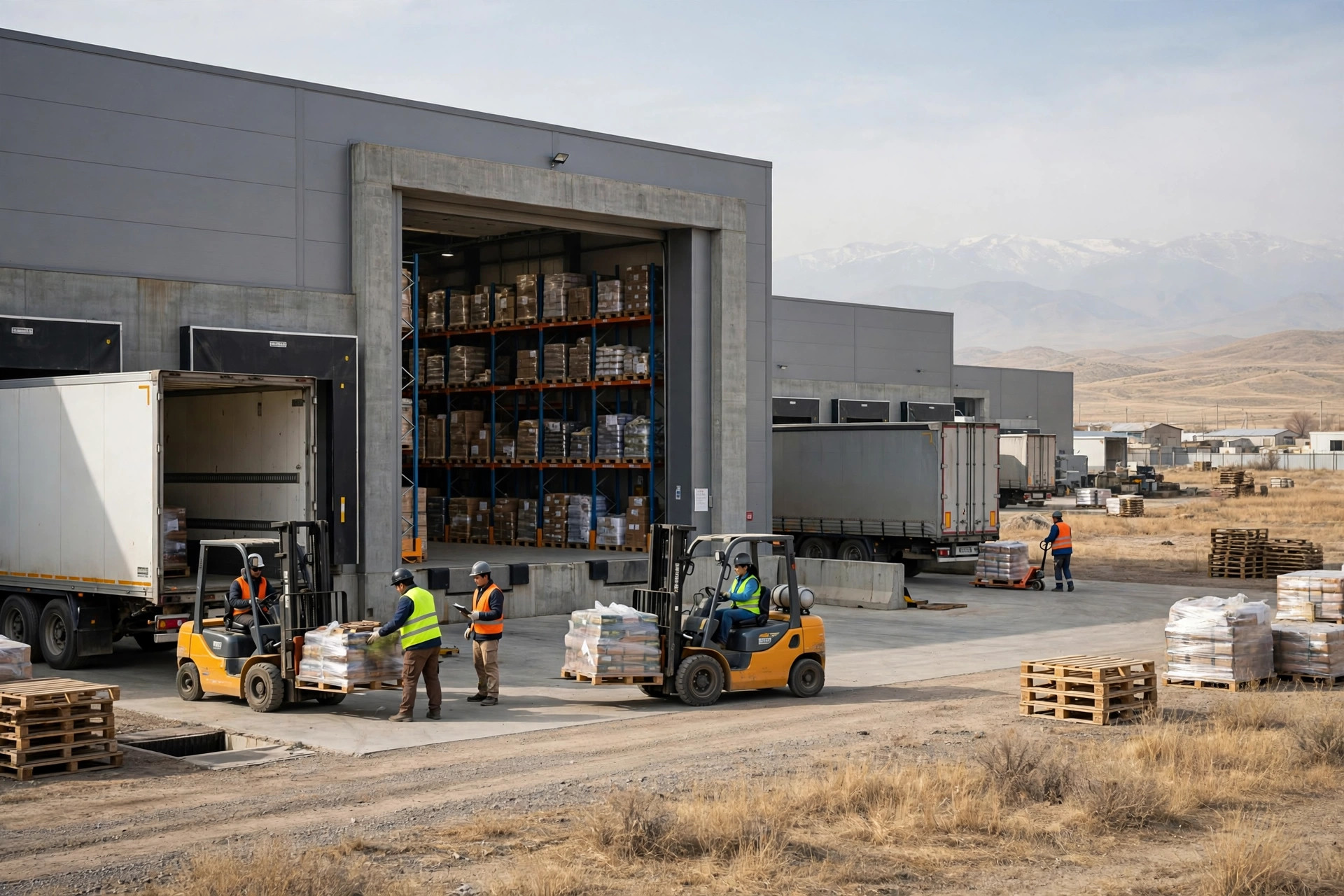
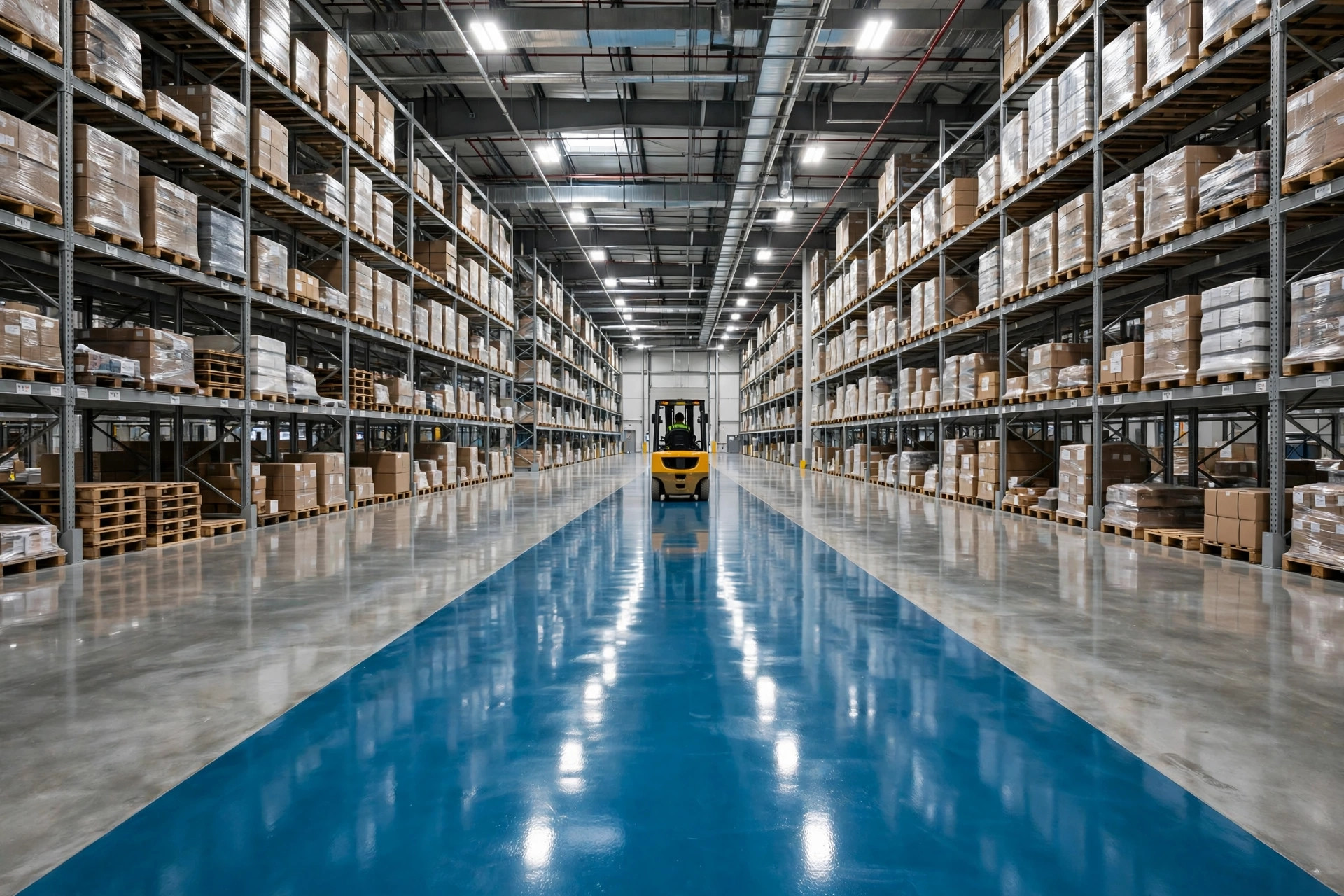
Here is a real one. In spring 2024, a third-party warehouse outside Dongguan, in Guangdong, moved into a single-story building of roughly 8,000 square meters. Good ceiling height, sensible racking and picking zones. The owner went with epoxy across the whole floor in a bright gray. It looked spotless on opening day. Within four months, the coating was peeling in sheets where forklifts turned at aisle entrances, drag marks showed white wherever pallets had been pulled across the floor, and rainwater tracked in from the dock doors pooled on the sealed surface so pallet jacks slipped. The worst part was the repair cycle: every patch meant cordoning off a section and waiting for it to cure, and one busy aisle was reworked three times before peak season, forcing two changes to the picking route. When we visited, the concrete slab underneath was perfectly sound. The failure was a selection failure — the highest-shear, highest-traffic zones had been given the system least tolerant of local shear and shutdown repairs.
How warehouse floor coating works: epoxy is a skin, polished concrete is the slab itself
Think of it this way. An epoxy floor is a coat of clothing over concrete: primer, build coats, and a topcoat layered on top, and that film does the work of resisting wear, dust, and chemicals. The upside is obvious — color zoning, aisle markings, and a sealed surface that wipes clean when something spills. The downside is just as obvious: clothing has seams and a lifespan. Hard forklift wheels grinding and twisting across it every day are constantly tugging at that coat, and once one spot breaks, moisture and oil creep underneath and the peeling spreads.
Polished concrete takes the opposite approach. You can understand it as hardening the stone itself: the concrete surface is ground down in stages and densified so the top layer becomes harder and smoother, with no film to peel. What the forklift wears away is only a paper-thin layer of the slab. But there is no membrane to stop stains, so oil, sauces, and chemicals that sit on it soak in and stay, and zoning has to come from markings applied afterwards, which wear and need repainting. So the first question is never which one looks better. It is what your floor actually does all day: does it mostly need to survive abrasion, or does it mostly need to stay sealed against dirt and chemicals?
The dividing line for warehouse floor coating: epoxy vs polished concrete
I draw three lines, and if two of them point the same way, that is your answer. First, wheel load and turning frequency: heavy forklifts and aisle mouths that see hundreds of turns a day favor polished concrete, because epoxy peel risk climbs with turning. Second, cleanliness and chemical resistance: food, pharma, and electronics operations that need dust control, spill containment, and frequent washdowns get real value from epoxy's sealed film; the open pores of polished concrete are a genuine weakness there. Third, tolerance for shutdown repairs: a warehouse that cannot close an aisle should think twice about epoxy, because a local failure means a cordoned-off curing zone, while a warehouse that can rotate closures can actually collect epoxy's zoning and appearance benefits.
| Factor | Epoxy coating | Polished concrete |
|---|---|---|
| How it resists wear | A topcoat film takes the abuse | The hardened slab surface itself |
| What it fears most | Turning shear, water under a break, dragging | Oil penetration, staining, wet slipperiness |
| Dust control | Sealed, very low dust | Low dust once densified, but no sealed membrane |
| Zoning and markings | Color zones built into the finish | Markings applied afterwards, repainted as they wear |
| Local repair | Cordoned area, curing downtime | Grinding repairs are comparatively flexible |
| Best fit | Clean, chemical-sensitive, zone-heavy sites | Heavy, high-frequency forklift, long-life sites |
A second case makes the dividing line concrete. In 2023, an auto-parts warehouse near Kunshan, in Jiangsu, ran about 12,000 square meters with more than twenty electric forklifts on two shifts, all on hard polyurethane tires. They originally wanted epoxy everywhere, and I talked them out of it after two walk-throughs: polished concrete for the main aisles and turning zones, epoxy only for inspection, packing, and chemical storage areas. Two years on, the main aisles show ordinary wear and no peeling, while the lightly loaded epoxy zones still look fresh and their color zoning is intact. What they saved was not installation money; it was two years with zero route changes caused by floor repairs.
Here is the counterintuitive part. A shinier floor is not a better forklift floor. A mirror-gloss polished surface gets slippery when wet, and deliberately keeping a slightly matte, slightly rough finish in forklift zones gives shorter braking distance and better tire grip. And let me be blunt about a pseudo-requirement I see constantly: warehouses demanding a mirror finish across the entire floor just so it photographs well. The drivers standing on that floor all day cannot tell the difference, and the premium paid for showroom shine in a forklift aisle is money thrown at a camera, not at operations.
Maintenance traps both warehouse floor coating options share
Start with cleaning. Epoxy hates grit dragged under wheels; sand embedded in a tire and ground across the topcoat is sandpaper, and a warehouse that sweeps too rarely will halve its coating life. Polished concrete hates standing oil: hydraulic fluid or engine oil left sitting soaks in and becomes a permanent mark that grinding can only fade, never erase. Next, tires. Hard wheels are efficient, but they are the least forgiving thing you can run on an epoxy topcoat; if the whole floor is epoxy and the whole fleet is on hard wheels, you have sentenced the coating. A softer tire compound, or polished concrete in the turning zones, usually beats a thicker topcoat. Finally, the installation window: epoxy is sensitive to moisture, dust, and rushed cold-weather work, and a rainy-season rush job is practically a promise of future peeling. Polishing tolerates temperature and humidity better, but its dust and noise belong in an empty-building window, not in a live operation.
One more cost people forget: markings. On epoxy, markings sit in the film and touch-ups must match the original system; on polished concrete, markings wear under forklift traffic and repainting becomes a routine expense. Any budget that counts only the installation price per square meter and ignores five years of markings and repairs is fiction. Local pricing, lead times, and material standards vary widely, so check the latest official guidance and get the contractor's written specification before signing anything, rather than copying a price off the internet.
So is the money worth it? Look at one number: the total cost per square meter over five years — installation plus five years of maintenance, marking touch-ups, tire wear, and shutdown losses from repairs, divided by five. Run that number for epoxy and for polished concrete in your own building, and the argument ends. Whatever looked best on the color swatch does not get a vote.
By Da Liu, Automation Engineer