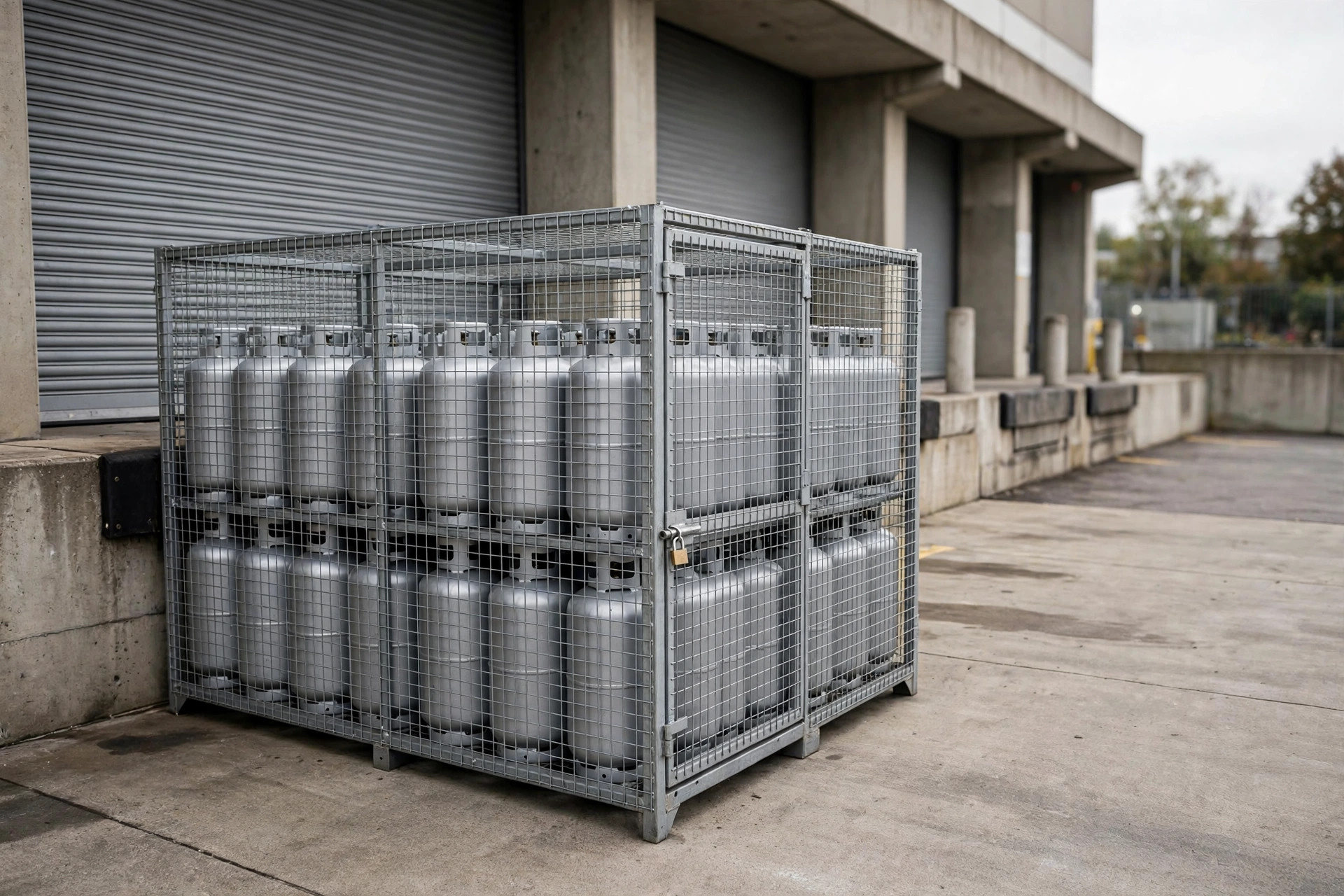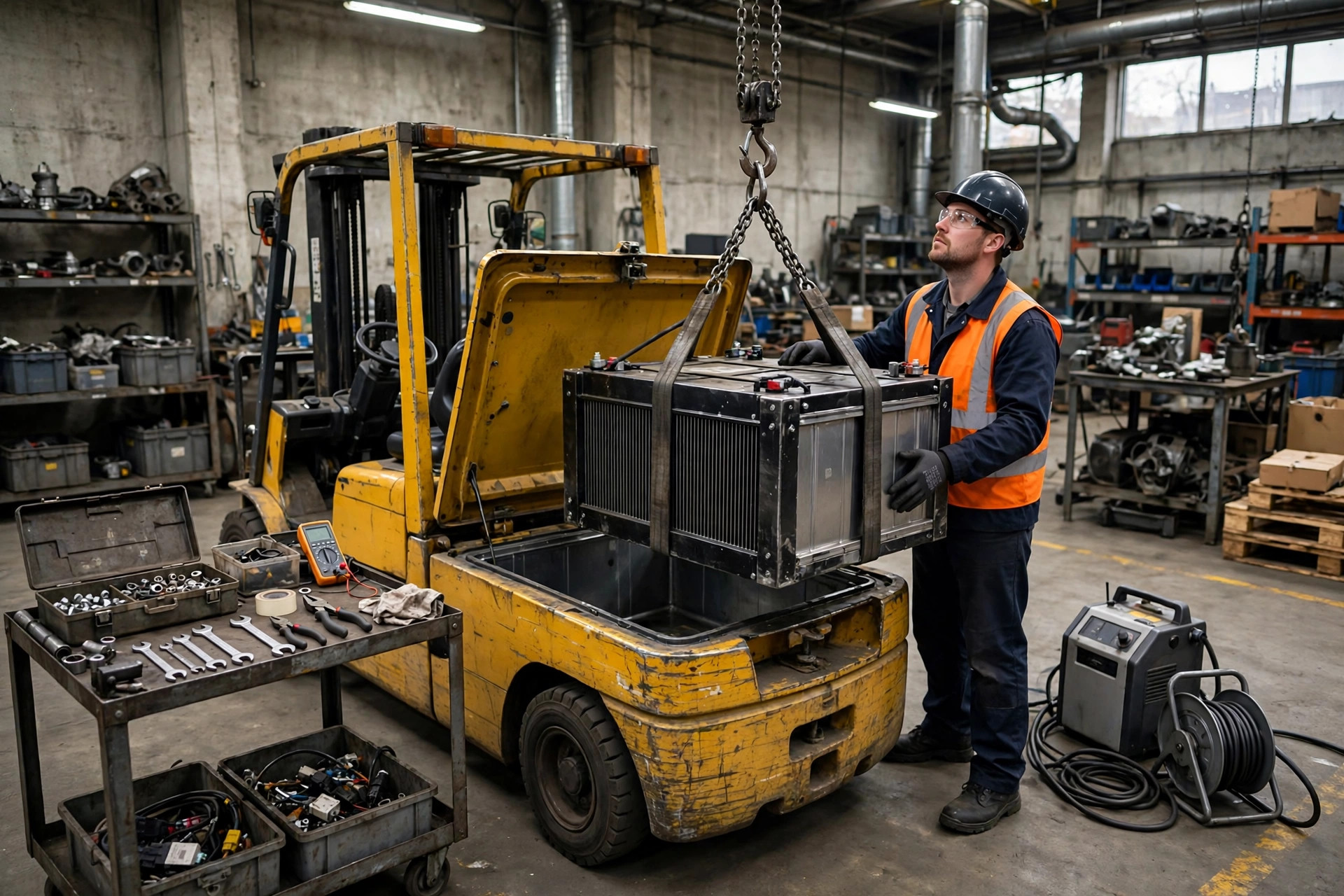
Let me be blunt: an old forklift switching to lithium is not getting a new battery. It is getting a new system. A lead-acid battery is heavy and bulky, and that weight is part of the truck's counterweight. A lithium pack is much lighter and charges completely differently. If the voltage does not match, the BMS cannot talk to the truck, or the chargers are not ready, the truck either will not work properly or carries a safety problem. Think of it like rewiring an old house: you are not changing a light bulb, you are re-checking every circuit.
I will start with a real lesson. An auto parts warehouse with a fleet of older 3-ton trucks decided to convert the whole fleet to lithium after a few vendor presentations. The first converted truck came back with a problem: at full lift height with a load, the body felt light at the rear, and drivers refused to lift full loads. The lithium pack weighed hundreds of kilograms less than the lead-acid battery it replaced, so the rear counterweight was short, the lifting moment changed, and stability suffered. It took two weeks of adding ballast blocks to fix, and the downtime cost more grief than the battery price difference. The lesson is simple: the first gate in a forklift lithium battery conversion retrofit is not price. It is physics.
Gate One of the Forklift Lithium Battery Conversion Retrofit: Voltage and Communication Must Match
Voltage is a hard gate. The truck's motor, controller, and hydraulic pump were designed around the original voltage platform. The lithium pack's nominal voltage and fully charged voltage must sit inside the truck electrical system's allowed window. The same nominal voltage on paper does not mean it works: lithium has a flat discharge curve, and the spread between full and empty voltage differs from lead-acid. If the controller's low-voltage cutoff was set for lead-acid, it may flag under-voltage while the lithium pack still has charge, or fail to warn before over-discharge. Before ordering, get the voltage window from the truck maker or controller supplier, and treat vendor test data as the authority.
Second is communication. A lithium pack has a battery management system, and that BMS has to talk to the truck controller: state of charge, temperature, and fault signals need to reach the dashboard. Many older trucks have no matching communication interface at all, so the retrofit needs an adapter module or a new display. This step gets underestimated more than any other. The battery goes in, the gauge reads full forever, and the driver runs the truck flat without warning. That is the classic symptom of a communication mismatch. Before signing, ask one question: does the BMS protocol match this truck's controller, and is there a record of a real-truck verification?
Gate Two: The Pack Is Lighter, So What Happens to Ballast
A lithium pack is lighter than the same-capacity lead-acid battery. That is an advantage, and it is also the retrofit's biggest trap. Counterweight is not decoration; it is part of the stability calculation. Rear weight holds the tail down so the truck does not tip when the forks lift a load. Once the battery gets lighter, the whole center of gravity and the rated lifting capacity must be recalculated, and the shortfall made up with ballast blocks, positioned and fixed the way the truck maker requires. Welding a random steel plate onto the frame is not a fix.
Here is the counterintuitive judgment: after conversion, the truck's headline performance may look better — quicker acceleration, longer apparent range — while its rated load capacity may actually need to go down. If you keep lifting to the original nameplate capacity without recalculation, high-lift work carries real risk. After conversion, load testing and stability re-verification are mandatory, and the test report goes on file. That is a hard acceptance item, not an optional extra.
Gate Three of the Forklift Lithium Battery Conversion Retrofit: Chargers and Charging Rhythm
The lead-acid charging room and charging routine both have to change. Lithium can take opportunity charging during breaks, but that does not mean any outlet will do. Charger voltage, current, and communication protocol must match the battery's BMS, and the charging area's fire protection and ventilation requirements need fresh assessment. More important is the scheduling logic. Lead-acid fleets charge overnight in batches with battery swaps; lithium fleets top up during lunch and shift changes, which means charger count, charger location, and driver routes all need replanning. Too few chargers and trucks queue to charge; too many and the electrical upgrade bill climbs.
My recommendation: convert one truck as a pilot and run it for a full month before expanding. The pilot must cover the hardest duty: maximum lift height, heaviest load, longest shift. Record the data, then decide how many trucks to convert and how many chargers to install.
The Math: Skip the Percentages and Build Your Own Framework
You will not find vendor savings percentages or cycle-life claims in this article. Those are marketing figures, and I do not quote them. Build the math yourself with this framework:
| Cost item | Lead-acid today | After lithium retrofit |
|---|---|---|
| Battery and conversion parts | Periodic battery replacement, watering labor | Battery pack, ballast blocks, adapter modules |
| Charging infrastructure | Charging room, battery-change equipment | Chargers, electrical capacity upgrade |
| Labor and downtime | Battery swaps, maintenance, charging waits | Opportunity charging, pilot-phase downtime |
| Residual value and risk | Old battery recycling | Change in truck residual value, re-verification test cost |
Fill in only your own warehouse's real numbers: how many labor hours battery swaps, maintenance, and charging waits cost per year; what each line of the conversion quote actually says; how many hours the pilot truck really sat idle in its first month. Where you cannot fill a number, leave it blank. Do not plug a vendor percentage into the gap.
Is the money worth it? Judge it by one number: how many hours the pilot truck lost in a month to charging and conversion problems. If that downtime exceeds the total battery-swap waiting time of the lead-acid era, one of the three gates is still failing, and you should not expand yet. If the pilot runs clean and the math balances, expand in batches, re-verifying load capacity and ballast at every batch. With a lithium conversion retrofit, slow is fast.
By Da Liu, Automation Engineer