In 2021, a 100,000-square-foot e-commerce warehouse in the Inland Empire had a lithium battery pack catch fire in the charging area. The fire itself was small. The first ten minutes were chaos: nobody knew where the nearest extinguisher was, nobody dared decide whether to drop the fire shutters, and two minutes burned arguing over whether to call the fire department or the boss first. By the time firefighters arrived, half the zone was full of smoke. Product damage plus downtime ran into the high six figures.
An emergency plan isn't a file in a folder. It's muscle memory. When there's a real fire, nobody is opening a 30-page PDF. All you can count on are the moves you've rehearsed.
Four things the plan must nail down: who commands, where to run, what to fight it with, who to call
I've read a lot of warehouse emergency plans. The common disease is correct-sounding fluff. A plan that works answers exactly four questions:
Who commands. A fire scene gets one voice. The plan names the incident commander — usually the shift manager — plus who takes over if they're absent, plus the backup to the backup. Three levels, in writing. In that 2021 fire, the first two minutes were lost because nobody would order the evacuation; everyone waited for the owner, who was in a meeting with his phone off. Remember: command follows the role, not the person. If the person is gone, authority moves down automatically.
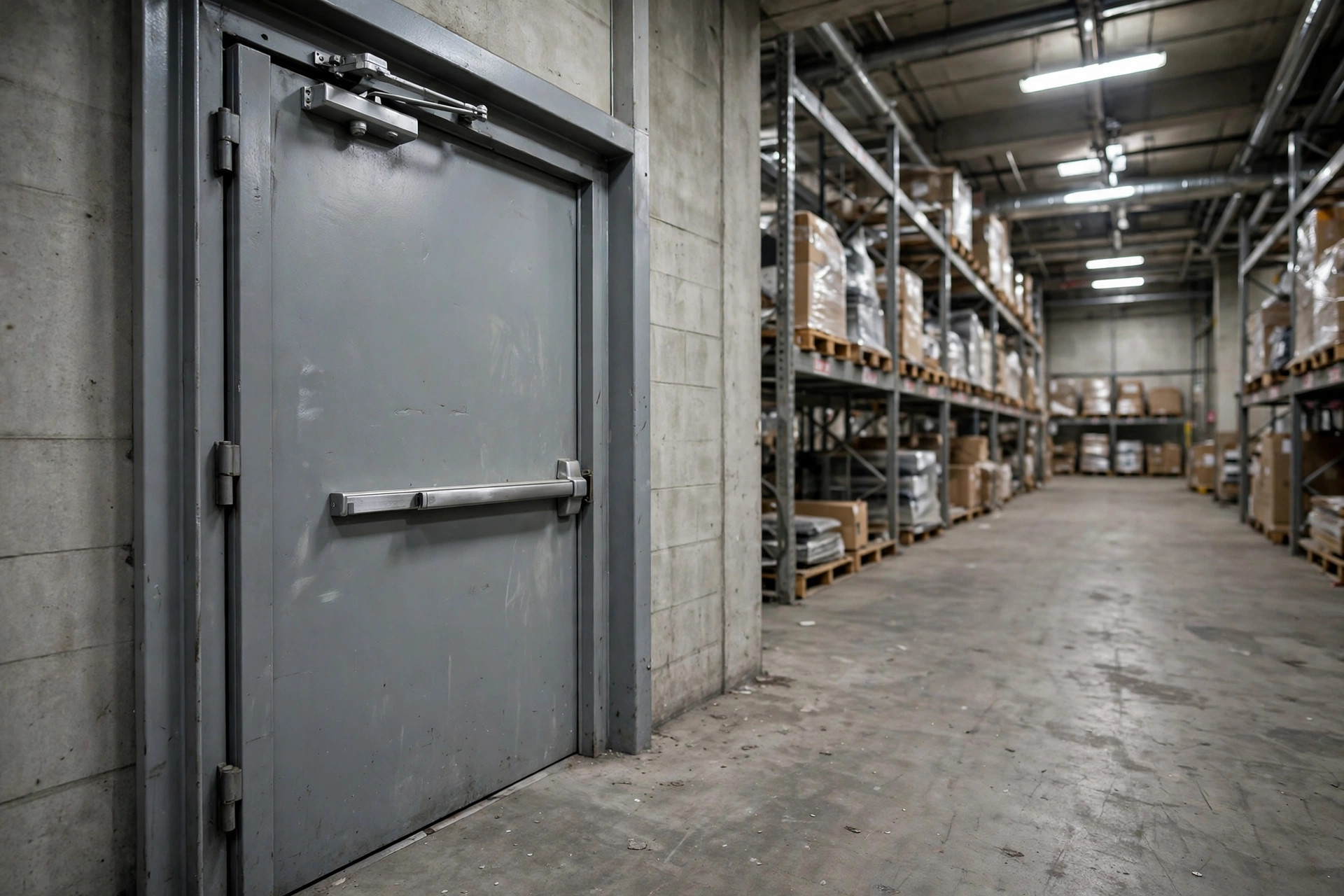
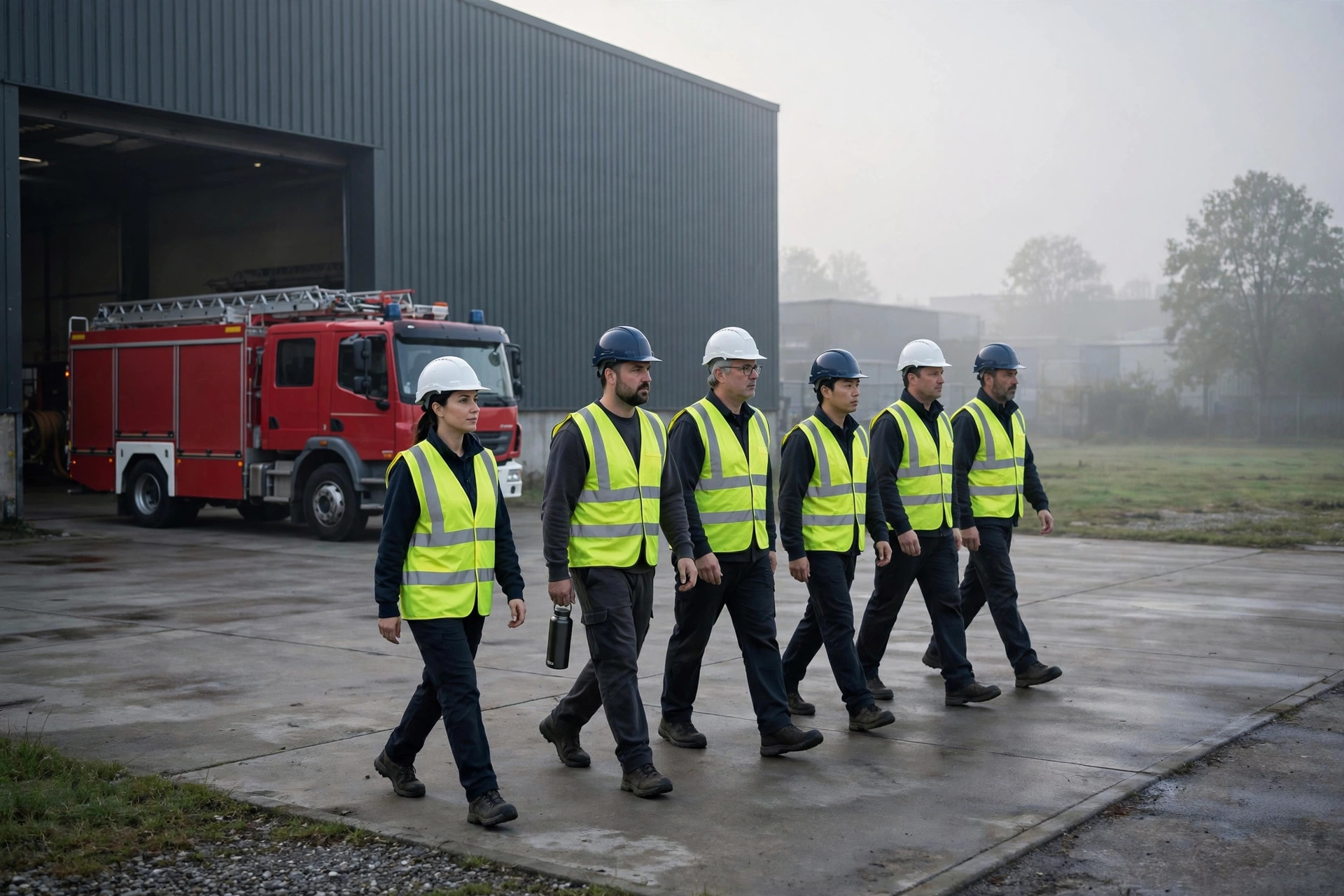
Where to run. Evacuation routes can't just live on a diagram. Everyone at every workstation should be able to reach the nearest exit without looking at a map. The assembly point goes upwind and well clear of the building, and the headcount sheet is organized by crew — because firefighters won't go in until they know how many people are still inside.
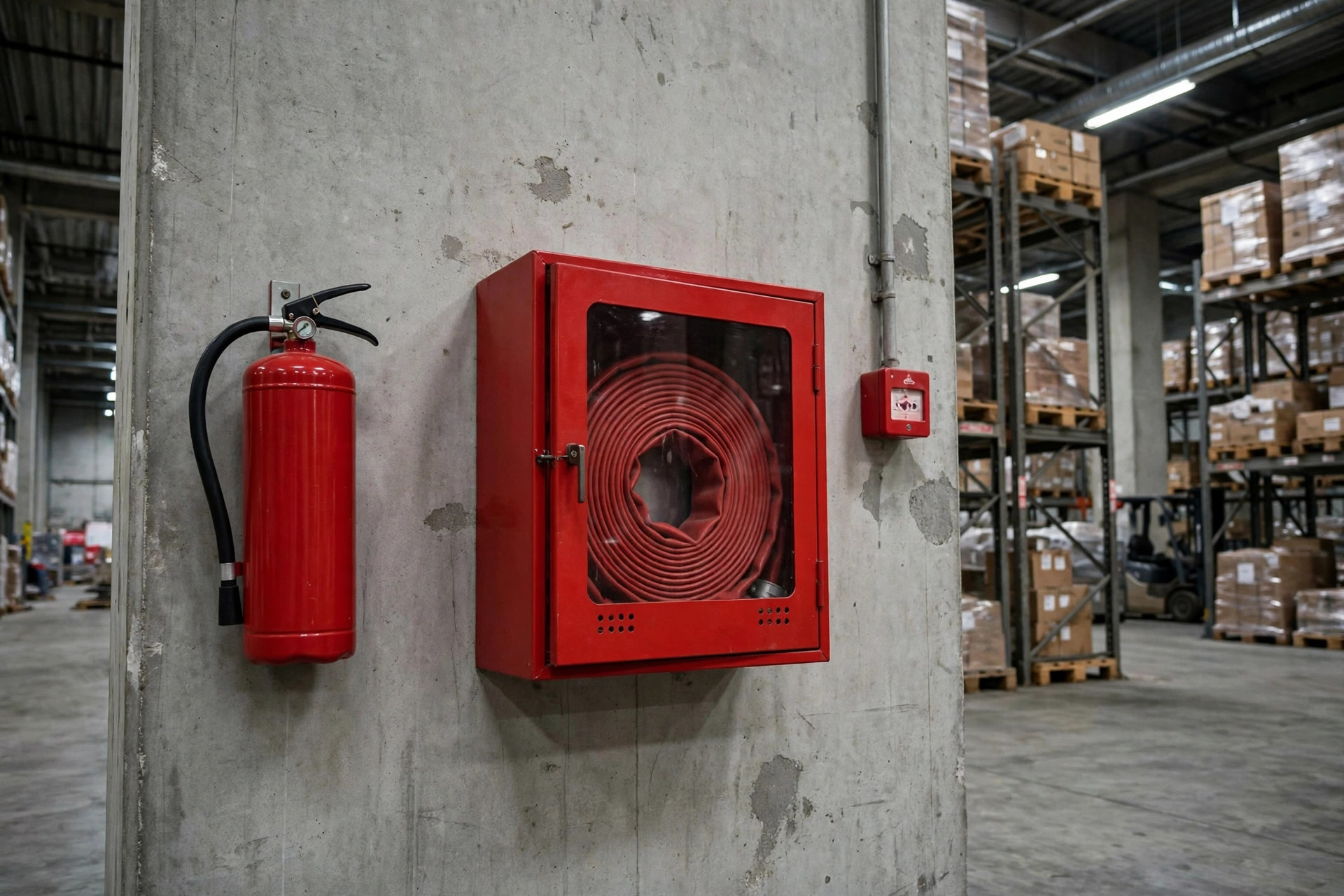
What to fight it with. This is the one that kills: electrical and lithium battery fires cannot be fought with water. The three fire types you'll meet in a warehouse — ordinary combustibles (cartons, pallets), electrical (charging areas, electrical rooms), lithium batteries (forklift packs, power banks in returns) — need completely different extinguishers. One table in the plan: which zones carry which extinguishers, and the first move on a lithium fire is isolate and de-energize, not hose it down. OSHA requires monthly visual inspections of extinguishers (29 CFR 1910.157) — don't discover a depressurized unit during a fire.
Pay special attention to the charging area, because that's where warehouse fires actually start. Lithium forklift batteries and their chargers concentrate your two worst risks — stored energy and electrical heat — in one corner of the building. The rules that matter: charge only in the designated area, never on a damaged pack (swelling, cracked casing, and unusual heat are immediate red flags — quarantine the pack, don't charge it), keep the area clear of combustibles for several feet in every direction, and make sure the smoke detection over the charging area is the right type for the environment. A charging-area fire at 2 a.m. with nobody around is how small incidents become total losses; if your operation charges overnight, that area earns a dedicated detection and suppression review.
Who to call. Write the notification order in stone: 911 first, then the commander, then the owner and the insurer. In that order. I've seen five minutes lost to someone calling the boss to report first. And get the fire department familiar with your building before anything happens: send the local station your floor plan, hazmat storage locations, and fire water supply points now, so they aren't discovering them mid-incident.

Drill twice a year — and drill these three moves, not walking
Most warehouse drills are "everyone lines up, walks out, photo taken, done." That drill trains nothing. The three moves that actually matter:
Kill the power. Step one for an electrical fire is de-energizing. Where's the main disconnect, who is authorized to pull it, will the UPS and emergency lighting hold afterward — pull it for real during a drill and you'll discover half the emergency lights are dead. Finding that out in a drill is training; finding it out in a fire is a casualty.
Drop the shutters, seal the fire zones. Fire shutters stay open all day and need to come down when it counts, trapping the fire in one compartment. But pallets staged under the shutter mean it can't descend — the most common thing I find on walkthroughs. Every drill should verify: clear space under every shutter, and the manual release actually releases.
Account for everyone. Headcount at the assembly point, and if one person is missing, the commander must be able to name their last known location immediately. The roster tracks who's actually on shift, not last month's headcount printout.
OSHA's 29 CFR 1910.38 requires employers to maintain a written Emergency Action Plan. That's not a suggestion; it's regulation. But the regulation only checks that you have one, not that it works. Whether it works is the fire's call.
There's a financial angle most operators discover too late: your insurer. After any fire incident — even a small one — expect your property insurer to ask for the emergency plan, the drill records, and the extinguisher inspection logs before renewing or paying out. A warehouse with documented twice-yearly drills and current inspection records negotiates from strength; one with a dusty binder negotiates from weakness. The plan doesn't just reduce the fire's damage — it protects your coverage when you need it most. Keep the drill sign-in sheets and inspection checklists filed where you can produce them in an afternoon, not a month.
Do three things this week — no meetings, no project charter: walk the building and check every extinguisher for pressure and expiry; walk your own evacuation routes and look for pallet blockages; put the commander and backup phone numbers on the wall. Do those three and your plan is already better than half your competitors'.