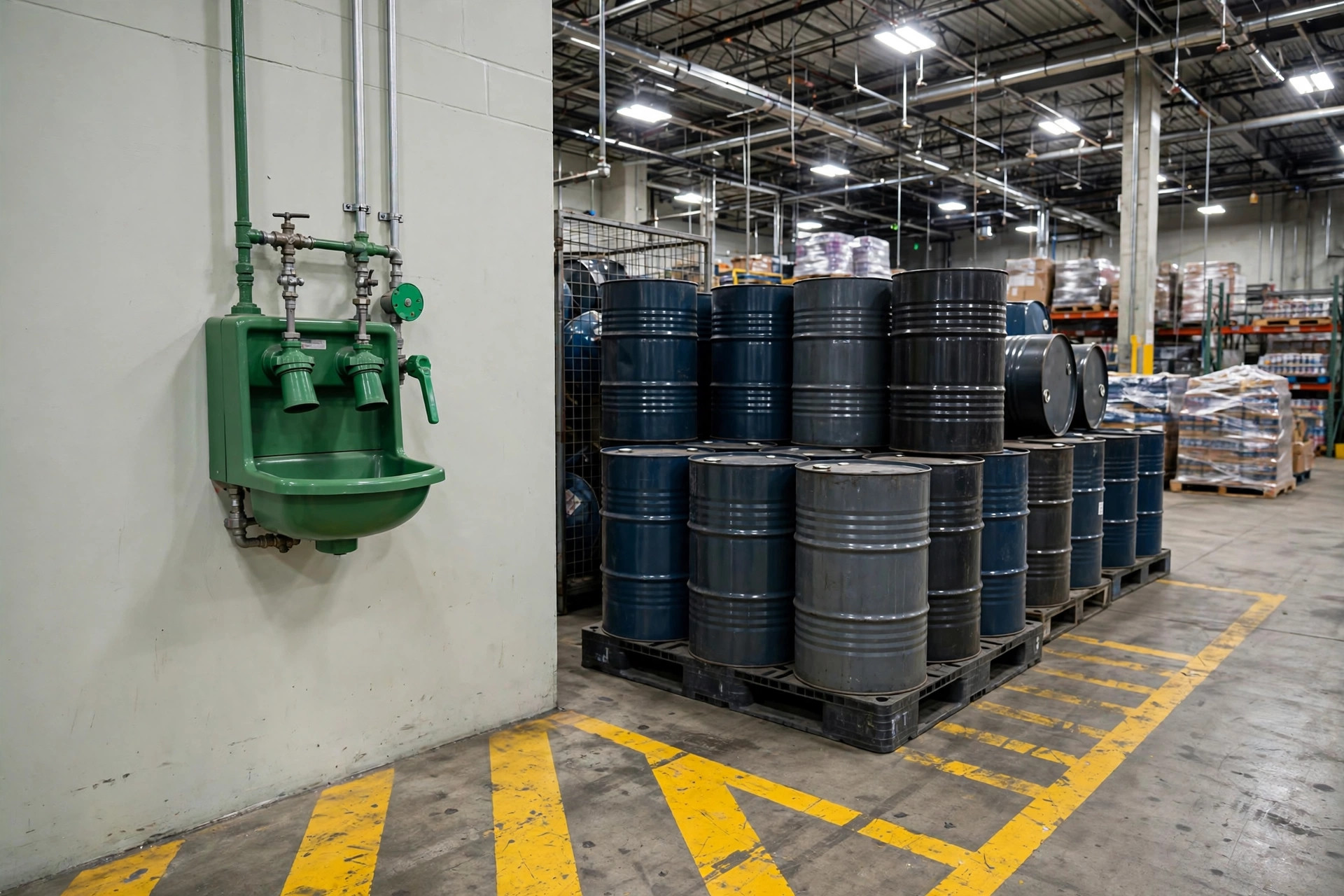
Here's my verdict up front: if your warehouse handles anything corrosive and your eyewash station isn't compliant, you aren't saving money — you're just deferring a fine. And when it comes, it will be bigger than the fix.
OSHA's rule itself is one sentence. 29 CFR 1910.151(c) says: where employees' eyes or bodies may be exposed to injurious corrosive materials, the employer must provide facilities "suitable for quick drenching or flushing." That's it. OSHA doesn't define how close, how fast, how warm, or how much flow. In practice, inspectors enforce the numbers through a consensus standard — ANSI/ISEA Z358.1 — and that's the ruler everything gets measured against. These are the osha eyewash station requirements warehouse operators actually live by, even though most of the numbers come from ANSI, not OSHA.
This has two sides: the regulation on paper, and whether a worker can actually use the thing in the ten seconds that matter. Let me cover both.
Step One: What OSHA's Eyewash Station Requirements Actually Cover
The first reaction I hear from warehouse managers is always the same: "We're a warehouse, not a chemical plant. Why would we need eyewash stations?"
I've heard that one too many times. In 2019, a 40,000-square-foot 3PL warehouse in Fontana, California was handling lead-acid batteries for a customer. The site manager was confident: "We do storage and distribution. We don't have chemicals." The inspector's reply stopped him cold: "Does battery electrolyte count as a corrosive material?"
The test is straightforward: pull the SDS (safety data sheet) for anything stored or handled in your building and check the hazards identification section. Batteries, plated parts, caustic cleaning agents, certain lubricants, coolants — any one of them pulls you under 1910.151(c). The counterintuitive part: this rule doesn't scale with warehouse size. A 5,000-square-foot operation and a 500,000-square-foot facility face the exact same standard.
The Most Expensive "Check the Box" Job I've Seen: 26 Seconds vs. 10
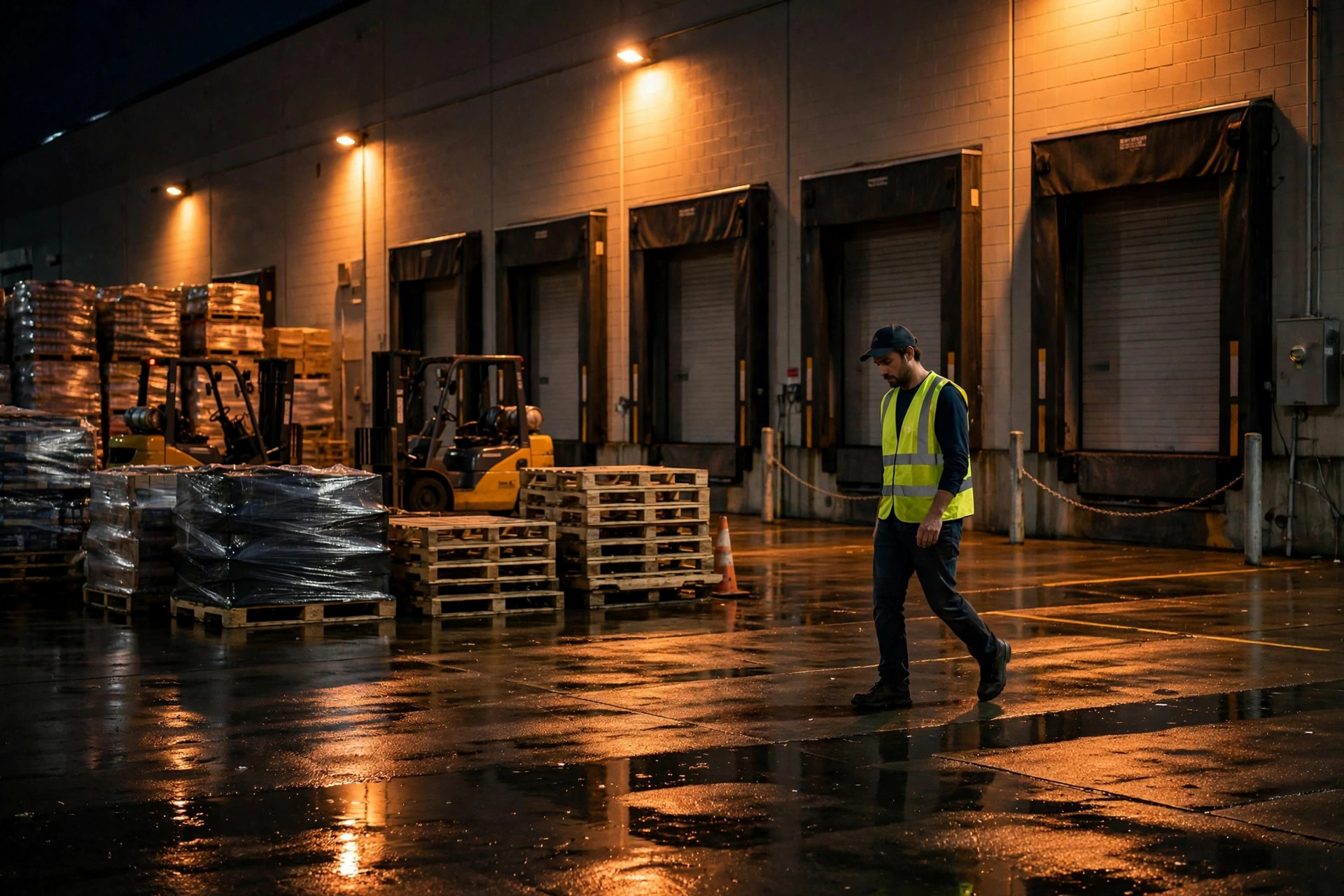
Same Fontana warehouse. They had installed an eyewash station — mounted by the office door, 120 feet from the battery storage area, with a pallet-clogged aisle in between. The inspector started a stopwatch at the battery racks and walked. Twenty-six seconds.
ANSI Z358.1 requires the equipment to be within a 10-second walk of the hazard — the annex works out to roughly 55 feet (about 16.8 meters). Note: that's real walking time with real obstacles, not a straight line on a floor plan. The pallets you can't walk through, the inspector can't either.
The fix was simple: add a plumbed eyewash unit next to the battery area. Unit cost $1,200, plumbing $1,100, tempering valve $600 — $2,900 all in. Pocket change compared to the citation story I'm about to tell you.
The More Common Way to Fail: Installed, Never Tested for Two Years
In 2021, a warehouse in Ontario, California had it all — compliant location, compliant equipment. Except the valve was rusted solid. The handle might as well have been welded. Nobody had activated it in two years.
ANSI requires weekly activation testing, with records. No log, no proof of maintenance — the inspector assumes you didn't do it. That warehouse got hit with a serious violation worth over $5,900. Get this: an eyewash unit costs hundreds to a couple thousand dollars. The citation was roughly triple the equipment price, before workers' comp and legal fees.
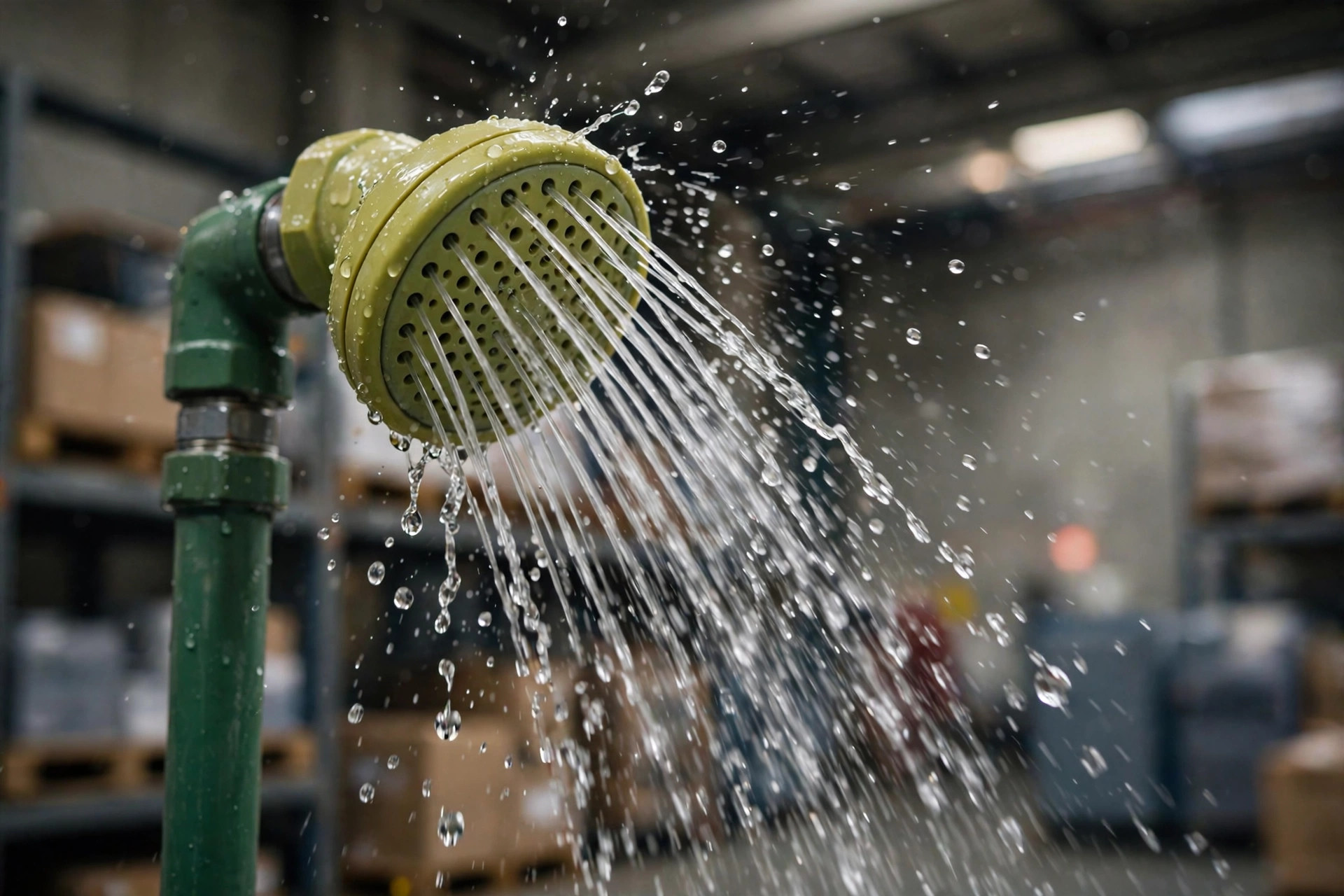
Here's the counterintuitive call: nine times out of ten, eyewash violations aren't "no equipment installed." They're "equipment installed and never maintained." Ten minutes of weekly testing is the cheapest insurance in your entire compliance program.
The Field Checklist: Six Hard ANSI Z358.1 Numbers
- Reachable in 10 seconds: within about 55 feet (16.8 meters) of the hazard, on the same level, with no doors, steps, or permanent freight blocking the path.
- Flush for 15 minutes: once started, the flush must continue for at least 15 minutes uninterrupted — which means your water supply and pressure have to keep up.
- Tepid water: 60–100°F (15.6–37.8°C). This is a real trade-off: a tempering valve adds five or six hundred dollars, but fifteen minutes of cold water will drive the victim into hypothermia and they'll instinctively pull away — an ineffective flush. The money goes in the valve, not in decoration.
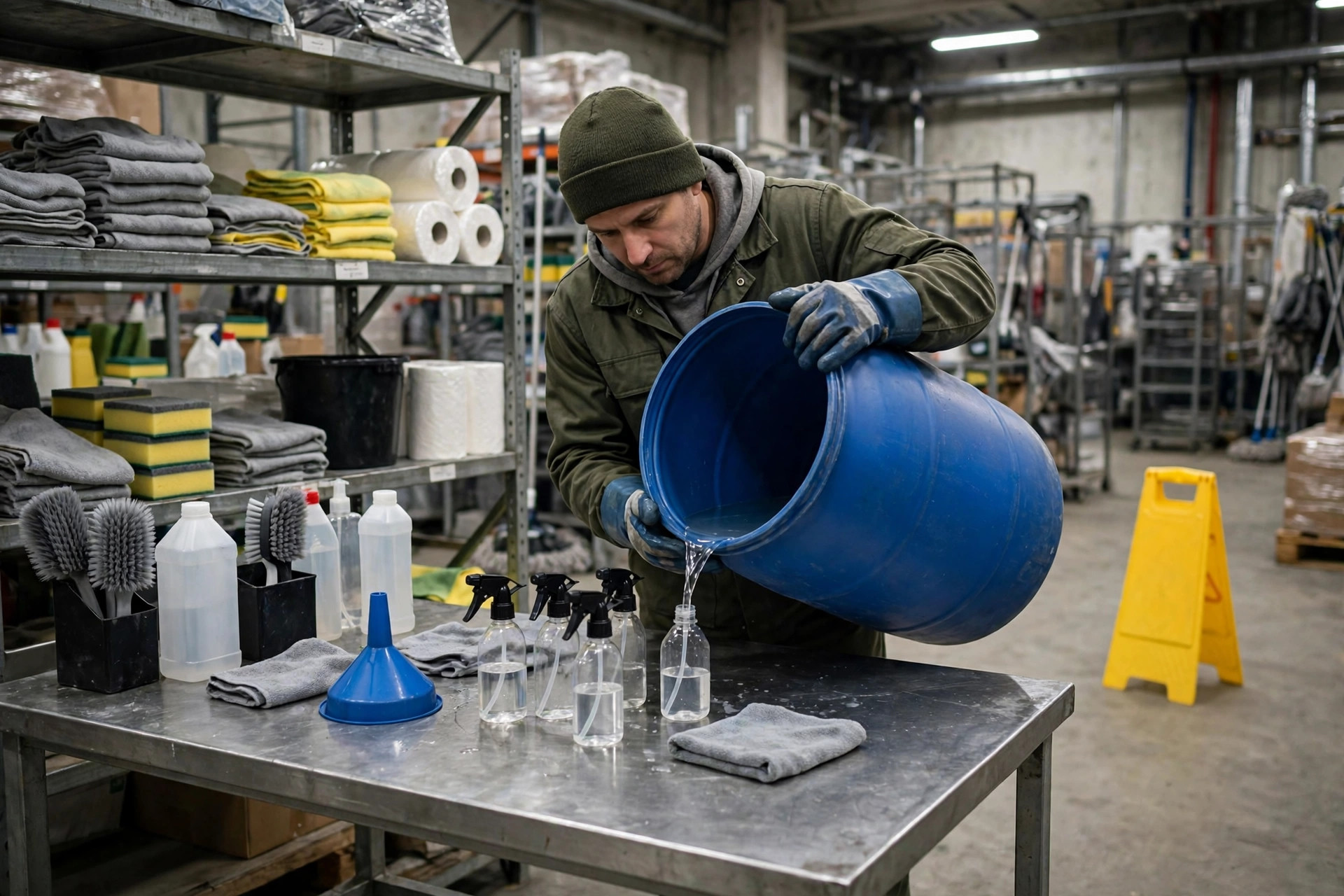
- 0.4 gallons per minute: the eyewash must deliver this flow for the full 15 minutes. And a heads-up: the squeeze bottles you see in workshops don't count as compliant equipment. They can bridge the first minute, not replace a fixed unit.
- Visible and findable: well lit, clearly signed, and the activation handle must be locatable by feel — the user may not be able to see.
- Tested weekly: activate it, confirm flow, log the date and the tester's name. One form, one pen, ten minutes.
The Math: $3,000–$4,000 of Compliance vs. One Citation
| Item | Typical cost |
|---|---|
| Plumbed eyewash unit | $800–$1,500 |
| Installation and plumbing | $1,000–$2,000 |
| Tempering valve | $500–$800 |
| Weekly test labor | ~10 minutes each |
| Employee training | 1 hour per year |
Full compliance for one hazard area runs $3,000–$4,000. For comparison: federal OSHA issued 774 related citations in 2008 alone, and a single serious violation runs several thousand dollars before workers' comp. This is the highest-ROI safety investment in a warehouse — the only spend that looks like waste until the day it saves you from something you can't afford.
An eyewash station isn't furniture for the inspector. It's for your people, in the ten seconds that decide everything.
So — have you pressed the test handle yourself this week? If you can't remember the last time you did, don't wait for an inspector to find out.
One more trade-off worth naming: gravity-fed tank units versus plumbed units. A self-contained tank unit can be installed in an afternoon with no plumbing, which looks like a win for older buildings — but you inherit weekly water changes, bacterial-growth risk in stagnant tanks, and a unit that runs dry partway through the required 15-minute flush if it's undersized. Plumbed units cost more up front and need a plumber, yet they give you unlimited compliant flow and one less thing to babysit. I've watched too many managers pick the tank to save a week, then spend every week afterward managing the tank. Pick the pain that ends.
By Lao Mi, Supply Chain Veteran (20 yrs)