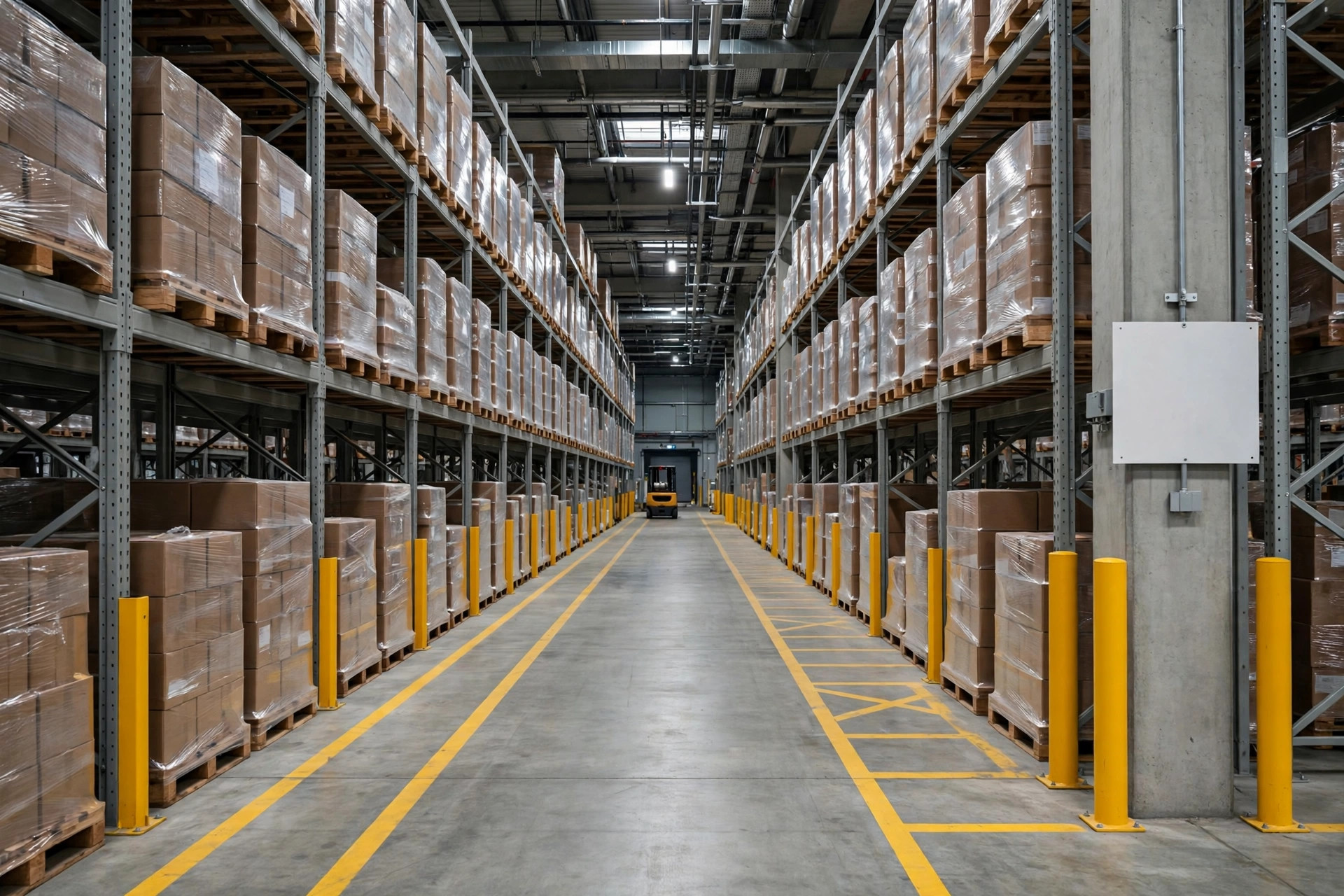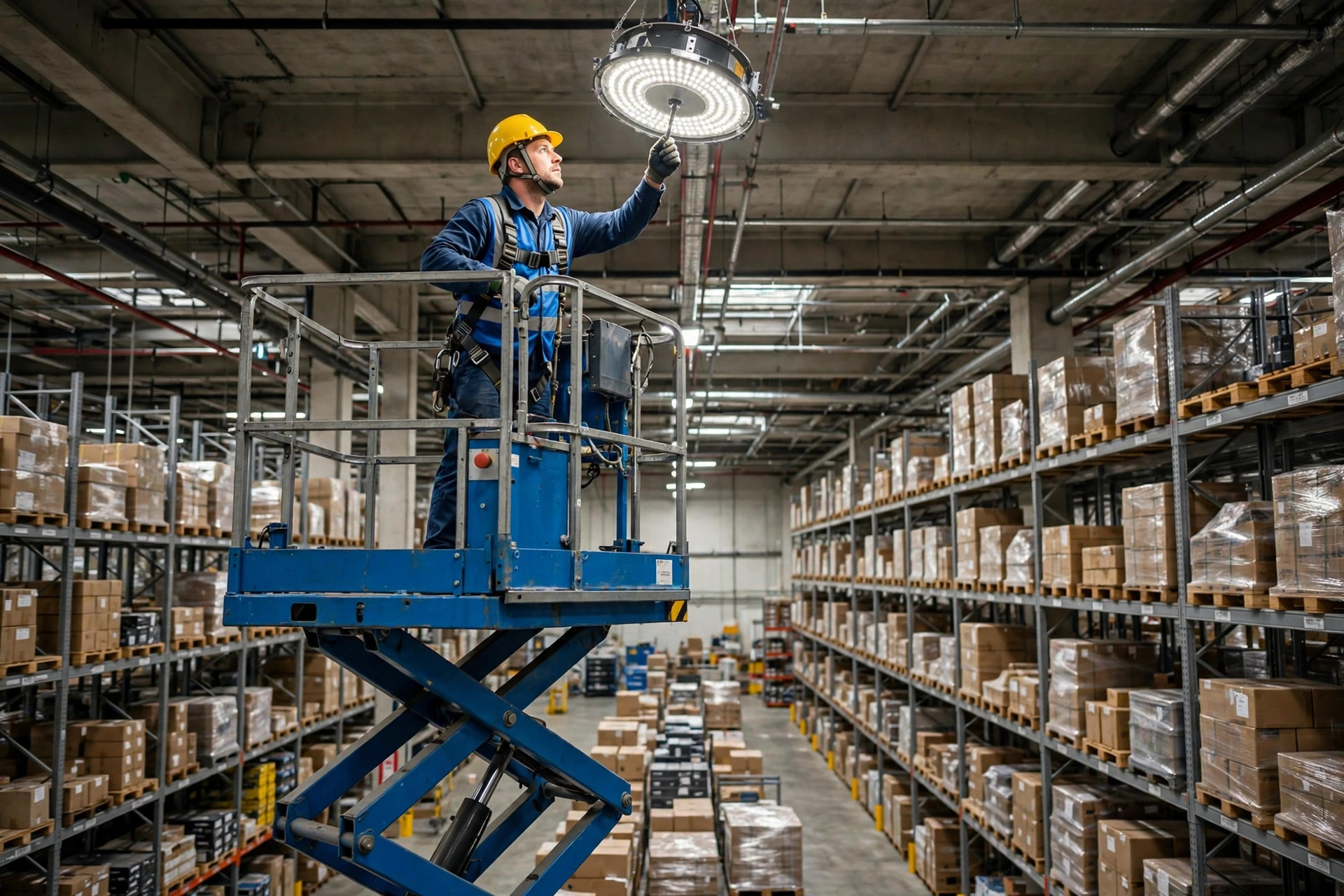
At 8 a.m. one March morning in 2025, an OSHA inspector walked into a 200,000-square-foot food distribution warehouse in San Bernardino. He skipped the forklifts. He skipped the chemical cabinet. He walked straight up to the maintenance tech changing a high-bay light fixture. The man was on a scissor lift, guardrails in place, harness on — clipped to the guardrail, with his toolbox hanging outside it. The inspector filled three pages of notes. The warehouse manager told me later the fine would have paid for relamping the entire building, with money left over.
Working at height in a warehouse is aggressively ordinary: swapping a 30-foot LED, fixing a sprinkler head, wiping high windows, reaching a carton that fell onto the top rack level. So ordinary that nobody calls it "working at height." So ordinary that people only remember OSHA has a whole rulebook for it after something goes wrong. The inspector's logic is simple: what you call routine, he calls a hazard.
How High Is "High"?
First, unlearn something: don't apply construction standards to a warehouse. Warehouses fall under general industry, and the height that triggers fall-protection requirements is far lower than most people assume — roughly the height of one standard pallet stack. In other words, climbing onto the second beam level to grab a carton is, in an inspector's eyes, fully qualified work at height, and none of the required protections can be skipped.
Height is only half the equation. The other half is what happens if you fall. Standing in a guarded lift platform and standing on a rack beam are two completely different risk categories, and an inspector can tell them apart at a glance. One is protected work. The other is trusting your balance with your life. And most warehouse falls don't happen during the planned job — they happen in the "it'll just take ten seconds" moment. Ten seconds is plenty of time to fall 20 feet.
There's a blind spot people forget: working at height isn't only about the person up there. Tools and parts dropped from above count too. That toolbox hanging outside the guardrail in San Bernardino was the first thing the inspector wrote down. If the area below isn't barricaded, you've pulled your coworkers into the risk zone with you.
Pick Your Protection, in This Order
The correct first question is whether anyone needs to go up at all. If a long-handled tool can reach it, don't climb. When speccing fixtures for a new building, choose models serviceable from the ground and cut the number of climbs at the source — the cheapest safety investment there is. When somebody must go up, pick equipment in this order.
First choice: a guarded lift platform, scissor or boom. The guardrail is your first line of defense and the harness is the second — and the harness clips to the platform's designated anchor point, not to the guardrail. Clipped to the guardrail, the day the rail deforms under load, you go with it. That's exactly what the San Bernardino tech got wrong: fully geared up, wrong anchor, protection effectively zero.
Second choice: compliant scaffolding, erected, moved, and loaded per the manufacturer's instructions. Third, and last: a ladder — industrial grade only, correct angle, secured, with a spotter. No exceptions. I've seen people standing on pallets to reach something, and riding a forklift fork to lift equipment. Each one is fineable. Each one is also an ER visit waiting to happen. The few minutes you save are the most dangerous minutes of the whole job.
Scissor or boom? Match the machine to the job. Scissor lifts are stable with big platforms — ideal for fixed-point work like relamping or sprinkler repair. Boom lifts reach farther along walls and over obstacles — better for window cleaning or perimeter runs. Measure aisle width and required lift height before renting; the most common do-over is a platform that tops out a foot short. And for outdoor dock work, mind the wind — the manual states a clear limit, and past it you stop. Don't gamble.
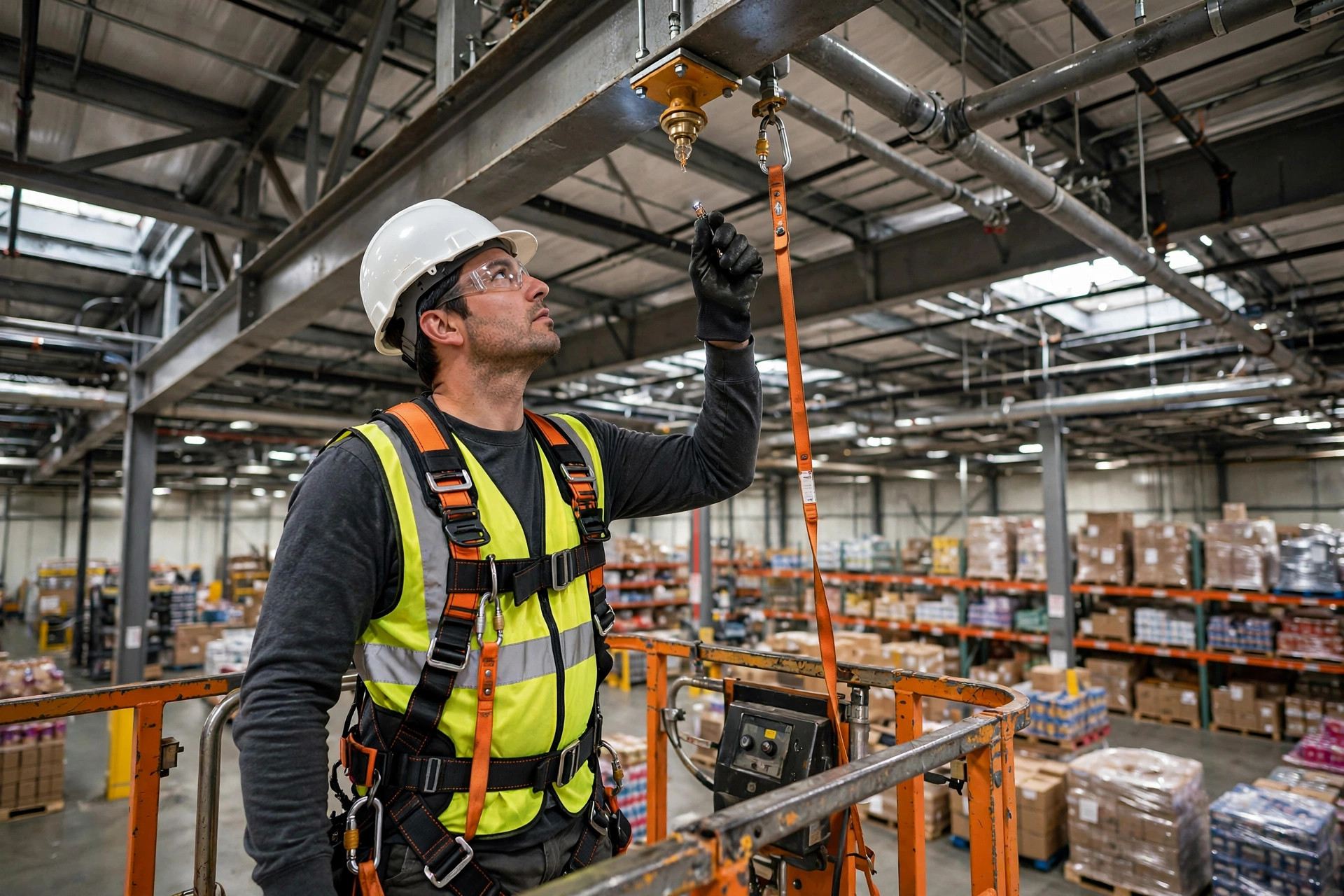
Give the harness itself a one-minute inspection before every use: cuts in the webbing, pulled stitching, buckles that lock, a shock absorber that's never been deployed. A harness retires after one arrested fall, no matter how new it looks. Plenty of people don't know that — a harness is a consumable, not an heirloom.
A day's rental on a scissor lift is a rounding error next to an OSHA fine. Next to a fall injury, it's not even a comparison. Every warehouse manager can do this math; the only question is whether they spend the money before something happens.
What the Inspector Checks First
The pre-job checklist is one the inspector knows better than you do, and he'll walk it item by item: is the lift's annual inspection tag current; is the ground level, free of potholes and oil; do sprinkler pipes or cable trays block the lift path overhead; is the area below barricaded, with nobody walking under the work zone; is it a two-person job, one working and one spotting.
The repeat fine categories are worth listing, because they're the inspector's greatest hits. One: no written at-height work plan — verbal instructions don't count. Two: no training records. Under OSHA's enforcement logic, no records is practically the same as no training, and this is the most unjust fine of all — plenty of warehouses did train, they just didn't keep the paperwork, and the fine lands anyway. Three: no daily inspection records for the equipment. A scissor lift's inspection log is a life-saving document. Four: the harness anchored wrong, San Bernardino style.
The training-records point deserves emphasis. "Everyone's been trained," you say. "Show me the records," he says. You can't. I've watched that conversation play out too many times. Hours of training, undone by a missing piece of paper. Keep the at-height training sign-in sheets in their own file, separate from everything else. The record needs three things: date, content covered, and signatures. Half a page describing equipment selection and anchor requirements is enough. New hires complete it in their first week; veterans refresh annually. When the inspector asks, produce it in three minutes — can't-produce and never-had are punished the same.
The written work plan doesn't need to be fancy either. One page: task, height, equipment, anchor location, barricaded zone below, spotter's name, emergency number. Spotter and worker both sign before starting — five minutes. Nobody reads it on a normal day; it's the first thing the inspector asks for, and having it versus not having it changes the fine by an order of magnitude.
One more thing inspectors ask about, and most warehouses blank on: rescue. If a harness arrests a fall, the worker is left hanging, and suspension trauma becomes a real risk within minutes. That's why at-height work is a two-person job — the spotter isn't there to watch, they're there with a plan: how to lower the person, who to call, where the first-aid kit is. One line in the work plan. It can save a life.
When was the last time someone went up high in your warehouse? And before they climbed, who signed the paper? If you can't answer both, the inspector's visit will supply the answer — printed on the fine.