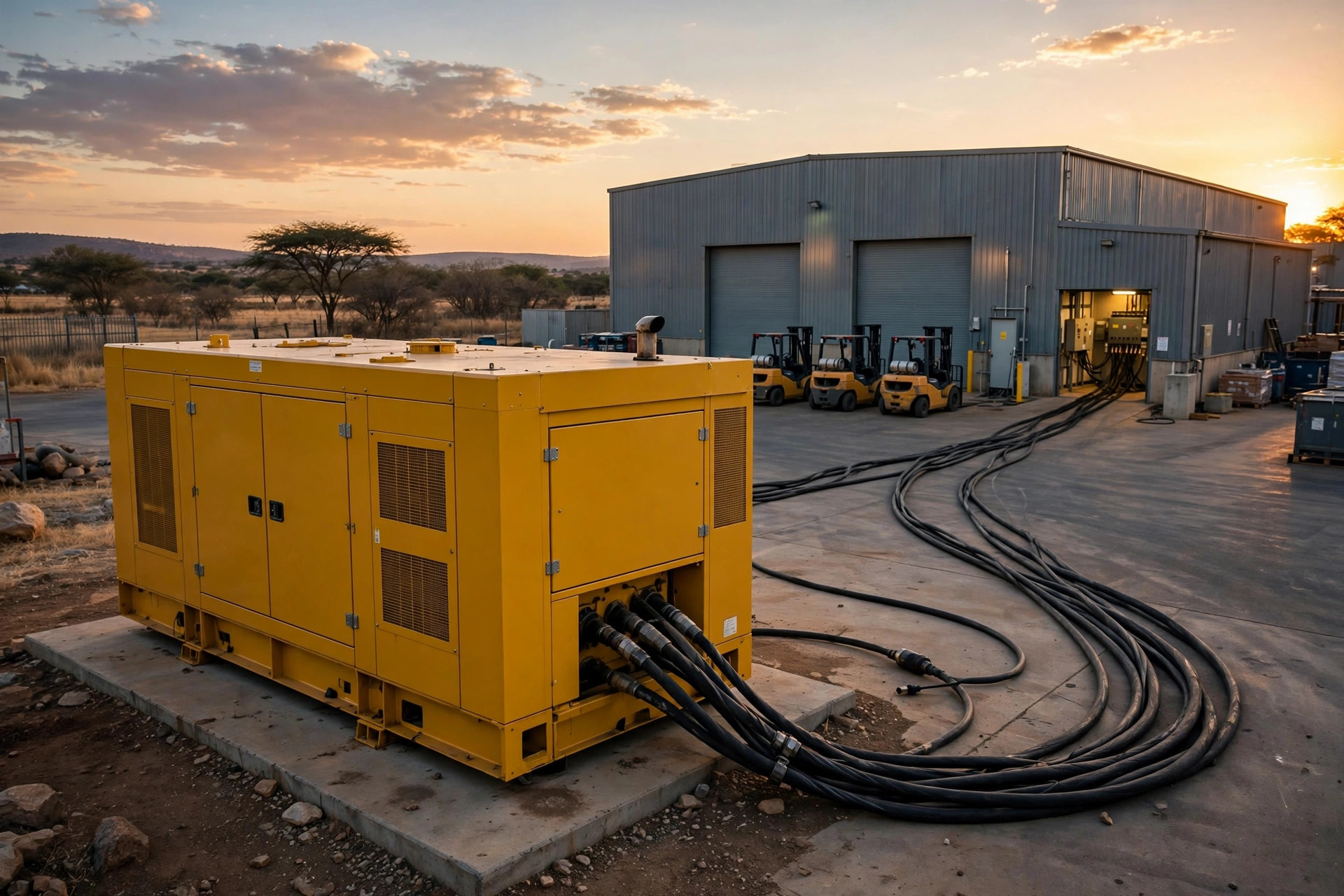
In early 2023 I signed a lease on an 80,000-square-foot warehouse in Ontario, California. I negotiated the rent, the CAM charges, and the insurance down to the last decimal. The one line I skimmed over was the utilities clause: "Tenant shall pay for electricity based on submeter readings." Seemed fair. You use it, you pay for it. What could go wrong?
The first power bill came in at $15,500.
I sat in my office and ran the math three times. That building — lighting plus electric forklift charging — pulled roughly 45,000 kWh a month. In my head I had budgeted around 27 cents a kWh, which is about where California commercial power sits. That put the bill a little over $12,000. The actual invoice was nearly $3,500 higher. A 30% jump, and I hadn't changed a thing about how we operated.
I called the landlord's property manager. The answer came back smooth as glass: "Sir, we bill the whole building at a flat 34 cents per kWh."
That day I learned something I now tell every operator looking at industrial space: if you don't read the submetering clause carefully, you're paying your landlord a second, invisible rent every single month. Here's how the markup game works, how to spot it, what to negotiate before you sign, and how to fix it if you've already signed.
How a landlord's power rate gets "legitimately" expensive
Here's a rule most tenants don't know. In California, when a landlord resells electricity to tenants through submeters, the per-unit rate must match what the utility charges the landlord. No markup on the power. The landlord can recover the actual cost of reading the meters, but can't mark that up either. The California Public Utilities Commission settled this years ago in a decision covering commercial buildings.
Rules are rules, bills are bills. Landlords who don't want to touch the per-kWh rate have other ways to get there.
The most common trick is burying demand charges inside a blended rate. California commercial tariffs have two parts: an energy charge per kWh, and a demand charge based on your peak load. The landlord's invoice shows a single "all-in rate" — say, 34 cents a kWh — with no breakdown. You can't see how much is energy and how much is demand. And here's the kicker: demand charges are billed for the whole building but allocated by your share of consumption. The less power you use, the worse the deal gets for you.
The second trick is an "administrative fee." A line item on the bill, charged as a fixed percentage of your electricity cost. California allows landlords to recover real meter-reading costs, but a percentage-based admin fee quickly exceeds any actual cost. That's a markup wearing a costume.
The third is double-counting common-area power. Corridors, the loading dock, exterior lighting — that electricity gets allocated to your bill by square footage, while your CAM charges already cover common-area expenses. Same electrons, billed twice.
The fourth is the sneakiest: billing the peak rate around the clock. California runs time-of-use pricing, and the 4-to-9 p.m. window is brutally expensive. A warehouse runs mostly during the day with almost no evening load, but some landlords settle your entire bill at the peak-period rate. No time bands on the invoice, no way to challenge it.
None of these show up in the lease itself. They all hide behind those five words: "based on submeter readings."
Got a suspicious bill? Do these three things first
Don't start with a fight. Start with evidence.
First, ask the landlord for a copy of the utility's master-meter bill. California rules require the tenant's bill to carry the same level of detail as the master bill the landlord receives from the utility. In other words, the landlord is obligated to show you the rate they actually pay. If they refuse, that refusal tells you plenty.
Second, check the utility's published commercial rates. Southern California Edison, PG&E — they all publish their tariff books online. As of 2026, California commercial power averages about 27 cents per kWh. Large industrial users pay a blended rate that's higher once demand charges are folded in, but if an ordinary warehouse is being billed 25 to 30 percent above the going commercial level, something is off. Make sure you're comparing the right schedule: small commercial and medium commercial tariffs have different rate structures, and mixing them up will mislead you.
Third, install your own check meter and run it in parallel for a month. Submeters drift. I've seen a fifteen-year-old submeter run 8% fast — not fraud, just aging equipment, but the overcharge spends exactly the same. A few hundred dollars for a verification meter settles the question with data instead of arguments.
Before you sign, get these three sentences into the lease
After getting burned once, I made the electricity clause a mandatory negotiation item. Three sentences, in the body of the lease, no verbal promises.
One: a rate cap. "Tenant's electricity rate shall at no time exceed the utility's published rate for the same customer class." That single sentence kills every markup scheme at the root. If the landlord says "we have one standard rate for the whole building," ask them to put that standard in the contract. If they'll write it down, it's probably honest. If they won't, you know why.
Two: the right to your own utility account. "Tenant may apply for a separate utility meter and direct account; landlord shall cooperate." This is the nuclear option. With it, submetering is just a temporary arrangement, and the landlord knows you can bypass them any time. Most landlords hesitate at this clause. The reason they hesitate is the reason you need it.
Three: metering and audit rights. "Landlord shall provide monthly submeter readings and a copy of the utility master bill; tenant may audit the electricity allocation once per year." California already requires bill-detail parity — this turns that regulatory backstop into a contractual obligation. You'll use the audit right maybe once a year. Having it is what matters.
A reasonable landlord won't fight any of these. One who fights them is telling you there's a story in the power bill, and you're better off learning it now.
Already signed? Here's the way out
No rate cap in your lease? Don't just eat it. Three steps.
Run the numbers. Get the master-bill copy, compare each component against the utility's published rates, and calculate exactly how much extra you're paying per month. Precision is leverage. In my Ontario building it was 34 cents versus 27 — over $3,000 a month, $40,000 a year. Put that number on the table and watch the landlord's posture change.
Then cite the law. In California, marking up resold electricity violates CPUC rules. Send a written letter — written, and keep a copy — citing the submetering rules, demanding billing at the utility's rate going forward and a refund of the overcharge. Property managers soften fast when they get this kind of letter, because they know how it ends if it reaches the regulator.
Finally, trade. If the landlord won't budge on principle, bundle the electricity reset with something they want: an early renewal, a longer term. They want a stable long-term tenant; you want a fair power rate. If all else fails, exercise option two from the section above and open your own utility account. It's the cleanest fix — just run the payback math on the meter installation and wiring work first.
My verdict is blunt: the electricity allocation clause is the most overlooked and most profitable hiding place in a warehouse lease. The rent you negotiate is the visible ledger; the power bill is the hidden one. On an 80,000-square-foot building, a $40,000-a-year overcharge over a five-year term is $200,000 — enough to fund an entire rent renegotiation.
Next time you tour a warehouse, don't just ask "what's the rent." Ask one more question: "How is electricity billed, what's the rate, and can I see the utility's master bill?" The landlord's reaction is worth $40,000.