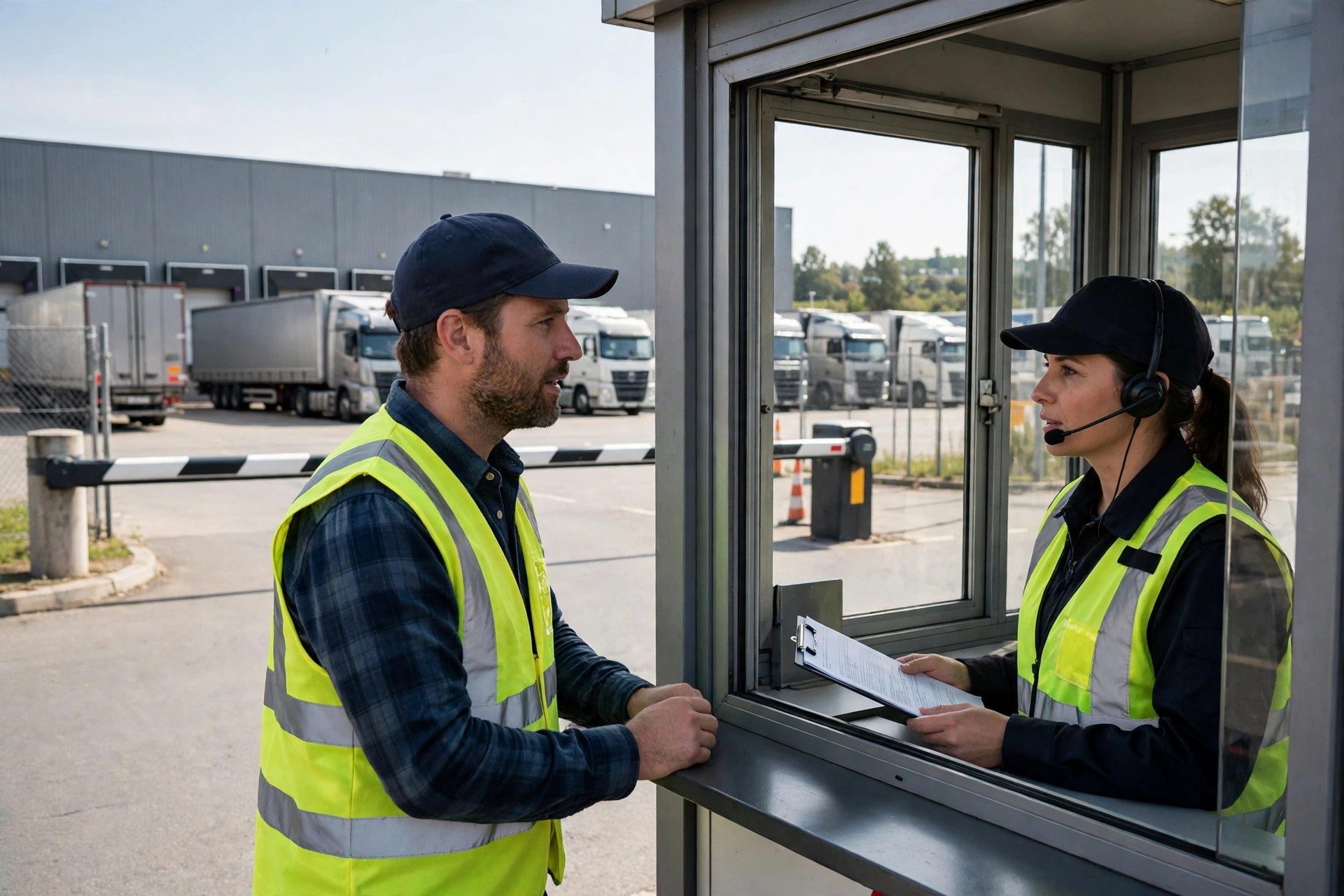
Excerpt: We run a 3,000-square-meter warehouse with no budget for a corporate driver access control system. After three near-misses, we built our own low-cost version: license plates in a group chat, color-coded zones, and a pickup area that checks every box. Here is what worked, what backfired, and what other small warehouses can copy.
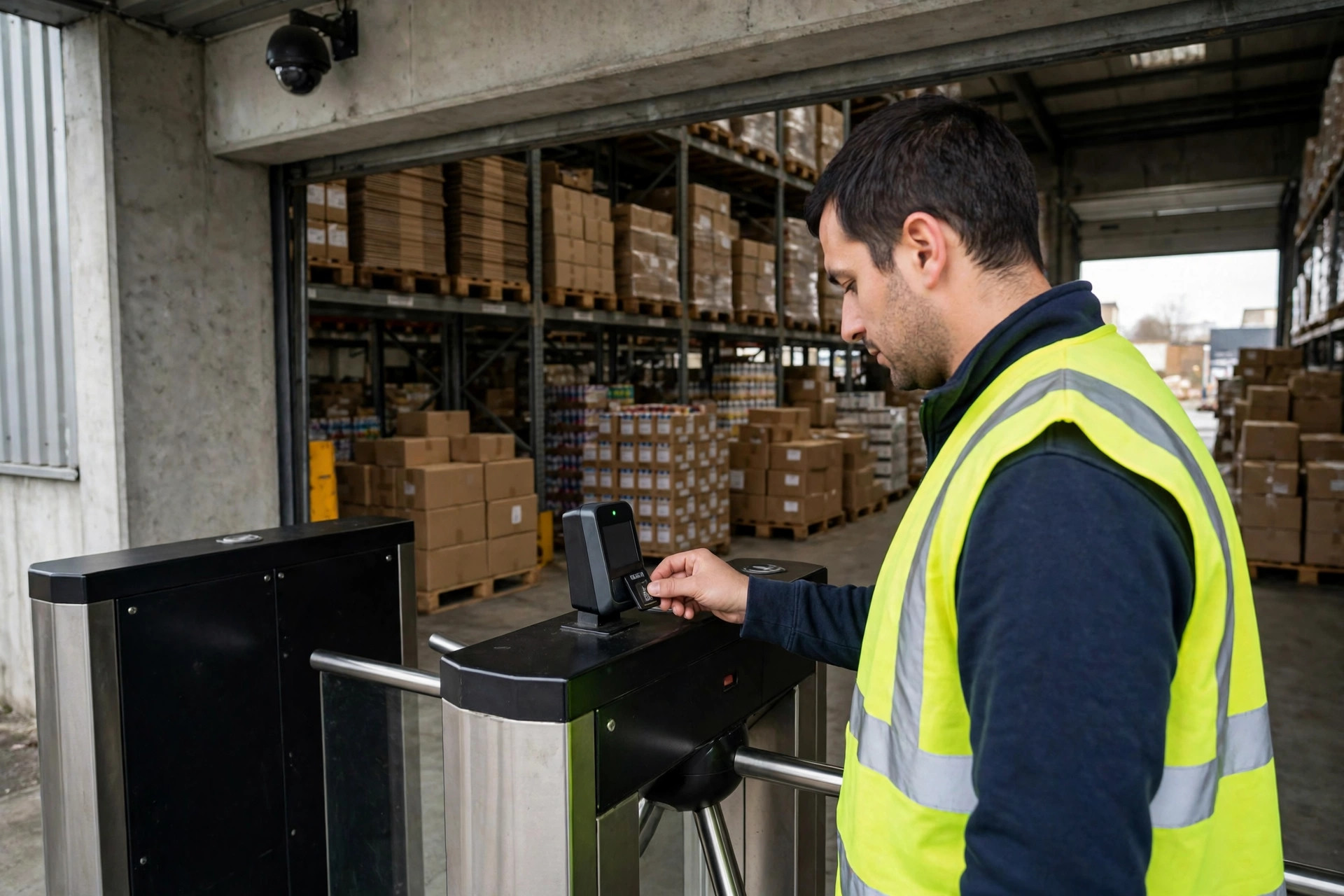
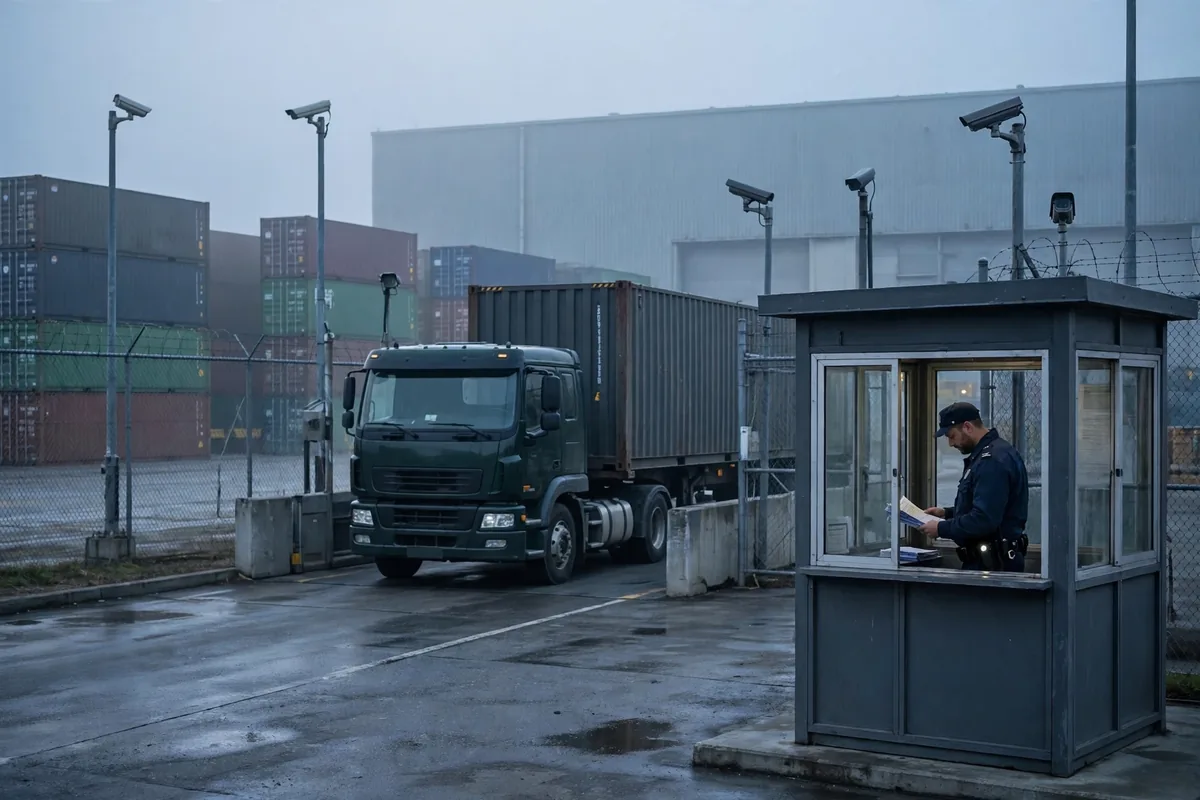
Our warehouse sits in the suburbs: 3,000 square meters, one electric gate, and one security guard who doubles as receptionist, parcel clerk, and telephone operator. I did look into the big-company driver access control package once. Turnstiles, license plate recognition, a visitor management system, plus an annual fee. I hung up halfway through the quote, because we simply cannot afford that kind of money. So the gate was guarded by our guard's memory instead: familiar faces waved through, strangers signed in. This human facial recognition system ran for two years, and to be fair, the old man's memory beat most software. In other words, our driver access control was a man and his memory. He knew which driver liked to park where. Then three incidents happened in a row, and I finally understood something: a familiar face is not security. A familiar face is a vulnerability wearing a friendly expression.
Three Near-Misses That Fixed Our Driver Access Control
In the summer of 2024, a delivery truck drove straight into the picking zone. The driver wanted to park as close to the goods as possible, and while reversing he nearly hit a rack. A forklift driver braked hard, two cartons slid off a pallet, and nobody got hurt, which was pure luck. That same day we put up a handwritten sign at the entrance, laminated A4 paper on a pillar: no vehicles in the picking zone, walk in and carry out. It is still there today.
The second incident exposed our visitor logbook. One stock count came up short by a full pallet of small appliances, so we flipped through the logbook to see who had visited that day. The visitor column said "Lao Wang" and nothing else. The phone column was blank. The problem was that three different Lao Wangs had visited that day: the delivery driver, the forklift repairman, and a pickup driver. There was nowhere left to investigate, so we swallowed the loss. From that day on, the logbook rule changed: name, phone number, license plate, and purpose of visit, all four required, and our guard checks that every line is complete before letting anyone in.
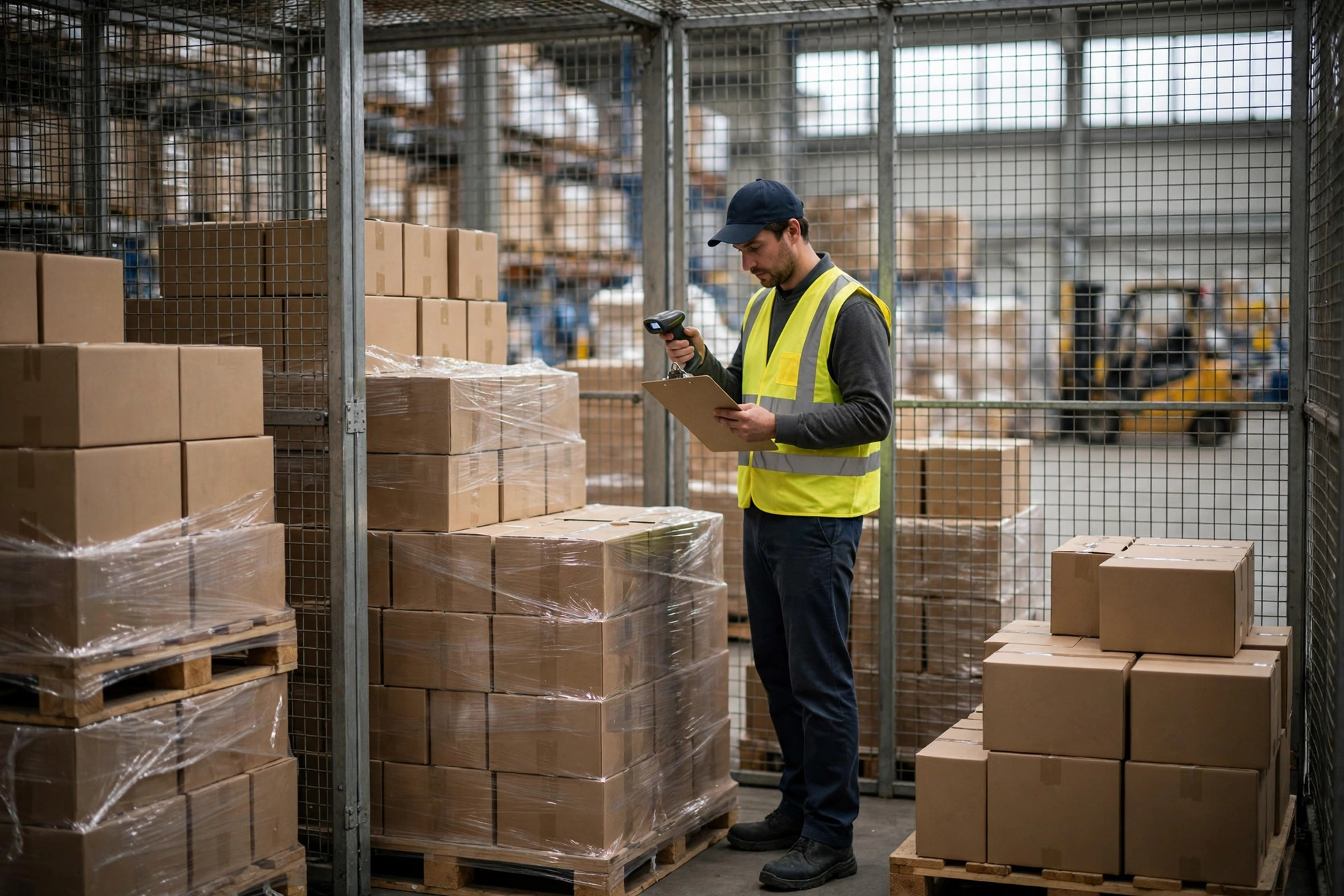
The third incident happened in the pickup zone, back when it had no divisions at all. Two drivers were picking up at the same time, and driver A walked off with two cartons belonging to driver B. Driver B only discovered it when he opened the boxes at his customer's site, then drove all the way back to swap them. We paid the extra freight, and the customer left us a one-star review anyway. Losing goods to theft is bad enough, but handing goods to the wrong person yourself is worse, because you cannot even feel righteously angry about it.
The Cheap Fixes That Actually Work
After those three incidents, I did not buy a big system. I put together a set of cheap fixes that became our driver access control system, and the total cost came to less than a rounding error on the corporate quote:
| Cheap fix | What it cost | What it controls | | Drivers report their plate number and arrival time in our group chat in advance | Nothing | No questions at the gate, just match the plate and wave them in | | Color-coded floor zones: red means no entry, yellow means enter after signing in, green means pickup | A few dozen yuan in printing | Drivers can see at a glance where they are allowed to go, without asking anyone | | A barrier in the pickup zone plus one-order-one-code checking | A few hundred yuan for the barrier | Wrong pickups get stopped on the spot instead of being discovered at the customer's site | | A driver waiting area: one table, two chairs, a water dispenser | A few hundred yuan | Drivers are willing to sit and wait, so the gate is easy to manage and nobody wanders the yard |
The results were better than I expected. Wrong pickups went from happening once or twice a month to zero in six months. Our guard's workload actually shrank, because instead of chasing people around the yard all day, he mostly watches drivers who already know where to go. The color stickers had an unexpected side effect as well: new drivers no longer need an escort, because the floor itself tells them where to go, and the pickup queue moves faster at peak times without anyone standing there directing traffic.
When the Gate Got Too Strict, Everything Slowed Down
The cheap fixes have a failure mode of their own, and it deserves its own warning. At one point I overcorrected and required every vehicle to register and leave an ID card at the gate. The queue of trucks backed up onto the public road, a traffic officer came over to write tickets, and drivers complained in the group chat that we were stricter than customs. That taught me a counterintuitive lesson: a gate is not better when it is stricter. A gate is better when it is smoother. Rules that flow get followed, while rules that fight people just push them to find a way around, and someone who has gone around your rule is harder to manage than someone who never had one.
We now run two lanes. Drivers who booked ahead in the group chat use the fast lane, where we match the plate and let them in. Walk-in drivers use the registration lane, where they fill in all four logbook fields first. Neither lane backs up, and nobody complains anymore. We cannot copy the big companies' full strict-control playbook, but the idea of splitting traffic by preparation level works just as well in a small warehouse.
Advice for Warehouses Like Ours
A few suggestions for small warehouses in the same boat, all paid for with bruises. Divide the zones before buying equipment: if you have not even marked out your areas, a turnstile just automates the same chaos, and the money is wasted. Write the rules on the wall, not in your guard's head, because the wall never takes a day off and your guard does. Read through the logbook once a month, not to catch anyone, but to find which rule is rubbing people the wrong way so you can fix it early. The monthly review earns its keep, too. One month we noticed that Friday afternoons were the busiest pickup window, so we extended the fast lane by half an hour, and the queue never reached the road again. Another month we spotted that the same courier kept arriving unannounced, so we gave him a standing pickup slot and the registration lane got quieter. A logbook looks like paperwork until you read it, and then it reads like a map of where your rules need adjusting.
Big companies have their way of surviving, and small warehouses have their own way of surviving. Driver access control is not a contest over whose equipment costs more. It is a contest over whose rules run smoother, and smooth rules can guard a gate on very little money.
By Xiao Ma, Small Warehouse Owner