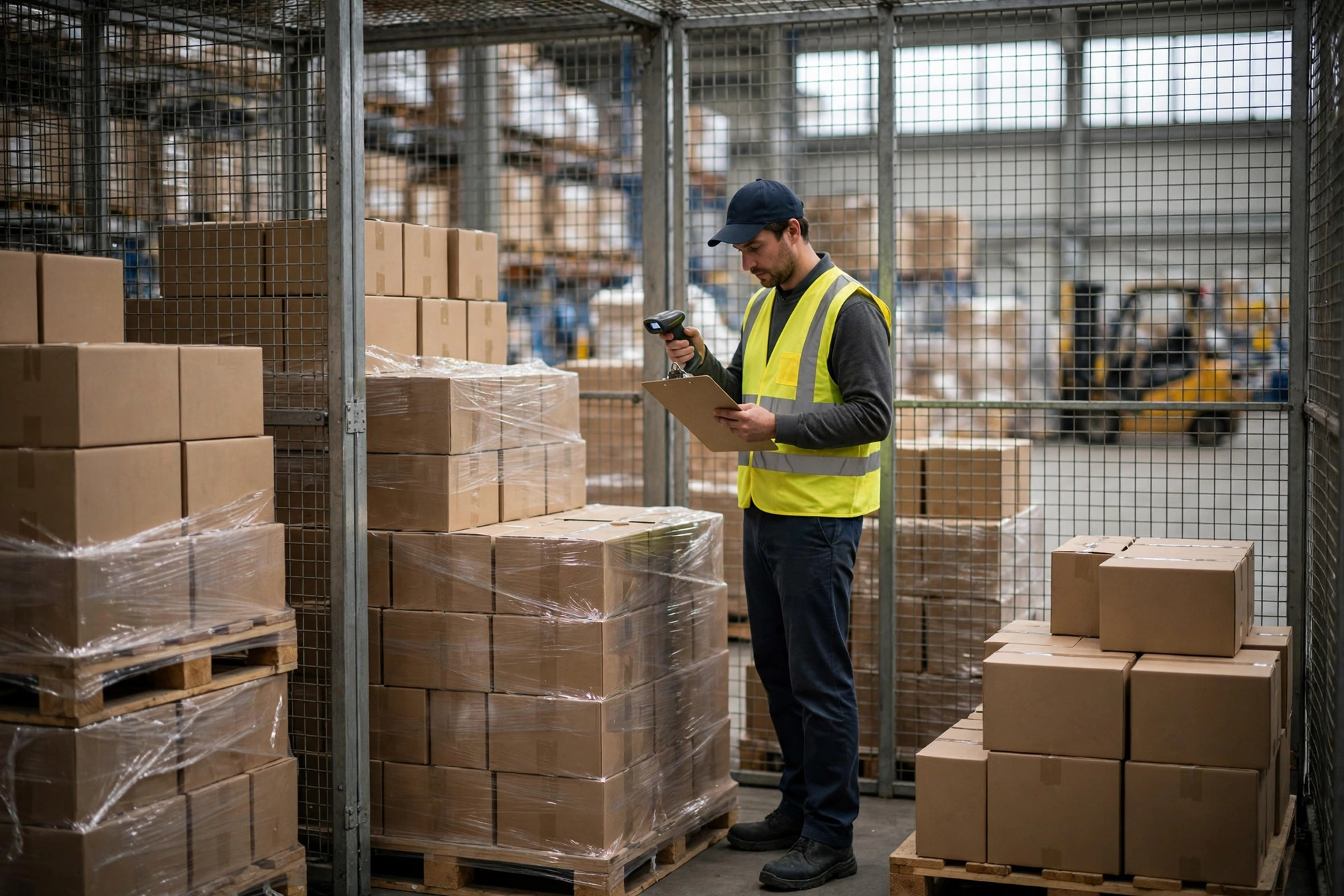
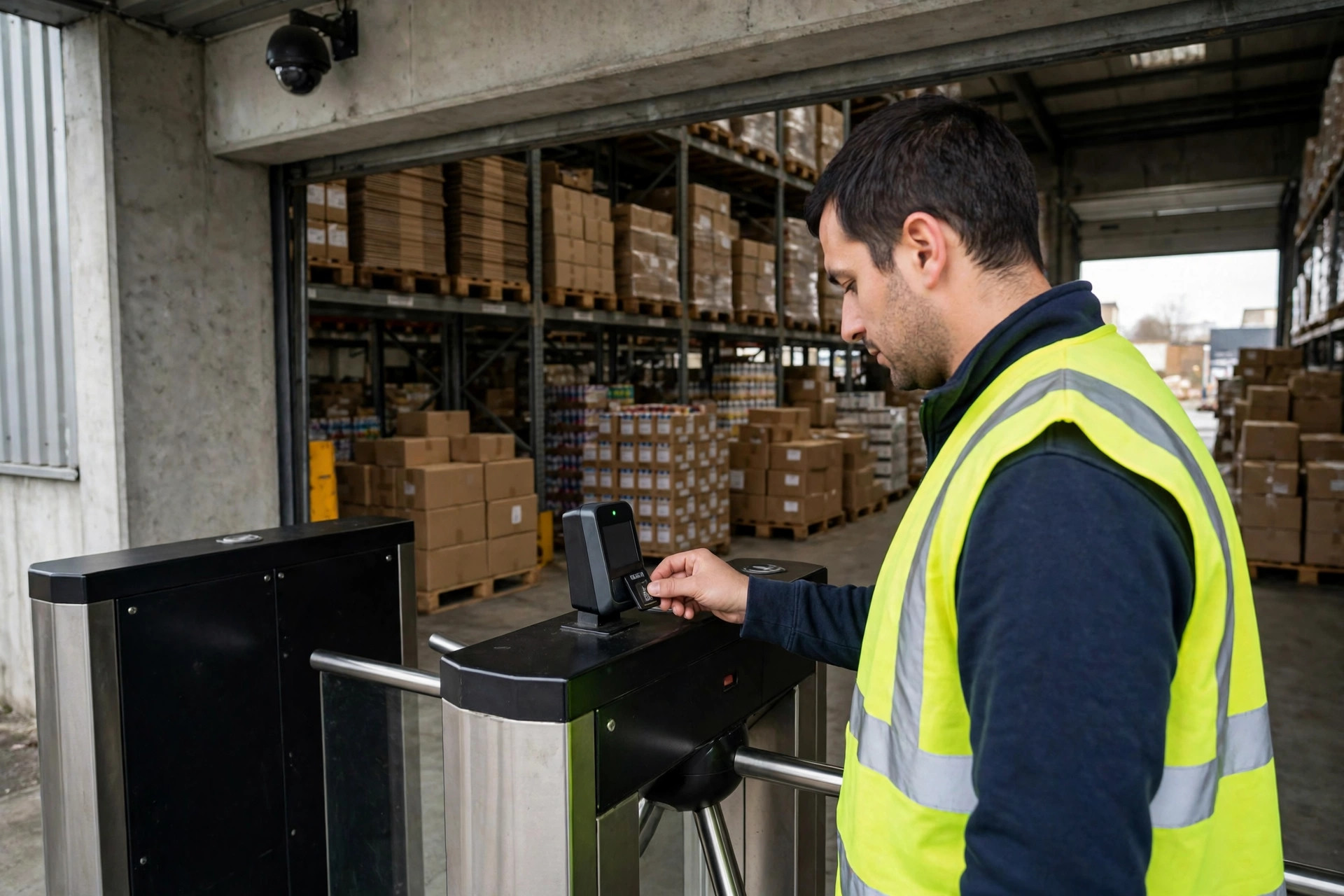
Here is a scene I have watched play out more than once: a warehouse with forty-plus cameras on the walls, a dispute on a Friday evening, and a manager scrolling for half an hour only to find footage of rack backs and the rear of a forklift. That is the whole problem in one shot. Warehouse video surveillance camera placement is not about filling walls with cameras. It is about retrieval. When something goes wrong, can you pull a clip within ten minutes that clearly shows a person, an action, and a time? If you cannot, the rest of the system is decoration.
The Principle First: Warehouse Video Surveillance Camera Placement Serves Retrieval, Not the Wall
Think of it like this: you are not buying eyes, you are buying evidence. Every camera position has to answer three questions before it earns its mount: who does it watch, what action does it capture, and what will it need to prove later? A camera that sees people but not the loading action, or sees the truck but not the pallet count, will leave you arguing from memory when it matters most. Resolution alone does not fix that. A blurry action shot in 4K is still a blurry action shot.
A common industry practice puts mounts in the 8 to 10 foot range, high enough for a wide view and out of casual reach. Treat that as a starting point, not an answer. Rack height, aisle width, lighting direction, and door glare will all push the real number up or down, so the final height, angle, and focal length must follow an on-site survey. And let me be blunt about a fake requirement I keep hearing: all cameras, all 4K, all the time. That is like putting a race engine in every delivery van. It sounds impressive, it burns through your retention budget first, and I will show you the math below.
Docks, Aisles, and High-Value Zones: Miss These Three and You Have Missed the Point
Docks and entrances are where disputes live. I worked with one warehouse where a driver claimed 22 pallets were loaded and the warehouse record said 20. Two pallets, nobody backing down. The dock camera pointed straight at the rear of the truck, so the loading action sat at the edge of the frame and counting pallets was guesswork. The warehouse paid, not because it was wrong, but because it could not prove it was right. A dock position has to capture the door or plate, the loading action, and the pallet count point at the same time. Lose one link and the chain of evidence breaks.
Aisle coverage has a different trap. A top-down camera looking along the aisle is standard practice and it works, until the warehouse changes around it. Racks grow taller, a new level goes in, peak season stacks product higher, and last year's clear view is this year's blind wall. You can think of the field of view as inventory: it moves. High-value zones deserve their own dedicated coverage, not a passing glance from an aisle camera. A passing glance is exactly what fails when you need a face, a label, or a hand movement in detail. Give high-value areas their own positions, their own retention, and their own restricted access.
Then there is low light. Night shifts, a dock door half open, fog at a cold-storage entrance: this is when infrared and low-light performance actually matter. A camera that looks great at noon and turns into white noise at midnight leaves your night shift effectively unwatched. Judge cameras on the three hardest scenes, night, backlight, and door glare, not on a sunny demo clip.
Retention Math: Price Storage Before You Finalize Camera Placement
Retention is the second most common failure, and it is almost always discovered too late. The system is installed, someone asks how long footage is kept, and the answer is seven days, because high resolution filled the drives fast. Disputes, cycle-count variances, and customer claims routinely surface two or three weeks later. By then the footage is overwritten and no one can recover it.
The math is one line: bitrate per camera, times camera count, times time, converted to storage. Here is an illustrative calculation, not a vendor claim, so you can rerun it with your own numbers: assume 4 Mbps per camera, 16 cameras, recording around the clock. One camera uses about 43 GB per day, 16 cameras use about 0.7 TB per day, 30 days comes to about 21 TB, and 90 days comes to about 63 TB. Compare that with your drive bays and your budget and you will know immediately whether your retention target survives contact with reality.
| Retention target | Storage at 16 cameras, 4 Mbps assumed | Trade-off |
|---|---|---|
| 7 days | About 5 TB | Cheap, but most disputes surface after footage is gone |
| 30 days | About 21 TB | The balance point for most warehouses |
| 90 days | About 63 TB | Safer, but storage, bandwidth, and upkeep climb steeply |
Here is the counterintuitive part: image quality and retention sit on opposite ends of a seesaw. The fix is not to max out both. Tier them. Docks, high-value zones, and entrances get high quality and long retention. Ordinary aisles and outer yards get good-enough quality and shorter retention. Motion-based recording, event tagging, and different policies per zone stretch retention without buying more drives. It is the same logic as ABC classification in the warehouse: not every location deserves the same investment.
The Blind-Spot Audit and Telling Your People: Walk It Every Quarter
The sneakiest failure is the blind spot that grows after installation. A rack moves, a new row of high bays goes up, a seasonal stack appears, a truck parks in a new spot, and a slice of coverage quietly disappears. I audited one warehouse that passed its install check with full coverage, then found six months later that a promotional stack had been sitting in front of a high-value zone's side view for two months. For two months, that corner simply did not exist on camera.
So make it a hard rule: walk a blind-spot audit every quarter. Take the camera map, stand at each position, look at the live view, and note what changed. Adjust angles, add positions, update the map, and file the record: what changed, why, who approved it. That record is what keeps you calm the next time someone asks for footage.
Telling employees matters just as much, and the general principles are simple. Tell people in advance which areas are covered and why. Keep coverage to the purpose, warehouse safety and dispute evidence, and do not let it creep into areas it does not belong. Restrict who can retrieve footage and keep a log of retrievals. Specific legal requirements vary by location, so check the latest official guidance for your jurisdiction rather than taking legal advice from an installer. Workers are not the enemy of the system. Rules explained up front mean less friction when footage is actually needed.
So here is the one number that tells you whether the money was well spent: after an incident, can you retrieve a usable clip, showing a person, an action, and a time, within ten minutes? If yes, your placement, retention, and audit math all add up. If no, you have a wall display, not a surveillance system. And warehouse video surveillance camera placement, done right, is the difference between those two outcomes.
By Da Liu, Automation Engineer