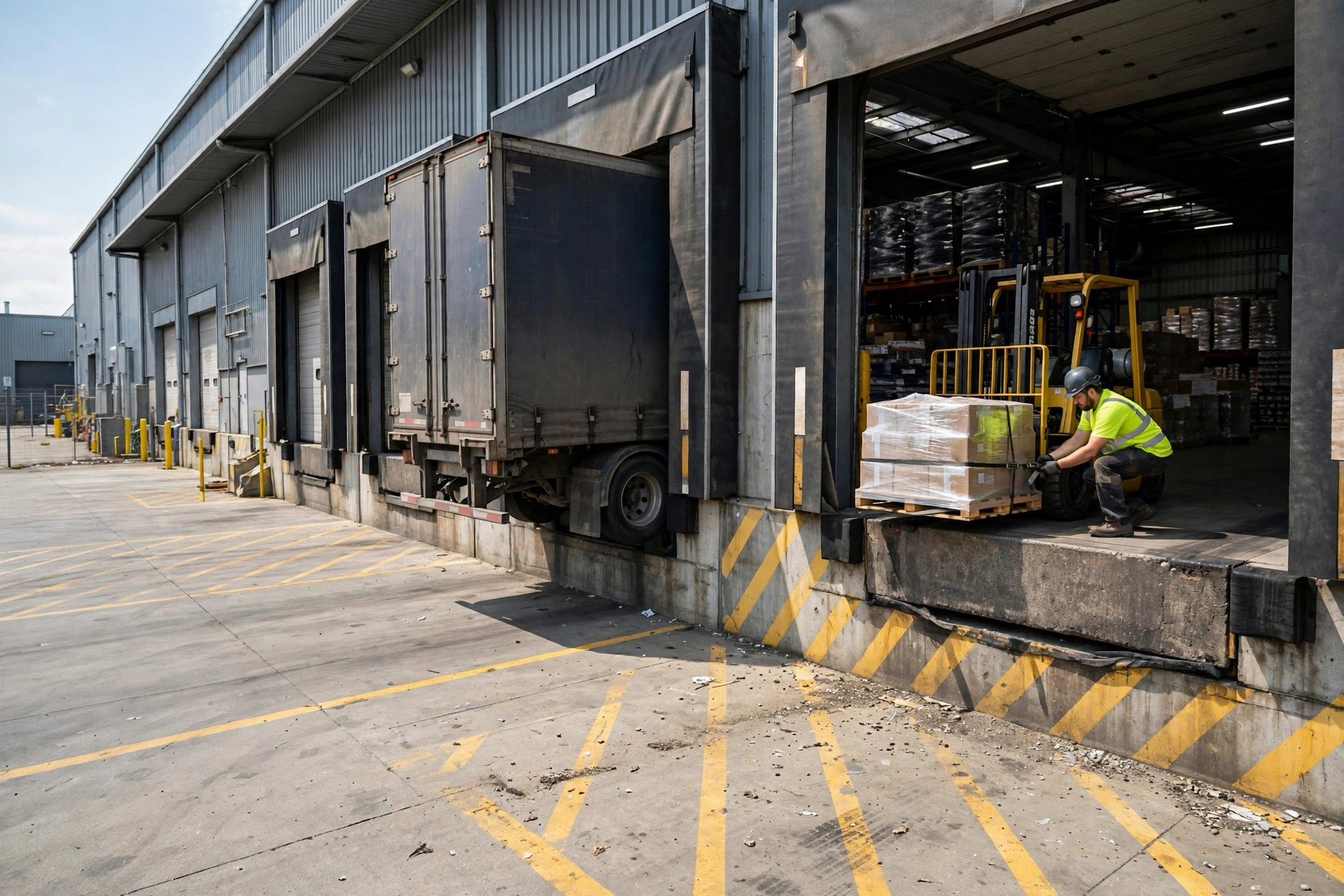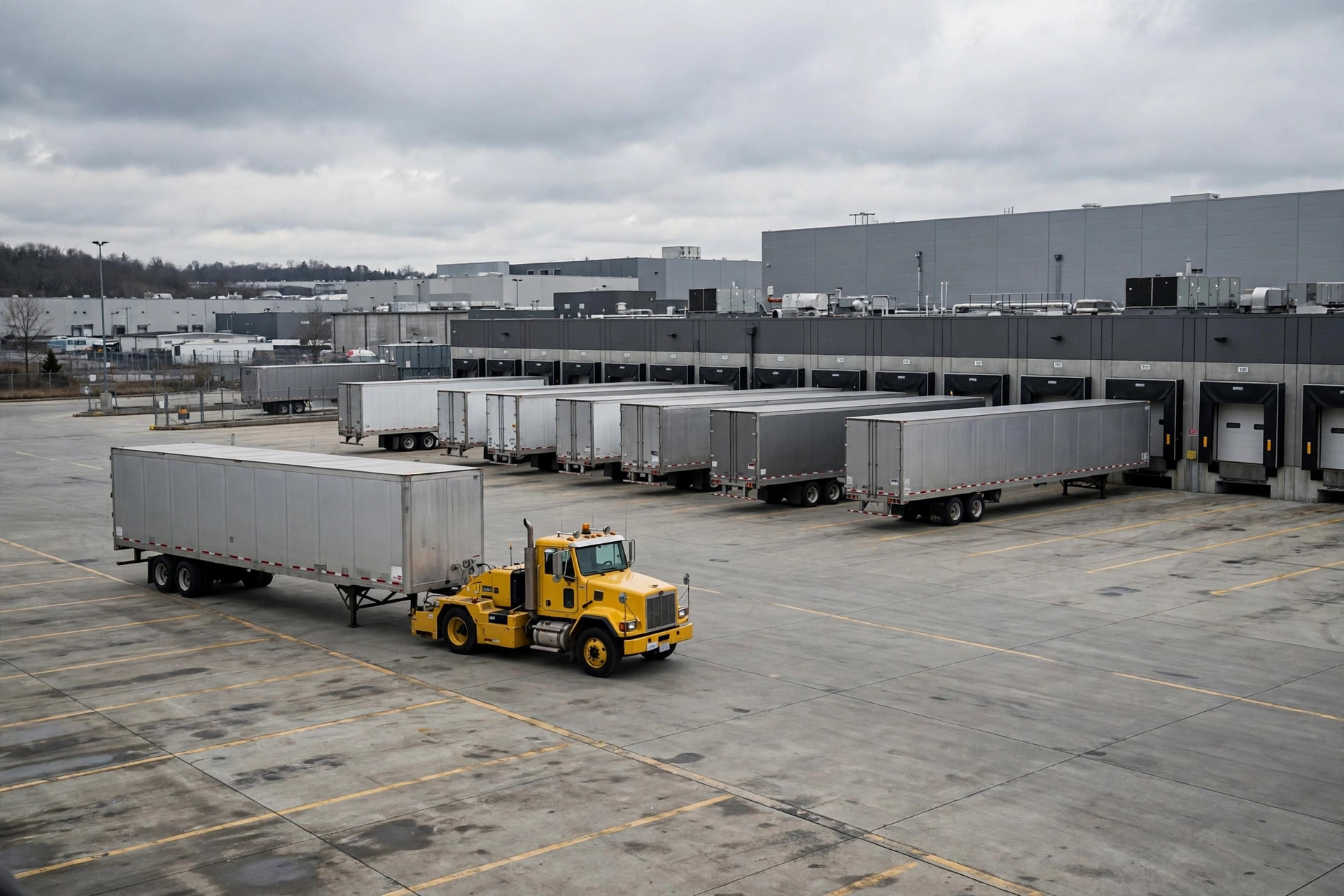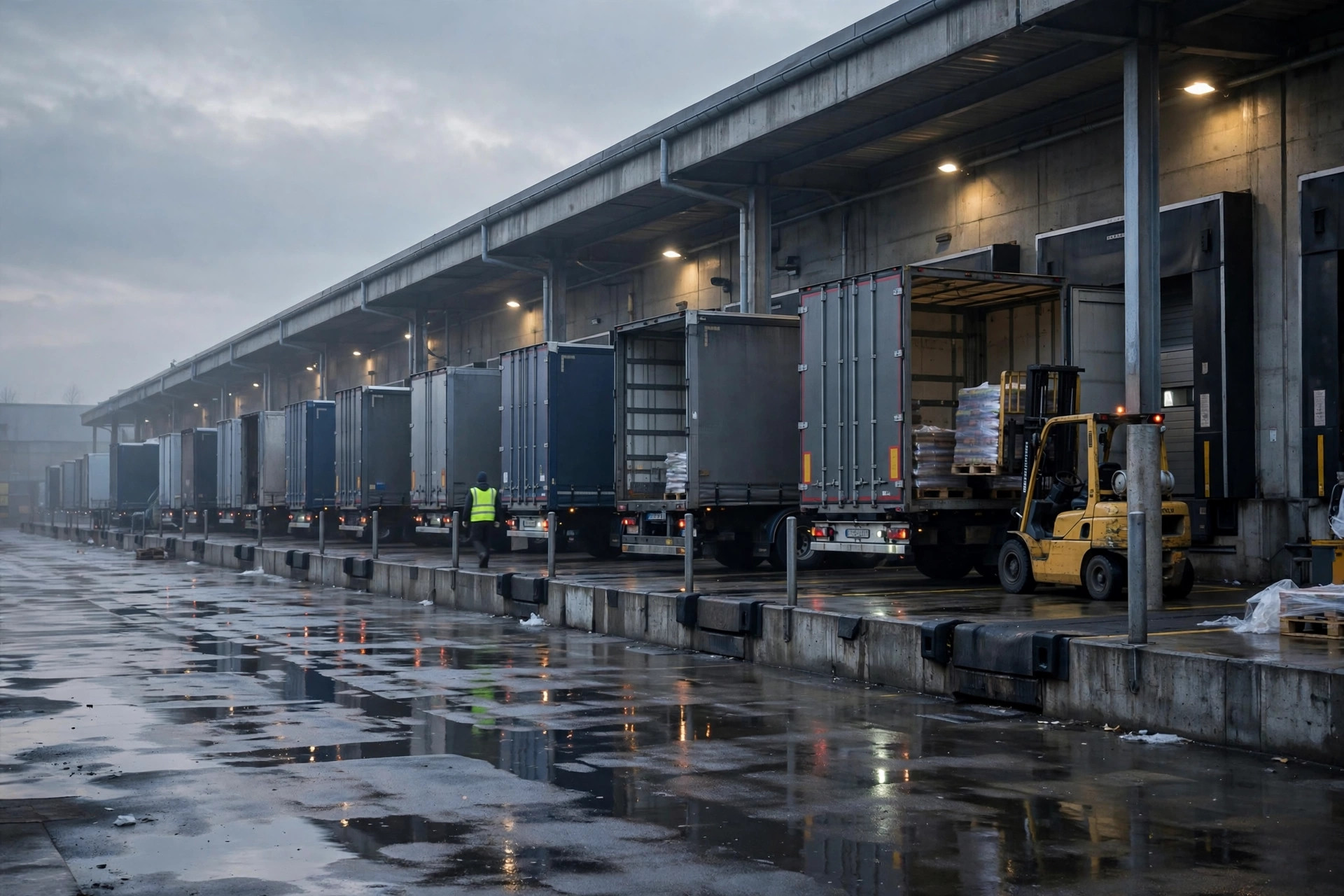
At 6:40 in the morning I was out on the dock counting trucks. The ninth inbound trailer had just backed into Door 3, four more were still stacked up outside the gate, and drivers were standing next to their cabs stomping their feet against the cold. I turned around — the six shipping doors were dead quiet, shutters not even up yet. The outbound crew doesn't clock in until 8.
Look, if you run a warehouse, you've lived this exact scene. Inbound trucks pile up in the morning, outbound trucks pile up in the afternoon, and between them sits a row of dock doors that each "know their place." Receiving doors do receiving. Shipping doors do shipping. Nobody touches anybody else's doors. Sounds disciplined. It's just waste.
Our building has 14 doors. Years ago we split them the classic way: 8 receiving, 6 shipping. Come peak season, 7 to 10 in the morning, all 8 receiving doors jammed full with trucks still waiting outside — while 5 of the 6 shipping doors sat empty. Afternoon flipped it around: outbound trailers lined up one after another, and the receiving side was so empty you could play badminton out there. I ran the numbers on it. I'll get to those.
How did we end up here? Honestly, because it was easy when the building was designed. The blueprint said receiving on the left, shipping on the right. Clean. Nobody had to think. But business doesn't follow blueprints — truck traffic has tides. Supplier trucks flood in during the morning, customer trucks roll out in the afternoon. That's just how it works. Fixing doors to one job means you're betting half your dock on the other half standing idle.
Our first idea was the dumb one: add more doors. We talked to the landlord about cutting 4 more. The quote killed it fast — construction plus equipment, tens of thousands of dollars per door. Four doors would have eaten my bonus budget for a year. And the idle problem wouldn't have gone away, it just would have been spread across more doors.
So we flipped the thinking: we didn't need more doors, we needed faster switching. Tidal door allocation. It comes down to three things: switch each door's job by time of day, re-zone the dock with cones and movable signs, and run a shift-handoff checklist.
The Doors Are Fixed. The Signs Aren't.
First, the switching schedule. Here's how our building runs now: 6 AM to 11 AM, 12 doors do receiving. Two doors stay untouched — fire access and returns only, nobody lays a finger on them. 11 AM to 2 PM is the crossover: either direction, first come first served, shift lead on the floor watching it. After 2 PM, 10 doors flip to shipping, 4 stay for straggler inbound and returns. We didn't guess those times. We pulled three months of arrival records, counted trucks by hour, and the peaks jumped right off the page.
Second, the zoning. Doors are fixed, signs are movable. We bought a batch of traffic cones and double-sided rolling signs — one side says "RECEIVING," the other "SHIPPING." Every day at switch time, two people, 20 minutes, cones and signs go out. Total cost? Cones plus signs, under two thousand dollars, one time. That's less than what one truck costs you sitting at the gate for a few days — drivers charge detention when they get tired of waiting, and every warehouse manager knows it.

Third, the handoff checklist. This is the most important part, and the easiest to laugh off. Switching isn't just cones on the floor. Outgoing and incoming shifts go through five items on a whiteboard: which doors flipped, whether door status in the WMS got updated, any trucks not finished unloading, where the problem trucks are (bad paperwork, damaged load), and whether the driver group chat got notified. The WMS door status has to match reality. If the system sends a forklift to a door that's "shipping" on paper but closed in real life, that's a wasted trip. We learned that the hard way in week one. Now the shift lead clicks through every door in the WMS after a switch, then walks the floor, and the switch isn't done until both agree.
The Counterintuitive Part: More Doors Won't Save You
Here's my contrarian take: dock doors aren't like parking spaces. More isn't better. Faster switching is better. After we went tidal on 14 doors, average morning wait time dropped from over 40 minutes to about 10, and all-day door utilization went from under half to over 70 percent. If we'd added those 4 doors instead, we'd have 18 fixed doors running at 50 percent utilization and a pile of money gone. Dock doors are the most expensive real estate in the warehouse — construction, equipment, maintenance, every year. Before you add doors, learn to switch fast.
There's a real trade-off though, and I won't sugarcoat it: the more you switch, the easier it is to get chaotic. Drivers backing into the wrong door, forklifts and trucks fighting for the same lane — these risks are real. So we switch exactly twice a day, at fixed times, no "we'll see how it goes" freelancing. Fixed times matter because drivers learn the rhythm. Morning arrivals know where to queue, afternoon arrivals know where to wait. Switch three times today and five times tomorrow, and the first people yelling at you will be the trucking companies.
A true story from last peak season. One Tuesday, the system showed afternoon outbound about to blow up, so we moved the switch from 2 PM up to 12:30. Then at noon, three unscheduled inbound trucks rolled in with nowhere to go. They sat outside for nearly an hour, and one driver called our boss directly to complain. After that we made a rule: switch times can move earlier, but only with one hour's notice in the driver group chat — and two doors never flip, ever, reserved for exactly these walk-ins. Emergency doors look like waste on a normal day. On a bad day they save your life.
Let's Do the Math
These are our actual numbers, measured, not made up:
| Fixed zones (before) | Tidal schedule (now) | |
|---|---|---|
| Total dock doors | 14 | 14 (added zero) |
| Receiving doors available at morning peak (7–10 AM) | 8 | 12 |
| Average morning truck wait | 40+ minutes | About 10 minutes |
| All-day average door utilization | Under 50% | Over 70% |
| One-time investment | — | Cones + signs, under $2,000 |
| Quote for adding 4 doors | Tens of thousands per door | Never spent it |
Do the math yourself. Two thousand dollars versus hundreds of thousands, for roughly the same result.
One last thing for anyone thinking about trying this. Tidal allocation isn't hard to understand — it's hard to execute. Three things, one more time: first, pull your last three months of truck arrivals, count by hour, set your switch times where the peaks are, don't guess; second, always keep emergency doors in reserve, don't get greedy over one or two doors of utilization; third, WMS door status and the actual floor must match, every single door — make the shift lead own it, and hold them to it.
You've got a fixed number of doors and a growing number of trucks. Instead of wishing for more doors, get good at switching. That's how our building runs now. Worth a try in yours.
By Chen Feng, Warehouse Operations Manager