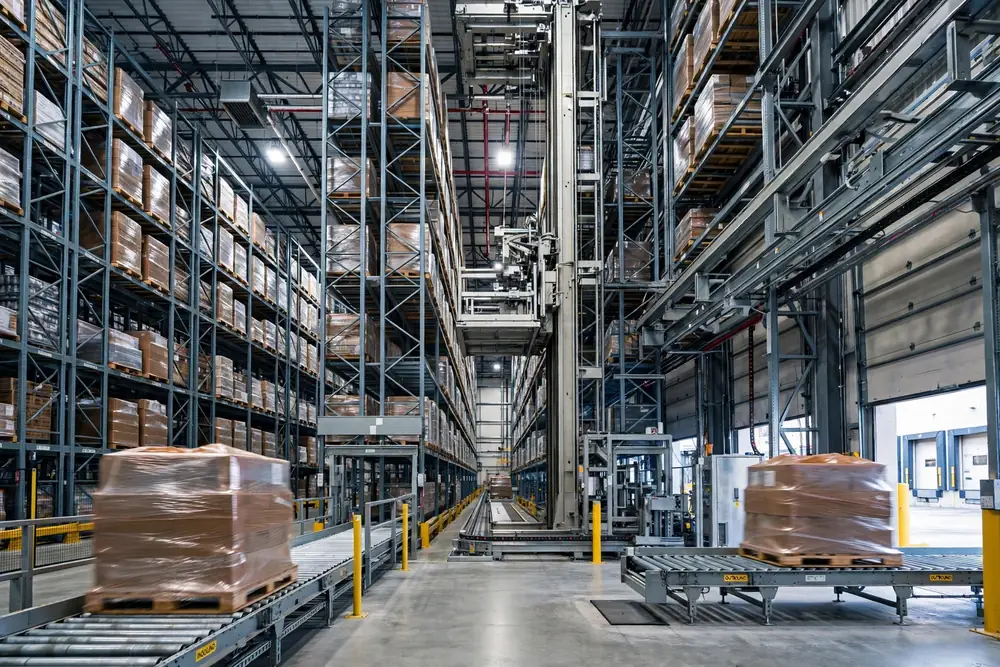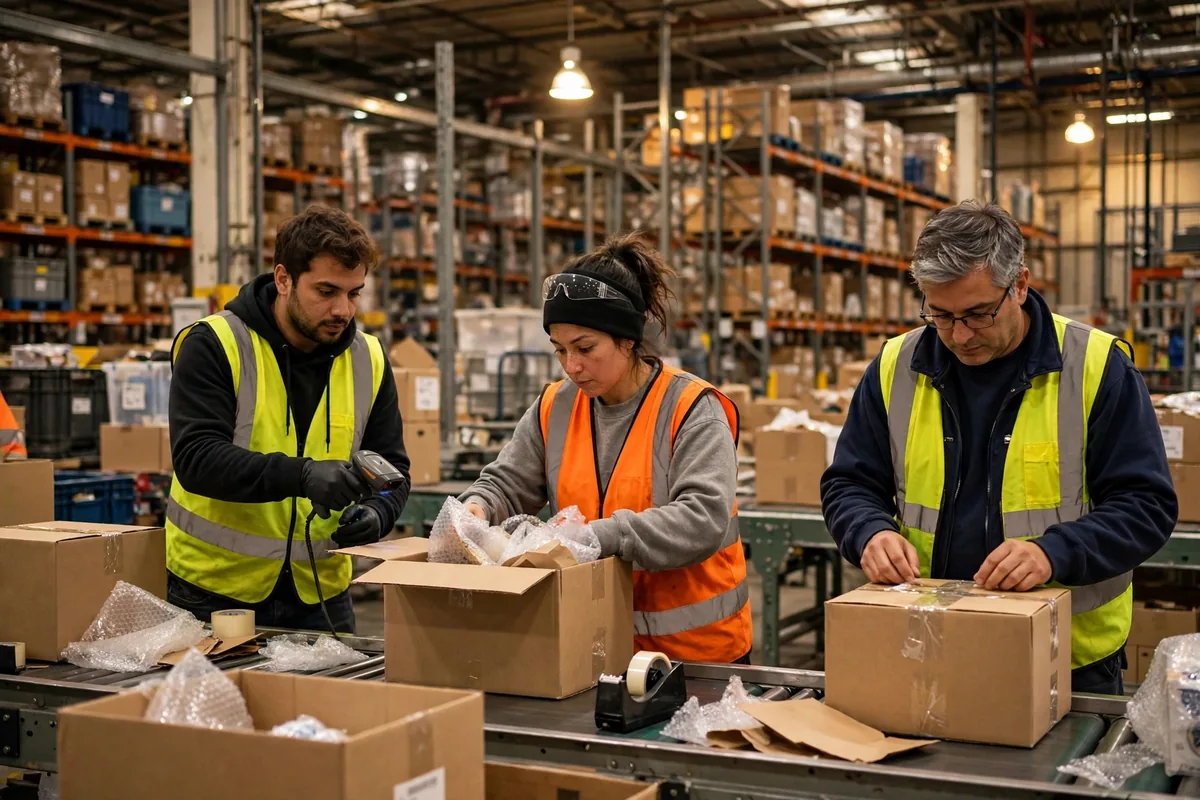
It's 6:50 in the morning. The lights are all on in the pick zone, the forklifts are just rolling out of the charging area, and the air still has that cold the night shift left behind. I stand in front of the whiteboard and clap twice. "Guys, gather round. Ten minutes, then we start." That is the warehouse daily huddle — ten minutes, standing up, every shift.
I've said that sentence for almost ten years. Let me be straight with you: a warehouse daily huddle done right is the cheapest management habit on the floor. Done wrong, it's ten minutes wasted every single morning, right on schedule. Here's how we do it in our warehouse now: everybody stands, in front of the whiteboard, ten minutes, every shift, no exceptions. No chairs. Nobody sits down to listen. There's research behind that, too — a 1999 study in the Journal of Applied Psychology found standing meetings ran about a third shorter than seated ones, with no drop in decision quality. Sounds academic. The real reason is simpler: once people sit down, they start chatting.
Three ways a warehouse daily huddle goes sideways
The first one is the boss speech. The supervisor reads from a notebook while the crew stands there and listens. Nobody remembers a word of it. They're already thinking about the orders in their hands. You talk, they think about freight.
The second one is the numbers readout. Yesterday we shipped this many orders, today we have that many. That's not a meeting, that's reading a screen. The numbers are already written on the whiteboard. Anyone can read them.
The third one is the worst: the meeting turns into a problem-solving session. Somebody raises an issue, the supervisor tries to fix it on the spot, and ten minutes becomes forty. The orders haven't moved, and morale is already gone. The deeper the discussion goes, the more people gather around, and before you know it the loudest voice wins.
We used to do all three. The fix came down to one rule: a huddle does three things only — align, remind, assign. Problems get solved after the meeting, with the people involved. I taped that rule to the edge of the whiteboard, and I cut people off when they run long. Cutting someone off isn't polite. A forty-minute huddle is worse.
Ten minutes, four things: our daily huddle agenda
Minute one: safety. Did anyone get hurt yesterday, did anyone almost get hurt, and which zone needs extra care today? This part can't be skipped, but it can't turn into a lecture either. Keep it to the point. If something serious happened, talk about it after the huddle. I usually just ask one question: "Anyone have a near miss yesterday? Raise a hand." When a hand goes up, the whole crew listens. That beats reading ten safety rules out loud.
Minutes two to four: yesterday's exceptions. How many orders got picked wrong, which line jammed, which carrier showed up late. Facts only, no naming and shaming. To be honest, exceptions are the thing people most want to hide, and hiding one for a day means two days of rework. A mispick talked about today gets the location label fixed today. Left until next week, the same batch of orders keeps going out wrong.
Minutes five to seven: today's priorities. How many orders, which ones are rush orders for key customers, which ones have to go out before the carrier cutoff, who's off sick and who's covering. Say the names of the priority orders out loud. When your name gets called with an order, you know that order is yours. The people whose names weren't called know not to waste the morning on the low-priority stuff.
The last three minutes: assignments and confirmation. Who's on replenishment, who's on check, are the forklifts charged, do we have enough consumables? Then I ask one question: "Anyone not sure what they're doing today?" No hands, we're done. If a hand goes up, that person stays behind for two minutes. Nobody else has to wait.
The handover board that keeps nights and days connected
The huddle gets the day shift started. What about the night shift? We learned that one the hard way.
Last peak season, around 11 at night, the night crew picked a batch of promo orders, and one hot item was down to its last few dozen units in its slot. The night supervisor dropped a message in the group chat and went home. Nobody on the day shift scrolled back through the chat the next morning. They kept picking against the orders until they hit an empty slot. Then it was emergency transfers, order changes, and calls with customer service — half a shift's worth of people burned on one morning. That day I learned something: a handover can't live in a group chat. A chat message scrolls away and it's gone.
Now there's a handover board hanging by our warehouse entrance, with three columns: what nights leave for days, what days leave for nights, and what's still open. Before the night supervisor clocks out, they have to write three lines on that board: what's left over, which slot is about to run dry, and which order has a problem. The first thing the day-shift huddle does is read those three lines out loud. Three lines is enough. More than that, nobody reads it. The board hangs on the path everyone has to walk. Nobody can dodge it.
One more thing people miss: the night shift needs its own huddle, too. Nights are a small crew, and it's tempting to skip it — five or six people, what's the point? But nights are when things go wrong with nobody watching. A machine breaks at 2 a.m., the system freezes, and everything takes longer to fix. A two-minute huddle tells the night crew one thing: you're not the forgotten shift.
New hires get something out of the huddle, too. On their first three days, standing in that circle is how they learn who's who. Who's the lead, who runs check, who do you ask about the forklift — one huddle and the faces match the names. Our old rule is that after the huddle on a new hire's first day, the lead walks them around the aisles, shows them the routes, introduces them to people. Onboarding can't be left to HR alone; you remember people you meet on the floor. Plenty of new hires quit in the first week, and it's usually not because the work is hard. It's because nobody talked to them and they didn't know who to ask.
The math: is ten minutes actually worth it?
Here's the math, and I'll be clear about what it is: an illustrative example, using our warehouse's headcount to show the shape of it, not industry statistics. Day shift is 40 people. Ten minutes of huddle is 400 person-minutes a day, roughly six to seven hours of labor. Sounds like a lot. Now flip it around. If the huddle stops just 20 rework orders a day, and each rework takes 15 minutes, that's five hours saved. And that doesn't count mis-shipments, refunds, or the customer complaints you never see on a spreadsheet.
To be honest, the real value of a warehouse daily huddle isn't in the ten minutes. It's that problems surface half a day earlier. A problem you find in the morning can be fixed by lunch. A problem you find in the afternoon means overtime at night. Same stockout: found in the morning, it's a transfer. Found in the afternoon, it's overtime.
Here's the counterintuitive part: the shorter the huddle, the more you have to do it every day. People think skipping it once on a quiet day is no big deal. I tried that. Skip once, and the second time somebody asks, "Are we doing it today?" Skip three times, and the habit is dead. A ten-minute meeting doesn't run on content. It runs on rhythm. Break the rhythm and people drift off.
So here's my reminder to anyone running a floor: don't treat the huddle like a meeting. Treat it like the first action of the day, the same as walking around the forklift before you start it. Once the action is fixed, nobody has to think about it. They just do it. Tomorrow morning at 6:50, stand in front of your whiteboard and try it. Clap twice. Say, "Guys, gather round." Give it a month, and you'll know exactly what those ten minutes are worth.
By Chen Feng, Warehouse Operations Manager