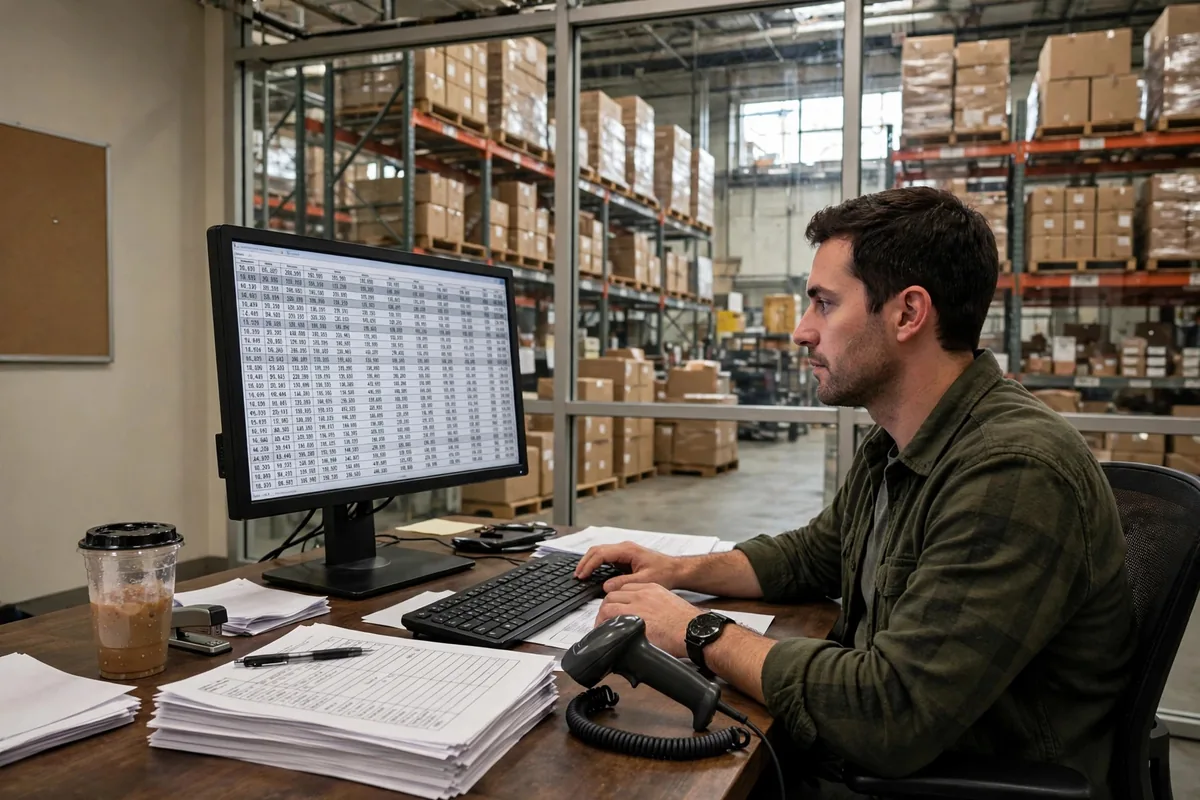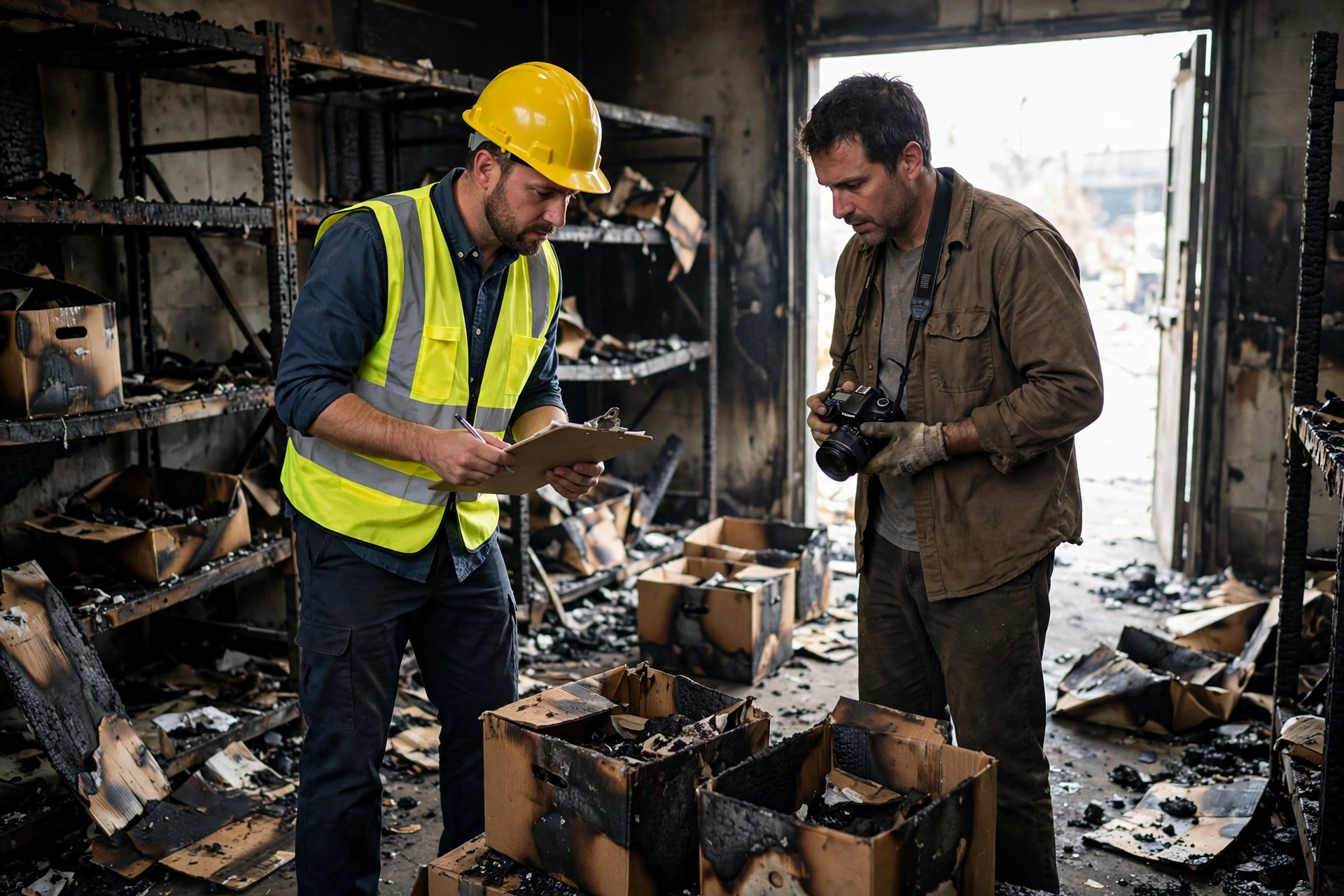
A ransomware attack on a warehouse management system is now a warehouse cyber insurance question as much as an IT department topic: can the warehouse still open its doors at all? In the past, a warehouse stopped for familiar reasons: broken equipment, a power cut, or too few hands on the floor. Now there is another one. The system is locked. Pickers arrive and the scanners return nothing, the printers produce no labels, trucks wait at the gate, and shippers start calling one after another — while the problem sits in none of those places, but in an encrypted server. That is the question warehouse cyber insurance has to answer: when the brain of the warehouse is locked, who pays the bill?
According to IBM's Cost of a Data Breach Report 2025, the global average cost of a data breach was $4.44 million, while the average cost in the United States reached a record $10.22 million. Ransomware and extortion incidents disclosed by an attacker averaged $5.08 million. The same report found that 63 percent of victim organizations refused to pay a ransom, up from 59 percent the year before. These figures are averages across many industries, not warehouse-specific statistics, but they point in a clear direction: the bill for a ransomware incident was never just the ransom. Downtime, recovery, legal costs, and reputational damage, added together, are the larger part.
What warehouse cyber insurance covers, and what it does not
The conclusion first: cyber insurance is not a policy that covers everything. It is a contract that lists, item by item, what is covered, what is not, how much is paid, and how long you wait. The coverage typically falls into two towers. The first is first-party loss: ransomware and extortion costs, lost gross profit while systems are down, data restoration and forensic investigation, and the cost of notifying customers and dealing with regulators. The second is third-party liability: claims from customers whose shipments stopped, and lawsuits and settlements arising from a data breach. The scope varies widely between policies, and the same insurer can offer very different terms to warehouses of different sizes.
The exclusions are where the misunderstandings live. The table below follows common industry practice. For the exact terms, follow the policy wording and the latest official policy.
| Category | Usually covered | Usually excluded or sub-limited |
|---|---|---|
| Ransomware and extortion | Negotiation fees, ransom where compliant | Payments that breach sanctions, amounts above the sub-limit |
| Business interruption | Lost gross profit after the waiting period, within the indemnity period | Losses inside the waiting period, losses beyond the indemnity period |
| Data restoration | Forensics, system rebuilding, data recovery | System upgrades that should have been done anyway |
| Third-party claims | Customer claims, notification and legal costs | Regulatory fines (restricted in some jurisdictions), reputational loss |
| Supplier events | Contingent interruption from a named supplier event | Unnamed suppliers, cloud outages outside the agreed scope |
One detail is easy to miss: business interruption cover usually starts after a waiting period. Common industry practice puts that period at several hours to a dozen or so hours, and the losses inside it are yours to carry. The indemnity period is also limited. A system down for three days is not necessarily paid for three days. Before buying, ask about three numbers first — the waiting period, the indemnity period, and the sub-limits — before asking about the premium.
The downtime bill is bigger than the ransom
Consider a hypothetical scenario, included to show the structure of the costs. The figures are a hypothetical example for illustration only. A mid-size third-party logistics provider handles about 3,000 orders a day. Its system is encrypted on a Friday evening, and on Monday morning the team discovers the backups were affected too. The warehouse is down for three full days. The ransom negotiation is one line on the bill, but three larger lines sit behind it. First, the gross profit on orders that cannot ship, accumulating day by day. Second, an outside incident-response team, billed by the hour, to investigate and rebuild. Third, customer claims for late shipments, and in the worst cases, lost contracts. Added together, these often run several times the ransom itself. That is one reason the average ransomware incident in IBM's 2025 report reached $5.08 million: the ransom is a single line, and downtime is the whole invoice.
A second hypothetical scenario looks at the problem from a different angle: nothing in the warehouse itself is attacked. Instead, the cloud provider that hosts its WMS, or a key electronic data interchange partner, goes down. Orders cannot come in or go out, and the warehouse stops just the same. In a policy, this usually maps to contingent business interruption cover, but it has to be agreed separately, and a standard policy may not include it. If your operation depends heavily on one cloud provider or one systems vendor, ask directly at the time of purchase: is downtime caused by a supplier event covered?
Before you buy, the insurer scores you first
According to publicly documented industry practice, an insurer will usually ask for a detailed application before underwriting: is multi-factor authentication in place, are endpoint detection and response tools running, how often are backups taken, can backups be restored offline, have restore tests been performed, and how is vendor access controlled? These are not formalities. They decide the premium, the limit, and sometimes whether cover is offered at all. A warehouse with its controls in order pays materially less. Just as important, the answers on the application carry legal weight. Inaccurate answers can put a claim at risk. Follow the policy wording and the latest official policy for the exact position.
That leads to a counterintuitive conclusion. The most valuable part of warehouse cyber insurance is not the ransom payment. It is the cover for downtime and for the people who rebuild the system. And buying insurance does not make a warehouse safer. On the contrary, insurers are willing to cover warehouses that are already relatively safe. In other words, the policy is not a substitute for security measures. It is a reward for having them. Whether backups exist, whether restore tests have been run, whether access is controlled — these look like costs in normal times, and after an incident they decide how much you recover and how fast you come back.
What, then, should a warehouse do before buying? In order of priority, the common industry practice runs like this. First, make backups restorable offline, test the restore regularly, and keep a written record of the test results. Second, put multi-factor authentication and tiered access in place, especially for vendor and remote-access accounts. Third, write down a recovery time objective and a recovery point objective, and get the business and the technical teams to agree on the same numbers. Only then take that list to the insurance negotiation, and check the waiting period, the indemnity period, the sub-limits, and the exclusions one by one. The order cannot be reversed. Buying the policy first and fixing security afterward leaves no bargaining power at the table.
How much warehouse cyber risk can one policy hold?
Return to the original question: when a WMS is hit, what does the policy actually pay? The answer depends on three things: what the policy wording says, what the warehouse's security measures were before the incident, and what evidence the downtime left behind. System logs, backup records, and test reports look unremarkable in normal times. At claim time, they are the evidence that matters. A loss with no evidence chain is hard for an insurer to recognize.
There is a broader shift worth watching. As more warehouses run their core systems in the cloud, risk is moving from the company's own server room to its suppliers and platforms, and policy coverage is moving with it. Contingent interruption, cloud outages, and supply-chain events will matter more in the wording, while premiums and underwriting conditions continue to move, and past price trends are no guide to the future. Follow the policy wording and the latest official policy for the exact position.
So what should warehouse cyber insurance be understood as? It is a contract that transfers part of the risk, not a line of defense. It can share part of the bill after an incident, but it cannot replace backups, restore tests, and access control. The question a warehouse manager should really ask is not how much the policy pays, but this: if the system will not open tomorrow morning, can my warehouse still ship today's orders with paper and pen? No policy can answer that. Only the preparation done beforehand can.
By Dr. Chen, Supply Chain Researcher