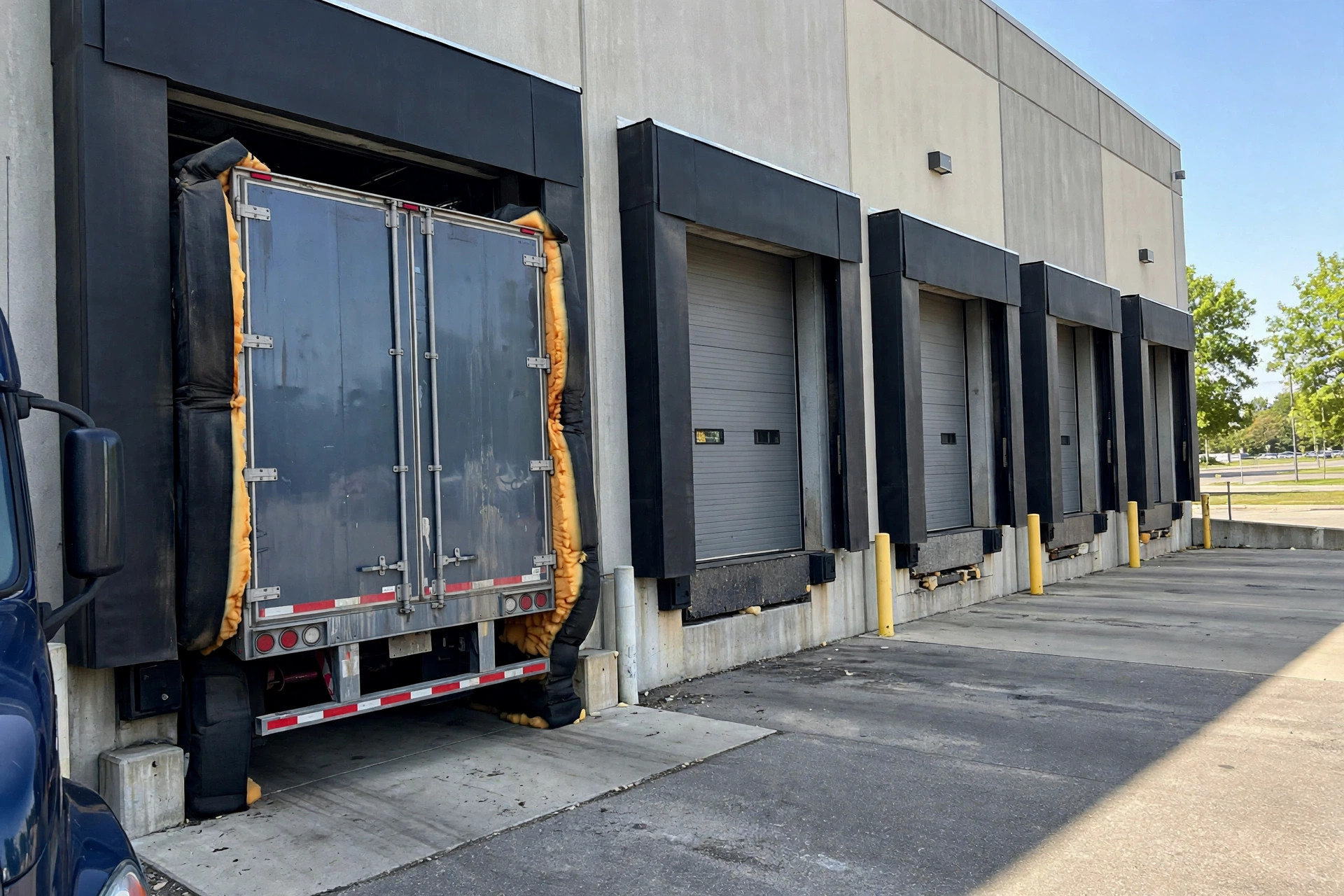
Let me tell you where I learned about warehouse blind cycle count accuracy. Not in an office. I learned it sitting in my cab at a loading dock, engine off, watching a warehouse count the very location they were supposed to receive my load into. Fifteen years on the road teaches you one thing fast: a delivery is only as smooth as the count at the dock. That day, the young counter had the count sheet in his hand with the book quantity printed right on it. He counted, glanced at the sheet, counted a bit more, and announced a number that matched the printout exactly. I laughed out loud. That was not counting. That was copying an answer key.
What the Road Taught Me About Blind Counting
A few months later I waited at a different warehouse, and they did it the opposite way. The counter walked into the location with a sheet that showed the location code and the product name, and nothing else. No book quantity. He counted what was physically there, wrote it down, sealed the sheet, and only then did the office compare his number against the system. It took longer. Nobody pretended otherwise. But when the variances came out, the supervisor walked the floor with the difference list and could explain every single one: a receiving error here, a pick from the wrong row there. Watching that, I understood warehouse blind cycle count accuracy is not a talent. It is a sequence, and the sequence starts with hiding the answer.
Human nature is the whole problem. Show a person a target number and their counting drifts toward it. At eighty-three cartons, with the sheet whispering eighty-six, the last few cartons get counted generously. I have done the same thing tallying pallets on my own trailer, so I do not blame anyone. A blind count simply removes the temptation. The counter reports reality, and reality is the only thing worth comparing.
The Blind Count Routine: Accuracy From Sequence
The routine I have seen work has four steps, and the order matters more than any of them. First, freeze the location in the system while it is counted, so stock is not moving in and out mid-count. Second, issue the count task with the book quantity hidden; the counter records full cases by case pack and counts loose pieces one by one, and the number is locked once submitted, with any correction leaving a visible trail. Third, compare only after the count is submitted, and treat every variance as a question, not as an adjustment waiting for a signature. Fourth, review each variance to its root cause in receiving, putaway, or picking, ideally by someone other than the counter, and recount stubborn locations with a second person counting blind again.
Here is a hypothetical example, with invented figures for illustration only, not industry statistics. Imagine a mid-size warehouse with 3,000 locations that counts 300 locations a month. With open counts, a location takes about four minutes, so the round costs roughly 20 labor hours and reports a tidy 2 percent variance rate. The year-end full count then exposes the truth: about 9 percent of locations were wrong all along, because counters had been nudging their tallies to the book. Switch to blind counting and the same location takes about six minutes, roughly 30 hours a month. The reported variance jumps to 7 percent in the first month, which looks worse and is actually better, because the recount review traces most of it to one receiving lane that chronically miscounts inbound cartons. Fix that lane with two-person receiving counts and the variance falls to about 3 percent the next month, this time honestly earned.
| Comparison (hypothetical example) | Open count | Blind count |
|---|---|---|
| Minutes per location | About 4 | About 6 |
| Monthly labor for 300 locations | About 20 hours | About 30 hours |
| Variance surfaced in the month | About 2%, mostly adjusted away | About 7%, traced to a cause |
| Year-end surprise risk | High | Low |
A second scenario, also illustrative: an auto-parts warehouse where five layers of near-identical filter cartons sit in one location, book quantity 120. An open counter reaches the low one-hundreds, senses he is close, and calls it 120. A blind counter, who has no idea what the book says, counts layer by layer and reports 107. The recount finds the bottom layer is a different part number that receiving mixed in months earlier. Those missing thirteen were never a counting problem. They were a hiding problem, and only a counter with no answer key could expose it.
When Blind Cycle Counts Backfire: Expiry and Lot Control
Now the part vendors of this method skip. Blind counting is the wrong tool, used carelessly, in expiry- and lot-controlled stock. Food, pharmaceuticals, and cosmetics are not just quantities; they are batches, dates, and rotation discipline. If you hide everything and count only pieces, a location can reconcile perfectly on quantity while two lots are quietly mixed and the older lot ships last. For those warehouses, count the quantity blind but keep the lot list visible, or split the job in two passes: a blind quantity count first, then a lot-by-lot verification against the records. Serialized products are similar. With one code per unit, the audit is about whether the right codes are present, not merely how many boxes sit on the shelf.
There is a second backfire I have watched from the dock. If a warehouse is physically chaotic, with one product scattered across four overflow spots and cartons spilling past the location lines, blind counting produces variances nobody can explain, because the root problem is slotting and housekeeping, not counting honesty. Tidy the locations first, one product in one home, then count blind. Otherwise you are grading a test the building itself cannot pass.
My counterintuitive advice, after years of watching both methods: do not blind count everything. Aim the method at high-value, fast-moving, error-prone locations, and use honest open counts or spot checks for slow, cheap consumables. Blanket blind counting burns out the crew, a burned-out crew starts performing the count instead of doing it, and a performed blind count is worse than a sincere open one. And if your monthly variance rate sits near zero, do not celebrate. Real warehouses moving thousands of picks do not achieve perfection; a near-zero rate usually means the counters are still finding the answer key somewhere, maybe from a friendly word in the office. The first honest month of warehouse blind cycle count accuracy will look worse on paper. That ugliness is the method working.
So here is my counsel from the driver's seat. I would rather wait twenty honest minutes at your dock while you count a location properly than come back next month and argue over a receiving dispute built on a padded count. Split the count sheet so the quantity column stays blank until the count is sealed. Hold a fifteen-minute variance review that names processes, not people, because a crew that fears blame will stop reporting true numbers. Post which locations get blind counts and which get open ones, so nobody quietly trades book quantities in the break room. None of this needs new software. It needs a warehouse willing to hear a number it did not script.
An old saying from the road: ledgers fear careful arithmetic, and people fear being serious. Count what your eyes see, not what the system hopes is there. That is the whole trick, and it has worked at every honest dock I have ever backed into.
By Shifu Zhao, Trucking Veteran (15 yrs)