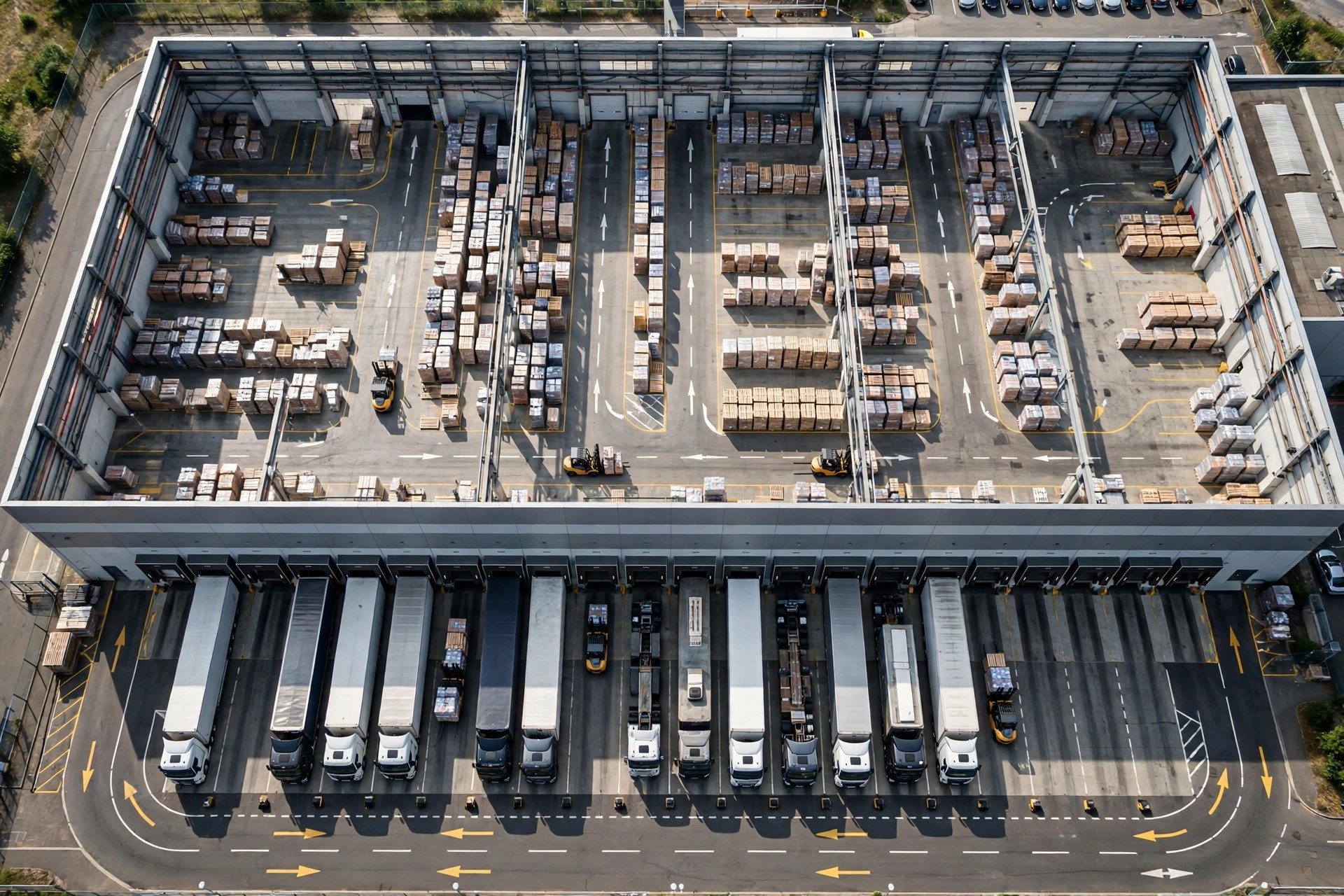
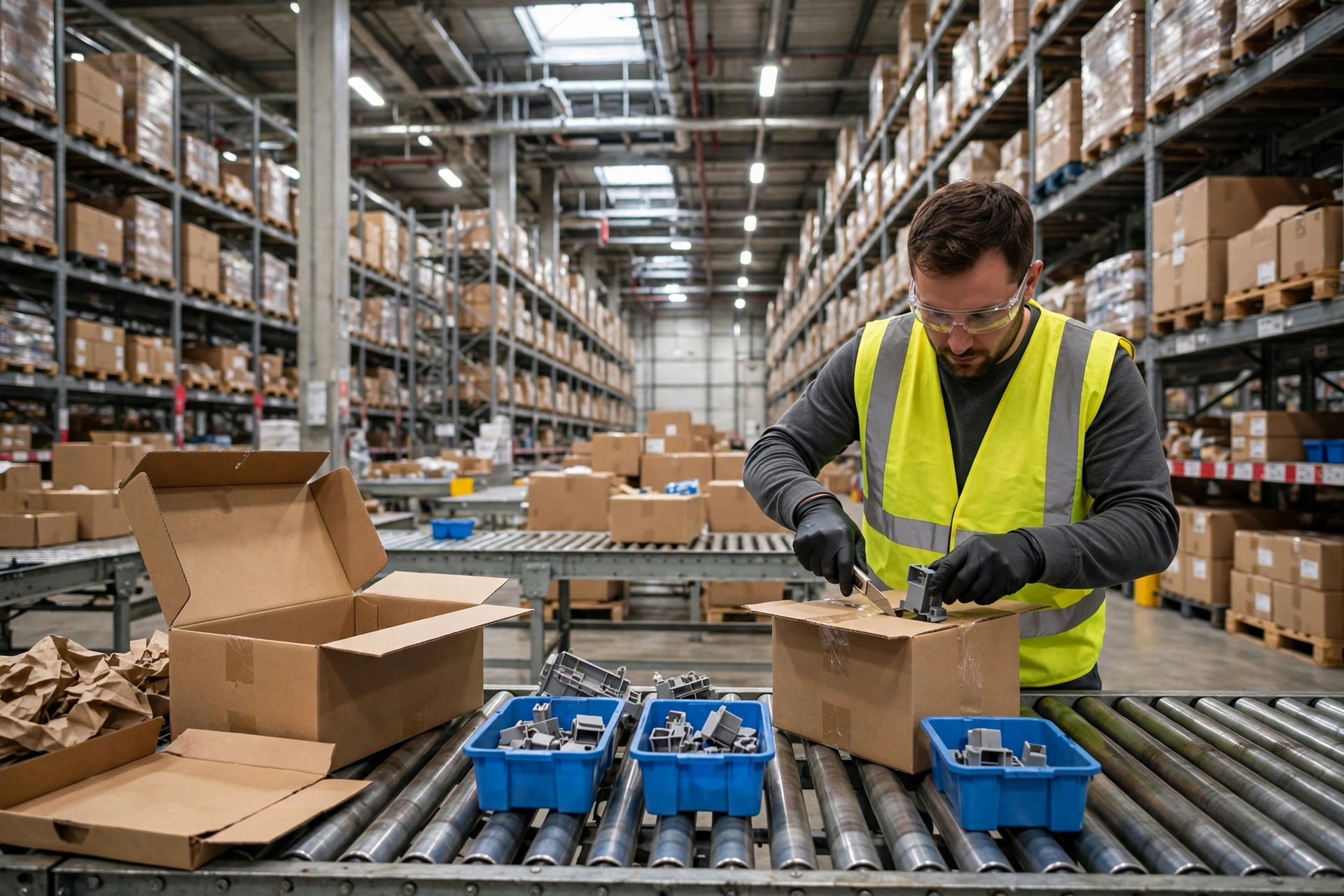
A warehouse aisle marking safety line looks like a painting job: quick, cheap, and easy to postpone until after the equipment arrives and the software goes live. Yet according to field observations published by third-party logistics operators, many of the everyday frictions inside a warehouse — people and forklifts meeting where they should not, pickers taking shortcuts, temporary stock creeping into the aisle — show up on the floor first. Where the lines are unclear, people invent their own explanations. The real value of a line is not how straight it is, but whether a person walking in for the first time can tell within seconds where to walk, where forklifts will come from, and where nothing may ever stop.
Start With the Floor, Not the Paint
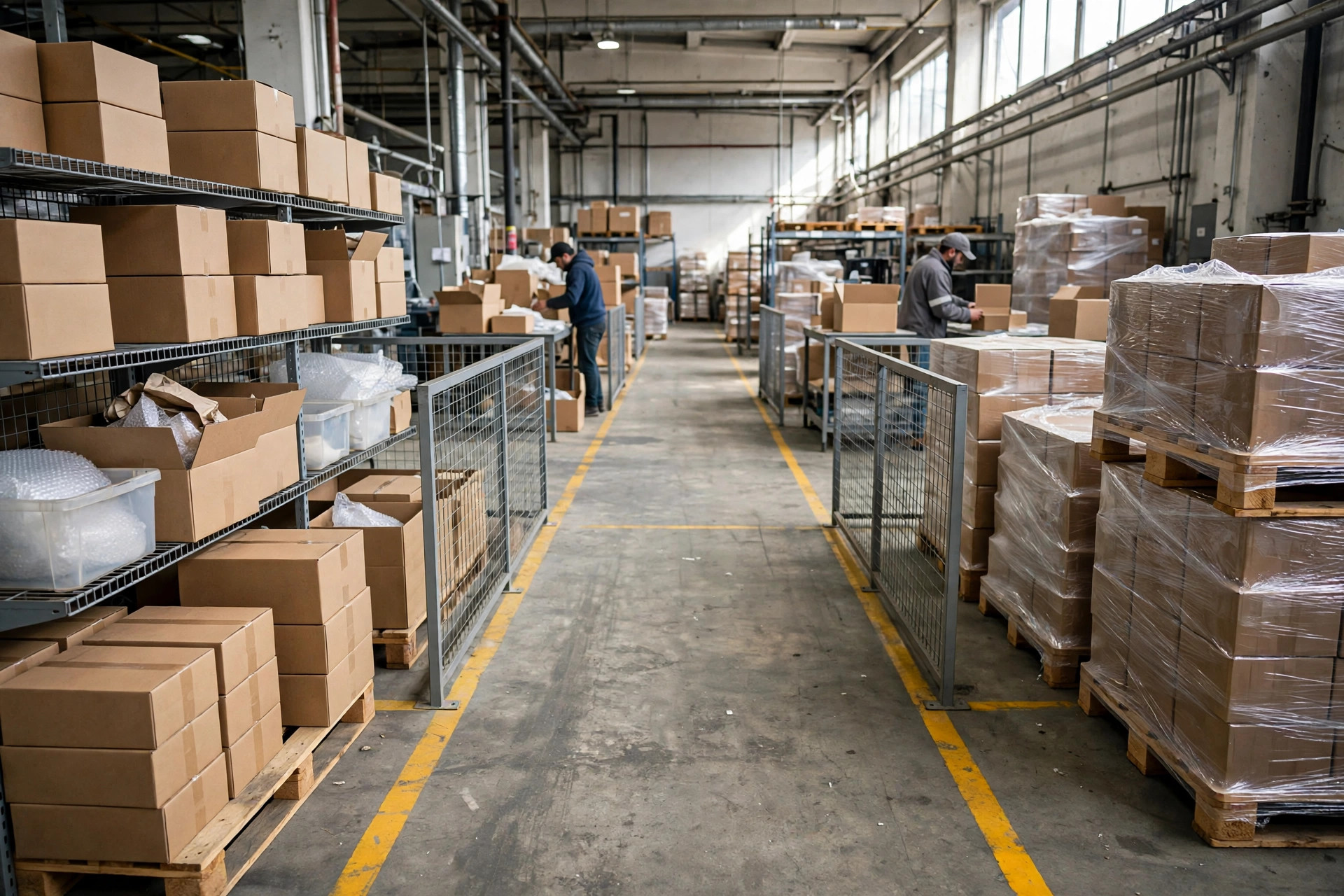
According to common industry observations, warehouse traffic problems are rarely a single accident. They are a slow accumulation of small deviations. A picker cuts diagonally across a forklift aisle to save thirty seconds. A forklift driver brakes hard to avoid a pedestrian. An inbound delivery with no designated staging area ends up stacked at the mouth of an aisle. Each action looks reasonable on its own; together, they turn the aisle into a shared zone where nobody is quite sure who has priority. Good marking solves this confusion of interpretation in advance: it separates walking, driving, parking, and working on the ground itself, so that people do not have to negotiate the rules in real time.
There is a detail here that is easy to miss. The starting point of a marking plan is not paint, but the flow of work. Map the high-frequency routes first: receiving to putaway, storage to picking, picking to checking and packing, packing to loading. Then look at where those routes cross and overlap. The fewer the crossings, the easier the marking. If the routes themselves are tangled, even the brightest paint can only draw the confusion more clearly; it cannot remove it. That is why experienced warehouses usually adjust slotting and work sequences before they repaint. The line is the last stroke, not the first.
Colour, Width, and Why Brighter Is Not Always Safer
When people talk about safety lines, the instinct is often that more colour means more safety. Field interviews and incident reviews suggest that instinct is only half right. Colour does divide space, but once the number of colours exceeds what a person can recognise at a glance, signal turns into noise. A warehouse using five or six colours at once — for walkways, forklift lanes, staging areas, fire lanes, hazardous zones, and inspection areas — forces a new hire to memorise a colour chart before starting work, and the chart itself becomes a burden.
A steadier approach keeps the palette to three or four colours and gives each colour exactly one meaning: one for pedestrian walkways, one for vehicle lanes, one for no-parking areas, and one for fire-related zones. Once chosen, the palette stays consistent across the whole site; it should not change just because a different supervisor takes over a zone. Line width and style follow the same logic of legibility. Main aisles get solid lines, pedestrian edges can use dashed lines to mark a boundary that may be crossed, and temporary areas should be tried first with removable tape before committing to permanent paint. Which colours and widths to use, however, depends on local and industry-specific requirements, so check the latest official policy rather than copying another warehouse's scheme wholesale. A second warehouse aisle marking safety line lesson follows from the same point: a scheme that cannot be read under night-shift lighting has already failed, however good it looks at noon.
Two Warehouses, Two Different Outcomes
In 2023, a home-appliance warehouse in Suzhou repainted its aisles ahead of peak season. Until then, a single yellow line had separated its walkway from its forklift lane, and pickers routinely cut across the forklift lane to reach another rack row. The new layout moved the walkway to the outside of the racking, added physical barriers and floor arrows, and kept clear no-parking zones on both sides of the forklift lane. Over the following three months, the site's internal log of close calls between people and forklifts fell from eleven or twelve a month to two or three, and pickers actually walked shorter distances, because the walkway was now straight instead of winding around temporary stock.
In 2024, a consumer-goods distribution centre in Guangzhou took the opposite route. To squeeze out more storage space, management narrowed the main aisle and let some staging stock press against the inside edge of the yellow line. In the short term, space utilisation rose by about six percentage points. Within two months, however, forklift waiting time at passing points had risen noticeably, and one week saw three scrapes caused by stock intruding into the aisle. The review that followed reached an uncomfortable conclusion: the space saved in the aisle had been paid back in full, in waiting time and incident cost. Once staging was moved back to a dedicated area outside the aisle and the aisle restored to its original width, waiting times returned to normal.
| Dimension | Suzhou: separate flows, then paint | Guangzhou: squeeze the aisle, then repair |
|---|---|---|
| Order of change | Routes sorted first, lines second | Space squeezed first, conflicts handled later |
| People and vehicles | Walkway independent, crossings reduced | Mixed traffic, crossings increased |
| Short-term effect | Shorter walking distances | Utilisation up about six points |
| Following three months | Close calls clearly down | Waiting time up, scrapes occurred |
| Long-term cost | One-off works and brief disruption | Repeated adjustments and incident handling |
The table is not really about which colour is better. It is about decision order. Aisle width and position are hard constraints on how work can flow; storage area is a softer variable that can often be recovered through rack height, slot density, and turnover speed. Trading a hard constraint for a soft variable may look like a win on paper, but the floor usually collects the debt.
After the Paint Dries: Upkeep and a Counterintuitive Trade-Off
Painting the lines is only the beginning. Forklift tyres grind over them daily, pallets drag across them, and oil and cleaning agents fade them. A faded line is more dangerous than no line at all, because it suggests a rule exists while the boundary itself has blurred. A marking plan therefore needs a maintenance routine written into it from the start: who inspects, how often, at what level of wear a line gets repainted, and what temporary marking covers the gap while repainting happens. None of this needs to be elaborate — an inspection sheet and phone photographs are enough — but someone must own it, and someone else must check it.
Here is the counterintuitive trade-off: more lines are not always better. Some warehouses mark every square metre of floor with zones and numbers, until staff standing in a sea of lines cannot tell which line governs them. Blank space is also a signal. An unmarked area can mean do not walk here, do not park here, do not work here — or it can mean space deliberately held back for future layout changes. Writing that purpose into the operating manual, and deliberately leaving some floor unmarked, often helps people remember the rules better than filling the floor completely. Half the craft of marking lies in deciding what not to draw.
Step back a little further, and a warehouse aisle marking safety line becomes a projection of a management philosophy onto the floor. Whether a site will give pedestrians an extra half-metre, hold a patch of floor open for a future change of flow, or spend money repainting a line that has already faded — those choices eventually show up in incident rates, picking efficiency, and whether staff want to stay. Lines will wear out. The question is whether anyone treats that wear as a matter worth acting on, or just walks past it one more time.
By Dr. Chen, Supply Chain Researcher