I'll say it straight: seven out of ten warehouses I've seen get decanting wrong. Either they build a decant station where none is needed — two people burning wages to break down a few dozen cases a day — or they skip one where it's desperately needed, leaving pickers to tear open cases by hand at the pick face, walking back and forth twice per order, and blowing up the whole operation when peak season hits.
Here's my verdict up front: a decant station is not a "nice to have." It's a cost boundary. On one side of the boundary, you move full cases to the pick face and break them open at pick time. On the other side, you decant in advance so pickers just grab and go. Your order volume, SKU count, and order lines decide which side you're on. Build without doing this math and you're spending blind.
What Warehouse Decanting Actually Solves
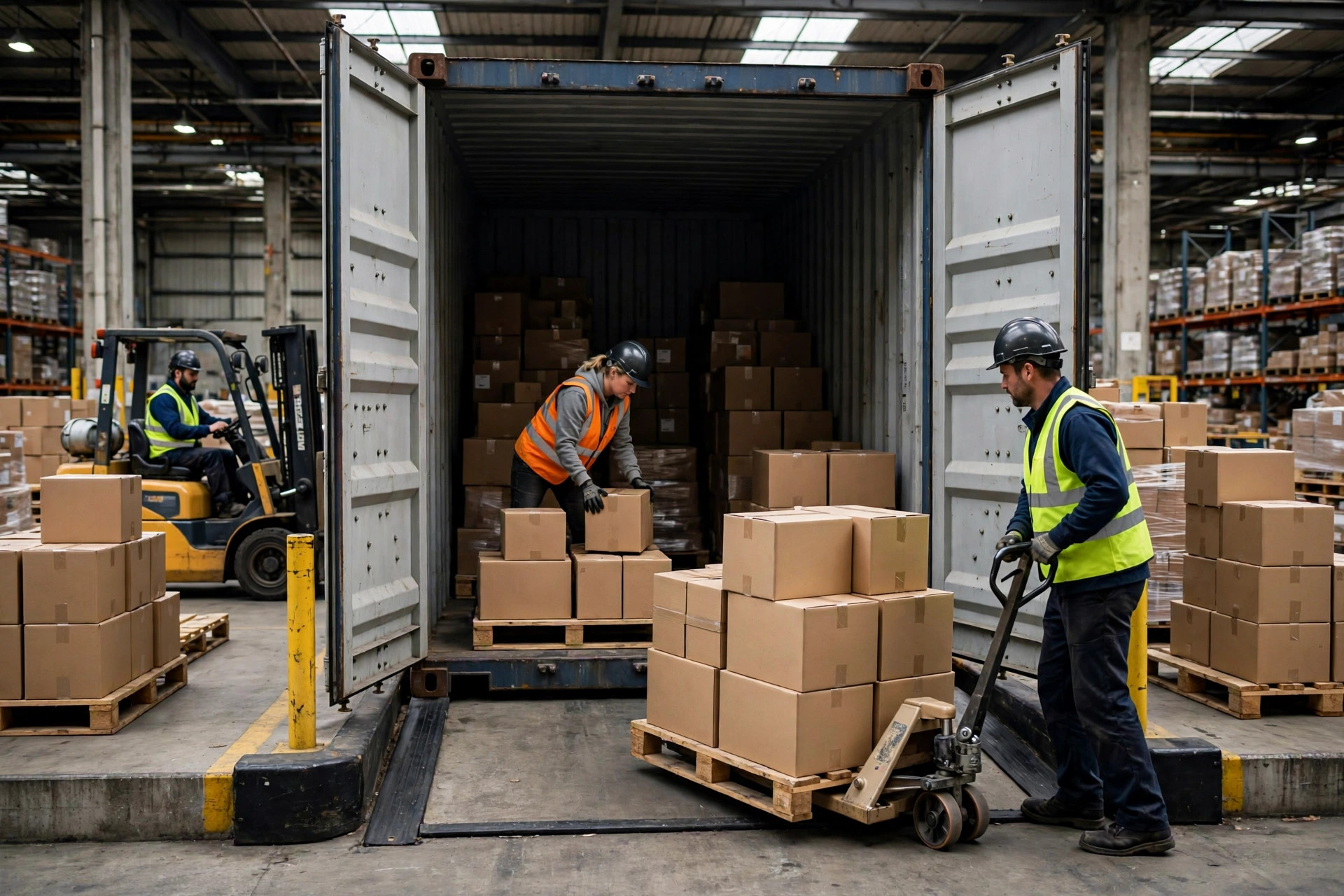
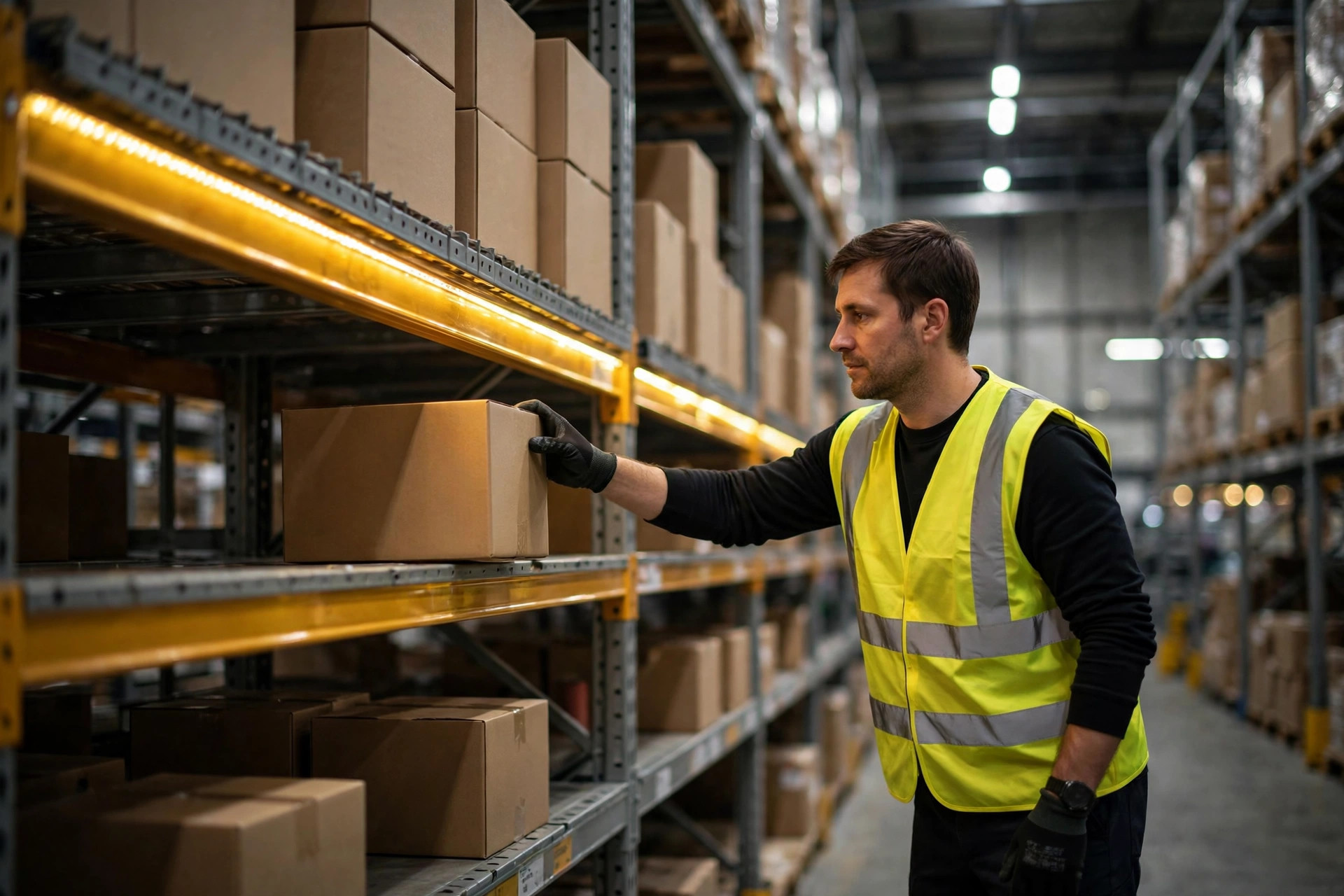
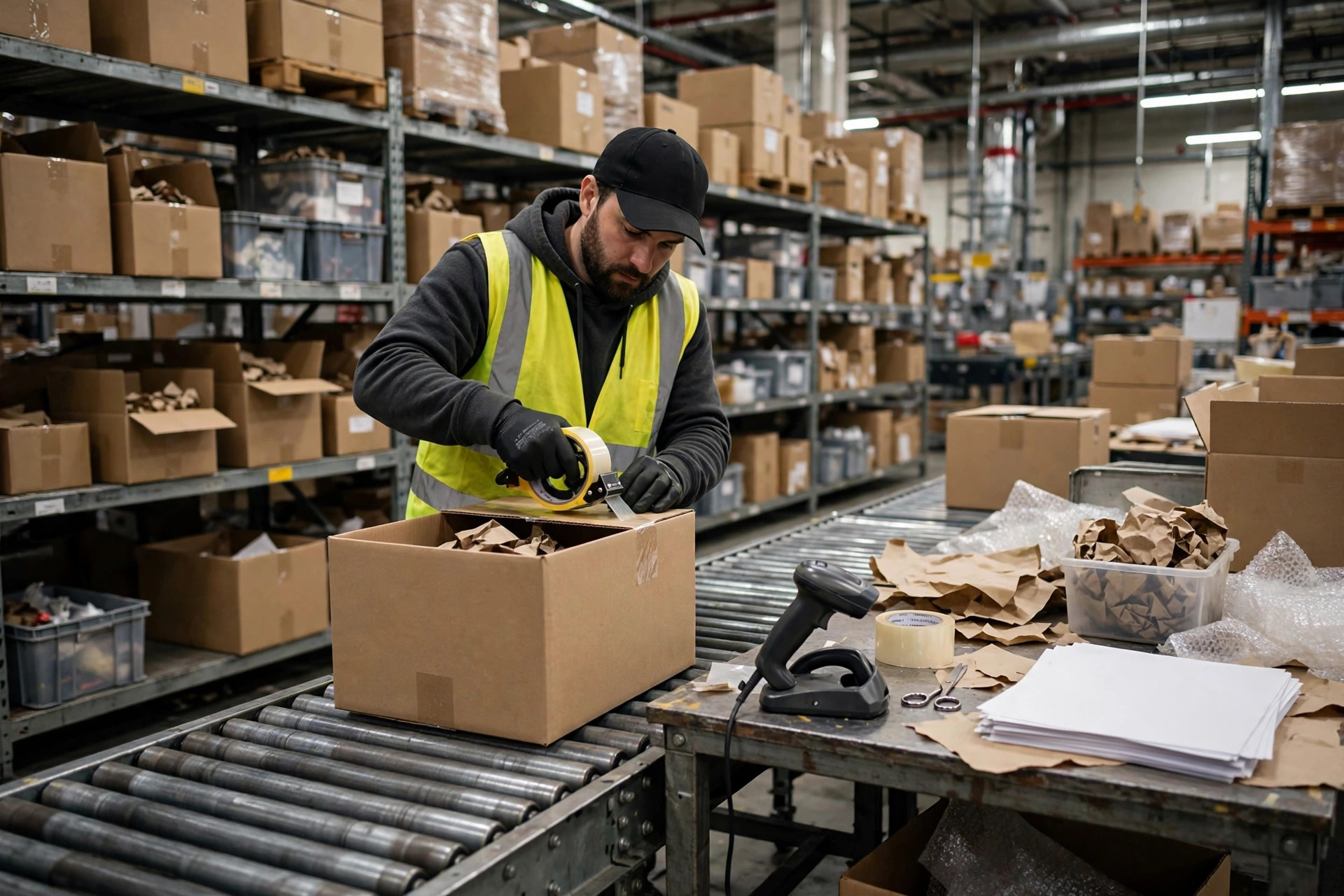
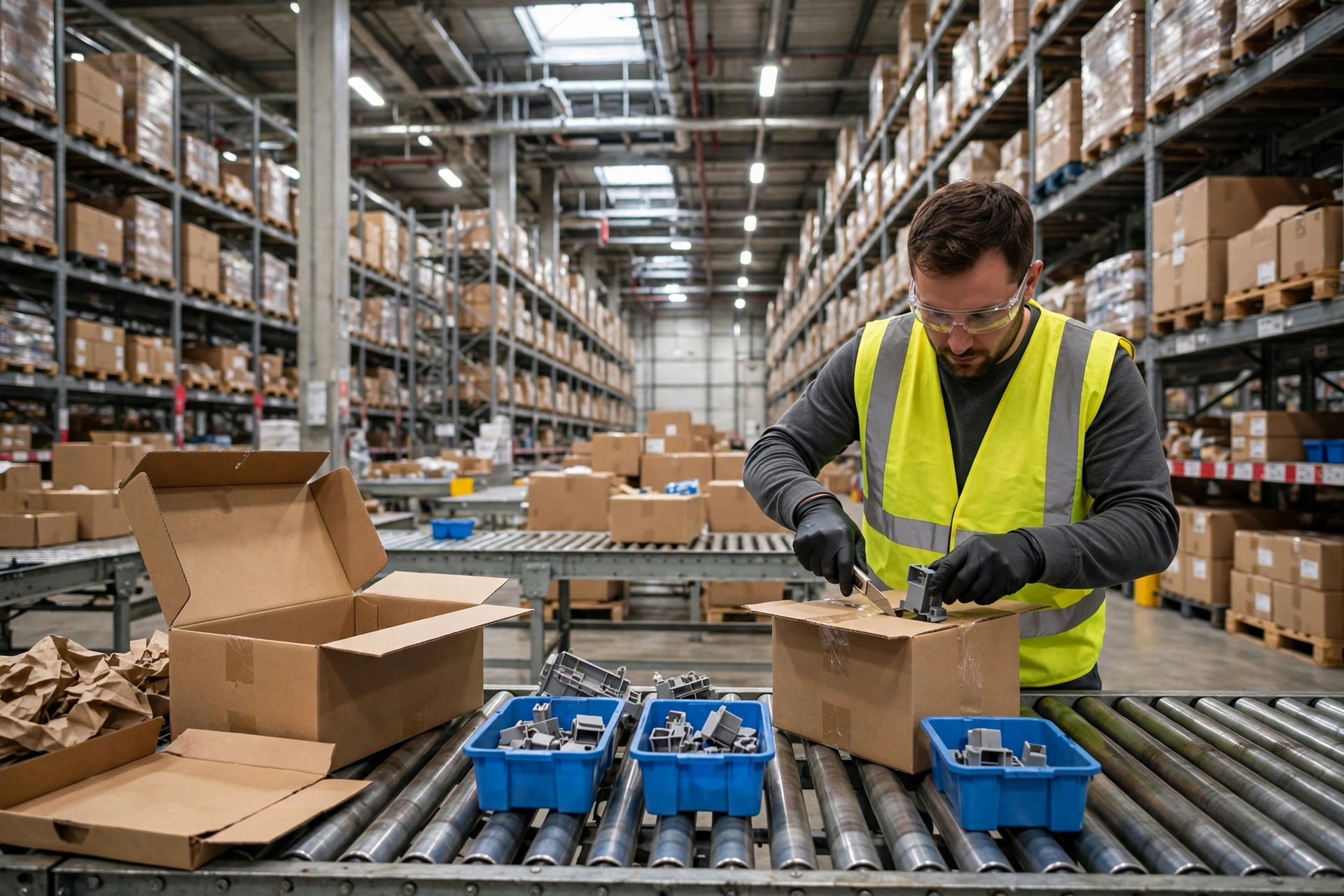
Decanting doesn't solve "opening boxes." It solves the question of who opens them, and when. In a warehouse without decanting, the break-down work is scattered across the picking process: the picker walks to the location, finds a full case, hunts for a box cutter, slices it open, counts out the pieces, takes what the order needs, and stuffs the rest back. Three lines on one order need breaking down? That's three separate interruptions.
I once had a warehouse time it with a stopwatch for three days: pick lines that required breaking open a case took 20 to 40 seconds longer on average than lines picked straight from loose stock. Sounds trivial — until you multiply by 50,000 lines a day and watch 300 to 500 labor hours evaporate. A decant station pulls those hours out of the pickers' hands and concentrates them in one or two people who do nothing but break down cases. But here's the other side of it: decanting creates no value by itself. It just moves uncertainty from the pick face to the receiving end — picking gets predictable, but now you're staffing and housing an extra step.
The Boundary: Three Profiles That Should Skip It, Three That Can't
This table is my field-tested rule of thumb. Treat the numbers as orders of magnitude, not gospel — every warehouse has its own SKU mix and order profile, so measure your own before deciding.
| Your warehouse profile | Recommendation | Why |
|---|---|---|
| Under ~100 cases decanted/day, fewer than 500 SKUs | Skip the dedicated station; decant at receiving | Dedicated labor and floor space won't pay back; have receivers break cases straight onto the shelf |
| 100–300 cases/day, volatile order lines | Flexible station: semi-permanent bench, flex staffing | Peak vs. off-peak can swing 3x; a fixed station sits idle half the year |
| 300+ cases/day, or 50,000+ order lines/day | Dedicated decant station, scheduled off the wave plan | Hours saved at the pick face already cover the station's full cost |
There's a hidden condition most people miss: decanting concentration. If 80% of your break-down volume comes from 20% of SKUs — the classic ABC curve — then decant only those fast movers and let pickers break the long tail by hand. That cuts the station's size in half while keeping 80% of the benefit. I've seen too many warehouses insist on "decanting every SKU" on day one. That's the classic try-to-do-everything move, and it ends with nothing done well.
The Trap I Watched Happen: An Idle Station and a Starving Pick Line
In 2023, an auto-parts 3PL outside Atlanta built two decant stations on a peer's recommendation and staffed them with four people. Three months later I walked in: the stations were idle more than half the time, decanted totes piled up on the flow racks — some untouched for two weeks — while the pick line was screaming about stockouts. Why? The decant schedule ran on arrival order, not wave demand. Everything coming off the stations was stock needed next week; everything needed this week was still sitting in full cases.
The expired parts were the real gut punch. Some rubber components have a shelf life that starts ticking at unsealing. Totes that sat for two weeks ended up scrapped — nearly 3% of what the stations produced. The owner told me, "The stations are fine, they just never synced with the production plan." Exactly. A decant station isn't a standalone bench; it's a pre-pick process, and its schedule has to follow the wave plan. What to decant, how much, and when — those answers live in wave planning, not in receiving.
Where to Put the Station So Nobody Runs a Marathon
An e-commerce warehouse in Ontario first put its decant station by the receiving dock — "break it down and put it away," the logic went. The decanted loose stock then had to be pushed 80-plus meters to the pick zone, dozens of trips a day. The cart pusher worked harder than the person breaking cases. They moved the station to the pick zone entrance, under 20 meters from the flow racks — decant, turn around, stock the rack — and productivity jumped immediately.
Three shop-floor rules for layout. First, the closer to the pick face, the better; decanted stock should go onto the rack with a turn of the body. Second, keep the inbound flow (full cases) and outbound flow (loose stock) from crossing, and give empty cases and waste cardboard their own exit — otherwise the station becomes a junkyard in three days. Third, one to two people per station. If you need more than two, your volume justifies a second station, not a crowded first one — too many hands at one bench means people waiting on each other, and throughput drops.
The Real Cost Comparison: Decanting vs. Breaking Cases at Pick
A lot of people assume decanting saves labor. It doesn't — not directly. On labor alone, decanting usually costs more: work that pickers did incidentally is now done by dedicated staff plus an extra handling touch. The honest math looks like this:
| Cost item | No decanting (break at pick) | With decant station |
|---|---|---|
| Time per pick line | High (find cutter, open, count) | Low (just grab) |
| Pick rhythm stability | Volatile, peak-season blowup risk | Stable, predictable |
| Upstream labor | Zero | 1–2 people per station |
| Floor space | Zero | One bench plus staging |
| Mispicks | High (counting at the pick face is where errors happen) | Low (second check at the station) |
Here's the contrarian take: decanting's real value isn't saving money — it's buying certainty. A stable pick rhythm is what lets you take on spiky orders and promise customers a cutoff time with a straight face. One peak month without a blowup, and the overtime and chargebacks you avoided pay for the station for the whole year. Two sides to it, as always: in the slow season the station feels like dead weight; in peak season you'll be glad it's there.
Decanted Wrong Is Worse Than Not Decanted: Quality Control the Low-Tech Way
The hidden cost of decanting is getting it wrong. A miscounted case or a mixed SKU poisons everything downstream — pick, pack, ship — and the customer service and reship cost of one bad order runs dozens of times the decant labor. So the station needs three low-tech guardrails: scan every case as you break it, converting "case stock" to "each stock" in the system with the count verified on the spot; label every decanted tote with SKU and quantity — never trust "I can tell by looking"; and spot-check 5% daily, with a full rework of the day's output if a check fails. Crude, but it works.
One piece of advice to close: tomorrow morning, before you build anything, hand your supervisor a stopwatch and have them shadow three orders, timing exactly how long your pickers spend breaking open cases. That number is your answer on whether to build the station.
By Lao Mi, Supply Chain Veteran (20 yrs)