On a packing bench, the cheapest-looking decision is often the most expensive one. The warehouse air pillow packaging vs paper void fill choice seems like a matter of grabbing whatever is at hand and stuffing it into a box. At a few thousand orders a day, however, it turns into a set of linked costs: material, seconds of labor, space in the warehouse, damage on the road, and the cost of handling a return. Many warehouses only revisit this choice after damage complaints climb, by which time one material has become a habit.
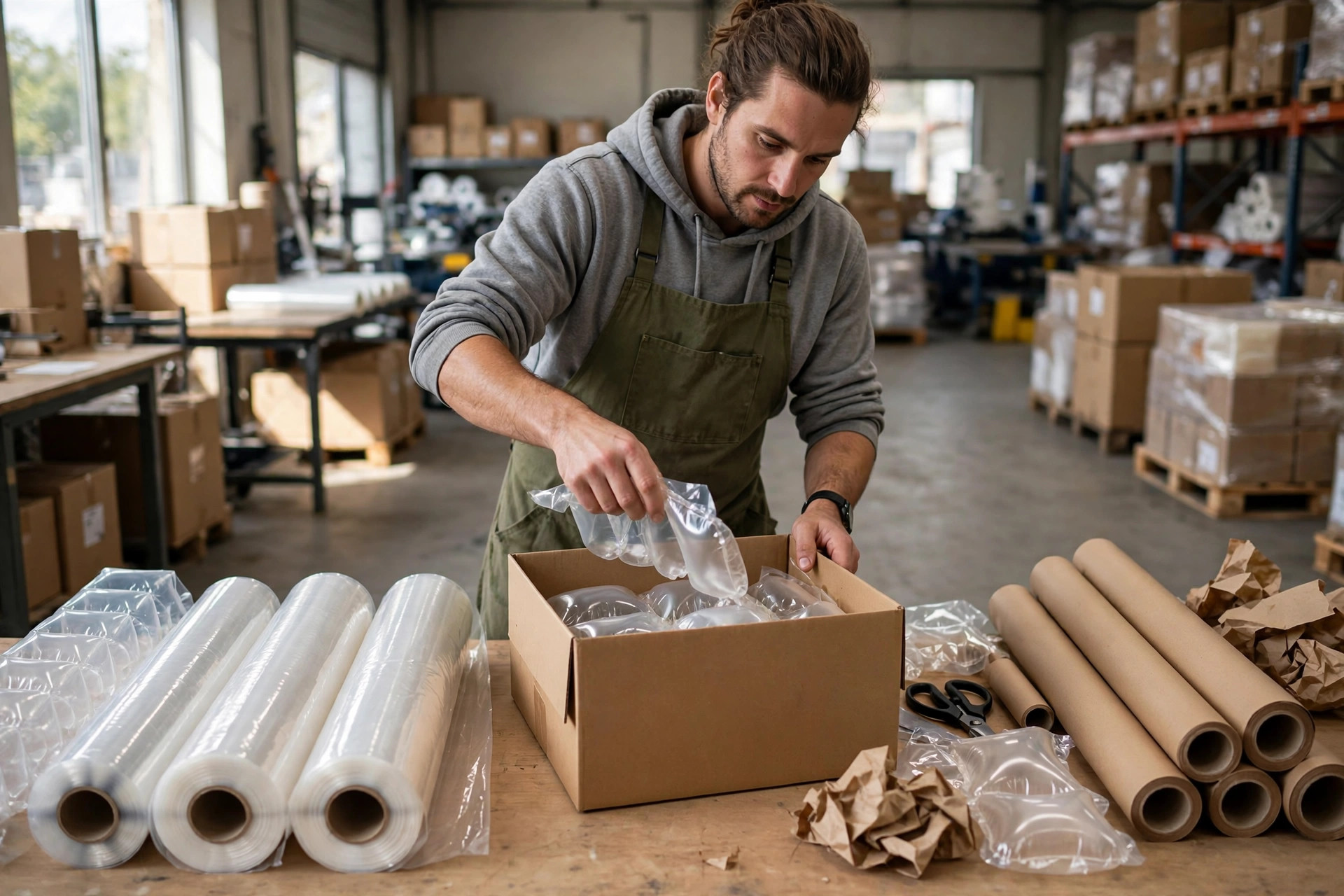
The debate over warehouse air pillow packaging vs paper void fill has no settled winner, and that is itself informative. Public industry discussion points to two different cost routes rather than two versions of the same product. Air pillows win on lightness and space: uninflated film takes up little room, so one pallet holds far more material, and the storage and transport footprint stays low. Paper fill wins on availability and adaptability: it needs no inflating machine, workers can tear, crumple and pack it immediately, and it conforms naturally to irregular shapes. The advantage does not sit in the material itself. It sits in the warehouse's order mix.
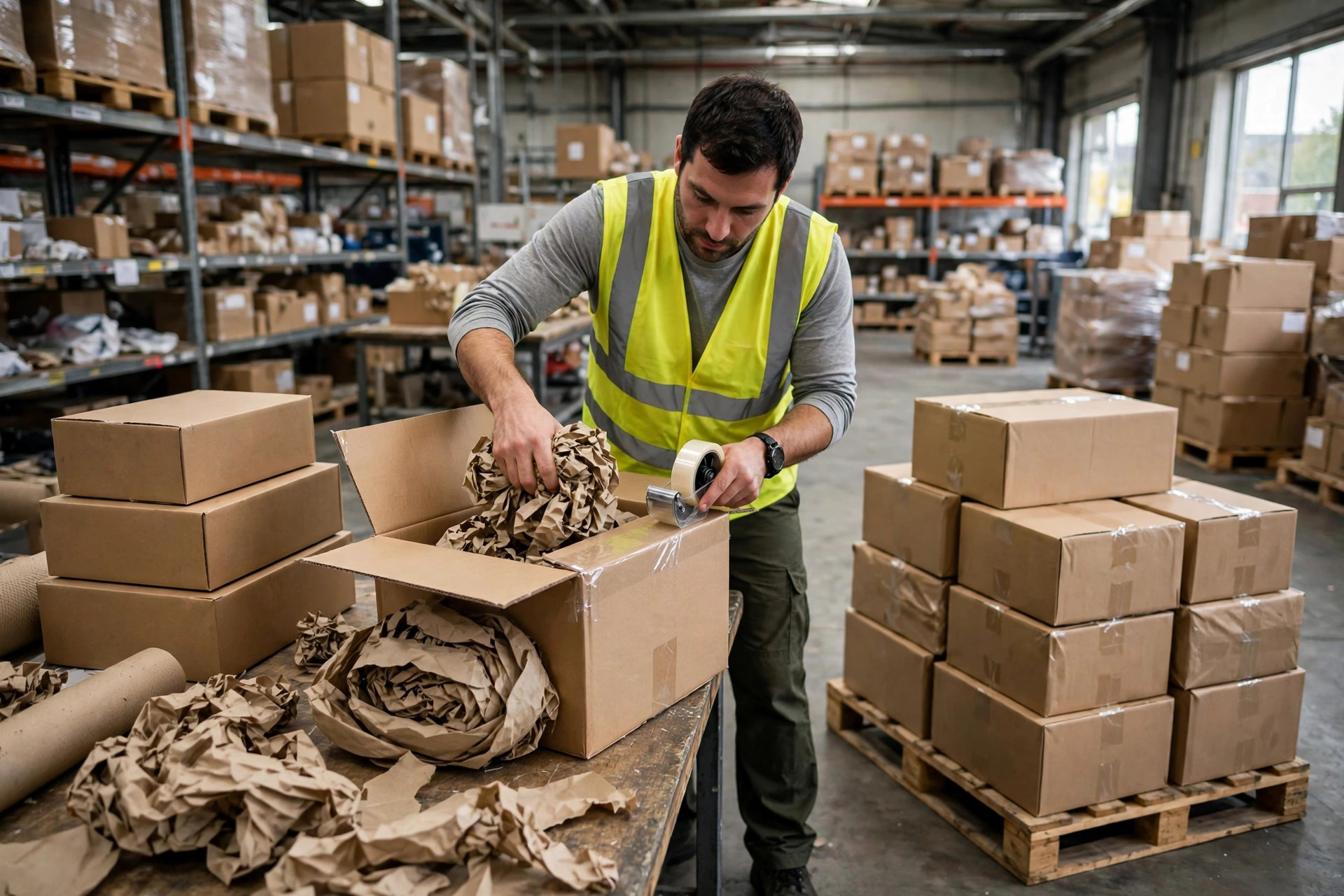
Consider a home-goods warehouse in eastern China. In the second half of 2024, its daily volume pushed toward about 8,000 orders in peak season, mostly ceramic cups, scented bottles and small ornaments, generally under one kilogram each. It started with paper fill throughout, for straightforward reasons: paper was familiar, and workers needed little training. By the year-end review, two hidden costs had overtaken the material saving. Labor time varied widely, because paper packing depends on judgment — how much to tear, how tightly to crumple, where to place it — and the gap between experienced and new workers could easily double. Damage was the second cost. For ceramic goods on long inter-provincial routes, paper wads can shift in transit, leaving voids at the corners, and complaints clustered in exactly those orders. In early 2025 the warehouse moved fragile items to air pillows and kept paper only for irregular pieces. Damage complaints fell noticeably in the following quarter, and average packing time shortened rather than lengthened. The lesson is not that air won. It is that packing every product with one material is where cost control breaks down.
A warehouse in northern China points the other way. Between 2023 and 2024 it handled large volumes of apparel and soft home goods — coats, blankets, cushions — where the risk was not breakage but creasing and pressure marks from movement inside the box. Air pillows performed poorly there: their fixed volume pushed soft goods out of shape, and the first impression on opening the box got worse. Switching back to paper fill let workers adjust the amount to the remaining space by hand, and the friction of paper kept soft goods from sliding. Air pillows suit light, hard, regular items; paper suits soft, irregular ones. That dividing line matters more than the purchase price of either material.
Warehouse air pillow packaging vs paper void fill: the full cost ledger
Putting both materials on one ledger means counting at least six items, and material cost is only the first, often not the largest. Equipment is one: air pillows require an inflator, and the machine, its maintenance and the lock-in to a film specification all create fixed costs. Labor is the second: air pillows are a repeatable motion — inflate, tear off, place — so new workers learn quickly; paper depends on feel, so speed varies, and a seasonal influx of temporary workers makes the labor line wobble.
Storage and transport space is the third. Uninflated film is dense, which suits a warehouse short on space or replenishing often; paper rolls and sheets take more floor area and need more frequent replenishment for the same order volume. Damage and returns are the fourth, and the most commonly underestimated. One damaged item is not one lost product: it also carries customer service time, return shipping, repacking and a higher chance of losing the customer. Reducing the damage rate by even a single percentage point is real money at ten thousand orders. Recycling and disposal are the fifth: paper has a mature recycling path and customers dispose of it without hesitation, while air pillow film depends on local plastic recycling, and in some areas customers simply treat it as waste, which costs brand goodwill. Flexibility is the sixth: paper quantities can change overnight, while air pillows are tied to film size and machine settings, so a specification change means changing rolls, adjusting machines and retraining workers.
Taken together, these six items produce a counterintuitive result: the cheapest material per unit does not necessarily give the lowest total cost, and the most expensive material per order does not necessarily give the highest. Total cost is driven by four variables — the share of fragile items, average weight, the number of box sizes, and worker experience. Where fragile items dominate and box sizes are few, air pillows gain; where irregular goods dominate and seasonal temporary labor is heavy, paper gains. Warehouses that get this calculation wrong usually do so because they compared only the procurement quotation.
Which goods suit air pillows, and which need paper
Cutting by product type is more useful than arguing by material. Goods suited to air pillows have a fairly clear profile: light, small, regular in shape, vulnerable to knocks but not to pressure — small appliances, electronic accessories, ceramic pieces, bottled skincare. The voids around such goods are relatively regular, air pillows fill them evenly, and the motion is fast. Air pillows also suit warehouses where box sizes have already converged on a handful of standards: workers do not need to judge the fill each time, the pillow size maps directly to the box, and training and quality checks both get simpler.
Goods where paper is clearly better also have a clear profile. The first group is irregular shapes: unusual ornaments, multi-piece sets, products with protruding parts, where paper can be shaped to fit and fixed-volume pillows leave dead corners. The second is soft goods and surfaces that dislike pressure: apparel, blankets, soft leather goods, where the softness and friction of paper are kinder. The third is bottom support for heavier single items: crumpled paper, once compressed, supports weight more steadily than air pillows, which can slowly lose air under sustained pressure over a long journey. The fourth is orders where customers have an explicit environmental expectation: the recycling story for paper is simple and needs no explanation.
There is also a middle ground that many mature warehouses already occupy: mixing the two. Fragile standard items go with air pillows, irregular and soft goods go with paper, and heavier items get paper at the bottom with air pillows as upper cushioning. Mixing costs more to manage, but on total cost it is often the least bad option, because it keeps each material away from the goods it handles worst.
A decision framework, and where the trend points
A workable warehouse air pillow packaging vs paper void fill decision framework can be reduced to four questions. Do fragile, regular small items make up more than half of orders? Have box sizes converged on a few standards? Does peak season rely heavily on temporary workers? Do customers have an explicit expectation about packaging sustainability? Yes to the first two raises the weight of air pillows; heavy temporary labor and strong sustainability expectations raise the weight of paper. When none of the four answers dominates, mixing is the default: split by product type, run it for a quarter, and review damage rates, labor time per order and return reasons, rather than deciding on purchase price alone.
Looking ahead, the contest between air pillows and paper fill is being reshaped by two outside forces. One is automation: automatic inflation and filling equipment strengthens the labor advantage of air pillows, while also raising the entry cost for smaller warehouses, so the payback period for equipment becomes a new dividing line. The other is recycling policy and customer perception: paper's recycling path is mature in most markets, while air pillow film must make a clear recyclability case or keep losing ground on brand perception. Public industry discussion suggests the likelier outcome is not one material winning outright, but product-based mixing becoming the norm, with choice set by product attributes, box types and damage data.
That leaves an open question: once warehouses decide cushioning by data rather than habit, will the boundary keep moving? Will recycling changes alter how much plastic cushioning customers tolerate? The answers are not in any single quotation. They are in each warehouse's own order mix and damage data. A warehouse that has worked out its full ledger can defend either choice; one that compared only unit price may pay for the hidden costs next peak season.
By Dr. Chen, Supply Chain Researcher