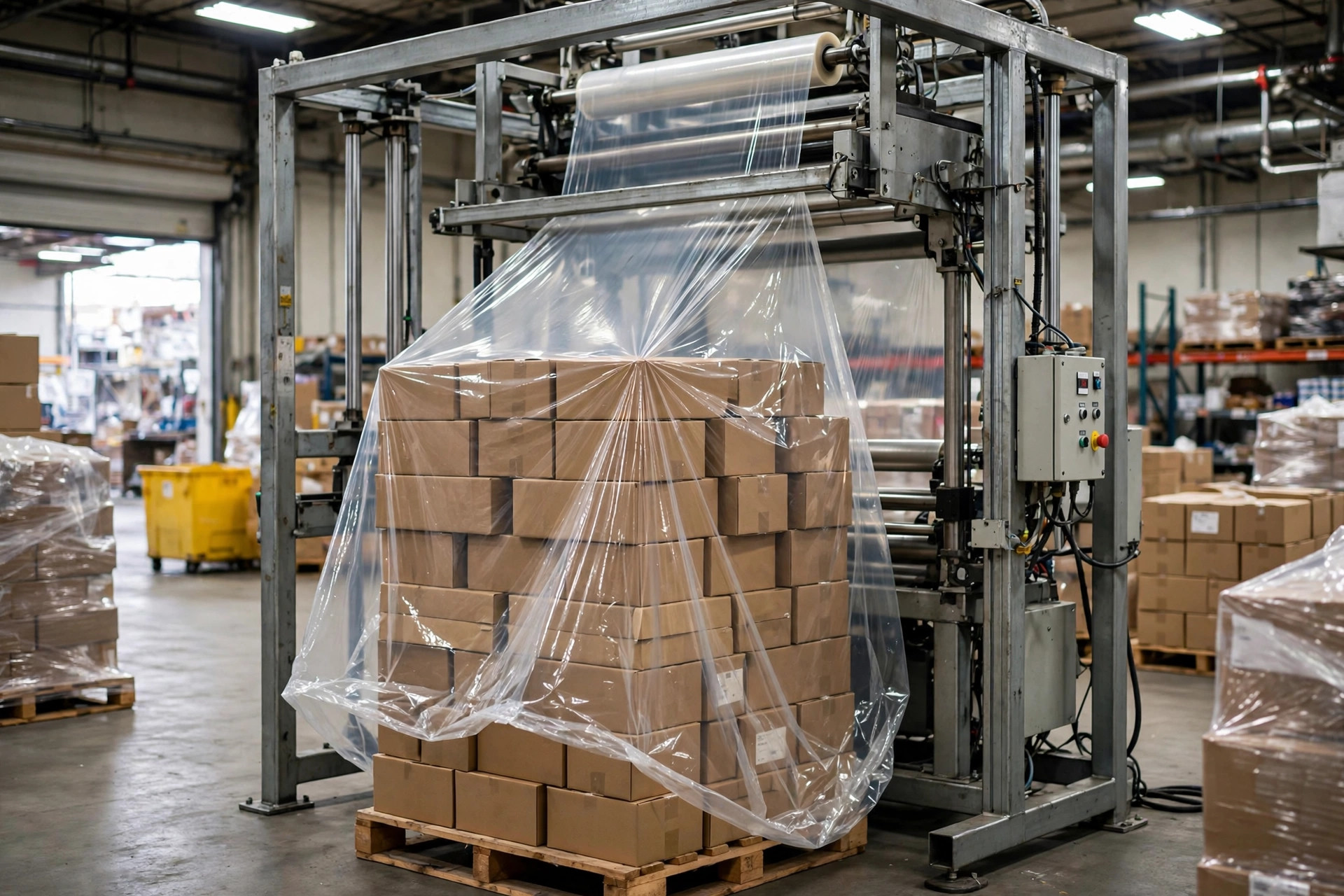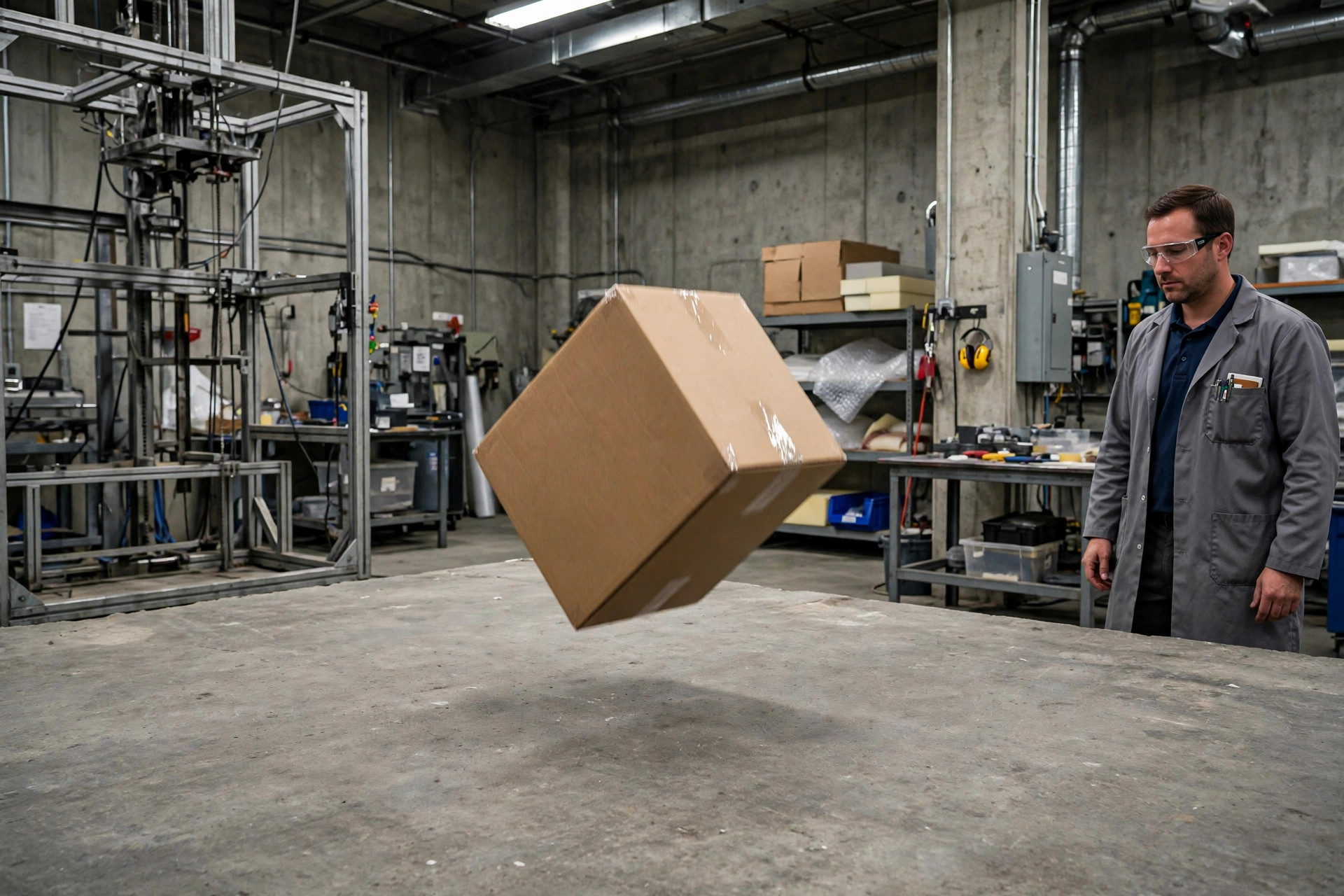
"We can't afford to burn money like that." That was the first thing out of my mouth when someone said the words "packaging drop test."
At first I thought drop testing was a big-company game. ISTA drop testing, labs, reports, certificates — it sounded expensive, and it sounded like paperwork. We run a 3,000-square-meter warehouse and spend our days receiving and shipping. Who has time to fight with a cardboard box?
Then a client's damage rate taught us a lesson, and we picked drop testing back up. The way we picked it up is so low-tech I'm almost embarrassed to describe it. But it works.
The client sold glass drinking cups. Not expensive, but fragile. Their packaging looked decent — some bubble wrap inside, a corrugated box outside. We packed and shipped to their spec. The first two months were fine. In the third month, complaints exploded. Customers were opening boxes to find broken cups. My first reaction was rough courier handling. The client's first reaction was that our packing team didn't care. We went back and forth, and neither side had any proof.
So I took the remaining packaging behind the warehouse and dropped it a few times the way a parcel gets dropped in a courier hub, then opened it up. Well — the cushioning at the rim and base wasn't doing its job at all. One dented box corner and the cup hit the wall directly. That was the moment it clicked: whether packaging passes isn't something you judge with your eyes. You judge it by dropping it.
Why a Small Warehouse Should Bother With a Drop Test
First misconception: a drop test doesn't test whether your product is tough — it tests whether your packaging can protect it through shipping. A lot of small sellers say, "My product is good quality, it won't break." Fair enough, but shipping isn't one drop and done: a parcel rolls on conveyors, gets squeezed in sorting carts, rattles in a truck, and might get tossed off a delivery van. The packaging has to survive that whole chain.
The second misconception is that only expensive products need testing. It's the opposite: the cheaper and higher-volume the product, the more you need to test it. Cheap products run on thin margins. One damaged order — shipping plus reshipment plus customer service time — wipes out the profit on several good orders. Expensive products, people pack carefully on instinct. It's the cheap stuff that gets the packaging budget cut, and then the damage claims eat the savings back.
That's why drop testing is now a required step for every new client. When a client brings new packaging, we don't ship to their spec right away — we take a few sample sets, drop them the way shipping would, photograph the results, and talk to the client about changes. It turns "your packing is the problem" versus "the courier is too rough" into photos and results.
The Low-Tech Way We Run a Drop Test
Big companies have labs, professional equipment, and standard procedures. We don't. We have an empty patch behind the warehouse, a few guys, and a phone. That's enough, as long as you drop with a method instead of dropping randomly.
Our method has three steps. Step one: replicate the real package. The test package must look exactly like what ships — same carton, filler, tape job, product placement. Never test an empty box or a special "exam version" packed extra carefully. You're testing mass-production reality, not a performance.
Step two: drop it the way shipping actually hits it. A parcel doesn't take force from one direction — faces, edges, and corners all hit the ground. Rotate through them, opening up after each round to check whether the product shifted, the filler collapsed, or the carton cracked. For the exact sequence, the full test method is published on ISTA's official site — we follow the official method's logic, and I don't invent parameters.
Step three: write it all down — product, packaging, when, who dropped it, what it looked like after, and what the product looked like unboxed. Photos and video are even better. The real value shows up when a client says "it was always fine before" and you pull out the record. That beats arguing by a mile.
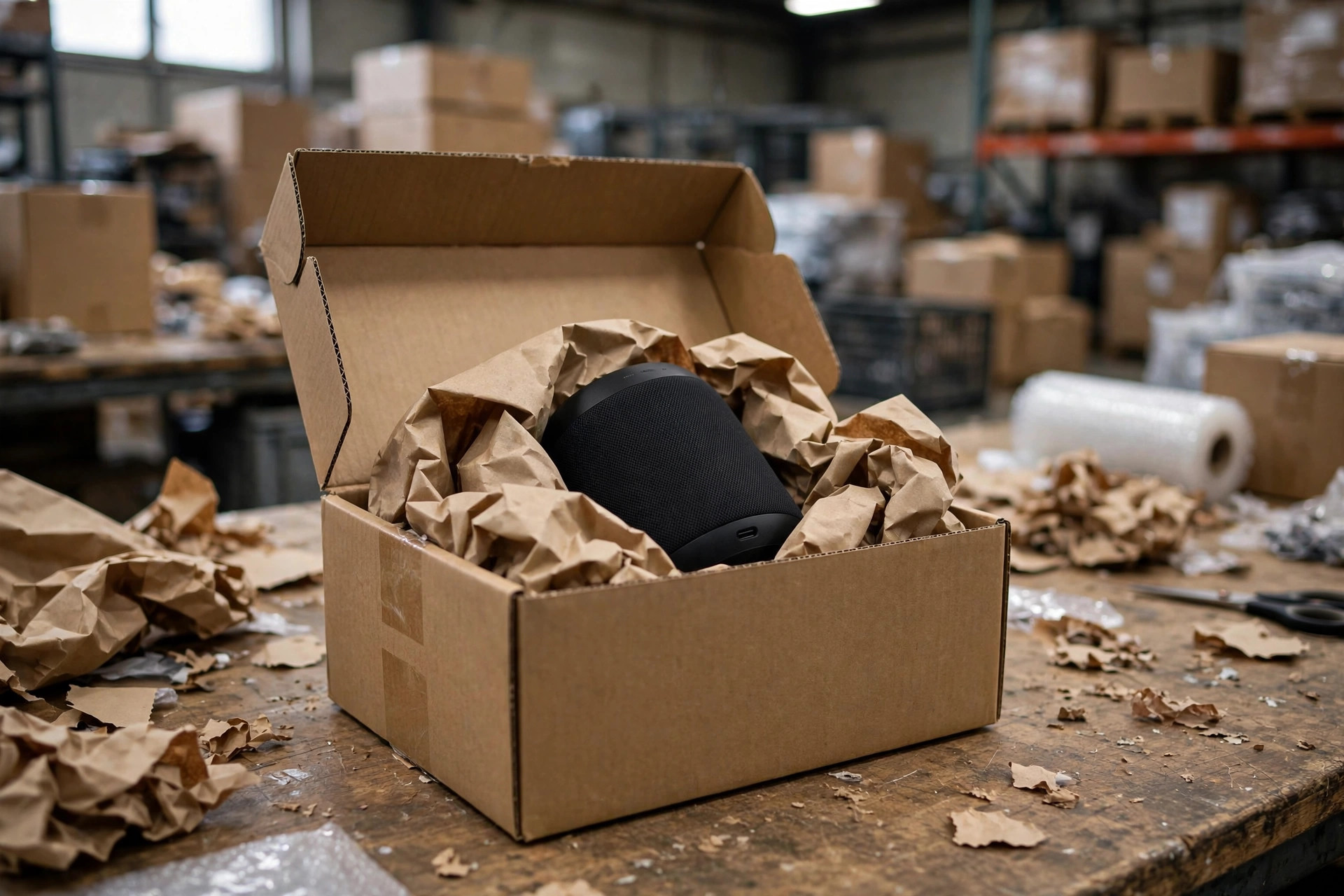
There is one more low-tech trick a lot of people miss: let the courier network test for you. Ship a few real orders to yourself, to different cities, and see what the packaging looks like when it arrives. It is closer to reality than dropping boxes behind the warehouse, but it can't replace simulated testing — a live test has too many variables for you to know which link broke. Simulated testing finds the problem; the live test confirms the fix worked.
When the Drop Test Fails, Don't Just Add Padding
When a test fails, most people's first instinct is to add cushioning, switch to a thicker box, and wrap another layer of bubble wrap. That's the most expensive fix, and it doesn't always work. Figure out where the problem is first, then decide where the money goes.
I made a simple troubleshooting table and taped it next to the packing bench:
| What you see after the drop | Most likely problem | Fix this first |
|---|---|---|
| Product shifted inside and hit the wall | Not enough filler, or wrong securing method | Fix filler and securing before changing the box |
| Box corner caved in, product corner took the hit | Box strength or corner protection too weak | Add corner protection or change box style |
| Filler collapsed or flattened | Wrong filler material or not enough of it | Change filler method |
| Seal opened, tape popped | Wrong sealing method | Fix sealing method and tape |
That table has saved us a lot of wasted money. Once we tested a cosmetics gift set. After the drop, the bottle was fine but the cap had come loose. We almost switched to a thicker box. Then we realized the cap's own securing method was the problem. One small inner tray fixed it, at almost no extra cost.
Here's the counterintuitive part: thicker packaging doesn't mean better protection. A too-thick box makes the parcel bigger and heavier, pushing freight up — and the product can have more room to move inside, rattling harder on impact. We had a client like that. They kept switching to bigger and bigger boxes, and the damage rate never moved. In the end they switched to a smaller box with tighter filler, and damage went down. The point of protective packaging is to keep the product from moving inside the box, not to make the box itself thicker.
Whether to test in-house or send it to a lab is another question small warehouses wrestle with. My rule is practical: if the product structure is simple and the damage cause is easy to pin down, in-house simulated testing following the ISTA drop test approach is enough — small money, real results. If your product is high-value, fragile, structurally complex, or the client explicitly wants a lab report, send it to the lab and don't try to tough it out. The lab's value isn't dropping harder; it's the report as evidence for platforms, insurers, or big clients.
One more trade-off: testing isn't one-and-done. Packaging supplier changed, carton batch changed, new product version, new shipping channel — re-test every time. We learned that the hard way. A carton supplier changed, the boxes looked identical, and only after dropping them did we find the strength had dropped a notch. Testing has to become routine, not a one-time show when a new product launches.
So here it is: big companies have their way, and small warehouses have ours. We can't afford a lab, but we have open space, hands, a phone, and the option to ship test orders to ourselves. Make testing a habit, keep the records, and spend the packaging money where it counts. The damage rate comes down slowly. It may look low-tech. It works.
Small warehouses have their own way of surviving.
By Xiao Ma, Small Warehouse Owner