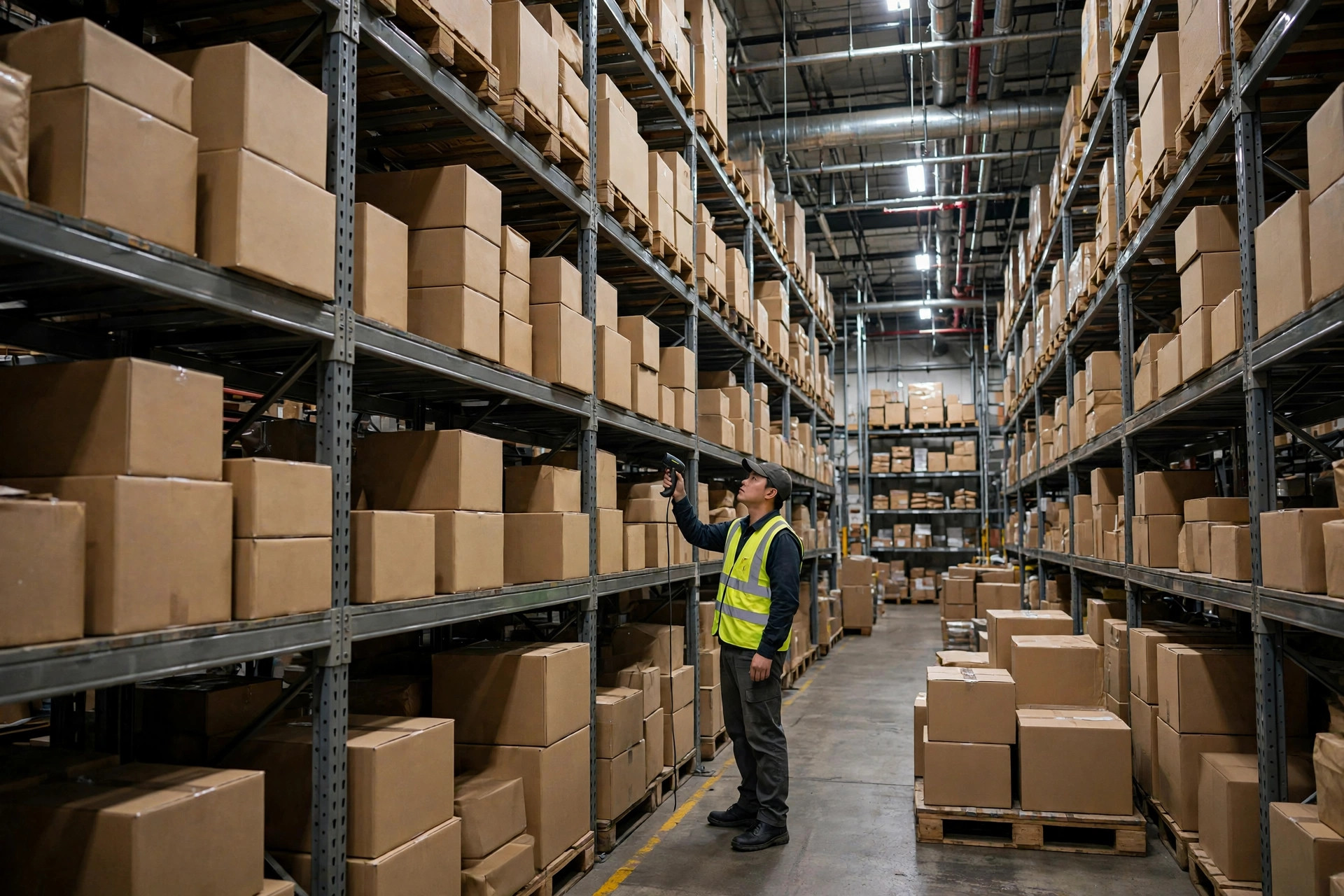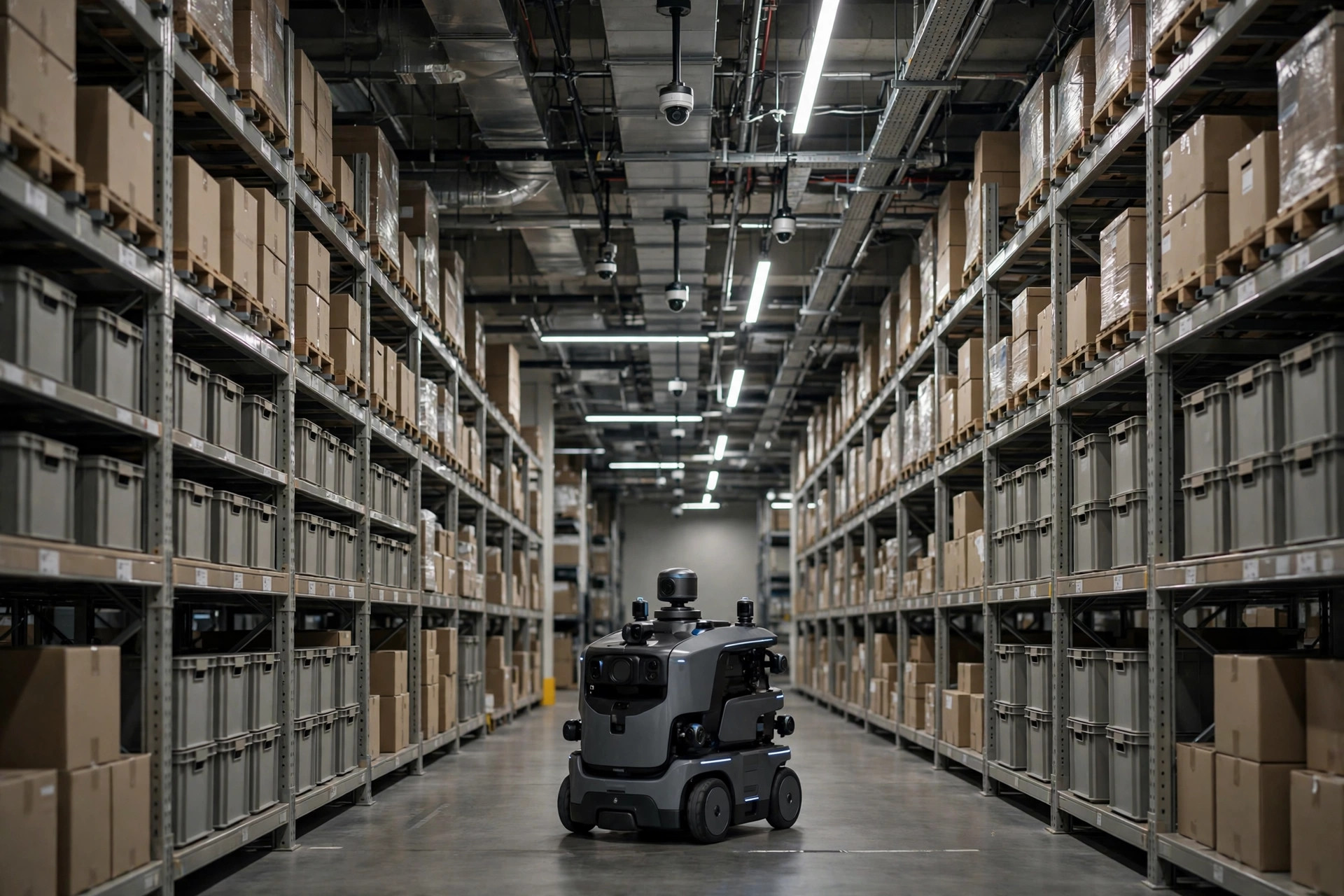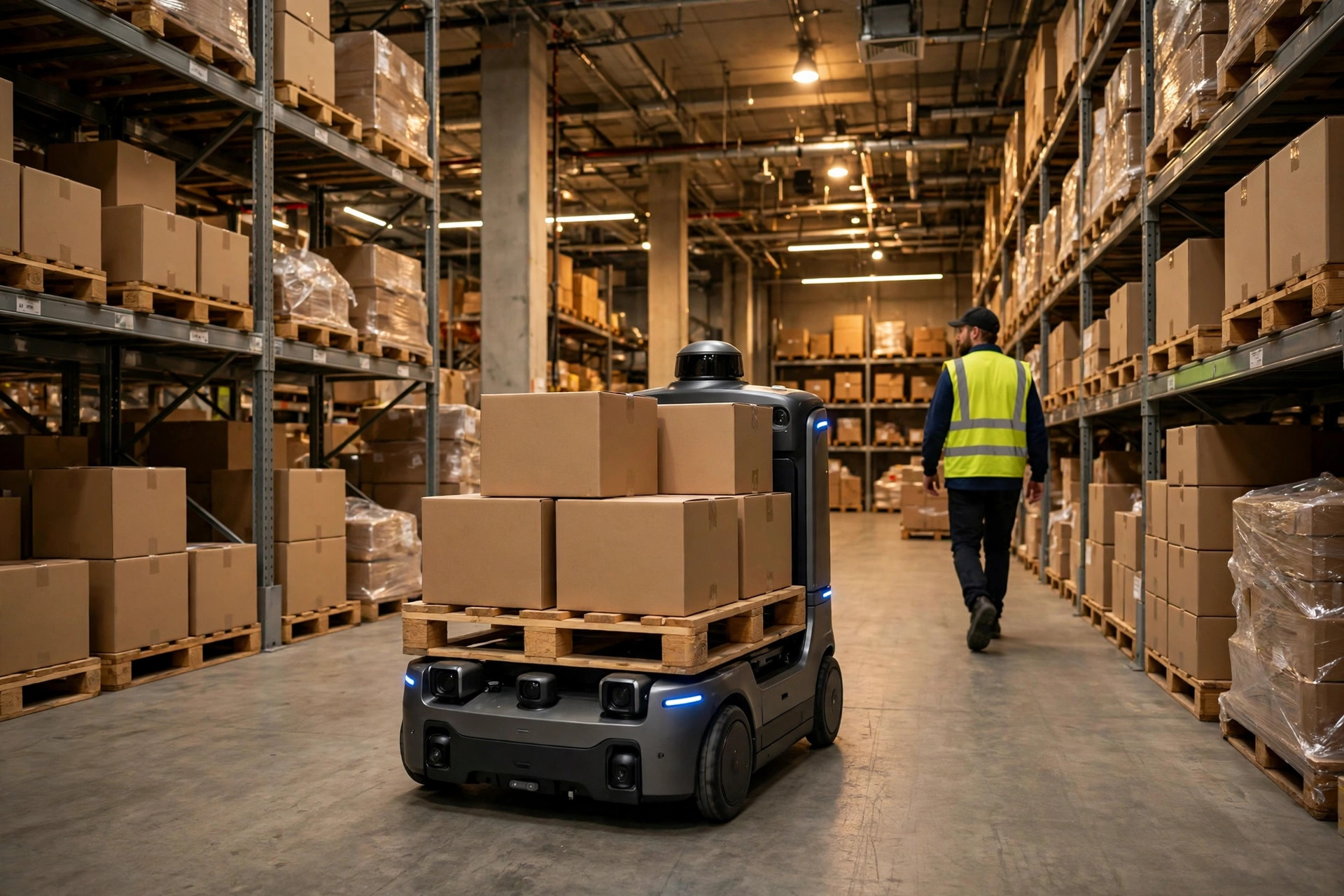
According to public industry reporting, accidents involving warehouse automation and AI systems in the United States have moved, over the past two years, from occasional headlines to a standing item on every operator's agenda. The issue is not frequency — statistically, automated warehouses still record fewer injuries than conventional ones — but what follows an incident: when an algorithm made the decision, an unprecedented question surfaces. Who bears the liability.
What warehouse AI liability incidents already look like
Consider a scenario that actually happened. In 2023, at a third-party logistics warehouse in the American Midwest, a loaded AMR collided with a picker in the small hours of a peak-season morning; the worker suffered a fractured tibia. The company later disclosed that workers' compensation, the shutdown, and remediation together pushed direct costs into the hundreds of thousands of dollars. The investigation then turned into a three-way dispute — sensor design versus go-live configuration versus that night's housekeeping — and dragged on for months.
A second category of incident is quieter, and more expensive. In 2024, an auto-parts distribution center replaced manual sampling with an AI vision inspection system, which passed brake rotors with surface defects for several weeks before the defective parts were caught on an automaker's assembly line, triggering a full-batch recall. Industry media put the automaker's claim alone in the seven figures. The post-mortem found the model had been trained on the vendor's reference samples, but lighting conditions and line speed had both changed after deployment — and no party had re-calibrated or re-validated. The model was not wrong; the data had drifted, and the process never caught up. Whose ledger should that loss sit on?
A third category involves algorithms nobody sees. Warehouses increasingly use algorithms for labor scheduling and task dispatch. At one facility, the scheduling system placed the same temporary worker on two consecutive shifts; the fatigued employee then damaged a row of racking while operating a forklift, producing another six-figure bill. The algorithm vendor argued the system only issued "recommendations," with final authority resting on the operator; the operator countered that reviewing several hundred scheduling suggestions a day during peak season made human sign-off a fiction. When an algorithm's suggestion becomes the de facto decision in practice, the legal line between "recommendation" and "decision" has no clear answer.
Dividing warehouse AI liability: a four-party chain
Under the general principles of U.S. product-liability and negligence law — specific application always requires counsel's judgment — warehouse AI liability typically has to be apportioned among four parties: the equipment manufacturer, the system integrator, the warehouse operator, and the algorithm or software vendor.
A practical way to think about it is a scenario-by-scenario matrix. The table below is a reference framework assembled from the disputed issues in public cases; it is not a legal conclusion, since actual apportionment depends on contract language and the facts on the ground:
| Scenario | Equipment maker | Integrator | Operator | Algorithm/software vendor |
|---|---|---|---|---|
| AMR strikes a worker | Sensor and avoidance-design defects | Go-live configuration, mapping, safety-zone marking | Aisle management, training, operating procedures | Navigation and avoidance-algorithm defects |
| Vision system ships defects | Camera and hardware defects | On-site deployment and calibration | Failure to re-validate after line changes | Training-data bias |
| Algorithmic scheduling causes fatigue accident | — | — | Workforce management, missing human review | Dispatch-logic defects |
| System outage causes order losses | — | Integration and disaster-recovery design | Missing contingency plans | Software defects, untested updates |
The matrix points to a counterintuitive finding: in most public cases, the largest share of liability lands not on the party with the most sophisticated technology, but on the party with the vaguest contract and the weakest site management. Operators often assume a turnkey purchase transfers the risk, yet according to industry reports from multiple insurers, it is precisely the operator's site changes — reconfigured aisles, altered lighting, added shifts — that most often become the pivot of a liability determination, because those changes leave a complete paper trail while the algorithm's decision process remains a black box.
There is also a discernible trend in how U.S. courts approach these cases: growing emphasis on requiring each party to demonstrate it did what it was supposed to do, rather than litigating whether the algorithm itself was right. The evidentiary focus is shifting from "technical correctness" to "process compliance" — risk assessments, validation records, training logs. Those are exactly what an operator can most readily put in place, and most easily neglect.
Robotics liability insurance: what insurers are doing
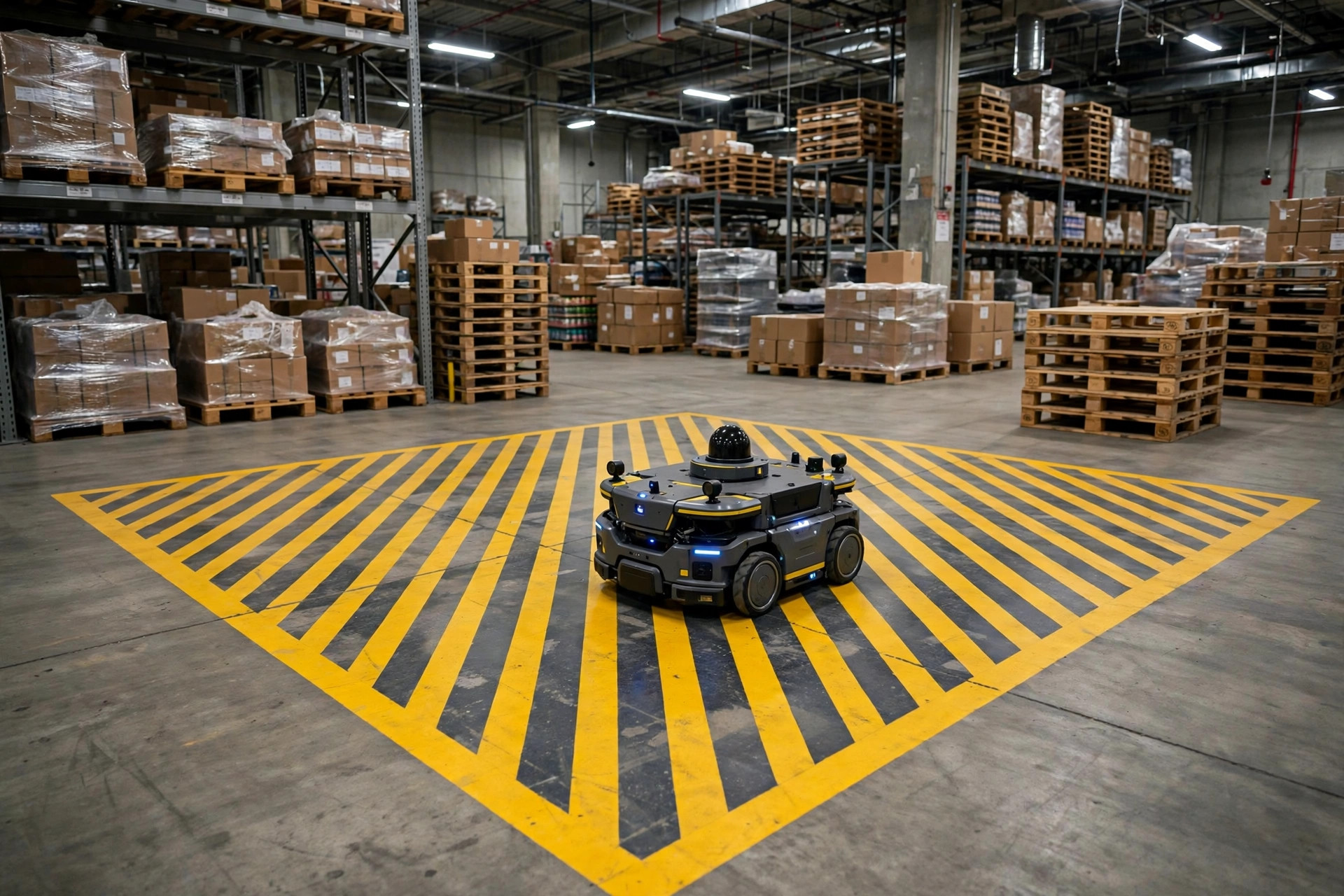
The insurance industry has moved faster than many expected. Since 2024, several commercial carriers have begun offering dedicated liability products for warehouse robots and AI systems, mostly as endorsements attached to general commercial liability policies, with a few piloting standalone coverage.
Pricing logic is still taking shape, but the emerging framework is visible: premiums track the number of deployed units, loss history, and safety certifications, and underwriting typically requires a risk-assessment report and documented safety processes before binding. Insurers are, in effect, using premium as leverage to push operators toward process compliance.
But a counterintuitive point needs stating plainly: buying insurance is not the same as buying peace of mind — deductibles and exclusions are where the real story lives. Based on publicly available product descriptions, common exclusions in current robotics liability policies include uncertified modifications, use outside the manufacturer's specified operating envelope, and — most notably — losses from autonomous algorithmic decisions, which some policies carve out entirely unless a separate rider is purchased. What a policy actually covers is determined by the exclusion section read word by word; the headline limit matters far less. Consult the policy terms and counsel.
Meanwhile, indemnification language in procurement contracts is changing too. According to public industry discussion, operators are increasingly requiring vendors to indemnify them against third-party claims arising from product defects, with negotiated caps; to name the operator as additional insured with proof of insurance; and to spell out who owns testing responsibility for software updates. Clauses that were rare two or three years ago are becoming standard.
A timeline for the next two to three years
Based on publicly available information and the direction of industry discussion, here are my judgments on how the next two to three years are likely to unfold — each with its basis and rough timeline:
First, from 2026 into 2027, robotics liability insurance products will converge toward standardized forms. The basis is the product-development cycle and the current pace of carrier pilots: once three to five major carriers offer comparable products, brokers and buyers will force out comparable policy structures, and pricing will move from bespoke negotiation toward rate tables.
Second, in the same window, procurement contract templates for automation projects will be updated systematically. The logic follows from the insurance trend: when carriers require risk-assessment reports as a precondition for coverage, legal teams will write the same requirements into vendor contracts. Liability-allocation matrices will migrate from analyst frameworks to contract exhibits.
Third, from 2027 to 2028, the first instructive case law may emerge. The basis is the typical lifecycle of U.S. product-liability litigation — two to three years from incident to judgment — and 2024–2025 was when warehouse AI incidents entered public view in volume. The outcomes cannot be predicted, but once decided, they will be written into the next round of contracts and policies with remarkable speed. These are trend inferences, not predictions and not legal advice; any specific matter requires counsel.
An open question, not a conclusion
What strikes me, writing this, is that the most important question may lie outside the courtroom.
As algorithms multiply across the warehouse, the absolute number of incidents may keep falling — automation's safety record is broadly improving — while each incident becomes harder to attribute, because the decision chain now includes roles that did not exist before. We are entering a somewhat paradoxical phase: the smarter the system, the harder it is to say afterward whose fault it was.
Perhaps the capability that will matter most over the next two to three years is not winning lawsuits, but writing risk down clearly before anything goes wrong — into contracts, into policies, into operating procedures. When that becomes routine, warehouse AI liability will have truly come of age. Until then, every operator deploying automation should ask one question: are our contracts and our processes ready for the first accident?
By Dr. Chen, Supply Chain Researcher