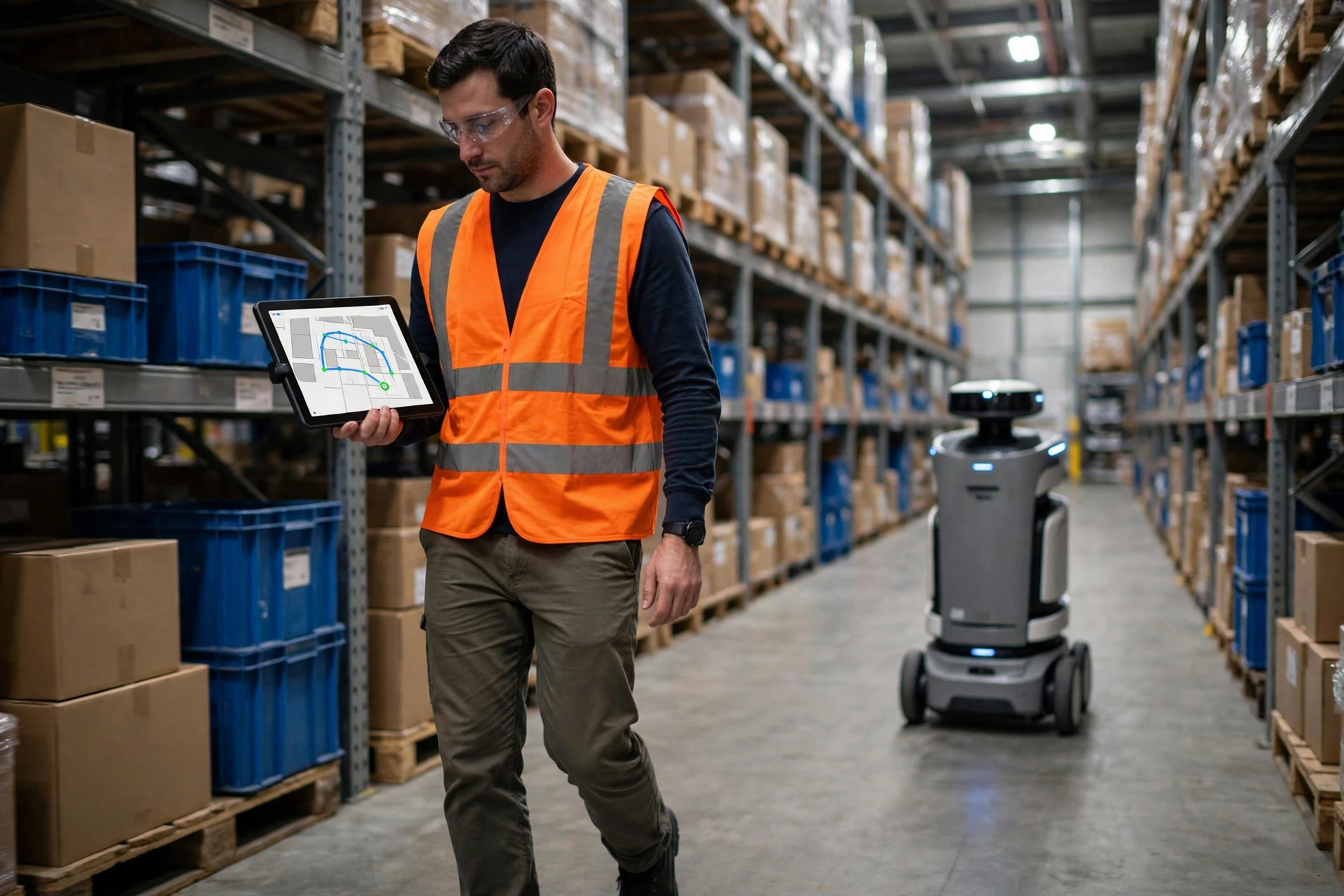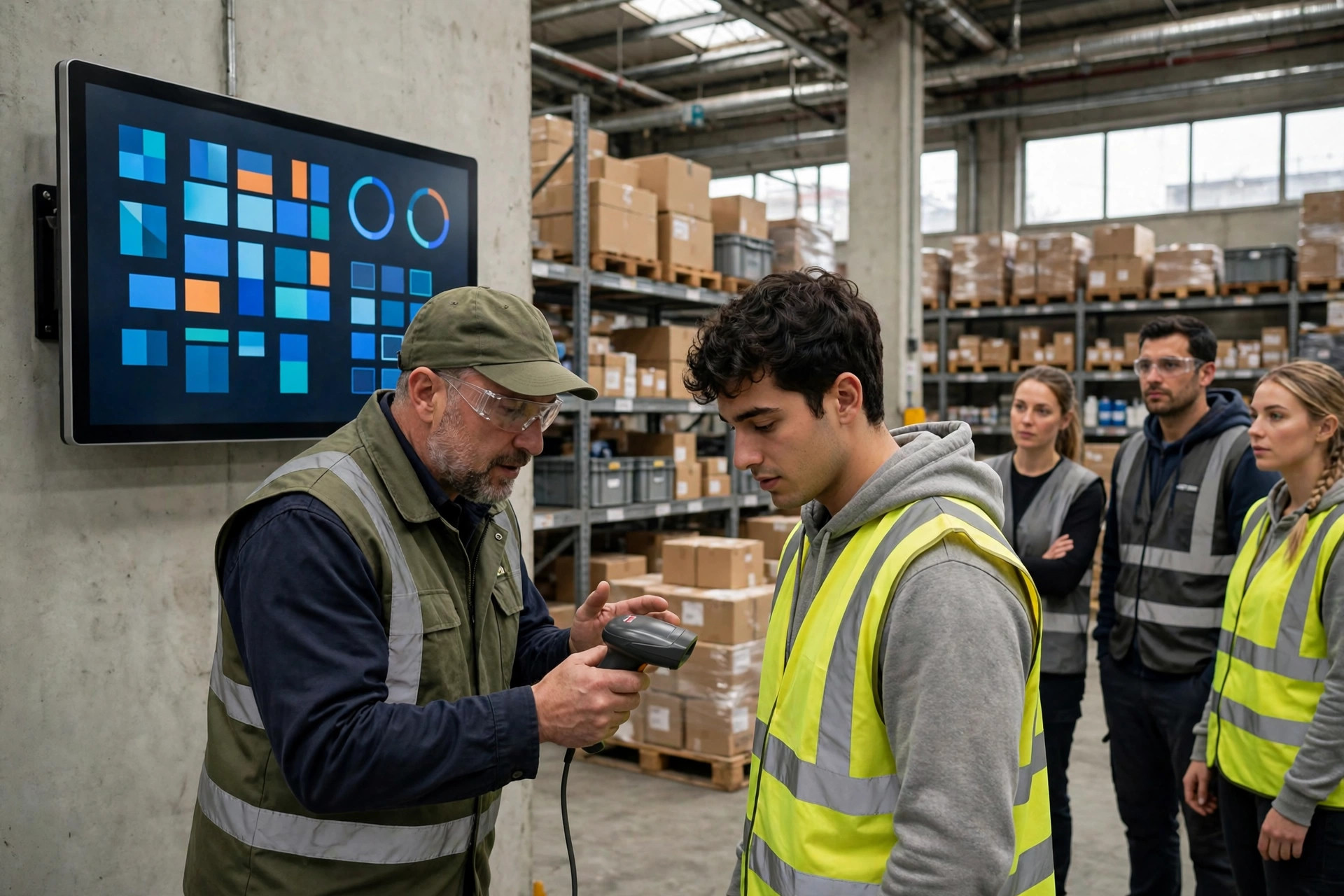
We have a client who installed an AI picking system in their warehouse last year. The equipment went in, the system went live, and three months later the review showed usage below half. Veteran pickers were still using the old methods, and the new system sat there like furniture. The owner was baffled: the money was spent, the technology was good, so why did the team resist using it?
I know this story well. After years in 3PL sales, I have seen too many AI projects die not on technology, but on people. When warehouse workers resist AI, it is never because they are slow or lazy. It is because nobody answered three questions for them: is my job still here, who takes the blame when something goes wrong, and what if I cannot learn it? Leave those unanswered, and resistance is guaranteed.
Three Real Reasons Warehouse Workers Resist AI
First, fear of losing their jobs. It is the most direct reason and the least likely to be said out loud. In early 2025, one of our client's warehouses installed an automated sorting line, and word spread among veteran staff that "half of us will be cut next year." Management had no layoff plan at all, but nobody said so, and the rumor grew on its own. In the first month after go-live, resignations rose noticeably and several experienced hands left. The counterintuitive lesson is that a layoff rumor damages a team more than the AI itself, and denying the rumor early costs far less than rehiring later.
Second, fear of being blamed. The AI makes a recommendation, the worker follows it, and something goes wrong. Whose fault is it? This is what keeps shift leads up at night. A lead with more than a decade on the floor once told me: "When I judged by experience, I owned the mistake. Now the system tells me what to do, so if it is wrong, is it the system's fault or mine?" If the line of responsibility is unclear, the rational choice for a worker is not to use the system, or to pretend to use it.
Third, fear of not being able to learn it. Many veteran warehouse workers are older, and screens and scanners were already a stretch. Add an AI system on top, and the pressure is real. People who fear they cannot learn it will not say so. They will say "this thing does not work" or "the old way is better," using criticism of the system to cover their own anxiety.
Three Scenes of Workers Resisting AI: The Veteran, The New Hire, The Shift Lead
Start with the veteran. In the second half of 2024, a picker named Chen at a client warehouse had been picking for eighteen years and knew where every item sat with his eyes closed. After the AI went live, the system asked him to follow its suggested route. Two days in, he quit on it: "My route is shorter than its route. Why should I listen to it?" We changed approach. Chen walked his own route for two weeks while the system only recorded and never intervened, then we showed him the data: the system route averaged about ten percent less walking per order. Chen said nothing, and the next day he started following the system. Veterans do not object to AI. They object to being taught their job by a machine. Let them win once, then talk about change.
New hires are a different story. When a new warehouse opened in 2025, a batch of workers in their twenties picked up the AI training in a single session. The problem was they depended on it too much: when the system went down, the whole floor froze. Training has to keep one card in reserve: teach the logic behind the system, and run regular "no-system drills" so people know where goods are and why they sit there. AI is a crutch, not a wheelchair.
The shift lead is the most important scene of all. The shift lead is the real gatekeeper of AI adoption: if they do not use it, nobody below them will. My experience is to make the lead an insider before go-live, involve them in process design, let them learn first, see the data first, and present it to the team first. We did exactly that on a 2025 project, and the lead turned from the biggest skeptic into the champion. Usage passed eighty percent within two weeks of go-live. Win the shift lead and you have won half the rollout.
Training and Incentives That Turn AI Resistance Around
Training design has three hard rules. First, practice first, no scoring. In the first month after go-live, practice only, no tests, and no penalties for mistakes. One penalty multiplies resistance tenfold. Second, veterans teach newcomers. Those who learn first teach those who learn later; the teacher gets a reward, the learner gets company. Third, teach in stages. Do not dump every feature on workers at once. Teach the single most-used function, let them master it, then add the next one.
Incentives need even more care. The most important rule: efficiency bonuses must never be tied to headcount reduction. The moment workers believe "the more efficient we get, the faster we get cut," even the best bonus formula becomes a disincentive. The right approach is to tie bonuses to team efficiency and error rates, and to use freed-up labor to take on more volume rather than cutting people. One client did this in 2025: after the AI went live, per-person efficiency rose, bonuses rose with it, and the team actively asked for more orders. Nobody mentioned layoffs.
Management makes three mistakes over and over, and I will name them plainly. First, saying nothing before go-live and springing it on people. Second, training only the operations and never explaining the "why," so workers know how but not what for. Third, presenting AI as a tool to save headcount instead of a tool to help people work. Change the pitch, and half the resistance disappears.
One more step is easy to overlook: the post-launch review. Many projects treat go-live as the finish line, and three months later nobody is watching usage anymore. By the time someone notices workers quietly drifting back to old methods, it is too late. My practice is to agree with the client on a monthly data review after go-live: usage rate, error rate, and worker feedback, all three together. When usage dips, ask the shift lead first, then the floor workers. The reasons are usually specific: one feature is too convoluted, one prompt is unclear, one system outage went unaddressed. Fix those small problems one by one and usage holds. AI adoption is not a one-time project. It is ongoing operations.
Another client in 2025 went further: they wrote AI usage into the shift lead's monthly review, not into frontline workers' evaluations. Each month the lead reported who still struggled, where they got stuck, and how the team would help next month. It was a smart move. The pressure sat with management, while workers only felt support, never judgment. Six months on, that warehouse held usage around ninety percent, and resignations even ran slightly lower than before the AI arrived. Workers do not resist AI. They resist the feeling of being judged by it.
Next time you negotiate a contract, remember to ask three questions: what is the budget for worker training, will the first month after go-live be scored, and what exactly are efficiency bonuses tied to? The answers to those three questions will tell you whether an AI project is real adoption or just theater.
By Susan, 3PL Sales Director