Warehouse AI edge computing vs cloud is a question that now shows up in almost every warehouse digitalization project. One side puts compute power on the warehouse floor; the other sends inference to the cloud. Both camps can make a convincing case, and both have their share of painful lessons. The real question is not which technology is more advanced. It is what warehouse AI inference actually demands in terms of latency, cost, and tolerance for network outages. Break those three requirements apart, and the answer often turns out different from the first impression.
The Same Warehouse, Two Very Different Outcomes
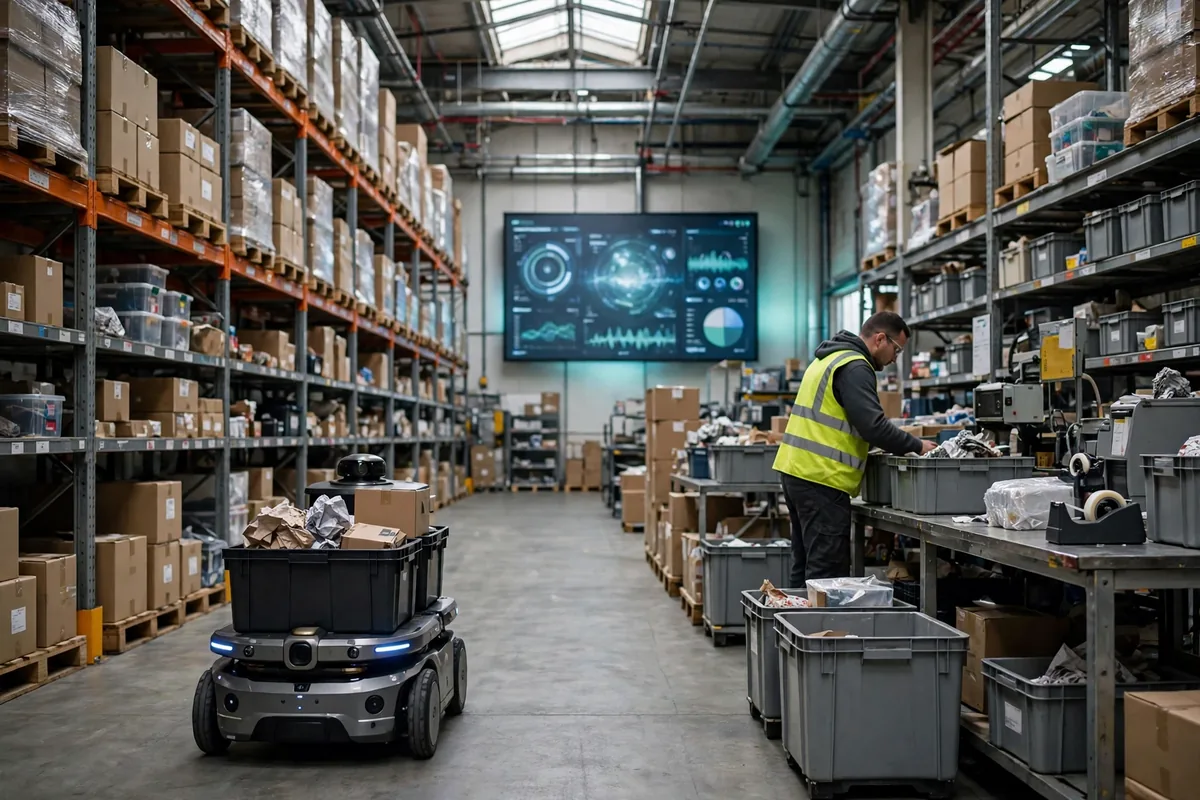
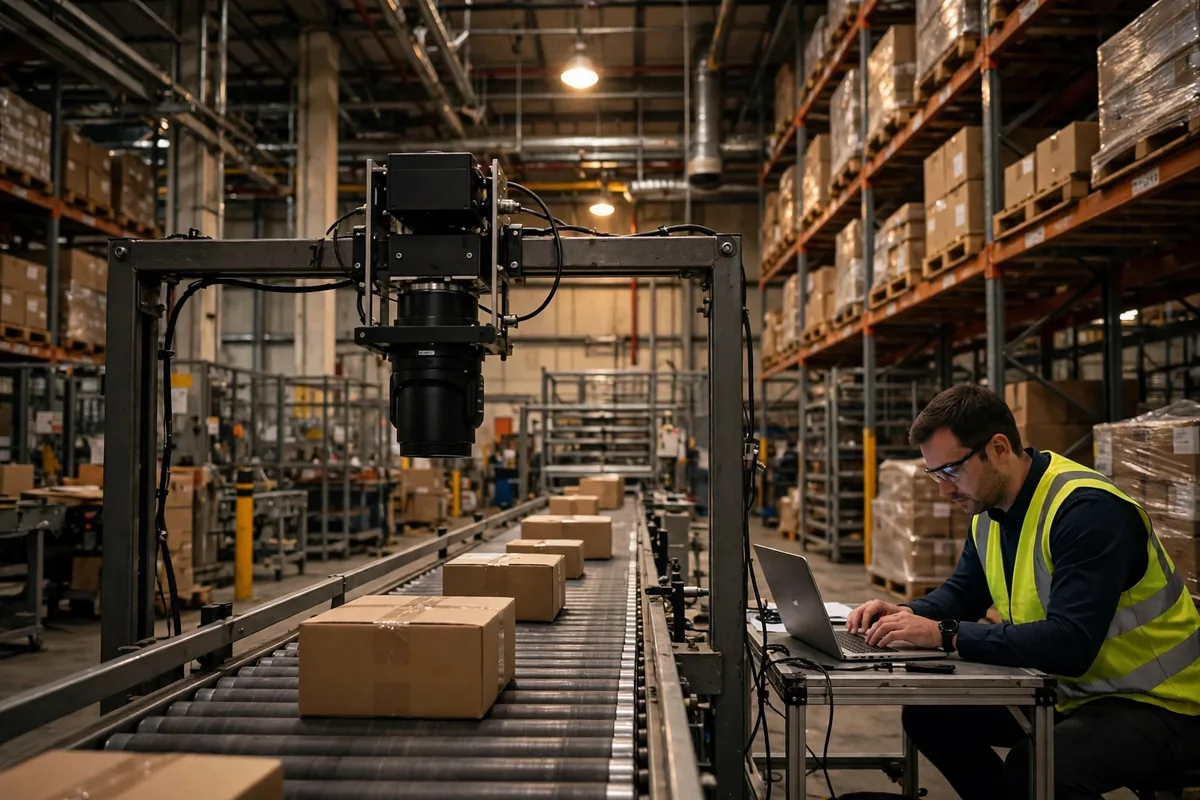
Consider a real scenario. In 2024, a third-party logistics warehouse in East China handling consumer electronics introduced visual inspection: cameras photographed parcel labels, AI read the label information and matched it against system orders, and mismatched parcels were stopped on the line. The system initially ran in the cloud. A photo went up, the result came back down. On a normal day, everything worked. Then a big promotion night multiplied order volume several times over, and the problems arrived together. Label recognition that used to return in under a second stretched to several seconds. Parcels on the conveyor could not wait, so they were released unchecked, and the interception rate fell noticeably. Worse, a brief broadband outage in the industrial park knocked out the entire inspection line for over ten minutes, leaving the team to fall back on manual spot checks.
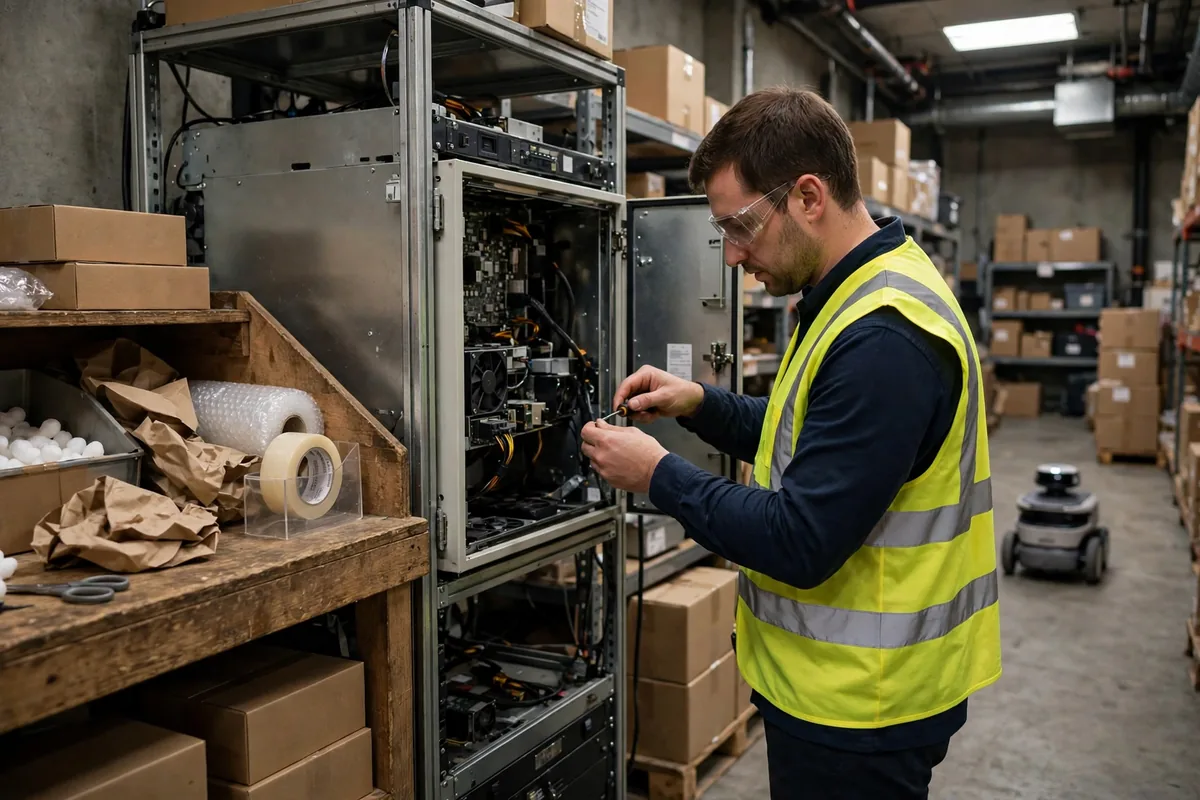
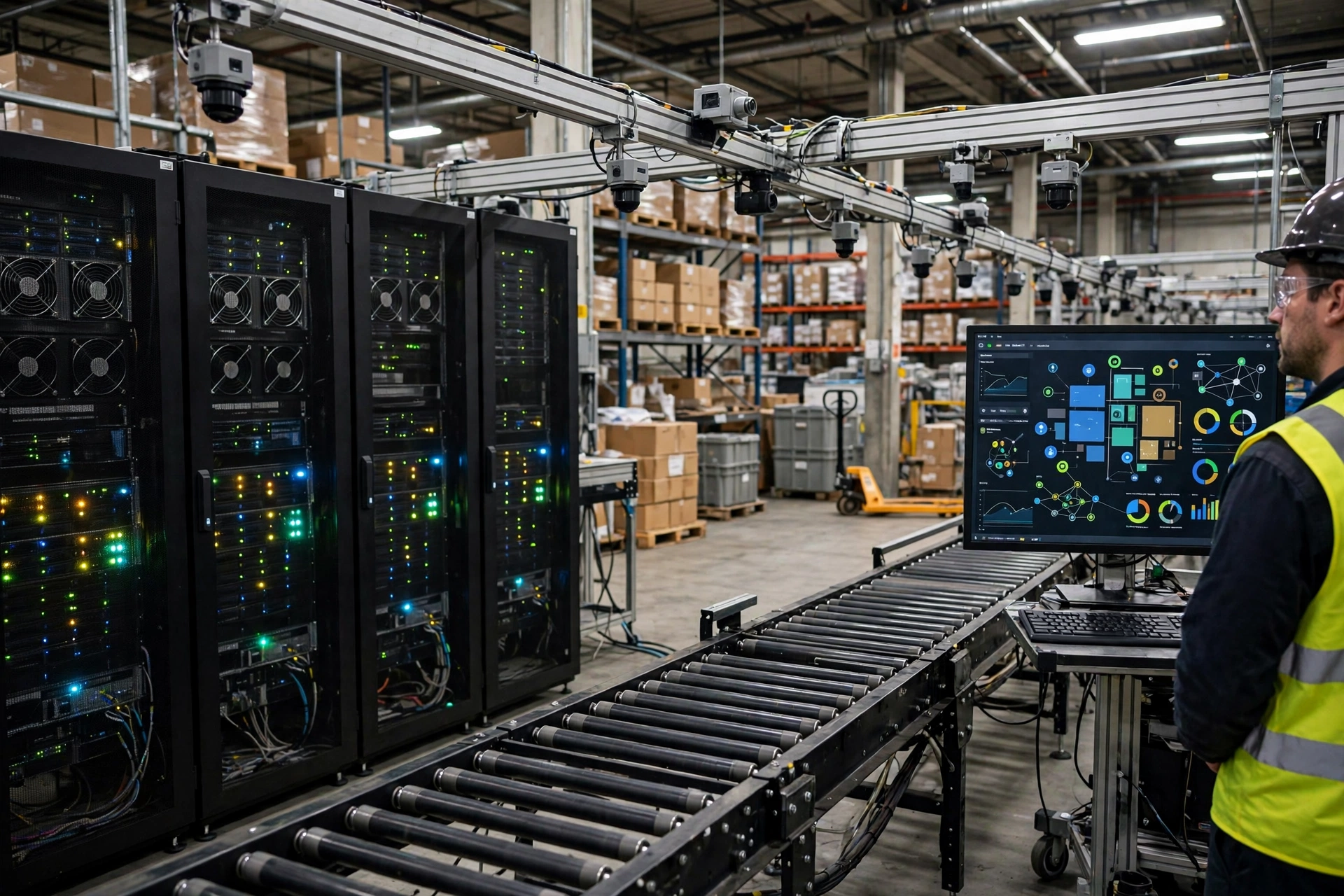
The same warehouse later moved visual inspection inference down to edge servers on site. Cameras fed images straight to local compute, results came back on the spot, and the cloud kept only model updates and data aggregation. Response times returned to the millisecond range, and a network outage no longer stopped inspection itself. The lesson is straightforward: where warehouse AI inference should run depends first on how much latency the task can tolerate. Visual inspection, pick verification, and anomaly alerts lose their value if the answer arrives half a beat late. They belong at the edge. Demand forecasting, replenishment strategy, and monthly performance analysis, by contrast, lose nothing if the answer arrives a few minutes later. The cloud is the better home for them.
A second case comes from an apparel warehousing company. In 2023, it adopted cloud-based AI for customer service questions and order exception analysis, and the results were good. The following year, the team wanted to move pick-path optimization to the cloud as well. The problem was call volume. Pick-path optimization needs to read location, inventory, and order data constantly. Each call is small, but the calls are frequent, and cloud billing is per call. Within months, inference call charges quietly grew past the original budget. The review found the mismatch: high-frequency tasks in the cloud produce a bill that climbs faster than a one-time hardware purchase. The cloud was not the problem. The fit between the billing model and the task profile was.
Edge Computing vs Cloud: Three Separate Calculations
Latency, cost, and outage resilience need to be calculated separately before any comparison makes sense.
| Dimension | Edge Computing | Cloud Inference |
|---|---|---|
| Inference latency | Local compute, typically in the millisecond range, barely affected by the network | Depends on network round trips, hundreds of milliseconds when stable, seconds when congested |
| Impact of an outage | Local inference keeps running; only model updates and aggregation are lost | Dependent tasks stop entirely until the network returns |
| Upfront investment | Edge servers and accelerators required, higher one-time cost | Near-zero hardware cost, pay-as-you-go, low barrier to start |
| Long-term cost | Mostly fixed cost, amortized better as usage grows | Grows linearly with call volume, can overtake edge hardware at high frequency |
| Maintenance | Needs someone on site who understands hardware; model updates pushed point by point | Vendor-managed operations; one model update reaches everywhere at once |
| Scaling | Adding machines takes weeks | Capacity scales on demand, in minutes |
Cost is the calculation most often done wrong. People compare the price of one edge server with one month of cloud bills, which is a one-time cost against a monthly one. The comparison is meaningless. The right way is to calculate total cost of ownership over three years: edge means hardware plus electricity plus on-site maintenance labor; cloud means call charges plus data transfer plus possibly a dedicated line. Take a mid-sized warehouse as an illustration. If visual inspection runs hundreds of thousands of inferences a day, three years of cloud call charges can easily exceed the one-time edge hardware cost. If it runs only a few thousand a day, the edge hardware sits underused and pay-as-you-go cloud is cheaper. The dividing line is not technology. It is call volume.
Outage resilience is the calculation most often underestimated. Warehouse networks are not office networks. Park broadband, internal Wi-Fi, and carrier lines can each fail. The key question is which processes must keep running when the network goes down. Pick verification, label inspection, and outbound interception cannot stop for ten minutes, because wrong parcels shipped in that window cost far more to recover than to prevent. Putting those at the edge is insurance for the critical path. Reporting, forecasting, and analysis can wait out an outage of several hours with no real damage, so they can stay in the cloud.
Here is the counterintuitive judgment: the greatest value of edge computing is often not speed but stability. Many teams adopt edge to save a few hundred milliseconds, yet in most warehouse scenarios nobody notices a few hundred milliseconds. What wakes a warehouse manager at night is a network jitter that takes down the whole AI pipeline. Edge computing is valuable first because work continues when the network does not, and only second because it is faster. Conversely, the greatest value of the cloud is often not lower cost but less worry. Model iteration, elastic capacity, and outsourced operations are invisible on the invoice, yet they quietly consume budget over three years.
Routing by Scenario: Edge or Cloud for Each Workload
Putting the three calculations together, the warehouse AI edge computing vs cloud decision becomes straightforward once tasks are routed by their characteristics:
- Edge: visual inspection, label recognition, pick verification, anomaly alerts, equipment condition monitoring. These tasks share three traits: high frequency, real time, and zero tolerance for network-dependent downtime.
- Cloud: demand forecasting, replenishment strategy, inventory health analysis, monthly performance reports. These are low frequency, can wait, involve large data volumes, and benefit from fast model iteration.
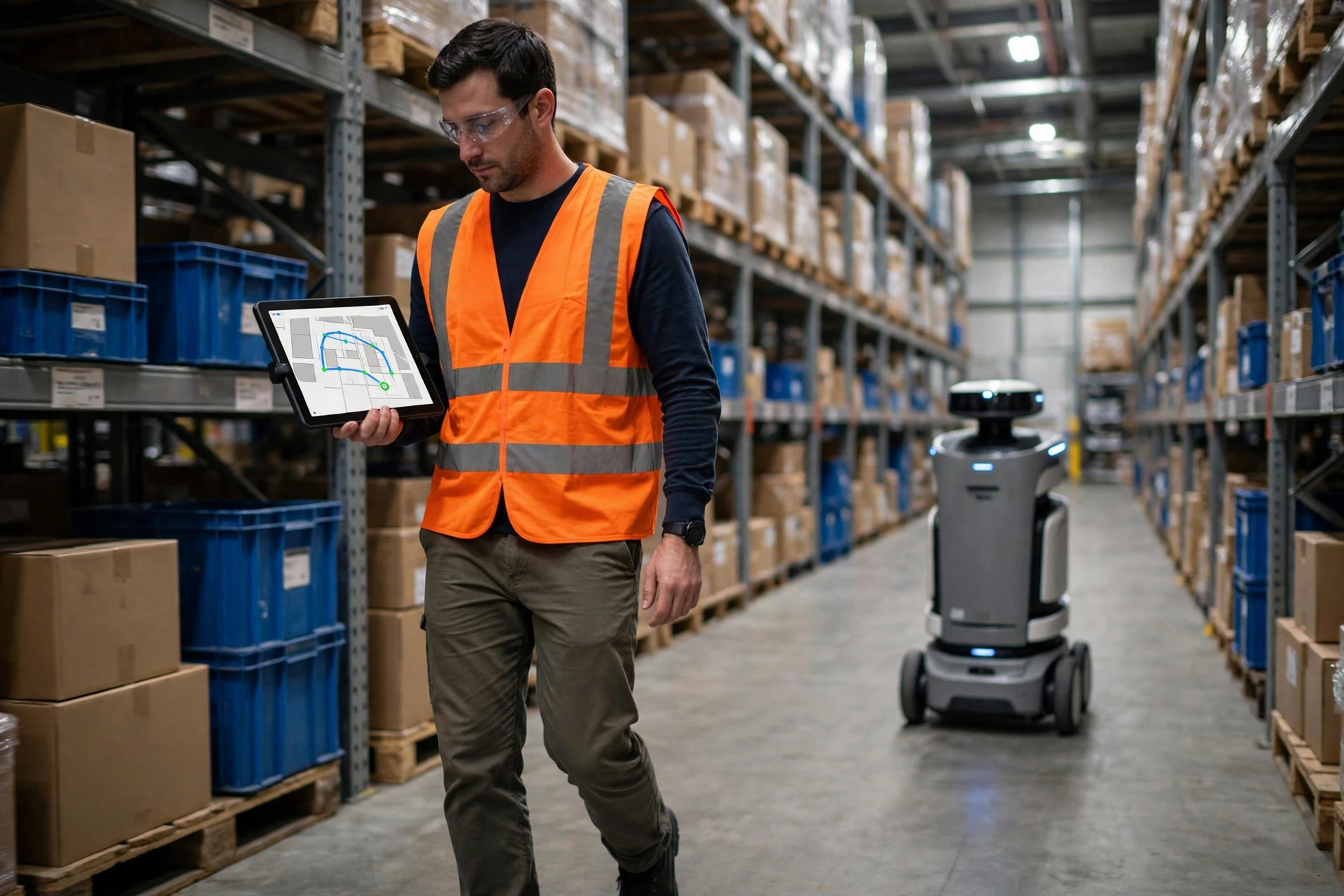
- Hybrid: pick-path optimization, wave planning, labor scheduling. These can run a lightweight version at the edge during the day for real-time response, and a heavier recalculation in the cloud overnight for global optimization.
Hybrid deployment sounds ideal, but it carries a trap: model version drift. The edge runs a lightweight model pushed three months ago while the cloud runs a large model updated last week, and the two can disagree on the same task. The fix is unified model version management, with edge model updates synchronized to the cloud and a clear rule for which side wins in a conflict. That management cost must be budgeted at project approval, or the savings from hybrid deployment will be repaid many times over in later disputes.
One more dimension is easy to overlook: maintenance capability. Edge servers sit on the warehouse floor, where dust, temperature, and voltage fluctuation are real. Hardware failures need someone on site. If the warehouse has nobody who understands hardware, the hidden maintenance cost of an edge deployment will be high. The cloud outsources operations to the vendor, and the warehouse only manages its network and accounts. For small and mid-sized warehouses, this point often decides success more than any technical metric.
The Decision Chain: Task First, Location Second
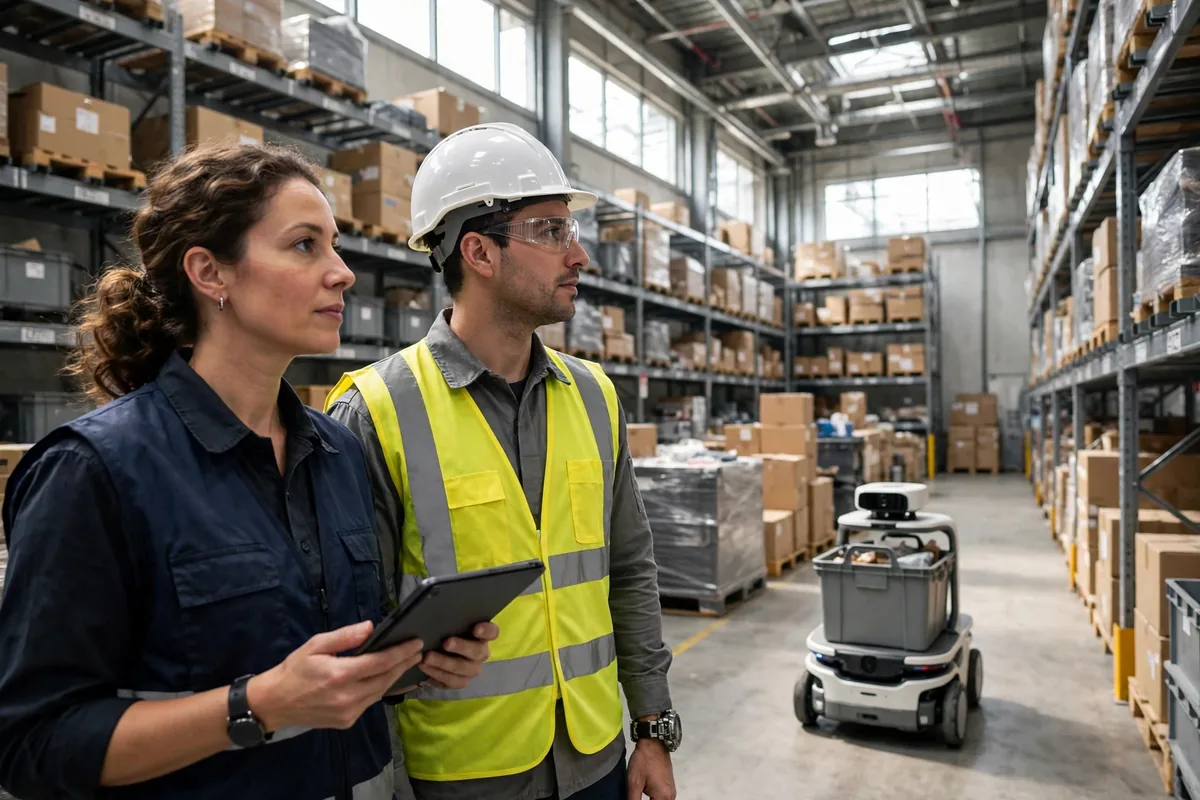
The warehouse AI edge computing vs cloud question has no standard answer, only a decision chain: first, how much latency and outage can the task tolerate; second, what does call volume do to the cost curve; third, can the team maintain edge hardware. Answer those three, and the deployment location follows.
One trend worth watching is that both sides of the boundary keep moving. Edge hardware keeps getting cheaper, and cloud inference keeps getting cheaper too, so the dividing line shifts every year. A task that belongs in the cloud today may belong at the edge next year; a task that must sit at the edge today may be covered by a cloud dedicated line plus local caching next year. This is not a one-time decision but a dynamic one, revisited every year. What warehouse managers really need is not the ability to choose right once, but the habit of recalculating the three accounts every year. Specific pricing should be checked against each vendor's latest published policy, and any project should be recalculated against its own call volume before approval.
By Dr. Chen, Supply Chain Researcher