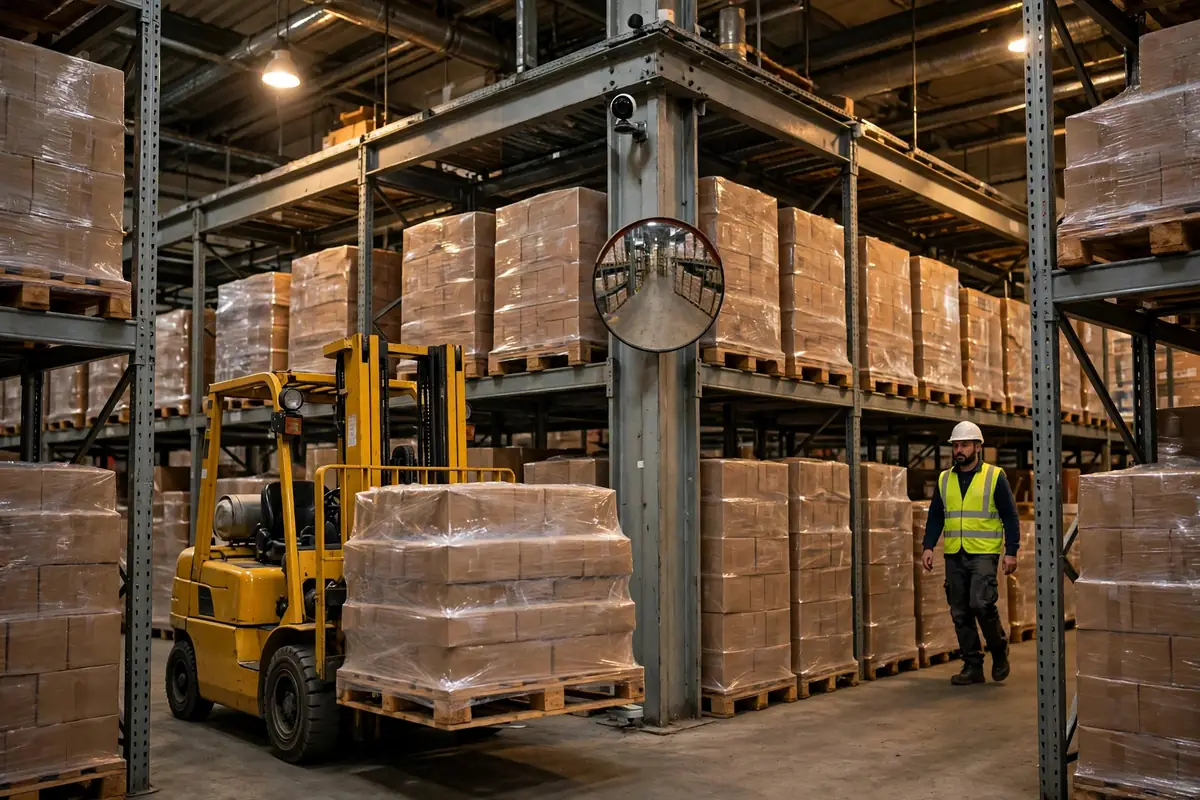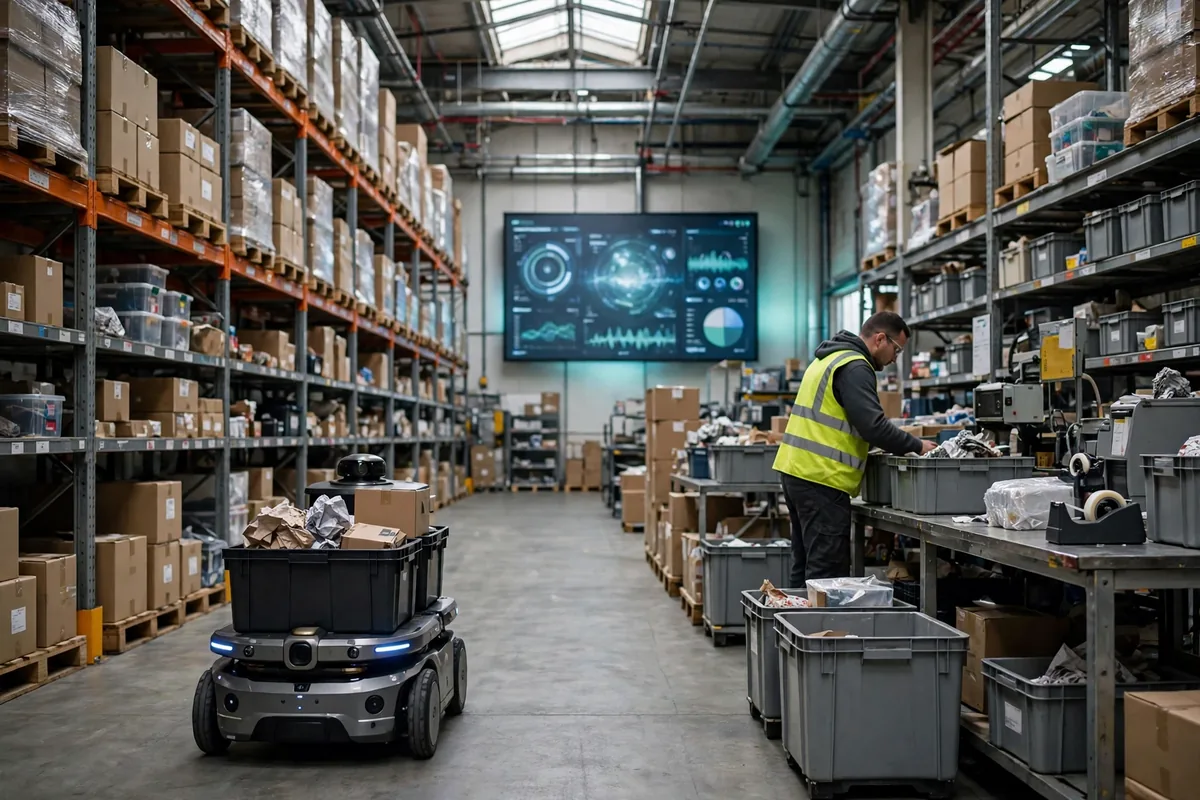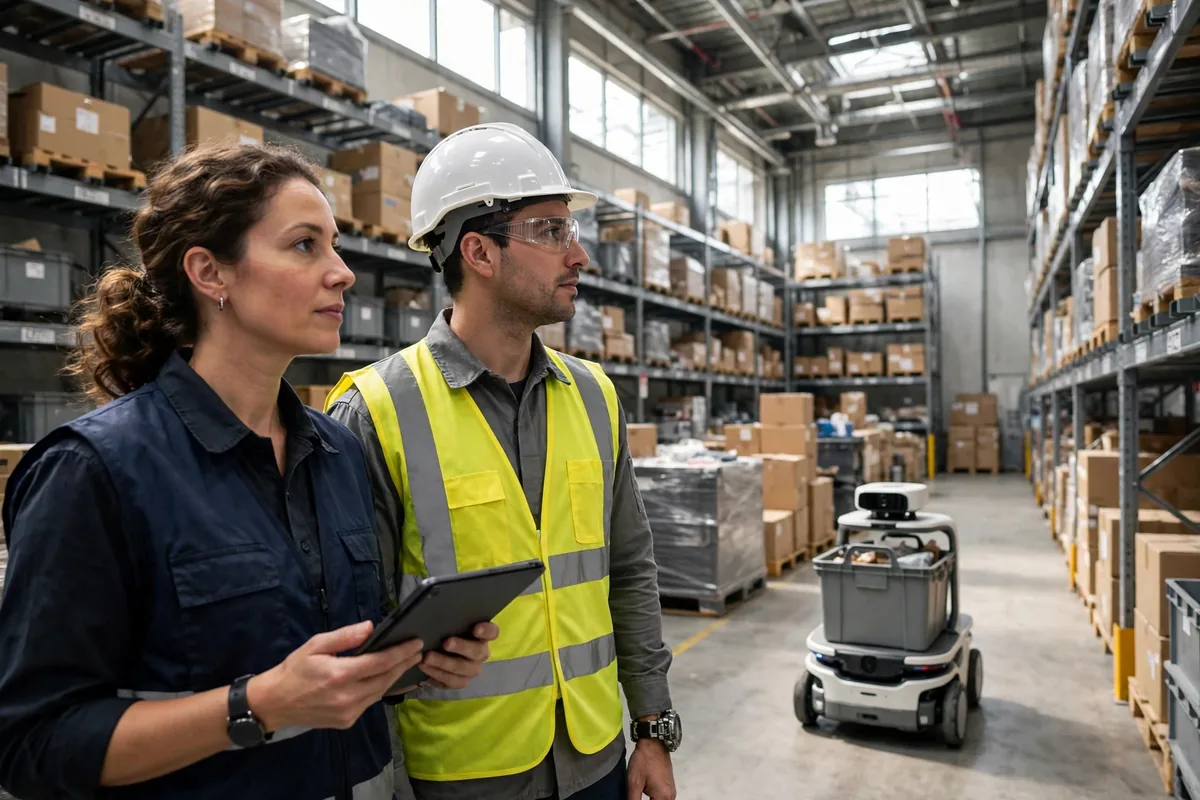
The most reliable way to predict the warehouse of 2027 is not to watch product launches. It is to look at how long the "now hiring" sign has been hanging on the warehouse door. Over the past two years, almost every warehouse I have visited has told the same story: night shifts are hard to staff, temporary workers cost more every peak season, and when an experienced worker leaves, training a replacement takes longer than it used to. This is not a regional problem. It is the shared backdrop of the whole industry, and the warehouse two years from now will be built on top of it.
The Warehouse of 2027: Three Things That Have Already Happened
First, labor is getting more expensive, and the trend does not reverse. Toward the end of 2024, a third-party logistics warehouse in East China that handles apparel fulfillment walked me through its peak-season math: it needed dozens of temporary workers, hourly rates were well above off-season levels, and it still could not fill every slot. In the end it moved order cut-off times half a day earlier — not because demand was weak, but because there simply were not enough hands on the floor. The general manager said something that stuck with me: "Next time we expand, I will call the equipment vendor before I call the staffing agency." When the labor cost curve turns upward, it rarely turns back. Manufacturing and logistics have confirmed that pattern again and again over the past few decades.
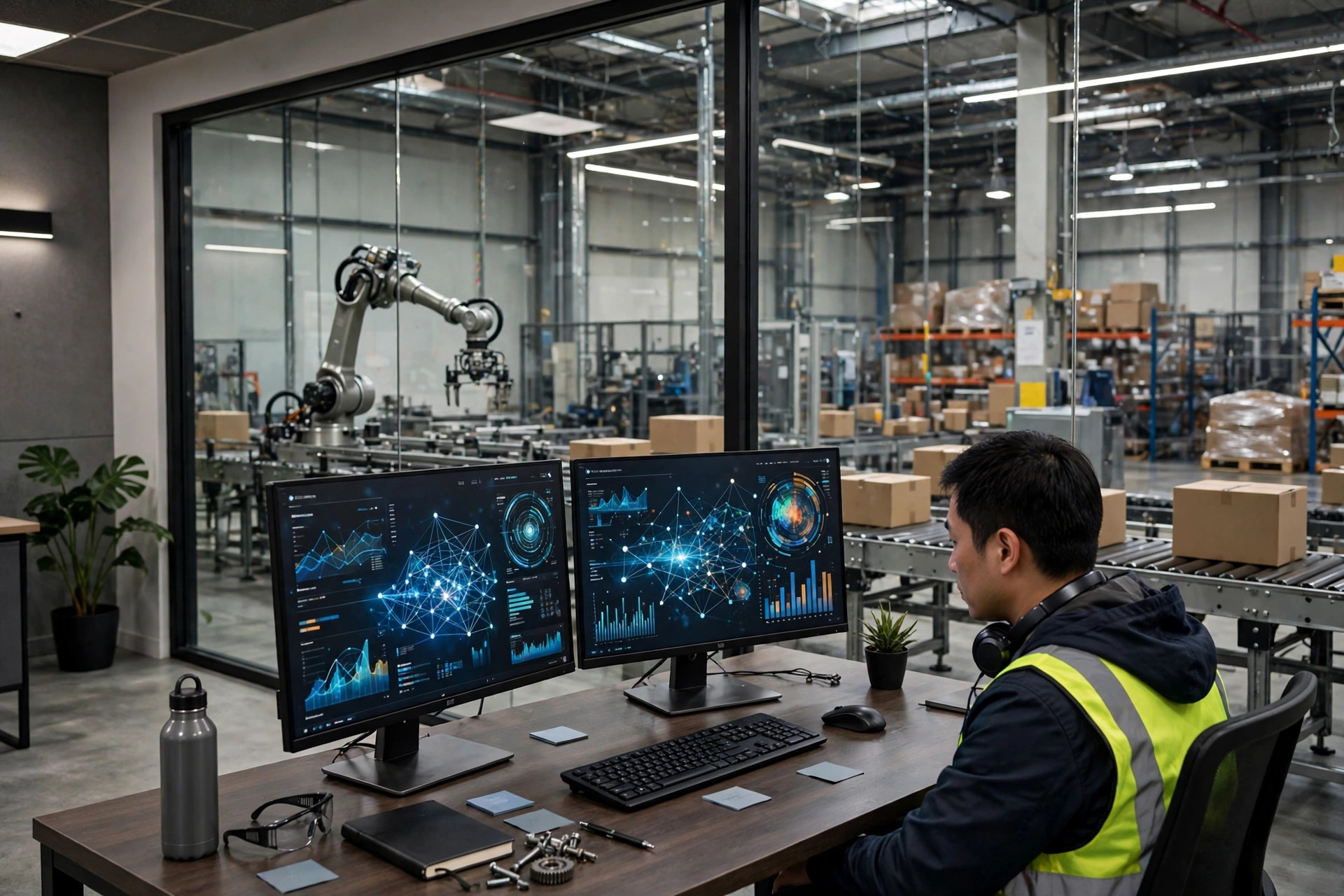
Second, vision technology has reached the threshold of being usable. Starting in the second half of 2025, warehouses began installing cameras at docks and in storage areas for occupancy checks and exception alerts — not as demonstration pilots, but wired into daily operations. A warehouse manager at an electronics facility in Guangdong told me they started with just two cameras watching empty and occupied slots. After several months without a major incident, they felt confident enough to roll the system out to more zones. That cautious pace is telling: there is a trust gap between "it works in a demo" and "we dare to deploy it widely," and that gap is now being crossed. By 2027, cameras plus vision models will likely be as standard in a warehouse as barcode scanners are today.
Third, warehouse systems are changing from ledgers into dispatchers. Early warehouse management systems answered two questions: where is the stock, and do the numbers match? Increasingly, warehouses now ask their systems a different question: which order goes first, who should do it, and which route should they take? A daily-chemicals warehouse in Zhejiang introduced wave optimization and automatic task assignment in 2025. Pickers no longer wait for a supervisor to hand out assignments in the morning; tasks arrive directly on their handheld terminals. The supervisor's job shifted from assigning work to handling the exceptions the system cannot resolve. The change looks modest, but it determines how the warehouse two years from now will be managed: people handle exceptions, and the system handles the routine. Once a system starts sorting and dispatching work on its own, a warehouse's capacity stops depending only on headcount and starts depending on whether the algorithms can slice tasks finely enough and sequence them well.
Fewer People, Same Workload: What Carries the Warehouse of 2027
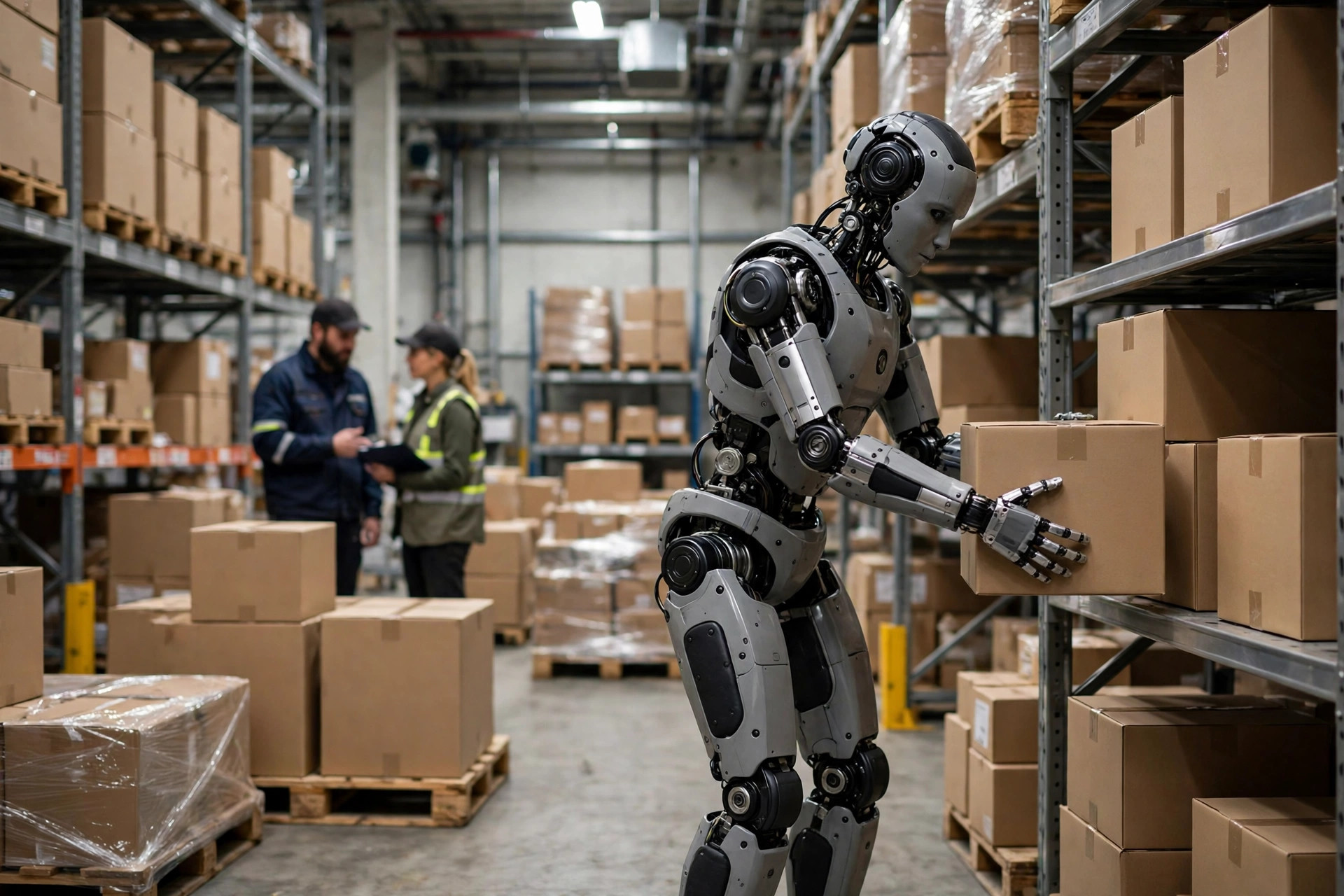
Put the three trends together and the outline of the warehouse two years from now becomes fairly clear: fewer people, more equipment, and a more proactive system. But here is the counterintuitive judgment — what decides the shape of that warehouse is not how advanced the technology is, but which tasks get forced into change first.
The tasks can be ranked by how hard they are being squeezed, and that ranking is also a practical framework for anyone planning ahead:
| Function | Pressure level | Most likely form in 2027 |
|---|---|---|
| Picking and moving | Highest — labor shortage hits here first | Hybrid model: machines move goods, people make picking judgments |
| Cycle counting and occupancy checks | High — manual counts are slow and error-prone | Fixed cameras plus mobile counting as routine, people verify exceptions only |
| Receiving and putaway | Medium — processes can be standardized | System assigns slots automatically, people execute by instruction |
| Exception handling and customer complaints | Low — still needs human judgment | People stay in the loop, but the system triages exceptions before handing them over |
The logic behind this ranking is simple: the more repetitive, physical, and hard-to-staff a task is, the faster automation arrives; the more judgment and customer contact it involves, the longer people stay. So the warehouse of 2027 will not be the science-fiction picture of a fully unmanned building. It will be a hybrid where headcount is roughly halved but every remaining person does work that is worth more. Claims that full unmanned operation will arrive within two years should be treated with caution, at least for general warehousing: there is still a long road between a technology demonstration and stable, round-the-clock operation.
There is another variable that is easy to overlook: cost structure. Automation equipment is a one-time investment amortized over years; labor is cash paid every month. For a small or mid-sized warehouse with tight cash flow, even knowing that equipment pays off in the long run, the upfront payment may be out of reach, so the warehouse keeps hiring people. That means warehouses in 2027 will split into two speeds: large warehouses and well-funded third-party operators move first, while smaller ones automate one function at a time — get one step running smoothly, then move to the next. That split itself will reshape the competitive landscape over the next two years.
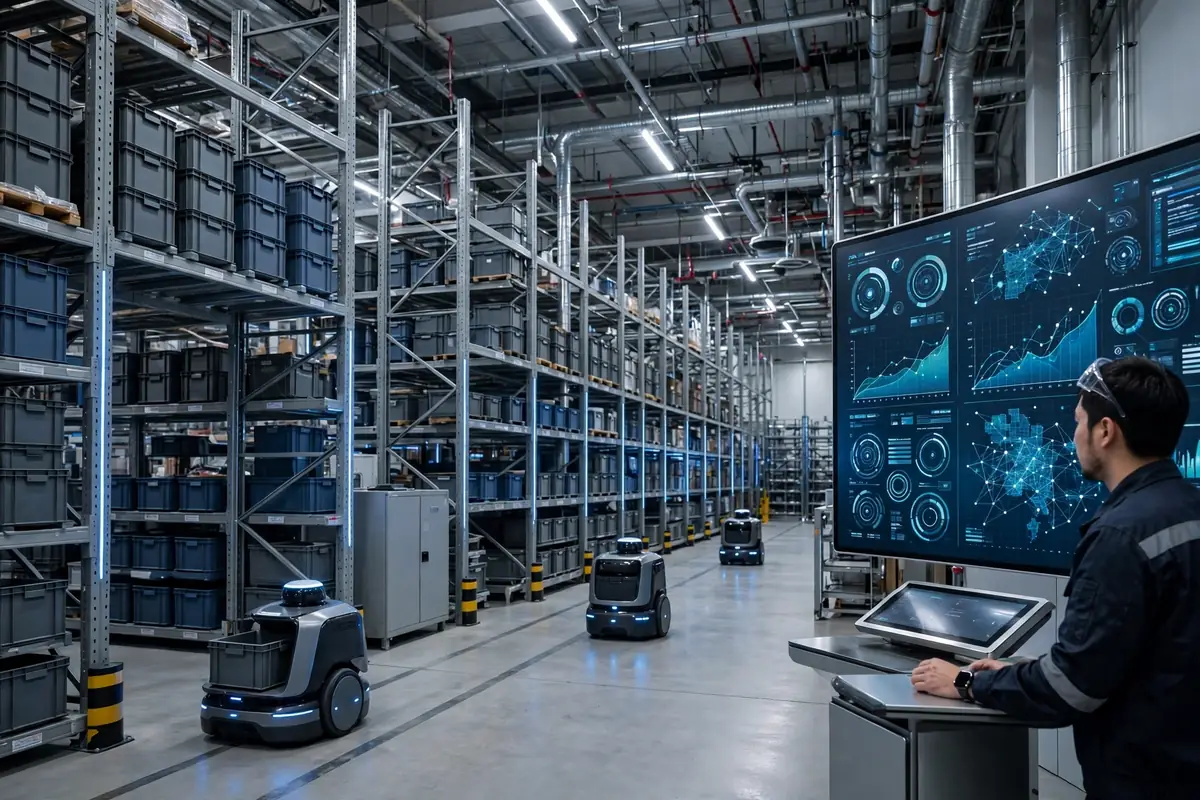
One more case is worth telling on its own. A cross-border e-commerce warehouse in South China introduced a fleet of mobile robots before the 2025 peak season. The idea was not to replace people, but to make sure people only walked the shortest possible routes: robots brought shelves to stationary pickers, eliminating back-and-forth travel. After peak season, the team reviewed the results and found the savings were not in headcount but in overtime hours and error rates — night shifts no longer dragged past midnight, and mis-shipments fell. The lesson is that the warehouse two years from now will not be won by whoever buys the flashiest equipment, but by whoever calculates the division of labor between people and machines most carefully. Machines move, people judge — the clearer that split, the better the return. Projects that try to replace everything in one step, by contrast, usually pay far more than expected during the bedding-in period.
Before You Place Your Bets: Three Dividing Lines
If I had to write down three verifiable predictions for 2027, they would be these. First, by the end of 2027, automation equipment will take a visibly larger share in the plans of mainstream new warehouses, while fully unmanned sites remain a small minority. Second, vision-based counting and exception detection will move from early adopters to default configuration for new warehouses, the way barcode scanners are today. Third, the selection criteria for warehouse management systems will shift from "how many features does it have" to "how strong is its scheduling capability," because whether the system can dispatch tasks and optimize waves on its own will directly decide whether a warehouse keeps running with fewer people.
Each of these predictions has its own premise. The first depends on equipment prices continuing to fall while labor costs continue to rise. The second depends on vision models becoming one step more stable in real warehouse environments. The third depends on software vendors being willing to invest in scheduling algorithms rather than only polishing interfaces. If any premise fails, the corresponding prediction has to be discounted. Notably, all three premises point to the same thing: the speed at which the supply side matures, not the strength of demand-side willingness. Warehouses have wanted to change for a long time; what they lacked was never willingness, but solutions robust enough to survive daily volatility.
In the end, the warehouse of 2027 is not a date on the calendar but a trend line that has already started. The hiring sign on the door, the newly installed cameras in the storage area, and the automatic task dispatch in the system are all points on that line. Looking back in two years, the change may be less dramatic than imagined, but the direction is unlikely to be wrong. The real question was never whether the warehouse will change. It is which function your warehouse will change first, how much you are prepared to spend, and who will lead the change. Those three questions can be thought through right now.
By Dr. Chen, Supply Chain Researcher